NBC Palm Springs • September 25, 2026
Restoring The Salton Sea: Progress, Promise, And Pressure
Share
Source: NBC Palm Springs
Premiered September 6, 2026
Verbatim transcript
---------
There are so many tales of the Salton Sea, it's hard to know what's really the truth. When you realize how many vested interests there are in the Salton Sea, how many competing projects, how many competing ideas and thoughts, and it's only gotten worse. Our state team is super focused on issues that are arising from the Salton Sea as it recedes. This is the cleanest lithium on the planet.
It is absolutely proven at commercial scale, regardless what anyone says. The Salton Sea is at the center of a growing environmental crisis, but a new state-led effort is trying to change what its future looks like. It's called the Species Conservation Habitat Project, one of the largest restoration efforts in the entire country. So how does it work, and will it make an impact? Let's take a tour behind the scenes.
To see the project up close, I met with the head of the Salton Sea Management Program at construction headquarters. It's really incredible. This state project is part of the 10-year plan to restore portions of the polluted sea, and it covers thousands of acres. To get a closer look, we made our way around the project's boundary, right along the sea shoreline. So we are at the southwest end of the Salton Sea.
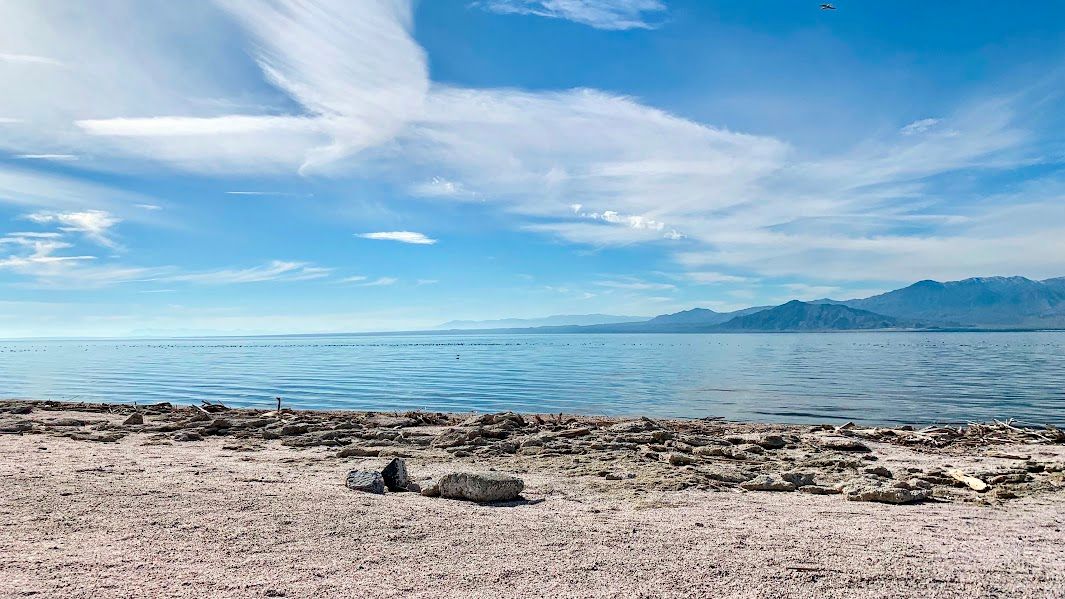
We're right at the edge of where the Salton Sea itself ends, and on the other side is where our state Salton Sea Program project is. This new project creates a series of large, shallow ponds built on the dry lake bed, land that was once covered by the shrinking Salton Sea. A barrier sand wall keeps the ponds separate from the sea's toxic water. In 2025, the state began filling these brackish ponds, returning water to land that had been dry for decades.
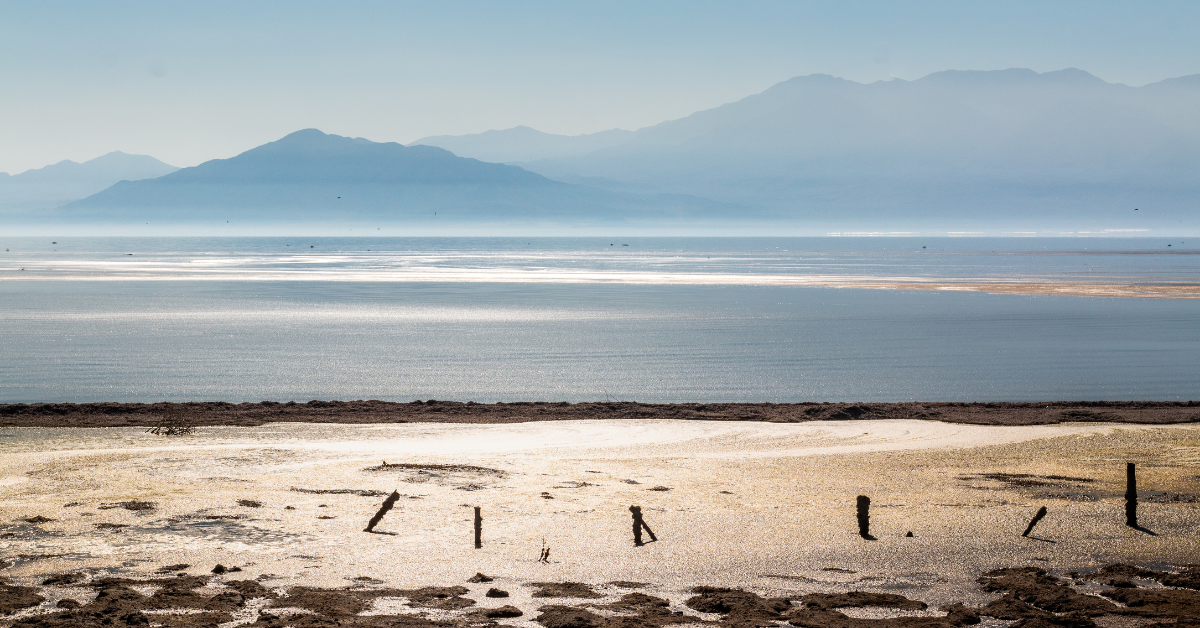
We have currently filled two of our mega ponds. That's about 2,000 acres, roughly four times the size of Disneyland, but we're working to fill seven mega ponds at full build-out. That's about 9,500 acres, or more than 7,000 football fields. The large size of the ponds is intended to address the sea's receding shoreline. In recent years, water levels have dropped due to reduced agricultural runoff and changes in how Colorado River water is managed, and that's created two major challenges: more exposed lakebed that generates dust, and less habitat for birds and fish.
These massive ponds are designed to help address both issues. The south end of the Salton Sea is particularly prone to emissive dust, and we wanna make sure that we're keeping the dust down and building projects that, that keep the dust down and bring wildlife back to the Salton Sea. And one year after breaking ground, Joe says migratory birds are already using the new habitat, a promising sign for a region that sits along the Pacific Flyway, a major migration route for millions of birds each year.
We've seen fish come back to the Salton Sea. We've seen thousands and thousands of birds stop by the Salton Sea. We've watched them raise chicks successfully. So it's proof positive that these projects to bring plants, cleaner water, and wildlife back to the Salton Sea can absolutely be done, and we've gotta do more of them. To fill the ponds, water comes from two key sources: the New River and the Salton Sea, which takes us to the second stop on our tour.
We have built a pipe three miles into the Salton Sea so that we can pump Salton Sea water out of the sea and mix it with fresher water, and the benefit of that is that fresher water can sustain fish in it. The saline pump is designed to help the sea, but with limited water it raises the question, are there any concerns about pulling water from the sea as it continues to shrink?
Sure. It's a, it's a great question. And so what we're focused on doing with this pump station is pumping about, you know, a third of the water that goes into our ponds is Salton Sea water, and the other two-thirds comes from the New River. And so what we're finding is that it's very beneficial to maximize the water that we do have, because we are limited with water in the Salton Sea region.
The limited water in this region dates back to 1905 when levee failures along the Colorado River sent rushing streams into the Imperial Valley. That water collected in the lowest point of the desert, forming the Salton Sea and the New River, which flows to Mexico and is full of agricultural runoff and sewage, requiring heavy filtration. That brings us to stop number three. This is what's called our labyrinth weir structure.
What's really exciting about the design of this feature is that it's essentially a really big water filter for cleaner water that we can put back into the sea. The structure manages the New River, taking advantage of the water flow. Because the structure is built up about eight feet high, it raises the water level of the river and it pushes the water backwards. What it does is it slows it down, forces it into mixing chambers, and the sediments that are in the water fall to the bottom.
And then once it's cleaner, we put it back into these mega ponds. With all of these elements working together, this project requires ingenuity, research, and balance. It's like this... philosophical question about how do we do our work at the sea because as you know, there's, you know, the fault Yeah and there's not a lot of water, so there's a tendency to want to engineer all these different pieces, but you've got to be able to grapple with the landscape.
Another key factor, money. The total cost is just under half a billion dollars, fully funded by the state and federal government, and more ponds are on the way. So we are gonna finish this project in 2028, and we're ramping up to start building a 3,000 acre project that's gonna be right next to this one. We're really excited. We just got the funding from the California State Legislature last year, and we're working to break ground later this year.
Work on the Species Conservation Habitat project is well underway. But even as this new habitat is being built on the shore, some are looking deeper for the sea's future. Underneath this land lies one of the largest lithium reserves in the country, a metal that's helped shape everything from the Cold War to the clean energy revolution. In January 1950, it was revealed that President Truman had directed the Atomic Energy Commission to continue its work on a weapon of even more overwhelming destructive force, the thermonuclear or hydrogen bomb.
The most terrible of all the weapons that man has ever built, the H-bomb, was detonated at Enewetak. The development of the hydrogen bomb during the Cold War created a need for a number of strategic metals, including lithium. It helped spark some of the first large-scale lithium mining operations in the United States. Then in the '70s, more demand as the FDA approved lithium as a treatment for bipolar disorder.
Decades later, a new market emerged. As electric vehicles grew in popularity, and so did the need for lithium car batteries. As the industry continues to expand, companies are searching for new sources of lithium, and some are turning to the Salton Sea. In 2023, a study by Lawrence Berkeley National Laboratory estimated the Salton Sea region contains enough lithium to support millions of electric vehicle batteries. The finding helped fuel the vision of Lithium Valley as a domestic source of the metal.
The US wants to be sure that we have enough sources of lithium and other critical minerals so we can continue to advance our technology, and frankly, so our, our economy can dominate the world, right? Dr. Michael McKibben played an important role in the Lawrence Berkeley study. But now three years after it was published, some are starting to question if Lithium Valley will ever fully materialize. Dr. McKibben believes it has the potential to be a driving force in the region's future.
I think it can be very much, especially if they not only produce minerals down there, but batteries. 'Cause why not produce the batteries where you're producing the raw materials for them? Dr. McKibben is a research professor for UC Riverside. He spent most of his career studying the geology of the Salton Sea. Actually visited that field when I was a high school freshman, and that's what got me interested in geology, was seeing the geothermal well down there.
So I've had a long-term interest down there. And so when the Department of Energy wanted to start to assess domestic resources of lithium, they approached Lawrence Berkeley Laboratory and asked them to conduct a study, and then Lawrence Berkeley Lab called me up 'cause they knew I was kind of the expert on the brines down there. And we came up with pretty substantial amounts of, of lithium being generated by the production of those brines, certainly enough to help make the US self-sufficient in lithium.
One of the companies hoping to turn that potential into reality is Controlled Thermal Resources. The company's geothermal and lithium campus broke ground in 2024, but lawsuits, regulatory reviews, and other challenges have slowed progress. In August, a state appeals court found Imperial County did not provide enough evidence that the Hell's Kitchen project would have an adequate water supply for its 50-year lifespan. The court also found the county did not fully address potential air quality impacts from the project's water use.
The ruling could force the county to revisit part of its approval, adding another hurdle for Lithium Valley. You're using When we spoke with CTR last year, they were targeting 2027 for lithium production. Now, that timeline has shifted. Early 2028 now for, for power and shortly thereafter for, for critical minerals. Slowly moving forward, not as quick as we'd like to, but generally we're fully permitted for stage one.
And it's not just lithium the company is after. They expect to extract other valuable minerals as well. We've actually moved forward with the advancement of manganese zinc, potassium. You know, for example, the US imports 11 million metric tons of potash or potassium. That's for agricultural you know, fertilizers basically. We could produce three million tons a year. Dr. McKibben says that approach could help protect the industry. If you can have a revenue stream that's dependent on several metals, then you're not so subject to the wild fluctuation in metal prices.
So if the price of lithium goes down, but the price of manganese goes up, you'll still make money, right? But even with the resource in place, funding remains one of the biggest hurdles. This year, CTR took a major step toward addressing that challenge. The company is going public through a $4.7 billion merger. Well, I think it, it actually helps accelerate execution. You know, access to capital has always been the fundamental.
You really need to be able to Enough capital to properly execute and start construction. So the announcement of that merger we're listing on the NASDAQ. The ideal date's around September. We'll see how we go. While commercial lithium production has yet to begin, local leaders continue to plan for the future. Imperial County's Lithium Valley Specific Plan is designed to create a framework for future development, and its final draft was just released in May.
The Lithium Valley Specific Plan covers Berkshire Hathaway, Energy Source Minerals, and ourselves on its development infrastructure and support environmental reports and reporting, infrastructure reporting services, water. Enables Imperial Valley to compete with friendly jurisdictions like Texas, you know, Louisiana, and friendly places where people want to come and set up their business. But while companies prepare for production, the science is still evolving. And at UC Riverside, researchers and PhD candidates continue to study lithium at the Salton Sea.
So we're just trying to quantify the behavior of lithium and other critical minerals. Whether Lithium Valley ultimately lives up to its promise remains to be seen, but for the first time, science, investment, and state planning are all moving in the same direction. Still, the search for a future at the Salton Sea didn't begin with lithium. For generations, residents and lawmakers have been asking the same question: "What comes next for the sea?"
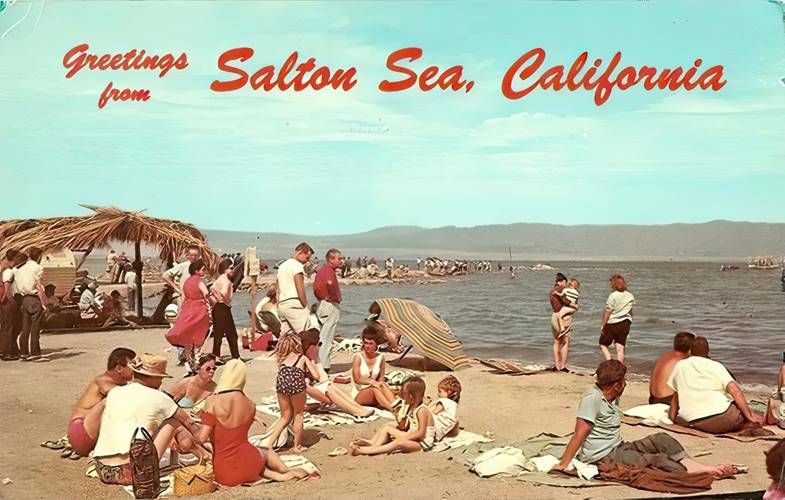
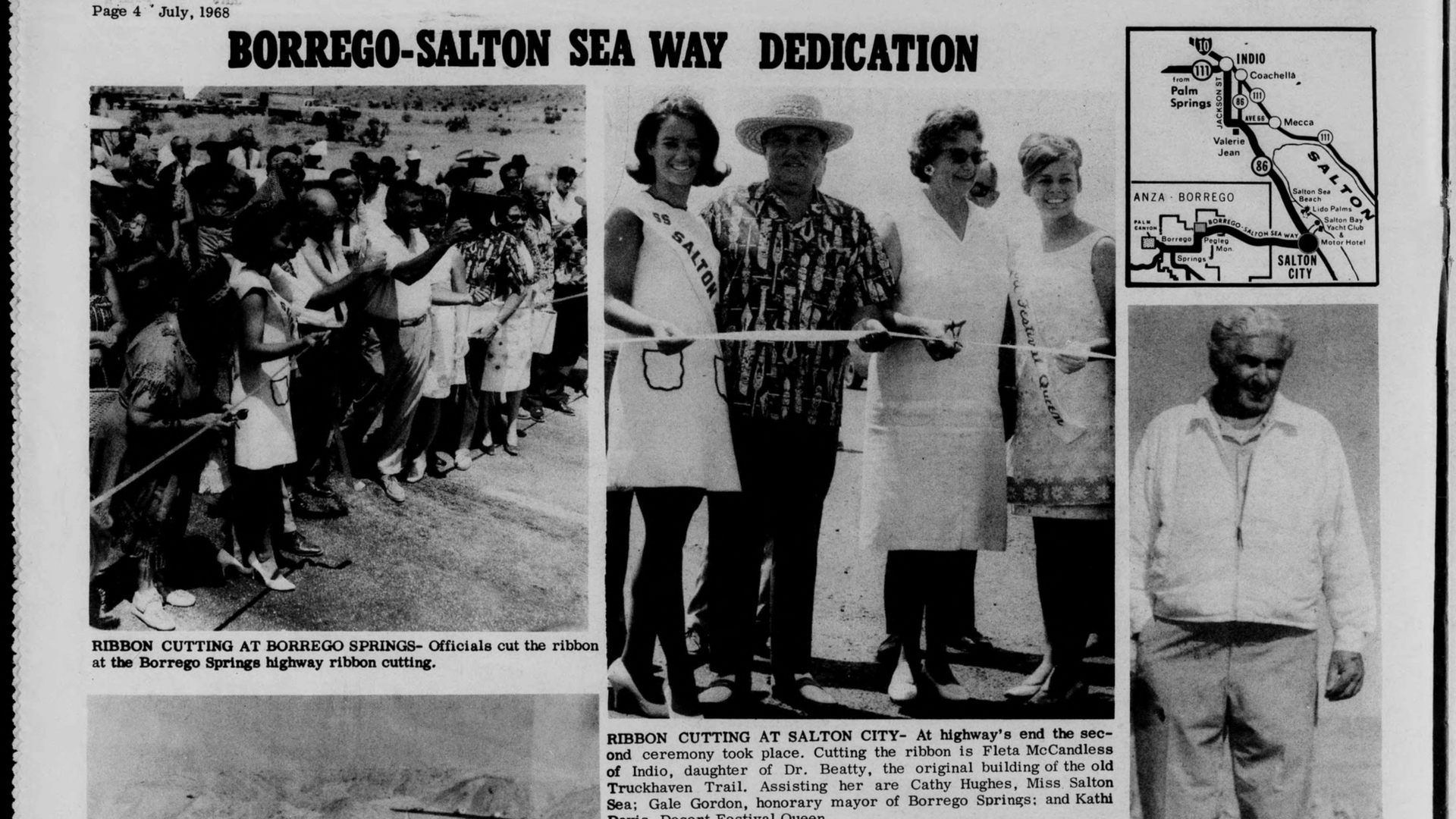
To understand why so many are invested in its future, you have to go back to a time when it looked very different. And another kind of water has been added to the desert that was never planned, never dreamed of: recreation water, the vast Salton Sea, a sea in the desert with its wide, sandy beaches, no tides or dangerous undercurrents, and with literally millions of fish ready for the taking.
A promotional film from 1968 There's the promise of life at the Salton Sea. At that time, the sea was thriving, and families from across the country were drawn to a different kind of desert life, including the Beestons, who moved to desert shores in the '60s and documented their life on eight-millimeter film. Decades later, their son Bruce still uses those home movies to relive some of his favorite memories.
I was born in 1962 and grew up Desert Shores. My mom had... It was, it was like desert, but it was a jungle where we lived, and there were bougainvilleas and honeysuckles, and she had everything known to man growing on this property, and then we were in the desert. It didn't feel like it. The films capture both a family's story and the Salton Sea's golden era, a time when Bruce says Desert Shores offered a sense of possibility.
So we'd ride the horses and donkeys over there. We'd go out into the water with the horses, go swimming with the horses. I'm glad my parents had those eight-millimeter tapes that I was able to digitize and, you know, at least any time I wanna reminisce about the past, I can just pull 'em up. One of his favorite memories? Christmas, Salton Sea-style. So here we have Santa Claus skiing into Salton Sea Beach.
The kids would be waiting there on the beach, and they would take kids, like a tour around the sea. And here's the Santa Claus throne. Today, Bruce lives in Indio and says watching the films is a reminder of how much has changed. It, it's kind of heartbreaking because, you know, my parents had a motel there. I'd drive by that area, and it's like, it's all run down and beat up.
And eventually I'm going to be gone, and I wanna pass that on and have that, you know, information out there. That way, you know, they can always pull that up and see what it actually looked like back then, so As the sea's condition changed, the story became bigger than the families who called it home. It became a national environmental crisis. One of its most prominent advocates was former Palm Springs mayor Sonny Bono.
After being elected to Congress, he pushed for action. If I can get them to understand or get them down here and to see what a liability we have here, I think they would get involved. After Sonny Bono's unexpected death in 1998, many wondered what would happen to his vision for the Salton Sea, until his wife Mary Bono carried it forward, first by winning his congressional seat. Sonny wanted to be known for saving the Salton Sea, and he truly cared about this issue.
And as I'm seeing more and more, the people of the 44th District of California care about the Salton Sea. Then, by making the Salton Sea one of her defining issues in Washington. Now, nearly three decades later, she's looking back on those moments captured by NBC Palm Springs. And whenever you're ready this little red button right there. And you guys aren't gonna watch it with me? The House of Representatives took a leap toward bringing Sonny Bono's dream of restoring the ailing Salton Sea to fruition.
All I hear is, "Let's save the Salton Sea." Following hours of debate led by Congresswoman Mary Bono, the House passed the Sonny Bono Restoration Act, a bill which will provide $350 million and cleanup to restore the former wildlife mecca and recreation hub. People see the studies, and they know that it's a joke. They'll see the front pages and the headlines, and they'll say, "No more studies. Let's get serious here."
How does it make you feel to look back at some of those moments? Oh, gosh, a lot different thoughts. But sadly, not much has changed. And it, it did seem to be a good opportunity with Sonny's passing, that there was an emotion tied to it. As you know, Sonny was a visionary. He saw the promise of the film festival. I think he saw the Salton Sea as an opportunity for tourism, and that was his, his big sort of vision, was how to revive it, bring the tourism there, bring the jobs along that come with that.
During her years in Congress, Mary Bono kept the Salton Sea in the national spotlight. She advanced federal legislation named for her late husband, chaired a congressional task force focused on the sea, and helped secure protections during major Colorado River water negotiations. And that attracted attention at the highest levels of government. In 1998, then House Speaker Newt Gingrich visited the Salton Sea and announced millions in federal support for study and restoration efforts, and Mary Bono took the issue to the White House.
When Sonny died, President Clinton called me, and I asked him to please help with the Salton Sea. That was my one request with him, was to help with the Salton Sea. So we had sympathetic ears, I think, and people would love to do it, but then when you start the fights again over water, the water allotments that we have to all live by, mean, that's really scary stuff, and it's really difficult stuff. So it was nice to, to think and to dream, and at the end of the day, the political fights that I didn't see at that time were far more complicated than I knew.
The Salton Sea sits at the center of complex water issues, where environmental concerns, agriculture, and politics often collide. And for Mary Bono, the challenge wasn't just keeping the issue alive in Washington. It was moving it out of the study phase. Well, look, studies are easy for a politician because you can look like you're doing something. I can get $100,000 or a million dollars, and it's, it's death by incrementalism.
Until you have a solid plan and then the leadership to implement that plan just being a politician who gets a skin on the wall, who can say to the constituents, "Well, I author... You know, got a study done," and there have been so many. So what would it take to finally change the sea's trajectory? Mary points to one of Sonny's ideas. Sonny talked about building islands out there, and people kinda...
laughed at the idea, which Sonny was always used to people doing anyway with his ideas, but they always turned out okay. But the islands would've displaced the water and preserved the shoreline, and there was a lot to it. Now, I would prioritize the negative consequences and how do we address them, and then once you do that, what is left, that can be something that you build upon.
But more than any specific project, Mary believes the biggest missing factor has been consistent leadership. Leadership that stays. So we've had how many governors work on, on this, you know? And they throw lip service at it, and then they're no longer in office, and the next guy has to come in and start with his whole list of priorities. So there's no continuity between political leadership that focuses on the sea.
And again, that's the congressional delegation, that's the governor's office, that's state electeds, 'cause they come in and, and reinvent the wheel again. And that question of leaders and long-term coordination may finally be starting to take shape. State officials say a new structure is designed to bring together the many pieces of the Salton Sea's future, and it's called the Salton Sea Conservancy. Ecologically, there's a need to improve this area.
I don't know what the answers are. It's interesting to hear how it's changed. A little hard to imagine how it was. And they've got a big project here to figure out. Well, I'm always concerned about it. There's there are many articles that are written about the Salton Sea, and I try to read them all, but they seem to be contradictory. For local residents, the Salton Sea has always been more than a structure or a plan. It's a place of change, and a problem that's still not fully understood.
Some of the confusion comes from years of fragmented information and leadership, but a new state agency aims to change that by creating a single place to coordinate efforts and provide long-term direction. It's called the Salton Sea Conservancy, and it held its first board meeting in May. So even though we haven't cleared all of the administrative processes for staffing up the conservancy and resourcing it, we thought it was worth a shot to try to see if we could start meeting in the meantime, because the Salton Sea cannot wait.
It's a historic step for the Salton Sea. Before the conservancy, responsibility was split across multiple agencies. While the new entity doesn't replace those groups, it's designed to serve as a long-term coordinating body for restoration work. It is going to be a place where so many of the regional leaders that have made our project successful, like IID, Coachella Valley Water District, Riverside County, Imperial County, it's a place where all of us can come together and focus on the next phase of work that we have to do at the Salton Sea.
They're gonna be very focused on operating the projects that our state team is building so that our state engineers can focus on building more projects and delivering even more benefits for the Salton Sea region. The board is made up of 15 voting members, ranging from representatives of the Department of Fish and Wildlife to nonprofits, like Alianza Coachella Valley. We cannot address the Salton Sea with only one perspective at the table.
That really requires all of us, and having community representation the understanding of what's happening, I think it's gonna go a long ways. Sylvia Paz is the executive director of Alianza. As part of the conservancy, she says the goal is to bring together different backgrounds, expertise, and priorities. There's been a lot of learning on how to come into agreements with the various owners of the land to see, how are we gonna get this done when, you know, we all sort of carry different types of responsibilities towards the sea?
It comes at a critical moment, as the Salton Sea's 10-year plan approaches its 2028 deadline. Current state data shows the program is only about halfway to its overall acreage target, while over $1.3 billion in state and federal funding has been allocated over recent years. One effort that has stalled, the North Lake Pilot Demonstration Project. Planning began in 2021, but its Prop 68 funding recently expired, leading to delays and challenges to move the concept forward.
And construction has yet to begin on the Desert Shores Channel Restoration Project, as communities there live next to toxic dried channels. So will the conservancy be able to save the Salton Sea? I don't know that it's ever gonna be enough. At least we're not there right now. Because we are seeing the real impacts that, you know, having a body of water that is drying is having. And again, and, and I still don't give up that hope, that this is a step in the right direction, that we need to continue working towards a Salton Sea that supports the people who live in closest proximity to it.
One project in the 10-year plan that's seeing recent success is the Tule Wash Vegetation Enhancement in Salton City. While some community members have questioned the use of straw bales in the past, state officials say the approach is evolving as vegetation takes root and coverage expands. So these are straw bales, and we put them down as phase one of these projects to slow down wind speeds immediately. We're seeing a 75% reduction in wind speeds at the ground level, kicking up dust from the sites.
And then we go and plant in between them to protect the plants and give them a chance to establish. And once they do that, and once we start seeing plants establish, we see a uptick in that control of 85 to 95% control of the sites. And sensors show the project is beginning to make a measurable difference. Yeah, so we got these sensors that are showing our PM10 and PM2.5, and then you come down here, and these are the ones that are capturing the saltation at the ground level.
They're very helpful tools to understand the efficiency of, of these projects and how they're performing. The straw bales cover almost 2,000 acres of sandy shore at the Salton Sea. In some areas, like Bombay Beach, vegetation is still establishing and needs time to grow. They're tracking about a year and a half behind some of these sites. So the vegetation that you're seeing on this side, you're not seeing over there.
But I would give it another year or so, where we hope to see similar success. Dust suppression is an important part of the state's restoration efforts, but the 10-year plan isn't meant to be the final answer. It was designed to start the recovery process. As the 2028 deadline approaches, state leaders say they'll measure what worked, what didn't, and what comes next. With both large and small-scale efforts now underway, multiple agencies are working to bring stability to a constantly changing landscape.
The Salton Sea Conservancy is the latest attempt to bring long-term coordination to a project that spanned years and multiple phases of the state's 10-year plan. From lithium development at the Salton Sea to efforts managing its shrinking shoreline, the future here is still being shaped, and we'll be tracking all of it on NBC Palm Springs.
Learn More About The Salton Sea