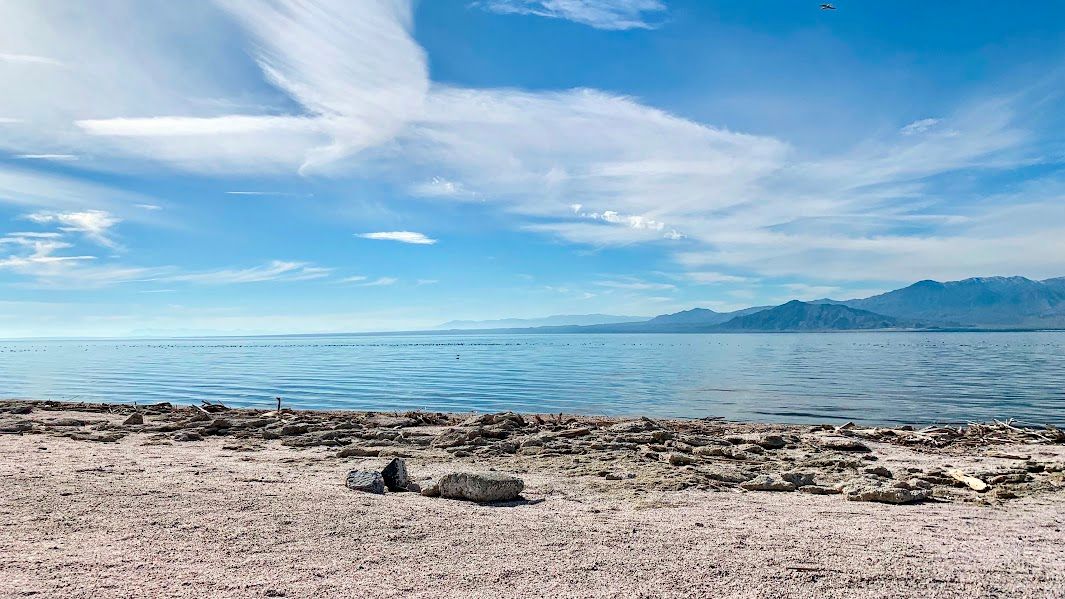
The first time I crossed it, I was a student pilot. The Salton Sea looked immense from the cockpit like an inland ocean improbably placed south of Coachella and just 30 miles east of Borrego Springs. It seemed like a permanent geographic fact, as fixed as the mountains surrounding it. But permanence has never belonged here. Before the modern Salton Sea existed, the Colorado River periodically wandered into the basin and created vast lakes. When the river changed course, those lakes mostly evaporated. Shorelines advanced and retreated over centuries. Fish arrived and vanished. Native communities adapted and thrived in tribal communities surrounding much larger, ancient inland seas.
California’s largest lake has been thought to be accidental, the result of an engineering failure when a Colorado River dike collapsed in 1905. We now know, based upon scientific data and historical evidence, that the Salton Sea is no accident. Researcher Jenny E. Ross’ paper which the Stout Research Center published in 2020, is an eye-opening
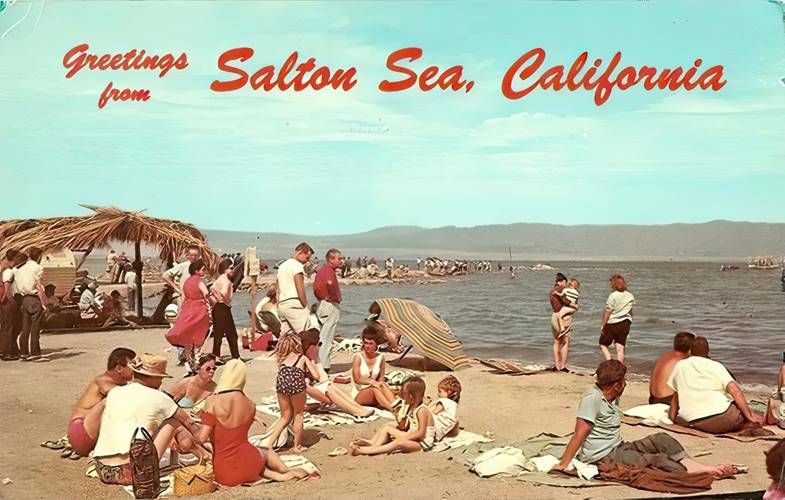
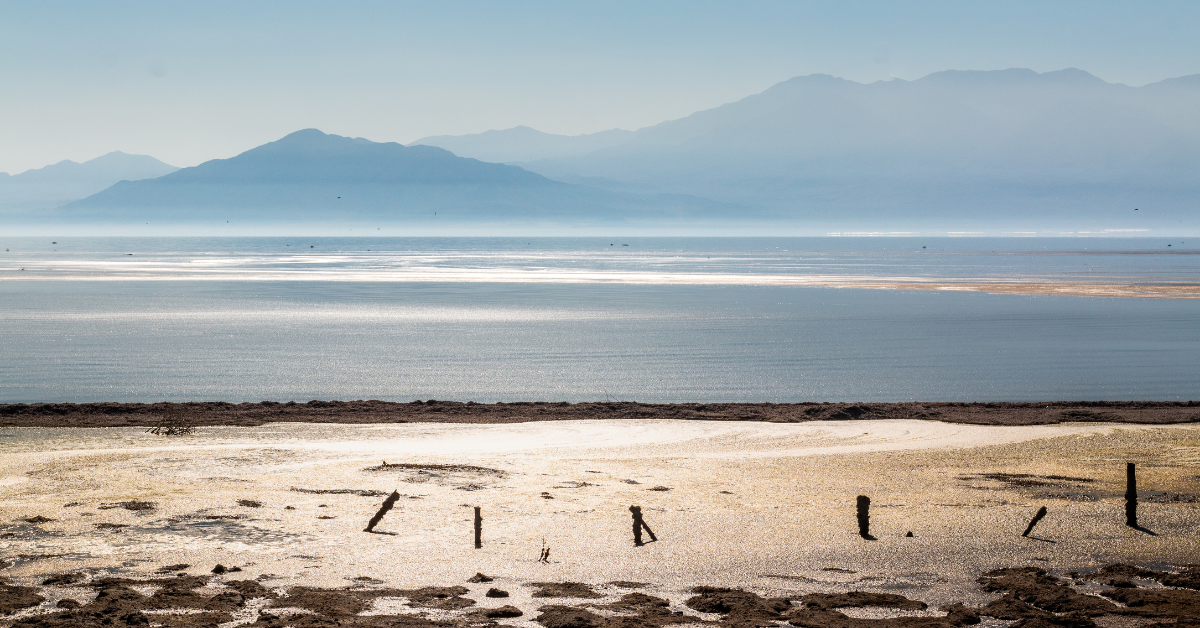
reality check. Three years ago, I interviewed Jenny Ross who told me the Salton Basin’s reoccurring inland sea would have been much larger had efforts to repair the broken dike failed in 1907. She added that characterizing the Salton Sea as an accidental lake is a harmful narrative often used to justify environmental neglect. Why should anyone care about a lake that was never supposed to be there in the first place? By the 1950’s, resorts dotted the massive shoreline. Hotels, yacht clubs and marinas promised a desert Riviera. Speedboats crossed the water. Celebrities drove down from Los Angeles. Families posed for photographs while enjoying beautiful days at the beach. Eventually fertilizers and agricultural nutrients that were conveniently disposed of accumulated. Algae blooms flourished. The water’s oxygen disappeared and so did the crowds. Fish washed ashore by the millions and the remains formed a second shoreline made of bones. Today, a former paradise has become ghostly.
Imagine the Salton Sea ten years from now.
The year is 2036, and from three thousand feet above the Borrego Valley, the Sea looks blue again. Not the dull metallic gray I remember. Not the muddy brown that appeared after summer storms. In 2036, it is a startling desert blue, broken by green wetlands, white beaches and the wakes of boats. In this daydream, I bank east after departing Borrego Valley Airport and climb toward the mountains. The Sea appears gradually, revealing itself between the ridges like a secret too large for the desert to conceal. No canal suddenly delivered the Pacific Ocean through the mountains. No biblical flood refilled the basin. No billionaire wrote a check large enough to restore the Sea of the 1950s. What changed was California stopped trying to recover every mile of the old shoreline and began building a smaller Sea that could actually survive. The first projects looked unimpressive from a distance: berms, channels, shallow ponds and stretches of treated playa. Engineers redirected agricultural drainage into managed habitat. Dust-control crews roughened exposed lakebed, planted salt-tolerant vegetation and flooded selected areas during the windiest seasons.
More from the future… by 2031, the first public beach opened near the North Shore. The sand was imported and laid above a sealed foundation separating visitors from the old playa. Shade structures generated solar electricity. Showers used recycled water. Every restroom displayed the lake’s current salinity, bacterial count and temperature. Nobody minded the monitoring. People had waited too long to touch the water again. Families arrived from the Coachella Valley and San Diego. Kayakers arrived from Palm Springs. Bird-watchers came from across the country. Sailboats returned, followed by paddleboards, fishing boats and electric watercraft. The great economic breakthrough emerged from beneath the lake. For decades, geothermal plants had drawn superheated brine from underground, converted its heat into electricity and returned the fluid to the earth. Scientists knew that the brine contained extraordinary concentrations of lithium, but extracting it reliably and economically proved difficult. The early attempts had encountered corrosion, clogged filters and disappointing recovery rates.
Critics kept predicting that Lithium Valley would become another desert speculation, a futuristic name attached to a collection of unfinished projects. Then the technology began to work. Unlike enormous open-pit mines, the operation occupied a comparatively compact industrial footprint. The brine never became a vast evaporation pond. It traveled through sealed equipment and was reinjected underground after its heat and minerals had been recovered.
By 2036, the Salton Basin has become one of the few places in America producing both renewable electricity and the materials required to store it.
Local communities in the future will have remembered earlier promises. They had watched water leave the Imperial Valley for coastal cities while dust and poverty remained behind. They will have demanded more than temporary construction work and a portion of lithium royalties to be placed into a Salton Sea Restoration Trust. Another share of royalties will go to fund local schools, respiratory clinics, water systems and job training. Imperial Valley College might create programs in geothermal engineering, mineral processing and environmental monitoring. Young people who once expected to leave the valley will have found technical careers near home.
In this future scenario, Calipatria, Brawley and Niland began to grow. New houses appear, not speculative resorts this time, but homes for plant operators, engineers, teachers, biologists and construction workers. Small manufacturers produce pumps, filters and corrosion-resistant equipment. The region becomes a laboratory for living with heat. Buildings used reflective materials, geothermal cooling and shaded courtyards. Solar canopies cover parking lots. Treated wastewater irrigates public landscaping. Visitors come to see not only the beautiful waterway, but the technology surrounding it. And Borrego is the natural gateway.
Presently, the Salton Sea is not simply disappearing. Jenny Ross’ research challenges the long-held belief that the giant lake was the result of an engineering accident in 1905. Ross’ analysis shows that the Salton Sea’s formation was a natural process that has been repeating for thousands of years. There had been multiple large lakes in the Salton Basin from the late Pleistocene through the late 19th century.
In the here and now, I turn the airplane west away from the Sea back toward Borrego Springs. Behind me, the morning sun catches the water, the wetlands and the silver roofs of the geothermal plants along the southern shore.
Read article #1
Future Scenarios - Borrego Springs & the Salton Sea