NEWS
Local news, updates, and stories from Borrego Springs and the surrounding desert community.

Donate Blood, April 30 A community blood drive is scheduled at Borrego Springs High School on Thursday, April 30, 2026. Hosted in partnership with the San Diego Blood Bank, the event offers residents an opportunity to donate locally and support regional medical needs. Donors will receive a limited-edition Disney Goofy T-shirt while supplies last. Event Details Date: Thursday, April 30, 2026 Time: 12:00 PM – 5:00 PM Location: High School Gym Parking Lot Cahuilla Road Borrego Springs, CA 92004 Appointments are encouraged, though walk-ins are accepted. Donors should bring a photo ID, be at least 17 years old, weigh a minimum of 110 pounds, and arrive hydrated. How to Participate Appointments can be scheduled online at sandiegobloodbank.org/donate or by calling (619) 400-8251. A QR code is also available on event materials for quick access. Blood donations collected at local drives support hospitals across the region, making community participation an important part of maintaining a stable blood supply.

Volunteer-Run Community Park Christmas Circle Community Park sits at the center of Borrego Springs and remains one of the most recognized public spaces in the area. The park was established in the early 1950s when the DiGiorgio family donated the land in honor of Alphonse A. Burnand, tying the space directly to the early development of Borrego Springs. A Park Run by Volunteers Today, the park is managed by a nonprofit 501(c)(3) organization led by a volunteer board of directors. The organization is supported through grants and donations from both residents and visitors who use the park. Jeff Sloan, president of the board, said, “There’s a group of people who really love the park and they put their effort into making it a wonderful place to visit.” What It Takes to Maintain the Park Maintaining Christmas Circle is an ongoing responsibility. The board oversees landscaping, lawn care, tree trimming, and water management to keep the grass maintained throughout the year. The park also provides regularly cleaned public restrooms, requiring daily attention and consistent upkeep.

Marcia Forman Band at Library The Marcia Forman Band will perform a free concert in Borrego Springs on Sunday, April 12, 2026, at 3:00 PM at the Borrego Springs Public Library. Presented by the Borrego Springs Community Concert Association , the performance features music from the Great American Songbook. The program includes a range of styles such as show tunes, pop, swing, bebop, rhythm and blues, and contemporary selections. Free Community Concert This event is open to the public and offers an opportunity to experience live music in a casual setting. The Borrego Springs Community Concert Association continues to provide accessible performances for residents and visitors throughout the season. What to Expect Attendees can expect a mix of familiar songs and diverse musical styles performed by an experienced group of musicians. The concert is designed to appeal to a wide audience, whether listening for enjoyment or exploring different genres of American music.

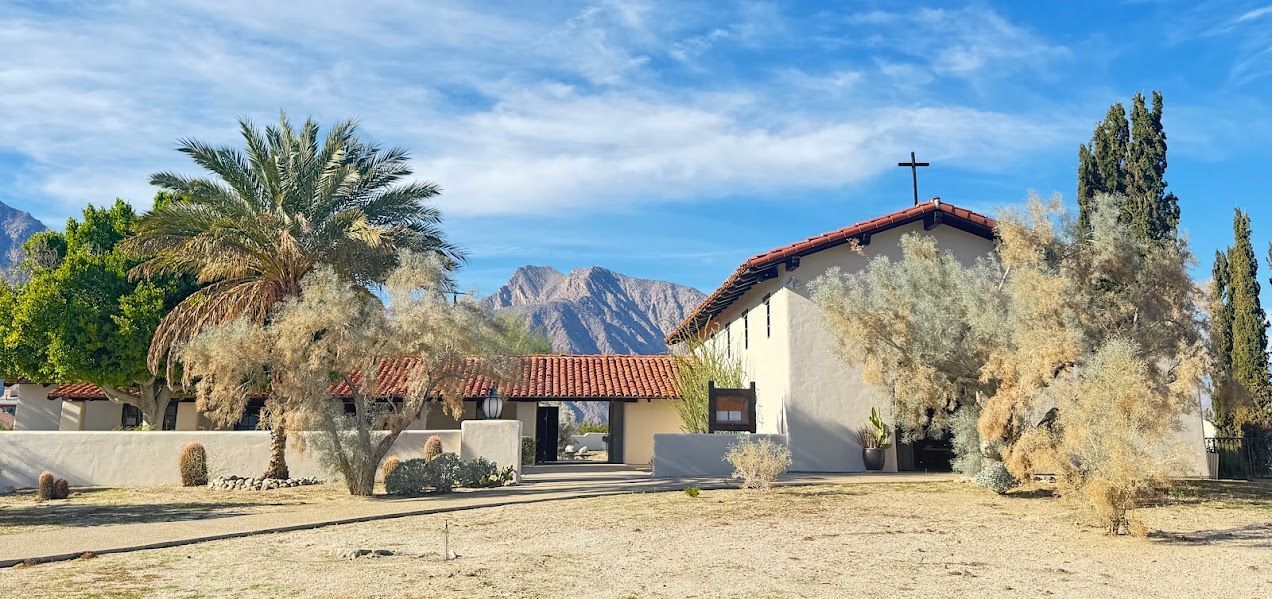
Easter Sunrise Service Borrego Springs The annual Easter Sunrise Service in Borrego Springs took place on Easter morning behind the United Methodist Church on Church Lane. Hosted each year by the Borrego Ministers Association, the outdoor service brought together local congregations, residents, and visitors for a shared Easter gathering at sunrise. Annual Easter Sunrise Service in Borrego Springs The Easter Sunrise Service is a long-standing community tradition in Borrego Springs. Held outdoors at sunrise, the service offers a shared way for people to gather on Easter morning in a peaceful desert setting. What Is the Borrego Ministers Association The Borrego Ministers Association is a group of local faith leaders and caring community members who work together to support Borrego Springs. The association helps coordinate shared services, community events, and outreach efforts throughout the year, including the annual Easter Sunrise Service. A Community Gathering at Sunrise Residents and visitors gathered early, bringing chairs and dressing for the cool desert morning. The service brought people together in one outdoor setting for Easter morning. The annual sunrise service continues to reflect community participation and cooperation in Borrego Springs.

Brand case study highlights campus updates A brand case study by KI Furniture highlights recent updates at Borrego Springs High School, including redesigned classrooms, shared spaces, and new furnishings. According to the case study, the improvements followed voter approval of an $8.6 million bond. The campus had not seen major renovations since the 1950s, and much of the furniture had been in use for more than 30 years. The report outlines updated classrooms, library and study areas, and flexible spaces designed for group work and career-focused learning. Borrego Springs Unified School District serves about 345 students across three schools. The case study includes input from staff and students describing how the updated spaces are being used. The content is presented as a KI Furniture brand case study focused on the design and furniture used in the project. For full details and images, view the original case study: www.ki.com/spaces/case-studies/borrego-springs-unified-school-district

By Dennis Mammana Week of March 22-28, 2026 Now that spring has sprung, I'm sure that those who have endured a long, cold and snowy winter are rejoicing. Anyone who knows me knows that I'm no winter person. Sure, I used to enjoy the season when I was a kid, but that's only because I could spend entire days building snow forts with my friends and making a few bucks shoveling the white stuff for neighbors. No longer. Today, warmer days of springtime can't come soon enough for me! If we had no calendar, we would still know the seasons are changing. We see it happening all around us: Temperatures are rising, the first flower buds are beginning to appear, and many birds are returning to our part of planet Earth. And, just as our daytime world gives us clues that spring is approaching, the darkness does as well. Nighttime hours are beginning to shorten, and the brilliant stars of winter are descending in the west to make way for those of springtime. And no star grouping heralds the arrival of springtime to our Northern Hemisphere more than Leo, the lion. Head outdoors during early evening hours and cast your gaze midway up in the eastern sky. There, you'll see Leo, one of the few constellations that, with some imagination, actually can be made to look like its namesake — a lion crouching in a regal pose reminiscent of the enigmatic Egyptian Sphinx. Most prominent in this constellation is the bright star Regulus, which shines brightly beneath the lion's majestic head and mane, outlined by a large sickle-shaped grouping of stars. More metropolitan stargazers may recognize this figure not as a sickle but as a backward question mark, with Regulus forming the dot at its base. The star's very name, "Regulus," comes from the Latin word "Rex," meaning "king," and, interestingly, this star was revered throughout the ancient world as a "royal" star. According to astronomy author R.A. Allen, it was known in Arabia as "Malikiyy" (the Kingly One), while the ancient Greeks knew it as "the Star of the King." At the other end of the lion, we find the bright star Denebola, whose name originates from the Arabic "Al Dhanab al Asad," meaning "The Lion's Tail." You can find Leo more easily if you use the two pointer stars of the Big Dipper, farther to the northeast. These stars point toward Polaris (the north star) if you follow them from the bottom to the top of the Dipper's bowl, but if you follow them in the opposite direction, you can find your way toward the back of the lion. If you have trouble tracing this animal's shape among the stars, don't worry. Just turn it around and you'll find it's much easier to find not the mighty king of the jungle but instead a mouse! Quite frankly, I think the figure of a mouse is much easier to trace. Here, the star Denebola forms its pointy nose, the nearby triangle forms his head, and the sickle now outlines its long, curving tail. Either way you look at it — mouse or lion — nothing in the heavens announces springtime more loudly than Leo! Visit Dennis Mammana at dennismammana.com. To read features by other Creators Syndicate writers and cartoonists, visit the Creators Syndicate website at www.creators.com. Learn More About Borrego Springs

A recent Hawk Alert shared through the Borrego hawkwatch community reports a significant number of Swainson’s hawks currently roosting in Borrego Springs. Estimates based on multiple counts suggest 200 to 300 hawks are gathered overnight. This is part of the annual spring migration, when large numbers of Swainson’s hawks pass through the Borrego Valley. The migration typically runs from mid-February through March and into April, with peak activity often occurring in mid to late March.

Easter Sunrise Service Borrego Springs The Easter Sunrise Service in Borrego Springs is an annual sunrise gathering that brings people together for a simple, meaningful start to Easter morning. This post covers the essentials—who hosts it, where it takes place, and a few practical tips so you can plan ahead each year. Since the service is timed to sunrise, the date changes with Easter, but the tradition stays the same: an early morning moment of faith, hope, and community in the desert. Date and time Sunday, April 5, 2026 6:00 AM (Sunrise)

by Fr. Michael Plekon All Christians see the days before Jesus’ death, burial and being raised as a holy week. Much of the liturgy we have for it, especially the last Three Days, comes from observances in Jerusalem recorded by a Spanish nun, Egeria, in the 300s. Still today, the processions on Palm Sunday and later after Good Friday are carried out by Christians of diverse church backgrounds in the Holy City. For some, Palm Sunday’s cries of “Hosanna” float over to the “Hallelujahs” of Easter Sunday. So much is missed if one does not come to the services during the week. Indeed, it is a lot to go to church not once but three more times in a week, but those who do come away with a deepened sense of what we celebrate around Easter every year.

By Dennis Mammana Week of March 8-14, 2026 If you hear the word "superstar," what immediately comes to mind? Perhaps names like Tom Hanks, Taylor Swift or LeBron James? That's certainly understandable; they are all undisputed superstars who attract the attention of paparazzi and fans alike. If you're an astronomer, however, you may answer this question differently. For example, when I hear the word "superstar," I think of UY Scuti, WOH G64 or RSGC1-F01. Yes, these are superstars, but not quite how people may think. These are some of the largest stars known in our galaxy and, for that reason, are quite intriguing to us celestial paparazzi. Regular readers of this column know that our sun is also a star. It appears big and bright in our daytime sky because not only is it rather close (about 93 million miles away), it's also pretty large (nearly a million miles across). It sounds huge, but our star is rather small on a cosmic scale, and believe it or not, there are stars out there that would dwarf our sun and make it look tiny. These are the true superstars! Until recently, the largest star known was given the hopelessly poetic name of UY Scuti. At a distance of some 9,500 lightyears from Earth, UY Scuti is what is known as a red hypergiant star, with a diameter some 1,700 times that of the sun! All that changed recently, however, when astronomers found a gargantuan star some 2,150 times larger than our sun! It's named Stephenson 2-18, and if you'd like to get a peek at this stellar behemoth, you'll need more than your eyes. At a distance of some 18,900 lightyears, it appears 5,100 times fainter than we can see without a telescope. If you have no telescope but would still like to see a celestial superstar, you're in luck. There's one shining in our night sky right now; it's one of the brightest up there and is named Betelgeuse. Betelgeuse sparkles brightly in the northeastern corner of Orion, the hunter, and you can see its orange light midway up in the southern sky after dark this week. With about 15-20 times more mass than our sun, Betelgeuse is known as a red supergiant star for good reason. While we could align 109 Earths across the face of our sun, we would need at least 700 suns to cross the face of Betelgeuse! Indeed, this star is so immense that if it replaced our sun at the center of our planetary system, Betelgeuse would engulf the orbits of Mercury, Venus, Earth and Mars, and stretch part of the way to Jupiter! Yet it appears as a simple point of light in our night sky because of its tremendous distance from us — some 3,100 trillion miles, or about 520 lightyears. Betelgeuse is easily one of the largest known stars, though its size fluctuates by as much as 60% as the star shudders and pulsates on its way to an eventual supernova explosion, thousands or millions of years from now. Or tonight. We just don't know. I hope you'll step out under the night sky soon to meet this remarkable superstar for yourself! Visit Dennis Mammana at dennismammana.com. To read features by other Creators Syndicate writers and cartoonists, visit the Creators Syndicate website at www.creators.com. Learn More About Borrego Springs

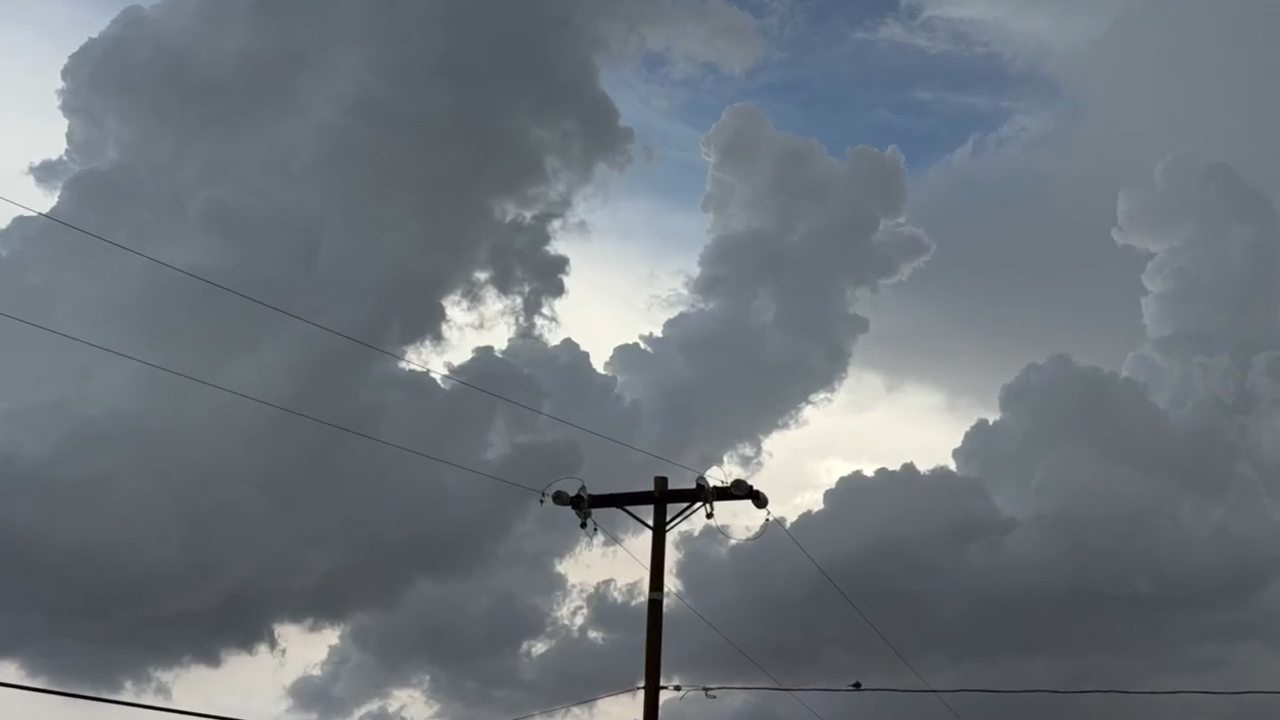
SDG&E Planned outage has been canceled. As part of SDG&E’s reliability initiatives in Borrego Springs, two planned outages have been planned. The first outage will occur Wednesday, March 18, 2026, from 7:30 p.m. to 6:00 a.m. Thursday, and the second outage will occur on Tuesday, March 24, 2026, from 7:30 p.m. to 6:00 a.m. Wednesday for infrastructure maintenance and to make improvements to our system. “We understand these outages can be disruptive and appreciate your patience while we conduct this important work to build a more resilient electric system,” SDG&E states. Learn More About Borrego Springs

FAQs
Got a question? We’re here to help. Contact us!
Learn More About Borrego Springs

By Dennis Mammana Week of March 22-28, 2026 Now that spring has sprung, I'm sure that those who have endured a long, cold and snowy winter are rejoicing. Anyone who knows me knows that I'm no winter person. Sure, I used to enjoy the season when I was a kid, but that's only because I could spend entire days building snow forts with my friends and making a few bucks shoveling the white stuff for neighbors. No longer. Today, warmer days of springtime can't come soon enough for me! If we had no calendar, we would still know the seasons are changing. We see it happening all around us: Temperatures are rising, the first flower buds are beginning to appear, and many birds are returning to our part of planet Earth. And, just as our daytime world gives us clues that spring is approaching, the darkness does as well. Nighttime hours are beginning to shorten, and the brilliant stars of winter are descending in the west to make way for those of springtime. And no star grouping heralds the arrival of springtime to our Northern Hemisphere more than Leo, the lion. Head outdoors during early evening hours and cast your gaze midway up in the eastern sky. There, you'll see Leo, one of the few constellations that, with some imagination, actually can be made to look like its namesake — a lion crouching in a regal pose reminiscent of the enigmatic Egyptian Sphinx. Most prominent in this constellation is the bright star Regulus, which shines brightly beneath the lion's majestic head and mane, outlined by a large sickle-shaped grouping of stars. More metropolitan stargazers may recognize this figure not as a sickle but as a backward question mark, with Regulus forming the dot at its base. The star's very name, "Regulus," comes from the Latin word "Rex," meaning "king," and, interestingly, this star was revered throughout the ancient world as a "royal" star. According to astronomy author R.A. Allen, it was known in Arabia as "Malikiyy" (the Kingly One), while the ancient Greeks knew it as "the Star of the King." At the other end of the lion, we find the bright star Denebola, whose name originates from the Arabic "Al Dhanab al Asad," meaning "The Lion's Tail." You can find Leo more easily if you use the two pointer stars of the Big Dipper, farther to the northeast. These stars point toward Polaris (the north star) if you follow them from the bottom to the top of the Dipper's bowl, but if you follow them in the opposite direction, you can find your way toward the back of the lion. If you have trouble tracing this animal's shape among the stars, don't worry. Just turn it around and you'll find it's much easier to find not the mighty king of the jungle but instead a mouse! Quite frankly, I think the figure of a mouse is much easier to trace. Here, the star Denebola forms its pointy nose, the nearby triangle forms his head, and the sickle now outlines its long, curving tail. Either way you look at it — mouse or lion — nothing in the heavens announces springtime more loudly than Leo! Visit Dennis Mammana at dennismammana.com. To read features by other Creators Syndicate writers and cartoonists, visit the Creators Syndicate website at www.creators.com. Learn More About Borrego Springs