Deborah Brennan, CalMatters • September 9, 2026
California politicians promised white gold in ‘Lithium Valley’. But are those dreams fading?
Share

By Deborah Brennan, CalMatters
This story was originally published by CalMatters.Three years after Gov. Gavin Newsom proclaimed Imperial County's "Lithium Valley" to be a game-changer for California's economy and alternative energy transition, little has changed.
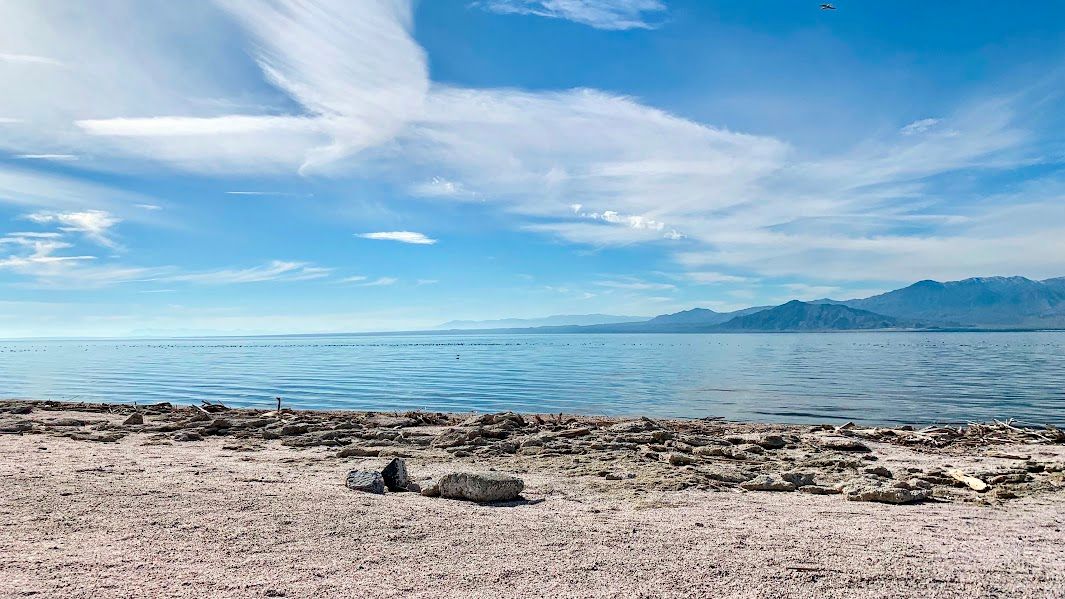
The southern end of the Salton Sea contains rich sources of lithium, a mineral used for electric car batteries, cellphones and other electronics. A few years ago California politicians raved about prospects for extracting the critical mineral from desert aquifers.
But lithium resources remain untapped, as plans to mine them falter amid legal challenges and funding problems.
The Hell's Kitchen project by Controlled Thermal Resources has been delayed by lawsuits arguing that the company neglected to address its environmental impacts. Last month an appeals court sent the environmental review back to Imperial County to correct deficiencies regarding water and air quality effects.
The appellate decision validates residents’ questions about the project, Luis Olmedo, executive director for one of the plaintiffs, Comite Civico del Valle, said in a statement to CalMatters.
“Do we have enough water to support these projects over the long term?” he wrote. “What happens to our communities if Colorado River supplies are reduced? And what happens to our air as less water reaches the Salton Sea? The Court of Appeal made clear that those questions deserve credible and well supported answers.”
Lauren Rose, communications officer for Controlled Thermal Resources, said the company is reviewing legal options and would not comment because of ongoing litigation. Two other lithium projects are in various stages of development, but none are near full operation.
Newsom’s office didn’t respond to CalMatters’ questions about lithium development, but referred them to the California Energy Commission.
“Though efforts to develop the resources have been slower than anticipated – largely due to global lithium markets and prices – progress is being made, with developers securing funding to advance projects,” said Niki Woodard, communications director for the commission.
Imperial County Supervisor Ryan Kelley said the setbacks aren’t surprising; lithium mining is technically tricky and procedures to extract it from thermal aquifers are new.
“It’s not an easy thing to work with,” he said. “It’s a hot resource with a lot of solids in it, and that’s why the lithium is there. So we’re still very optimistic and encouraged by the companies that are still proceeding.”
The buzz over Lithium Valley
In 2023, Newsom visited the Salton Sea to promote the region as a global center for lithium mining and battery production that would drive a worldwide transition to zero-emission vehicles.
“We’ve been all-in on Lithium Valley, building up a global hub for clean energy and making sure that local communities benefit from this once-in-a-generation opportunity,” he declared.
The Salton Sea is a hypersaline lake in an active volcanic zone that includes five small lava domes, boiling mud pots and underground reservoirs of hot, mineral rich water. Geothermal plants tower over the desert floor with arrays of tanks, pipes and cooling towers that turn steam from the thermal aquifers into electricity.
Those aquifers also contain the highest concentrations of lithium of any geothermal brine in the world, according to the California Energy Commission. The federal Lawrence Berkeley National Laboratory found that there’s enough lithium to make 375 million batteries for electric vehicles, more than the number of cars on the road in the U.S. now.
Developers propose extracting lithium and other minerals such as zinc and manganese from the brine, through a closed loop system they promise will be cleaner and safer than hard rock mines in Australia and China, or evaporation ponds in South America.
For years California politicians were giddy about prospects for a domestic source of the key mineral. In 2021 the state convened the Lithium Valley Commission, which offered recommendations on mining and marketing the mineral, and addressed economic and environmental issues involved in its extraction.
In 2022 Newsom promoted the plan with former President Joe Biden, and directed more than $100 million toward research and development of lithium extraction.
Community groups raise concerns
As companies geared up to start lithium production, environmental advocates put the brakes on plans for Hell’s Kitchen, which would extract up to 300,000 metric tons of lithium carbonate per year and generate almost 50 megawatts of geothermal energy: enough to power tens of thousands of homes.
Comite Civico del Valle, a social justice organization, and Earthworks, an energy and mining watchdog group, challenged the Environmental Impact Report for the project in 2024. They argued that the company neglected potential problems with air quality, water use, hazardous materials and tribal cultural resources.
In January, 2025, a judge rejected their claim and gave Controlled Thermal Resources the go-ahead for Hell’s Kitchen, ruling that the company had met legal requirements for environmental review. Rodney Colwell, CEO of Controlled Thermal Resources, told CalMatters at that time that he expected to start construction shortly, but said the lawsuit put the project at risk and disrupted its financing, setting it back a year or more.
In August an appeals court reversed parts of that decision. It ruled that the project’s environmental documents don’t prove that the Imperial Irrigation District can supply water to the project for 50 years, nor account for possible cuts to Colorado River water supplies.
It also found that the environmental review didn’t address how water use could affect air quality by drying out the Salton Sea lakebed. The court kicked the environmental review back to Imperial County, ordering it to remedy those deficiencies.
“What we see is a big win for the people and environment of Imperial County,” said Jared Naimark, western senior mining manager at Earthworks.
He said the appeals court vindicated complaints that the project didn’t clearly identify its water source.
“They can't just say, we'll figure that out later,” Naimark said. “They need to show their work on where that water is going to come from now, and analyze the impacts of it.”
How lithium development affects people in Imperial County
Although the appellate court concluded that the company properly consulted with local tribal representatives, they want more of a say. Kwaaymii tribal elder Carmen Lucas is calling for protection of key sites, including mudpots that tribes consider the heartbeat of Mother Earth.
“From the beginning I have made it clear that I’m not opposed to development,” she said. “I am asking that it be done in a balanced way.”
She’s pushing to place the Salton Sea area known as the Southeast Lake Cahuilla Active Volcanic Cultural District on the National Historic Register. While that designation doesn’t necessarily limit development, it would affirm the region’s value.
“It’s clear to me that Washington is looking at California’s desert as a wasteland,” Lucas said. “There's a beauty in the desert, and it opens the door for creativity and imagination.”
The county is reviewing the appellate ruling and deciding its next steps, Bari Bean, the assistant executive officer for Imperial County, wrote in a statement to CalMatters.
In the meantime workers who trained for jobs in the upcoming lithium industry are sidelined, as facilities where they hoped to work are stalled.
San Diego State University opened an $80 million STEM facility in Imperial County to train workers to “reap the benefits of the ‘white gold,’” SDSU president Adela de la Torre wrote in CalMatters. “But unless progress in Lithium Valley accelerates rapidly, these students will graduate into an empty local job market,” she warned.
Last year the Trump administration slashed federal clean energy commitments and Congress eliminated federal tax credits for electric cars, leaving lithium development uncertain.
And the Imperial County Board of Supervisors adopted a controversial plan for splitting up lithium tax revenue that reserves most of the money for the county, while dividing remaining funds between local cities based on size, instead of how close they’ll be to lithium facilities.
What happens next?
Despite legal delays, the Hell’s Kitchen project has plodded forward with some notable changes to its business strategy. Last year the Army Corps of Engineers extended permitting deadlines for the project under a designation called FAST-41.
Then in January Controlled Thermal Resources announced a new venture to supply geothermal power for data centers, signalling that it may be shifting its focus from lithium mining to powering artificial intelligence.
Shortly after that it merged with a U.S. firm, Plum Acquisition Corp. to become a publicly traded company and accelerate the first phase of construction for Hell’s Kitchen.
Two other projects are also in the works. Berkshire Hathaway’s CalEnergy operates 10 existing geothermal plants at the Salton Sea and recently completed a pilot of direct lithium extraction, then converted it into battery-grade lithium compounds, Christina Fleming, senior vice president at Berkshire Hathaway Energy Renewables, told CalMatters in a statement.
It plans to launch a demonstration plant in Calipatria by the end of the year and operate it through 2027. Then it will decide whether to build a full-scale commercial project, which could produce 90,000 metric tons of lithium per year: enough for 11 million EV batteries.
A third company, EnergySource Minerals, has permits for a lithium facility called Project ATLiS in the Imperial Valley. Company officials didn’t provide a timeline for the project, but said it’s moving ahead and could bring millions of dollars in tax revenue and hundreds of construction and operations jobs.
“We are actively engaged with all stakeholders to move this project forward as quickly as possible,” said CEO Eric Spomer.
Imperial County aims to streamline and standardize lithium development by creating a Lithium Valley Specific Plan and Program Environmental Impact Report, which would establish a planning and environmental framework for future development.
“I wish we had something of the commodity being produced today, but if it’s going to be produced in the years to come, that’s a good thing,” Kelly said. “And it will be done in accordance with all of the rules and regulations of the state of California, which are not as easy as other states and other regions of the world.”
This article was originally published on CalMatters and was republished under the Creative Commons Attribution-NonCommercial-NoDerivatives license.
Learn More About Salton City & Salton Sea
>> Salton Sea Tales: A Potentially True Adventure is a speculative eco-thriller novel by Gabriel Wisdom