Upcoming Events
Don't miss what's happening in Borrego Springs
View Event
No upcoming events at this time. Check back soon!
Upcoming Events
Don't miss what's happening in Borrego Springs
View Event
No upcoming events at this time. Check back soon!
Upcoming Events
Don't miss what's happening in Borrego Springs
View Event
No upcoming events at this time. Check back soon!

Slide title
Write your caption hereButton
Slide title
Write your caption hereButton
Slide title
Write your caption hereButton
Explore | Discover | Support Local
11,000+ Monthly Website Views!
Connecting Borrego Springs with readers across San Diego County and beyond.

Current News & Events Updated Daily

-

Slide title
Write your caption hereButton -

Slide title
Write your caption hereButton -

Slide title
Write your caption hereButton -

Slide title
Write your caption hereButton -

Slide title
Write your caption hereButton -

Slide title
Write your caption hereButton -

Slide title
Write your caption hereButton
Thanks to Our Community Sponsors

By Matt Bosson
•
September 27, 2026
The great free movies continue in October, with a French psychological thriller – Les Diaboliques, and Emma Stone in her Oscar winning performance – Poor Things. All screenings are held on Wednesday evenings at 7pm at the Borrego Springs Performing Arts Center, 590 Palm Canyon Drive, Borrego Springs, CA 92004 . Our full schedule for 2026 is posted on the BSFI website: www.borregospringsfilminstitute.org . Please check the website for the most up to date information. Here are the movies coming in October: Wednesday, October 7, 2026 at 7pm – Les Diaboliques – 1955 – Not Rated – 1h 47m Les Diaboliques , released in the United States simply as Diabolique , is a landmark of psychological suspense and one of the most influential thrillers in the history of cinema. A French psychological horror thriller co-written and directed by Henri-Georges Clouzot, it stars Simone Signoret, Véra Clouzot, Paul Meurisse, and Charles Vanel, and is based on the 1952 novel Celle qui n'était plus by Pierre Boileau and Thomas Narcejac. Set in a decrepit French boarding school for boys, the film follows the wife (Véra Clouzot) and mistress (Signoret) of a sadistic, irredeemably cruel headmaster (Meurisse), who conspire to murder him and disguise his death as an accidental drowning. When his body vanishes from the school swimming pool, however, and a ragtag detective (Vanel) begins poking around, the two women start experiencing chilling evidence that their tormentor may not be dead after all. Clouzot had optioned the rights to the source novel immediately after finishing The Wages of Fear (1953), reading it through the night and securing the rights the next morning — in doing so, narrowly preventing Alfred Hitchcock from acquiring them. Les Diaboliques went on to have an enormous influence on Hitchcock and directly inspired his horror-classic, Psycho (1960). The film premiered in Paris in January 1955, where it ran exclusively for seventeen weeks, and in the United States its press screening was held on Halloween 1955. Critically, the film was a sensation, earning the reputation that has followed it ever since: the Criterion Collection describes it as "a heart-grabbing benchmark in horror filmmaking," calling it "an almost perfect movie about a very nearly perfect murder," and the National Board of Review named it among the best foreign films of 1955, calling it "a genuine thriller — a shocking, satisfying chunk of Grand Guignol psychological suspense." The film earned Clouzot the enduring sobriquet of "the French Hitchcock," though many have argued, with considerable justification, that the comparison undersells him. In French with English subtitles. Wednesday, October 21, 2026 at 7pm – Poor Things – 2023 – Rated R – 2h 21m Poor Things is a wildly inventive, exhilaratingly strange, and visually ravishing work of absurdist cinema that stands as one of the defining films of recent years. Directed by Yorgos Lanthimos and written by Tony McNamara, based on the 1992 novel by Alasdair Gray, the film is an Ireland-UK-US co-production starring Emma Stone, Mark Ruffalo, Willem Dafoe, Ramy Youssef, Christopher Abbott, and Jerrod Carmichael. The story follows Bella Baxter (Stone), a young woman brought back to life by the brilliant and unorthodox scientist Dr. Godwin Baxter (Dafoe), who, hungry for the worldliness she lacks, runs off with Duncan Wedderburn (Ruffalo), a slick and debauched lawyer, on a whirlwind adventure across the continents, growing ever more steadfast in her determination to stand for equality and liberation. The film is a Frankenstein story refracted through feminist philosophy, dark comedy, and steampunk visual extravagance, moving from black-and-white to lush, outlandish color as Bella's consciousness expands. Poor Things premiered at the 80th Venice International Film Festival in September 2023, where it won the Golden Lion, and was released theatrically in the United States by Searchlight Pictures in December 2023. It became Lanthimos's highest-grossing film, earning over $117 million worldwide on a budget of $35 million. Critically it was celebrated with tremendous enthusiasm, where the consensus describes it as "wildly imaginative and exhilaratingly over the top — a bizarre, brilliant tour de force for director Yorgos Lanthimos and star Emma Stone." The film was named one of the top ten films of 2023 by both the National Board of Review and the American Film Institute. At the awards ceremonies, it swept the season: it won the Golden Globe for Best Motion Picture — Musical or Comedy and Best Actress for Stone, five BAFTAs including Best Actress in a Leading Role, and at the 96th Academy Awards received eleven nominations — second only to Oppenheimer — winning four: Best Actress for Stone, Best Production Design, Best Costume Design, and Best Makeup and Hairstyling. And looking forward, here are the scheduled movies coming in November and December: Wednesday, November 4, 2026 at 7pm – Babette’s Feast – 1987 – Rated G – 1h 42m Directed by Gabriel Axel and adapted from a short story by Isak Dinesen, the film tells the lovingly layered tale of a French housekeeper with a mysterious past who brings quiet revolution in the form of one exquisite meal to a circle of starkly pious villagers in late nineteenth-century Denmark. The title role of Babette is played by Stéphane Audran — with Birgitte Federspiel and Bodil Kjer as the two devout sisters into whose isolated lives Babette quietly, transformatively arrives. Babette’s Feast became the first Danish film ever to win the Academy Award for Best Foreign Language Film. Among its many admirers is Pope Francis, who named it his favorite film of all time. In French, Danish, and Swedish with English subtitles. Wednesday, November 18, 2026 at 7pm – The Daytrippers – 1997 – Rated R – 1h 27m Written and directed by Greg Mottola in his feature debut, the film follows the distraught Eliza (Hope Davis), who discovers a love letter written to her husband (Stanley Tucci) by an unknown woman and turns to her tight-knit Long Island family for help — sending the whole clan, including a strong-willed mom (Anne Meara), a taciturn dad (Pat McNamara), and a jaded sister (Parker Posey) with her pretentious boyfriend (Liev Schreiber) in tow, piling into a station wagon and heading into Manhattan to find out the truth. With its droll humor and bittersweet emotional heft, The Daytrippers announced the arrival of an unassumingly sharp-witted new talent on the 1990s indie film scene. Critics were largely enthusiastic: the Washington Post called it proof that "a great movie isn't a matter of dollars, so much as creativity," while Newsweek noted that "thanks to the superb cast and Mottola's deft touch, this modest-looking comedy proves quite memorable." Wednesday, December 2, 2026 at 7pm – Brief Encounter – 1945 – Not Rated – 1h 26m Directed by David Lean and adapted from Noël Coward's one-act play Still Life, the film stars Celia Johnson and Trevor Howard as two married strangers who fall into a fleeting, unconsummated love affair after a chance meeting at a railway station, told largely in flashback through Johnson's internal narration. Restrained, quietly devastating, and shot in stark black-and-white with Rachmaninoff's Second Piano Concerto as its emotional backbone, Brief Encounter became a landmark of British cinema for its portrayal of repressed longing and moral duty. It was widely praised on release — earning the Grand Prix at the first Cannes Film Festival in 1946 and Academy Award nominations for Lean's direction, Johnson's performance, and the screenplay — and it continues to be regarded by critics as one of the finest British films ever made, frequently topping "greatest films" lists for its emotional precision and understatement. Wednesday, December 16, 2026 at 7pm – The Holdovers – 2023 – Rated R – 2h 13m Directed by Alexander Payne, the film is set at a New England boarding school over the 1970 Christmas break, where curmudgeonly ancient history teacher Paul Hunham (Paul Giamatti) is stuck supervising the handful of students with nowhere else to go. As the group dwindles to just one, sharp-tongued troublemaker Angus Tully (Dominic Sessa), Paul and the school's head cook, Mary Lamb (Da'Vine Joy Randolph), who is grieving the loss of her son, form an unlikely bond over their shared isolation. Written by David Hemingson, The Holdovers was a major critical success, earning five Academy Award nominations including Best Picture, with Randolph winning Best Supporting Actress. Critics praised its warmth, wit, and old-fashioned craftsmanship, with many calling it one of the finest films of the year and a worthy heir to the character-driven dramas of the era it evokes. Wednesday, December 30, 2026 at 7pm – The Thin Man – 1934 – Not Rated – 1h 33m Directed by W.S. Van Dyke, the film stars William Powell and Myrna Loy as Nick and Nora Charles, a witty, hard-drinking former detective and his wealthy wife who are pulled back into sleuthing when an old acquaintance's inventor father goes missing amid a string of murders. Their affectionate, wisecracking rapport, as much as the mystery itself, became the heart of the film, setting the template for the screwball detective comedy. Based on Dashiell Hammett's novel of the same name, The Thin Man was a critical and commercial sensation on release, earning four Academy Award nominations including Best Picture, Best Director, and Best Actor for Powell. It remains a landmark of 1930s Hollywood, celebrated for launching a beloved franchise and for Powell and Loy's chemistry, still considered one of the great screen partnerships in film history. This season’s BSFI movie screenings are being generously underwritten by the Borrego Valley Endowment Fund (BVEF). See you at the movies!

By Andrea McKenna
•
September 26, 2026
Sunset Dinner Specials at La Casa del Zorro

By BSPAC
•
September 26, 2026
Borrego Springs Performing Arts Center is seeking sponsors for its November 21 fundraiser

By NBC Palm Springs
•
September 25, 2026
There are so many tales of the Salton Sea, it's hard to know what's really the truth.

By Anna Abatzoglou Executive Director, Borrego Valley Endowment Fund
•
September 24, 2026
Frugal Coyote is giving shoppers a new way to support Borrego Springs with its Nonprofit of the Month program.

By California Energy Commission
•
September 23, 2026
The goals of the Equitable Building Decarbonization Program are to reduce greenhouse gas (GHG) emissions in homes and advance energy equity. The Direct Install Program provides decarbonization retrofits to low- and moderate-income households. The Statewide Incentive Program incentivizes the increased adoption of low-carbon technologies. In addition to reducing GHG emissions, the Equitable Building Decarbonization Program will strive to encourage resiliency to extreme heat, improve indoor air quality, improve energy affordability, provide electric grid support, and increase payment of prevailing wage to the implementing workforce. Programs include: EBD Statewide Direct Install Program The Equitable Building Decarbonization Statewide Direct Install Program provides and installs energy-efficient upgrades to low-income households. EBD Tribal Direct Install Program The program will serve residential buildings owned or managed by a California Native American tribes, tribal organizations, or tribal members. EBD Statewide Incentive Program Loan loss reserve and interest rate buy downs to reduce the cost of loans for home energy retrofits that improve efficiency and reduce GHG emissions. Learn More: www.energy.ca.gov Contact: Equitable Building Decarbonization Program equitablebuildingdecarb@energy.ca.gov

By Andrea McKenna
•
September 22, 2026
Mid-century design and a community vision that began in 1965.

By Gabriel Wisdom, Ram Media Foundation
•
September 22, 2026
How a view from the sky and a friend’s desert retreat inspired the Pilot House at Borrego Valley Airport.

By Andrea McKenna
•
September 21, 2026
The Salton Sea was so named in 1905, but its history begins in the Salton Basin of ancient times – a time removed some 10,000 years.

By Andrea McKenna
•
September 20, 2026
Owner Cristina Serrentino offers Reiki sessions by appointment on Palm Canyon Drive.

By Elizabeth Rodriquez
•
September 20, 2026
Celebrate self-taught visionary artists on Friday, October 2, from 5–8 p.m.

By BSPAC
•
September 19, 2026
Turn Your Life Experiences Into a Story Worth Sharing

By By John Carroll / General Assignment Reporter & Anchor
•
September 18, 2026
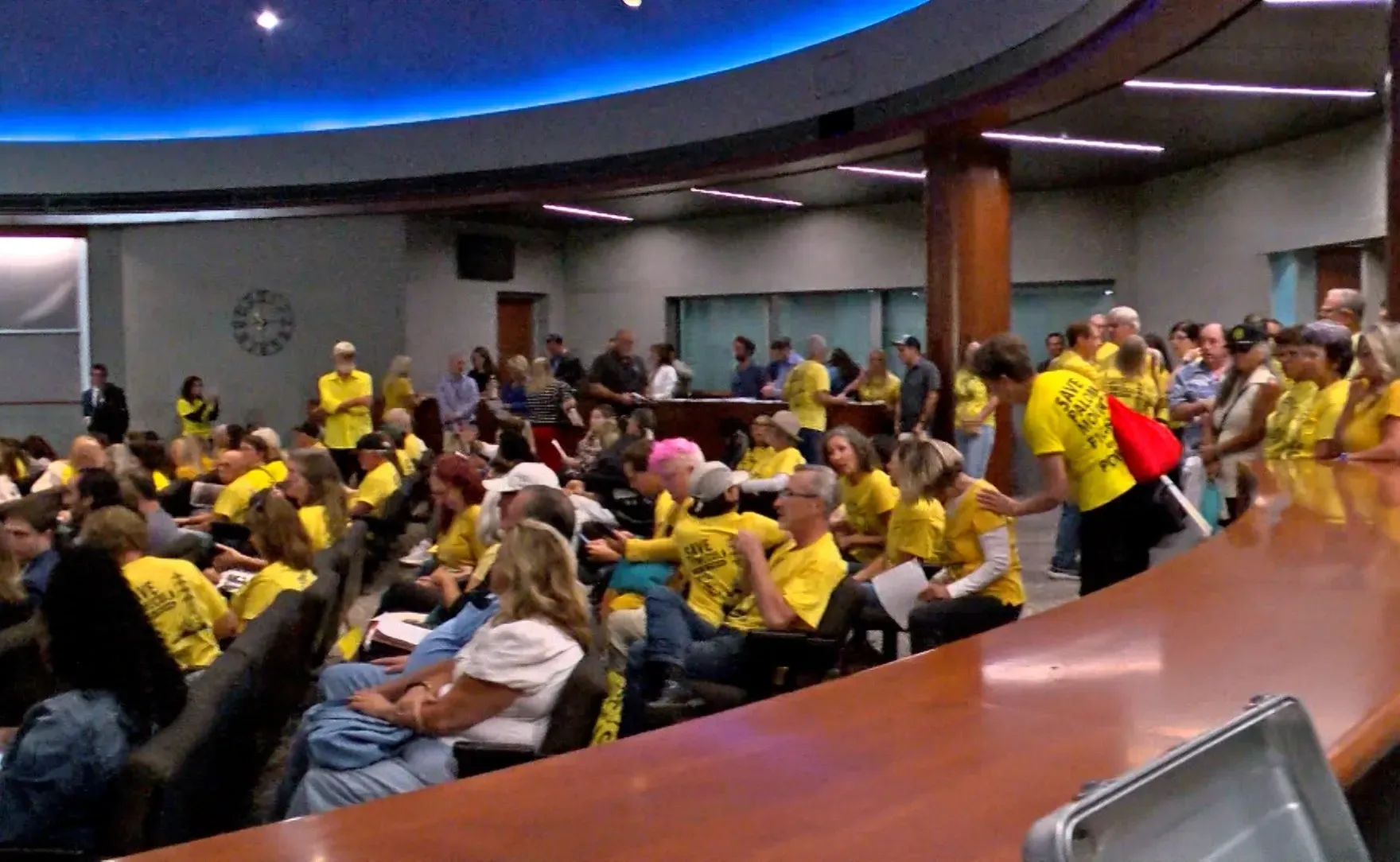
People wearing yellow shirts, who are opposed to the proposed Golden Pacific Powerlink, are shown at San Marcos City Hall on Sept. 17, 2026 . Photo by: Carolyne Corelis /KPBS
By Andrea McKenna
•
September 17, 2026
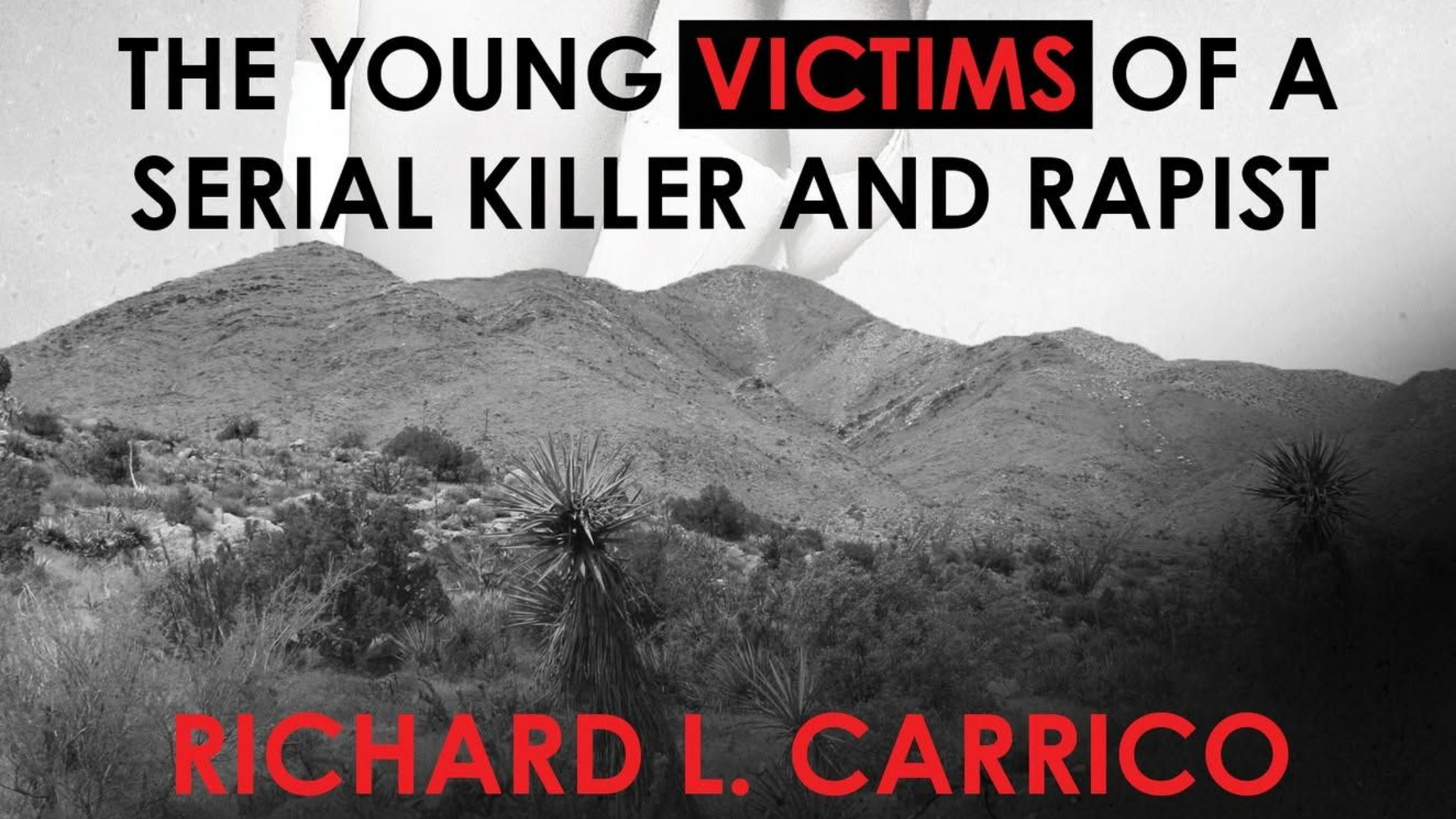
Los Angeles in the 1950s drew young women with promises of work, independence, and a chance at something bigger. Harvey Glatman saw an opportunity of another kind.

By Andrea McKenna
•
September 17, 2026
Family event will feature games, a puppet show, hayride, food, go-kart races and an evening Youth Zone The Christian Center will host its annual Harvest Festival on Saturday, Oct. 31, from 4 to 6 p.m., offering an afternoon of family-friendly activities for children and families in Borrego Springs. The festival will feature Bible-based games, a Gospel Castle, puppet show, hayride and go-kart races, along with free candy. Food and drinks will also be available for purchase, including hot dogs, chili dogs, nachos, Gatorade, soda and water. After the main festival activities conclude, the Christian Center’s Youth Zone will remain open from 6 to 8 p.m. for students in grades 6 through 12, with additional activities including go-kart races. The Christian Center is located at 675 Weather Vane Drive, Borrego Springs. For additional information, call 760-767-7447. Event Details: Saturday, Oct. 31, 4–6 p.m.; Youth Zone for grades 6–12 from 6–8 p.m.; Christian Center, 675 Weather Vane Drive, Borrego Springs. >> LEARN MORE

By Andrea McKenna
•
September 16, 2026
Rams Hill Looks Ahead in Latest Explorations Digital Magazine

By Andrea McKenna
•
September 16, 2026
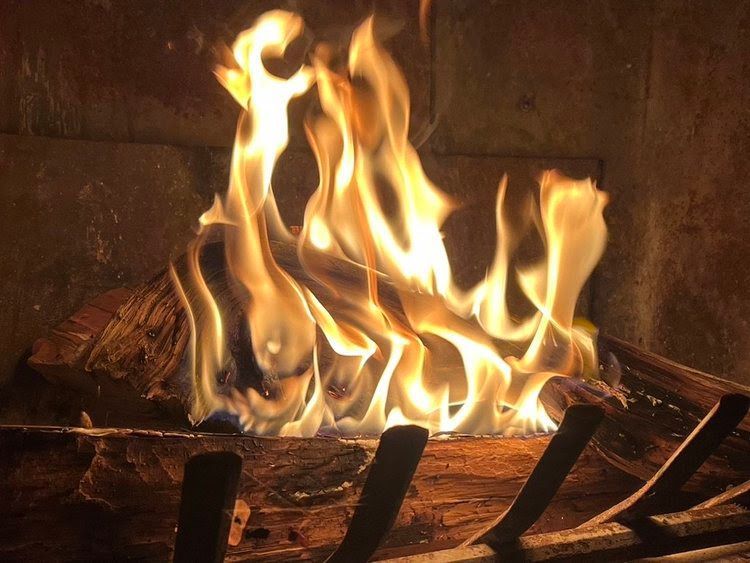
Borrego Springs practitioner and author Cherie Salma Bianco will lead a new monthly Women’s Community Fire Ceremony
By Under the Borrego Sky
•
September 15, 2026
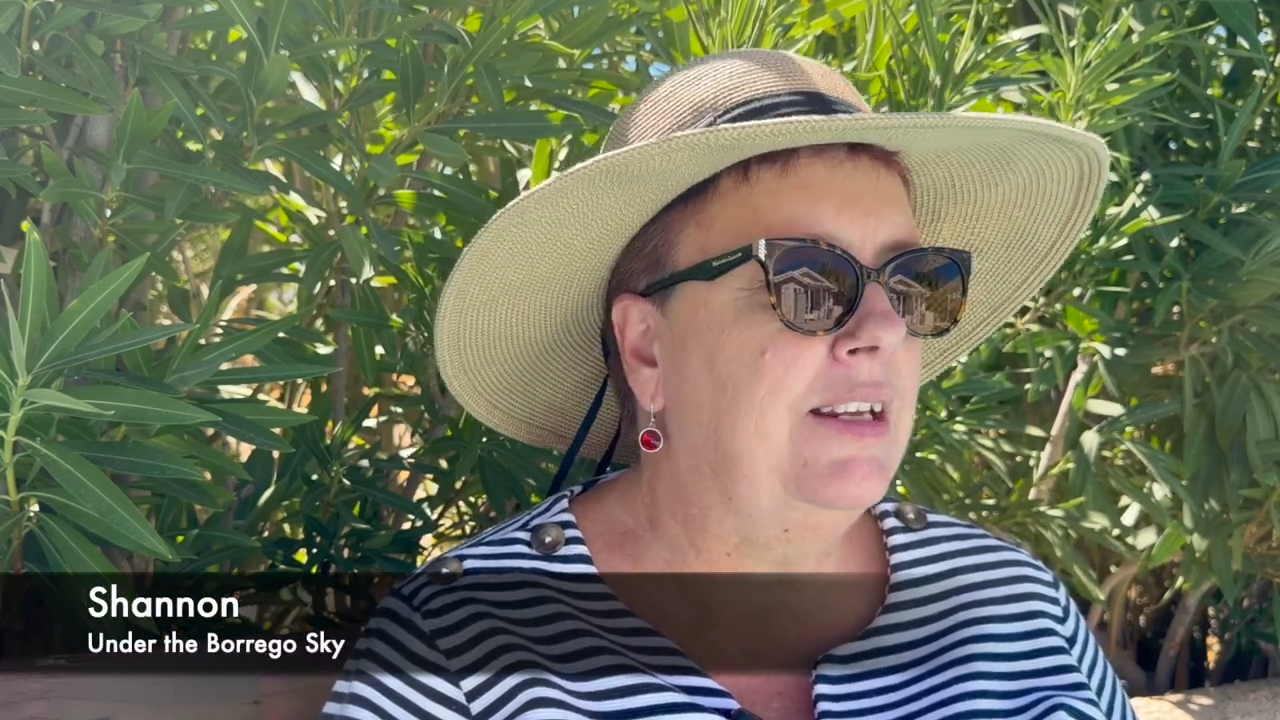
In this latest video from Under the Borrego Sky, take a look at life around town.

By Kori Suzuki / South Bay and Imperial Valley Reporter
•
September 15, 2026
Residents listen during a community town hall about the planned data center project in El Centro, California on April 13, 2026.

By Andrea McKenna
•
September 14, 2026
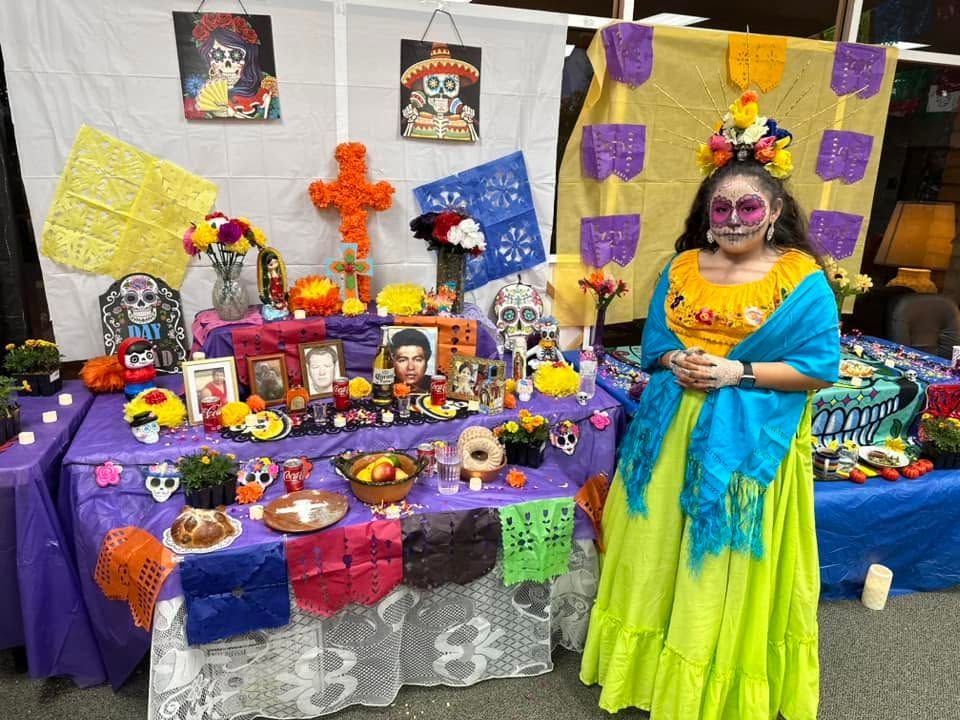
Meet Esmeralda Lopez-Garcia, a lifelong Borrego Springs resident, mother, community leader and OLAX founder whose heart for helping others has shaped generations.

By Phil Brigandi
•
September 13, 2026
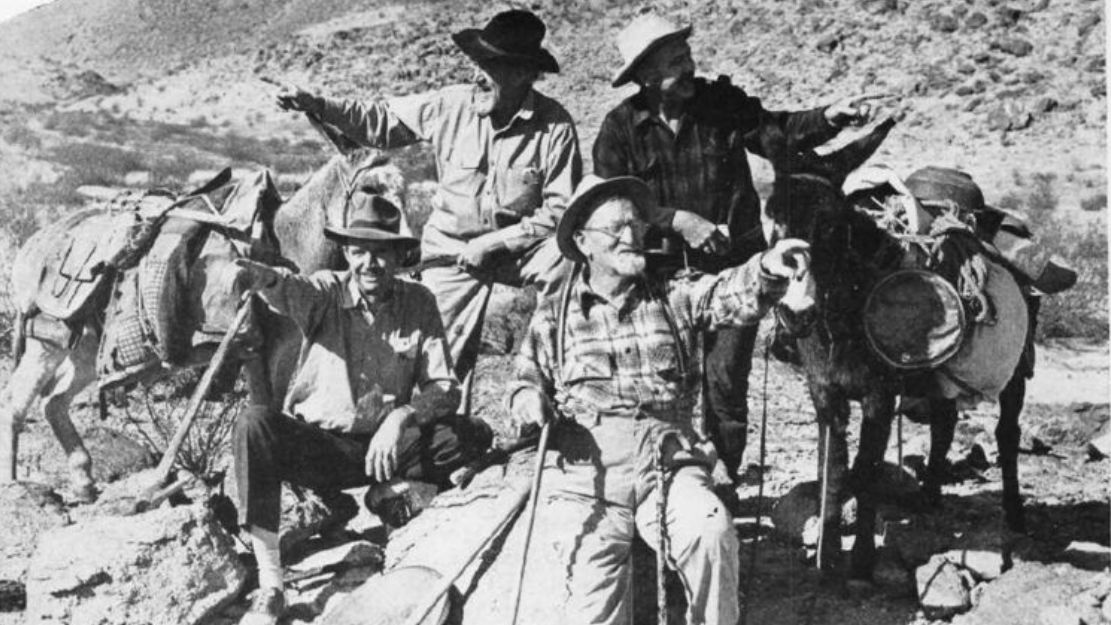
This column first ran ahead of the 50th annual Pegleg Smith Liars Contest in April 1998. Phil Brigandi, a longtime desert historian and four-time contest winner, died in 2019.

By Gabriel Wisdom, Ram Media Foundation
•
September 12, 2026
Borrego’s Bill Lawrence joined a sold-out San Diego History Center event celebrating Ted Giannoulas, The Famous San Diego Chicken, and the mascot’s remarkable 50-year legacy.

By Andrea McKenna
•
September 12, 2026
Family event will feature games, a puppet show, hayride, food, go-kart races and an evening Youth Zone The Christian Center will host its annual Harvest Festival on Saturday, Oct. 31, from 4 to 6 p.m., offering an afternoon of family-friendly activities for children and families in Borrego Springs. The festival will feature Bible-based games, a Gospel Castle, puppet show, hayride and go-kart races, along with free candy. Food and drinks will also be available for purchase, including hot dogs, chili dogs, nachos, Gatorade, soda and water. After the main festival activities conclude, the Christian Center’s Youth Zone will remain open from 6 to 8 p.m. for students in grades 6 through 12, with additional activities including go-kart races. The Christian Center is located at 675 Weather Vane Drive, Borrego Springs. For additional information, call 760-767-7447. Event Details: Saturday, Oct. 31, 4–6 p.m.; Youth Zone for grades 6–12 from 6–8 p.m.; Christian Center, 675 Weather Vane Drive, Borrego Springs. >> LEARN MORE
Times of San Diego.com: Gale Gordon: Lucille Ball’s TV nemesis who became Borrego Springs’ honorary mayor
By Matt Bosson
•
September 27, 2026
The great free movies continue in October, with a French psychological thriller – Les Diaboliques, and Emma Stone in her Oscar winning performance – Poor Things. All screenings are held on Wednesday evenings at 7pm at the Borrego Springs Performing Arts Center, 590 Palm Canyon Drive, Borrego Springs, CA 92004 . Our full schedule for 2026 is posted on the BSFI website: www.borregospringsfilminstitute.org . Please check the website for the most up to date information. Here are the movies coming in October: Wednesday, October 7, 2026 at 7pm – Les Diaboliques – 1955 – Not Rated – 1h 47m Les Diaboliques , released in the United States simply as Diabolique , is a landmark of psychological suspense and one of the most influential thrillers in the history of cinema. A French psychological horror thriller co-written and directed by Henri-Georges Clouzot, it stars Simone Signoret, Véra Clouzot, Paul Meurisse, and Charles Vanel, and is based on the 1952 novel Celle qui n'était plus by Pierre Boileau and Thomas Narcejac. Set in a decrepit French boarding school for boys, the film follows the wife (Véra Clouzot) and mistress (Signoret) of a sadistic, irredeemably cruel headmaster (Meurisse), who conspire to murder him and disguise his death as an accidental drowning. When his body vanishes from the school swimming pool, however, and a ragtag detective (Vanel) begins poking around, the two women start experiencing chilling evidence that their tormentor may not be dead after all. Clouzot had optioned the rights to the source novel immediately after finishing The Wages of Fear (1953), reading it through the night and securing the rights the next morning — in doing so, narrowly preventing Alfred Hitchcock from acquiring them. Les Diaboliques went on to have an enormous influence on Hitchcock and directly inspired his horror-classic, Psycho (1960). The film premiered in Paris in January 1955, where it ran exclusively for seventeen weeks, and in the United States its press screening was held on Halloween 1955. Critically, the film was a sensation, earning the reputation that has followed it ever since: the Criterion Collection describes it as "a heart-grabbing benchmark in horror filmmaking," calling it "an almost perfect movie about a very nearly perfect murder," and the National Board of Review named it among the best foreign films of 1955, calling it "a genuine thriller — a shocking, satisfying chunk of Grand Guignol psychological suspense." The film earned Clouzot the enduring sobriquet of "the French Hitchcock," though many have argued, with considerable justification, that the comparison undersells him. In French with English subtitles. Wednesday, October 21, 2026 at 7pm – Poor Things – 2023 – Rated R – 2h 21m Poor Things is a wildly inventive, exhilaratingly strange, and visually ravishing work of absurdist cinema that stands as one of the defining films of recent years. Directed by Yorgos Lanthimos and written by Tony McNamara, based on the 1992 novel by Alasdair Gray, the film is an Ireland-UK-US co-production starring Emma Stone, Mark Ruffalo, Willem Dafoe, Ramy Youssef, Christopher Abbott, and Jerrod Carmichael. The story follows Bella Baxter (Stone), a young woman brought back to life by the brilliant and unorthodox scientist Dr. Godwin Baxter (Dafoe), who, hungry for the worldliness she lacks, runs off with Duncan Wedderburn (Ruffalo), a slick and debauched lawyer, on a whirlwind adventure across the continents, growing ever more steadfast in her determination to stand for equality and liberation. The film is a Frankenstein story refracted through feminist philosophy, dark comedy, and steampunk visual extravagance, moving from black-and-white to lush, outlandish color as Bella's consciousness expands. Poor Things premiered at the 80th Venice International Film Festival in September 2023, where it won the Golden Lion, and was released theatrically in the United States by Searchlight Pictures in December 2023. It became Lanthimos's highest-grossing film, earning over $117 million worldwide on a budget of $35 million. Critically it was celebrated with tremendous enthusiasm, where the consensus describes it as "wildly imaginative and exhilaratingly over the top — a bizarre, brilliant tour de force for director Yorgos Lanthimos and star Emma Stone." The film was named one of the top ten films of 2023 by both the National Board of Review and the American Film Institute. At the awards ceremonies, it swept the season: it won the Golden Globe for Best Motion Picture — Musical or Comedy and Best Actress for Stone, five BAFTAs including Best Actress in a Leading Role, and at the 96th Academy Awards received eleven nominations — second only to Oppenheimer — winning four: Best Actress for Stone, Best Production Design, Best Costume Design, and Best Makeup and Hairstyling. And looking forward, here are the scheduled movies coming in November and December: Wednesday, November 4, 2026 at 7pm – Babette’s Feast – 1987 – Rated G – 1h 42m Directed by Gabriel Axel and adapted from a short story by Isak Dinesen, the film tells the lovingly layered tale of a French housekeeper with a mysterious past who brings quiet revolution in the form of one exquisite meal to a circle of starkly pious villagers in late nineteenth-century Denmark. The title role of Babette is played by Stéphane Audran — with Birgitte Federspiel and Bodil Kjer as the two devout sisters into whose isolated lives Babette quietly, transformatively arrives. Babette’s Feast became the first Danish film ever to win the Academy Award for Best Foreign Language Film. Among its many admirers is Pope Francis, who named it his favorite film of all time. In French, Danish, and Swedish with English subtitles. Wednesday, November 18, 2026 at 7pm – The Daytrippers – 1997 – Rated R – 1h 27m Written and directed by Greg Mottola in his feature debut, the film follows the distraught Eliza (Hope Davis), who discovers a love letter written to her husband (Stanley Tucci) by an unknown woman and turns to her tight-knit Long Island family for help — sending the whole clan, including a strong-willed mom (Anne Meara), a taciturn dad (Pat McNamara), and a jaded sister (Parker Posey) with her pretentious boyfriend (Liev Schreiber) in tow, piling into a station wagon and heading into Manhattan to find out the truth. With its droll humor and bittersweet emotional heft, The Daytrippers announced the arrival of an unassumingly sharp-witted new talent on the 1990s indie film scene. Critics were largely enthusiastic: the Washington Post called it proof that "a great movie isn't a matter of dollars, so much as creativity," while Newsweek noted that "thanks to the superb cast and Mottola's deft touch, this modest-looking comedy proves quite memorable." Wednesday, December 2, 2026 at 7pm – Brief Encounter – 1945 – Not Rated – 1h 26m Directed by David Lean and adapted from Noël Coward's one-act play Still Life, the film stars Celia Johnson and Trevor Howard as two married strangers who fall into a fleeting, unconsummated love affair after a chance meeting at a railway station, told largely in flashback through Johnson's internal narration. Restrained, quietly devastating, and shot in stark black-and-white with Rachmaninoff's Second Piano Concerto as its emotional backbone, Brief Encounter became a landmark of British cinema for its portrayal of repressed longing and moral duty. It was widely praised on release — earning the Grand Prix at the first Cannes Film Festival in 1946 and Academy Award nominations for Lean's direction, Johnson's performance, and the screenplay — and it continues to be regarded by critics as one of the finest British films ever made, frequently topping "greatest films" lists for its emotional precision and understatement. Wednesday, December 16, 2026 at 7pm – The Holdovers – 2023 – Rated R – 2h 13m Directed by Alexander Payne, the film is set at a New England boarding school over the 1970 Christmas break, where curmudgeonly ancient history teacher Paul Hunham (Paul Giamatti) is stuck supervising the handful of students with nowhere else to go. As the group dwindles to just one, sharp-tongued troublemaker Angus Tully (Dominic Sessa), Paul and the school's head cook, Mary Lamb (Da'Vine Joy Randolph), who is grieving the loss of her son, form an unlikely bond over their shared isolation. Written by David Hemingson, The Holdovers was a major critical success, earning five Academy Award nominations including Best Picture, with Randolph winning Best Supporting Actress. Critics praised its warmth, wit, and old-fashioned craftsmanship, with many calling it one of the finest films of the year and a worthy heir to the character-driven dramas of the era it evokes. Wednesday, December 30, 2026 at 7pm – The Thin Man – 1934 – Not Rated – 1h 33m Directed by W.S. Van Dyke, the film stars William Powell and Myrna Loy as Nick and Nora Charles, a witty, hard-drinking former detective and his wealthy wife who are pulled back into sleuthing when an old acquaintance's inventor father goes missing amid a string of murders. Their affectionate, wisecracking rapport, as much as the mystery itself, became the heart of the film, setting the template for the screwball detective comedy. Based on Dashiell Hammett's novel of the same name, The Thin Man was a critical and commercial sensation on release, earning four Academy Award nominations including Best Picture, Best Director, and Best Actor for Powell. It remains a landmark of 1930s Hollywood, celebrated for launching a beloved franchise and for Powell and Loy's chemistry, still considered one of the great screen partnerships in film history. This season’s BSFI movie screenings are being generously underwritten by the Borrego Valley Endowment Fund (BVEF). See you at the movies!
By Andrea McKenna
•
September 26, 2026
Sunset Dinner Specials at La Casa del Zorro
By BSPAC
•
September 26, 2026
Borrego Springs Performing Arts Center is seeking sponsors for its November 21 fundraiser
By NBC Palm Springs
•
September 25, 2026
There are so many tales of the Salton Sea, it's hard to know what's really the truth.
By Anna Abatzoglou Executive Director, Borrego Valley Endowment Fund
•
September 24, 2026
Frugal Coyote is giving shoppers a new way to support Borrego Springs with its Nonprofit of the Month program.
By California Energy Commission
•
September 23, 2026
The goals of the Equitable Building Decarbonization Program are to reduce greenhouse gas (GHG) emissions in homes and advance energy equity. The Direct Install Program provides decarbonization retrofits to low- and moderate-income households. The Statewide Incentive Program incentivizes the increased adoption of low-carbon technologies. In addition to reducing GHG emissions, the Equitable Building Decarbonization Program will strive to encourage resiliency to extreme heat, improve indoor air quality, improve energy affordability, provide electric grid support, and increase payment of prevailing wage to the implementing workforce. Programs include: EBD Statewide Direct Install Program The Equitable Building Decarbonization Statewide Direct Install Program provides and installs energy-efficient upgrades to low-income households. EBD Tribal Direct Install Program The program will serve residential buildings owned or managed by a California Native American tribes, tribal organizations, or tribal members. EBD Statewide Incentive Program Loan loss reserve and interest rate buy downs to reduce the cost of loans for home energy retrofits that improve efficiency and reduce GHG emissions. Learn More: www.energy.ca.gov Contact: Equitable Building Decarbonization Program equitablebuildingdecarb@energy.ca.gov
By Andrea McKenna
•
September 22, 2026
Mid-century design and a community vision that began in 1965.
By Gabriel Wisdom, Ram Media Foundation
•
September 22, 2026
How a view from the sky and a friend’s desert retreat inspired the Pilot House at Borrego Valley Airport.
By Andrea McKenna
•
September 21, 2026
The Salton Sea was so named in 1905, but its history begins in the Salton Basin of ancient times – a time removed some 10,000 years.
By Andrea McKenna
•
September 20, 2026
Owner Cristina Serrentino offers Reiki sessions by appointment on Palm Canyon Drive.
By Elizabeth Rodriquez
•
September 20, 2026
Celebrate self-taught visionary artists on Friday, October 2, from 5–8 p.m.
By BSPAC
•
September 19, 2026
Turn Your Life Experiences Into a Story Worth Sharing
By By John Carroll / General Assignment Reporter & Anchor
•
September 18, 2026
People wearing yellow shirts, who are opposed to the proposed Golden Pacific Powerlink, are shown at San Marcos City Hall on Sept. 17, 2026 . Photo by: Carolyne Corelis /KPBS
By Andrea McKenna
•
September 17, 2026
Los Angeles in the 1950s drew young women with promises of work, independence, and a chance at something bigger. Harvey Glatman saw an opportunity of another kind.
By Andrea McKenna
•
September 17, 2026
Family event will feature games, a puppet show, hayride, food, go-kart races and an evening Youth Zone The Christian Center will host its annual Harvest Festival on Saturday, Oct. 31, from 4 to 6 p.m., offering an afternoon of family-friendly activities for children and families in Borrego Springs. The festival will feature Bible-based games, a Gospel Castle, puppet show, hayride and go-kart races, along with free candy. Food and drinks will also be available for purchase, including hot dogs, chili dogs, nachos, Gatorade, soda and water. After the main festival activities conclude, the Christian Center’s Youth Zone will remain open from 6 to 8 p.m. for students in grades 6 through 12, with additional activities including go-kart races. The Christian Center is located at 675 Weather Vane Drive, Borrego Springs. For additional information, call 760-767-7447. Event Details: Saturday, Oct. 31, 4–6 p.m.; Youth Zone for grades 6–12 from 6–8 p.m.; Christian Center, 675 Weather Vane Drive, Borrego Springs. >> LEARN MORE
By Andrea McKenna
•
September 16, 2026
Rams Hill Looks Ahead in Latest Explorations Digital Magazine
By Andrea McKenna
•
September 16, 2026
Borrego Springs practitioner and author Cherie Salma Bianco will lead a new monthly Women’s Community Fire Ceremony

Thank you to our community supporters!







Borrego Springs Weather
Loading current conditions...
Source: National Weather Service, Borrego station BRGSD





Upcoming Events
Don't miss what's happening in Borrego Springs















View Event
No upcoming events at this time. Check back soon!
People of Interest
Stories of the people shaping Borrego Springs and the surrounding desert region.