Andrea McKenna • September 20, 2026
Salton Sea Timeline
Share
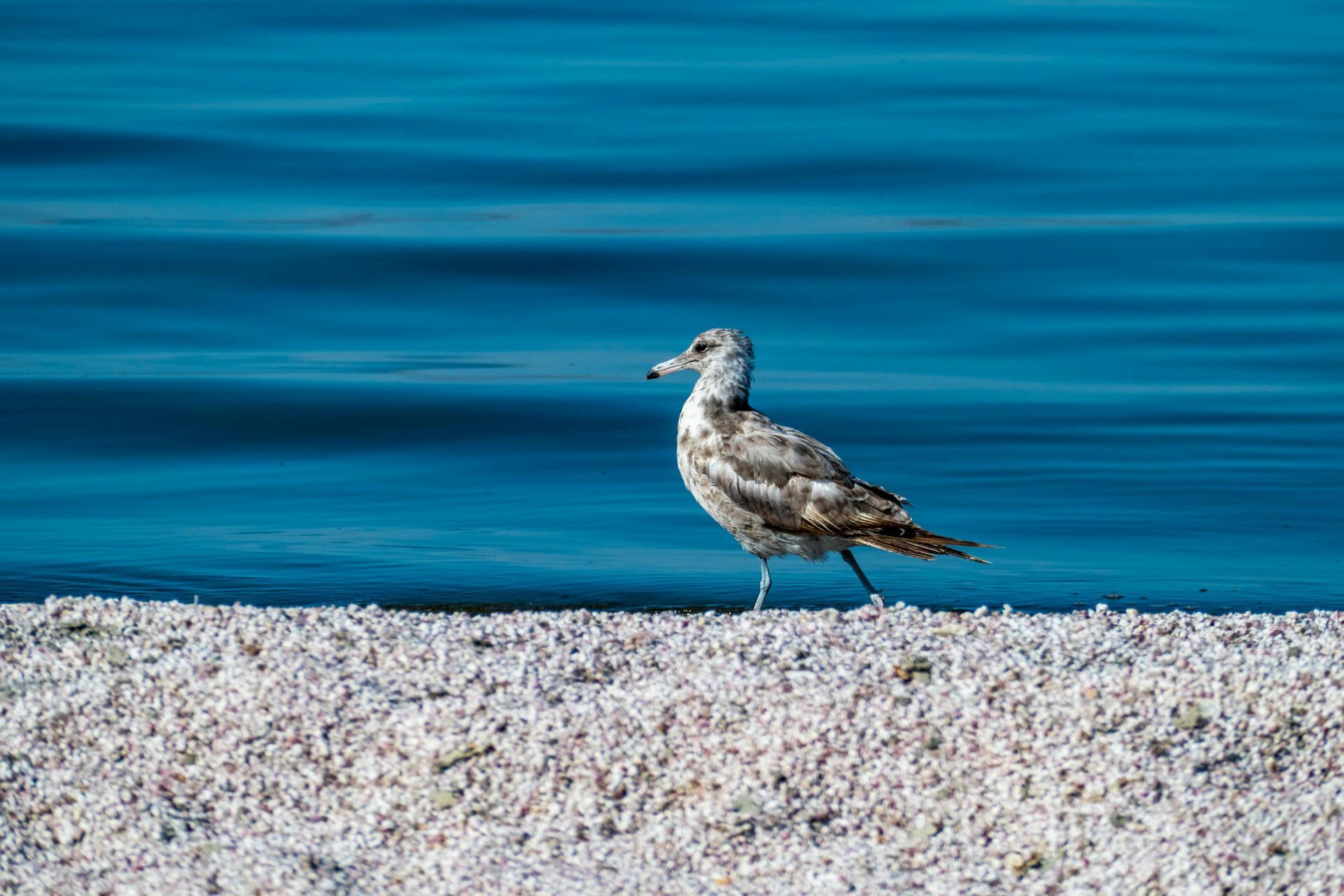
Salton Sea from the "beginning" to now..
From ancient Lake Cahuilla to lithium, and dust.
The Colorado River has filled and abandoned this basin for thousands of years. Only once did human hands do it.
The Ancient Basin
- c. 10,000 BC Native people are living in the Salton Basin.
- 700 AD The Colorado silts up its outlet to the Gulf of California and swings north through two overflow channels, creating Lake Cahuilla. Wet and dry cycles fill and empty it four times over the following centuries.
- 700 AD Tribes along the river plant in the Colorado floodplain, cross the dunes to work the lakeshore, and return home for the summer harvest.
- c. 1500 A large inflow swells the lake to roughly 26 times the size of today's Salton Sea. The old waterline is still visible on the surrounding mountains.
- 1540 Melchior Díaz travels up the mouth of the river later called the Colorado and sends parties toward the present Imperial Valley — the first Spanish exploration of the delta.
- 1604 Juan de Oñate, Spanish governor of New Mexico, gives the river its name.
- 1700–1750 The last major filling of Lake Cahuilla.
- 1774 Juan Bautista de Anza leads the first large European party through what is now the Imperial Valley. The sink is a dry lakebed again. The Spanish make first contact with the Cahuilla, ancestors of today's Torres Martinez Desert Cahuilla Indians.
Floods and First Settlement
- c. 1825 Trappers including Kit Carson, Jedediah Smith and William Wolfskill reach the lower Colorado and the Salton Sink.
- 1840–1867 The Colorado floods into the sink repeatedly — recorded in 1840, 1849, 1852, 1859 and 1867. The New River may have formed during the 1840 flood.
- 1849 Gold seekers begin crossing the valley on their way north, entering through Carrizo Creek and Warner's Hot Springs.
- 1853 The Imperial Valley is identified as a potential desert garden if it can be irrigated.
- 1876 The federal government establishes the Torres Martinez Desert Cahuilla Indian Reservation with a grant of 640 acres.
- 1891 Another flood forms a lake of about 100,000 acres. Explorers find the mouth of the Alamo River and its connection to the Colorado. Twenty thousand acres on the north side of the sink are withdrawn from public use for the Torres Martinez band.
- 1892 The New Liverpool Salt Company begins mining a salt marsh west of the railroad line.
The Accident, 1901–1910
- 1901 The California Development Company digs the Imperial Canal, bringing Colorado River water to the Imperial Valley.
- 1904 Silt chokes the canal. Engineers cut the Colorado's west bank to restore flow.
- 1905 Floodwaters break through the temporary diversion. Nearly the entire river turns into the sink, and the present-day Salton Sea begins to form.
- 1906 The flood continues, washing out a chain of lakes and threatening the valley's young farms. George Wharton James reports enormous concentrations of waterfowl and pelicans. The Sea is measured at 195 feet below sea level.
- 1907 Southern Pacific Railroad finally closes the breach in February. Sport fishing is promoted at the new lake the same year.
- 1908 Joseph Grinnell surveys the refilled lake and finds breeding colonies of cormorants and white pelicans.
- 1909 Expecting the Sea to evaporate by the 1920s, the government reserves another 10,000 acres of submerged land in trust for the Torres Martinez band.
- 1910 Harold Bell Wright turns the flood and the fight to close it into the bestseller The Winning of Barbara Worth.
The Resort Years
- 1911 The Imperial Irrigation District is formed and talk begins of a new canal to supply the valley.
- 1917–18 Netting mullet becomes a profitable wartime industry on the Sea.
- c. 1920 Mullet Island and the nearby mud pots become a popular tourist stop.
- 1924 President Coolidge sets aside the land beneath the Sea as a permanent drainage reservoir.
- 1928 Congress authorizes Boulder Dam and the All-American Canal, which will end the flooding for good.
- 1930 The Salton Sea Wildlife Refuge is established for ducks, geese and shorebirds.
- 1935 The Sea's level is measured at 248 feet below sea level. Construction on the All-American Canal had begun the year before; the Coachella Canal follows in 1938.
- 1941–45 With German submarines making ocean fishing dangerous, commercial crews supply coastal markets with Salton Sea mullet.
- 1944–45 B-29 crews of the 393rd Heavy Bombardment Squadron, under Lt. Col. Paul Tibbets, secretly drop dummy atomic bombs into the Sea. On August 6, 1945, Tibbets and the crew of the Enola Gay drop the real one over Hiroshima.
- 1942–48 The All-American Canal begins serving the Imperial Valley in 1942; the Coachella branch follows in 1948.
- 1950–51 Orangemouth corvina is established as the Sea's first successful saltwater game fish. Sixty-five sargo are introduced and multiply into the most commonly caught fish in the lake.
- 1955 Salton Sea State Park is dedicated — at the time the second largest state park in California.
- 1956 The Sea stands at 234.5 feet below sea level.
- 1958 The M. Penn Phillips Co. lays out a community on the west shore and calls it Salton City.
- 1960 North Shore Beach and Yacht Club Estates opens on the north side of the Sea.
- 1961 The California Department of Fish and Game predicts rising salinity will kill the Sea by 1980 or 1990.
Warning Signs
- 1968 Surface elevation is recorded at 233 feet below sea level. In her book on the Imperial Valley, Tracey Henderson writes that the salinity threat grows more serious every year and may be beyond fixing by 1972.
- 1974 A diking system is floated as a way to cut salinity.
- 1976–77 Tropical storms Kathleen and Doreen — two hundred-year storms in two years — flood farmland and shoreline resorts. Seven wetter than average years follow.
- 1979 Elevation recorded at 228 feet below sea level.
- 1985–86 Salinity passes 40 ppt. The state advises adults to limit how much Salton Sea fish they eat because of selenium.
- 1988 The Salton Sea Task Force forms, the forerunner of the Salton Sea Authority.
- 1992–94 Die-offs claim 150,000 eared grebes, then 20,000 more.
- 1993 The Salton Sea Authority is created by joint powers agreement among Riverside and Imperial counties, the Coachella Valley Water District and IID.
- 1996 Avian botulism kills an estimated 15 to 20 percent of the western white pelican population and more than a thousand endangered brown pelicans — the largest recorded die-off of an endangered species.
- 1997 Rep. Sonny Bono takes up restoration and forms a congressional task force. Interior Secretary Bruce Babbitt launches a multi-agency effort.
- 1998 Bono dies in a skiing accident; his wife Mary is elected and carries the cause. Congress passes the Salton Sea Reclamation Act, ordering a feasibility study.
- 1999 Oxygen crashes in August and 7.6 million tilapia and croakers die — even as studies call the Sea one of the world's most productive fisheries.
Plans, Pilots and a Water Deal
- 2000 The Authority and the Bureau of Reclamation release restoration plans. Pilot projects are approved and testing begins on evaporation and solar ponds to cut salinity.
- 2002 The Authority opposes water transfers that would drop the Sea's level, and breaks ground with Kent SeaTech on a project to strip nutrients from farm drain water using algae ponds and algae-eating fish.
- 2003 After years of talks, Southern California's water districts sign the Quantification Settlement Agreement, moving as much as 300,000 acre-feet a year from IID to San Diego and Coachella and setting aside about $133 million for Salton Sea mitigation. Frustrated by federal delay, the Authority votes to lead its own restoration planning.
- 2004–07 Federal law requires a feasibility study on a preferred restoration alternative. Reclamation issues its summary report and California finalizes its programmatic EIR in 2007.
- 2009–14 IID completes two phases of managed marsh in Niland. The Army Corps and the state release draft and final environmental documents for the Species Conservation Habitat project.
- 2015 The Little Hoover Commission holds hearings on the state's restoration governance. Reclamation measures salinity at roughly 57 ppt, and the state names Bruce Wilcox its first Assistant Secretary for Salton Sea Policy.
The Rules Change
- 2017 California releases the Salton Sea Management Program's Phase 1 10-Year Plan: roughly $400 million for dust control and habitat on 30,000 acres of exposed playa, with State Water Board oversight.
- 2017 On November 7 the Board adopts Order WR 2017-0134, setting annual acreage milestones and requiring a public progress workshop every year.
- 2017 QSA mitigation water deliveries end. Shoreline recession accelerates from about 40 feet a year to roughly 120 feet a year.
- 2018–19 The ten-year clock starts on replacing 30,000 acres of habitat. The Board holds its first annual workshop in March 2019.
- 2020 Salinity reaches roughly 74 ppt, up from about 46 ppt in 2005, all but eliminating the tilapia, pupfish and sailfin mollies that fed most of the Sea's birds.
Money, Habitat and Lithium
- 2021 General Motors partners with Controlled Thermal Resources to secure lithium from the Hell's Kitchen geothermal field.
- 2022 $250 million in Inflation Reduction Act funding is secured for the Salton Sea Management Program.
- 2023 Reclamation releases $70 million, letting the Species Conservation Habitat project grow from 4,100 acres toward roughly 8,000. Tropical Storm Hilary crosses the region in August.
- 2024 Reclamation adds $175 million, bringing federal funding to $245 million. SB 583 creates the Salton Sea Conservancy — the state's 11th and its first in more than 15 years. A groundbreaking on October 15 launches a 750-acre expansion of the habitat project, with major construction finished on the first 4,100 acres.
- 2025 An Imperial County judge clears Hell's Kitchen to resume construction in January. The first three square miles of habitat ponds fill in March, and the East Pond Expansion begins filling in May, carrying California past 2,000 habitat acres. The Sea stands at 241.87 feet below sea level, 13 feet below its 2003 baseline, with 36,500 acres of surface lost. SB 105 funds the new Conservancy.
- 2026 A 20-member Conservancy board is appointed to oversee long-term operation of the restoration projects. The habitat project is now planned at roughly 9,500 acres at full buildout. Controlled Thermal Resources agrees to a $4.7 billion merger to fund Hell's Kitchen, while an appeals court sends its environmental review back to Imperial County over water and air quality questions. The lithium remains in the ground.
A note on the numbers.
Elevation and salinity figures move every year.
Current readings are published by the Pacific Institute and the California Natural Resources
Agency's annual Salton Sea report.
Learn More About The Salton Sea
California's Lithium Valley faces delays in mining projects due to legal and environmental issues. Stay updated on the latest developments.
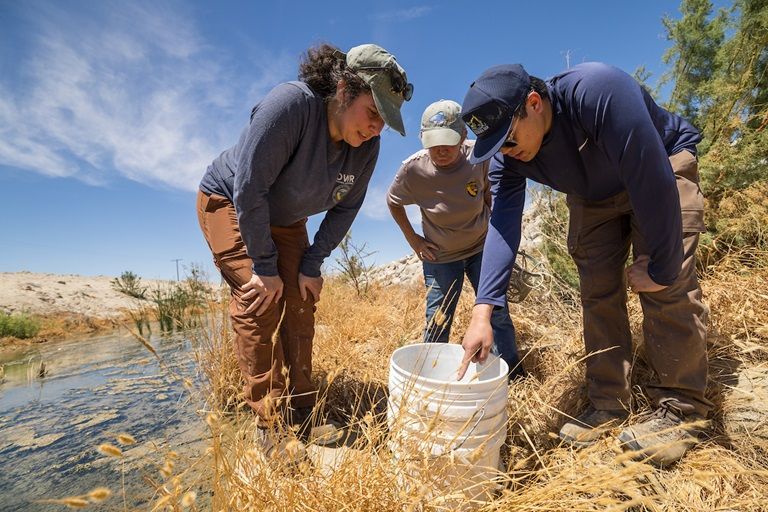
Learn how DWR scientists study the endangered desert pupfish in extreme heat. Read about their conservation efforts and challenges faced.
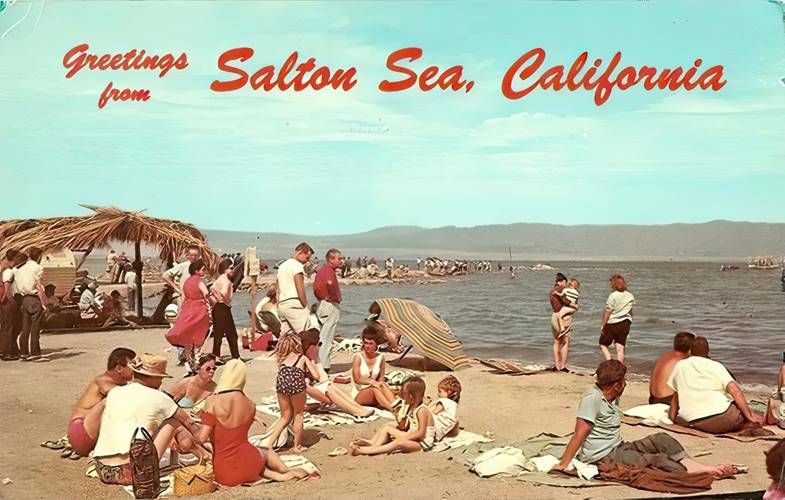
Explore the future of the Salton Sea by 2036. Join us in envisioning a revitalized ecosystem and sustainable practices.
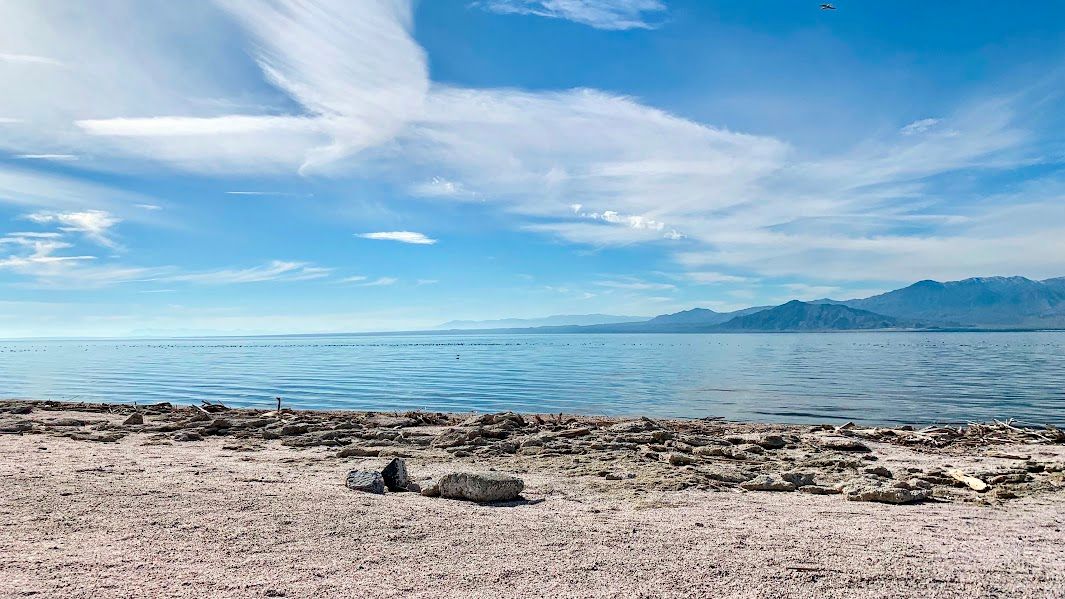
Learn how the Salton Sea's changes impact Borrego Springs' air quality & economy. Stay informed on tourism & clean energy developments.
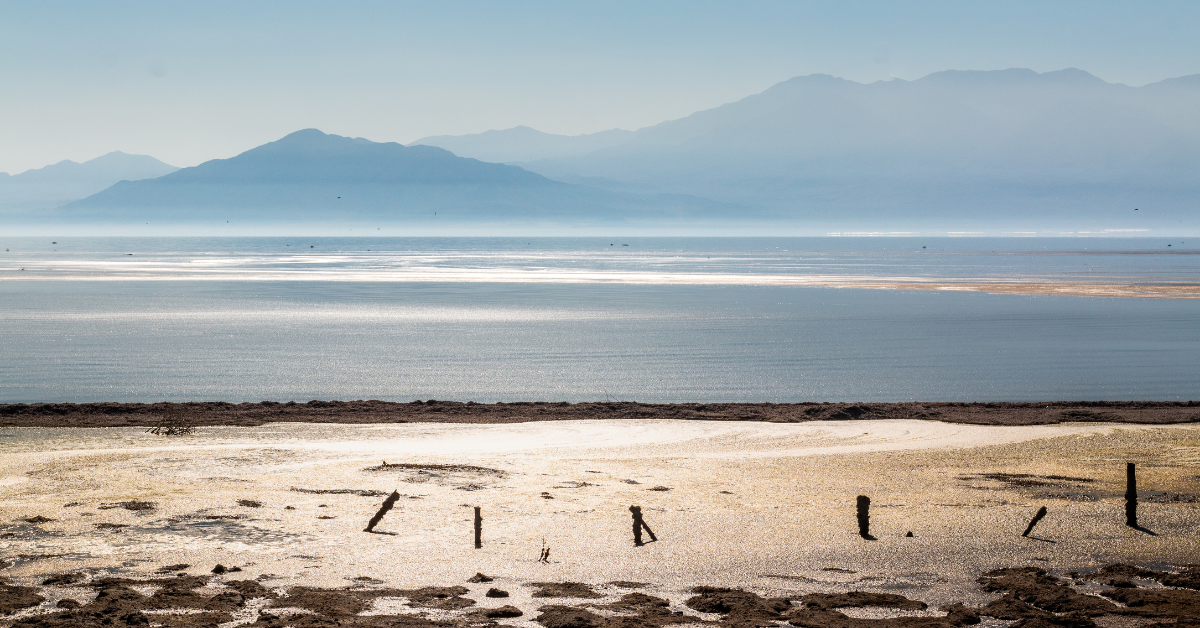
Tribal advocates seek historic protections for sacred land at the Salton Sea. Join the movement for cultural and environmental conservation.
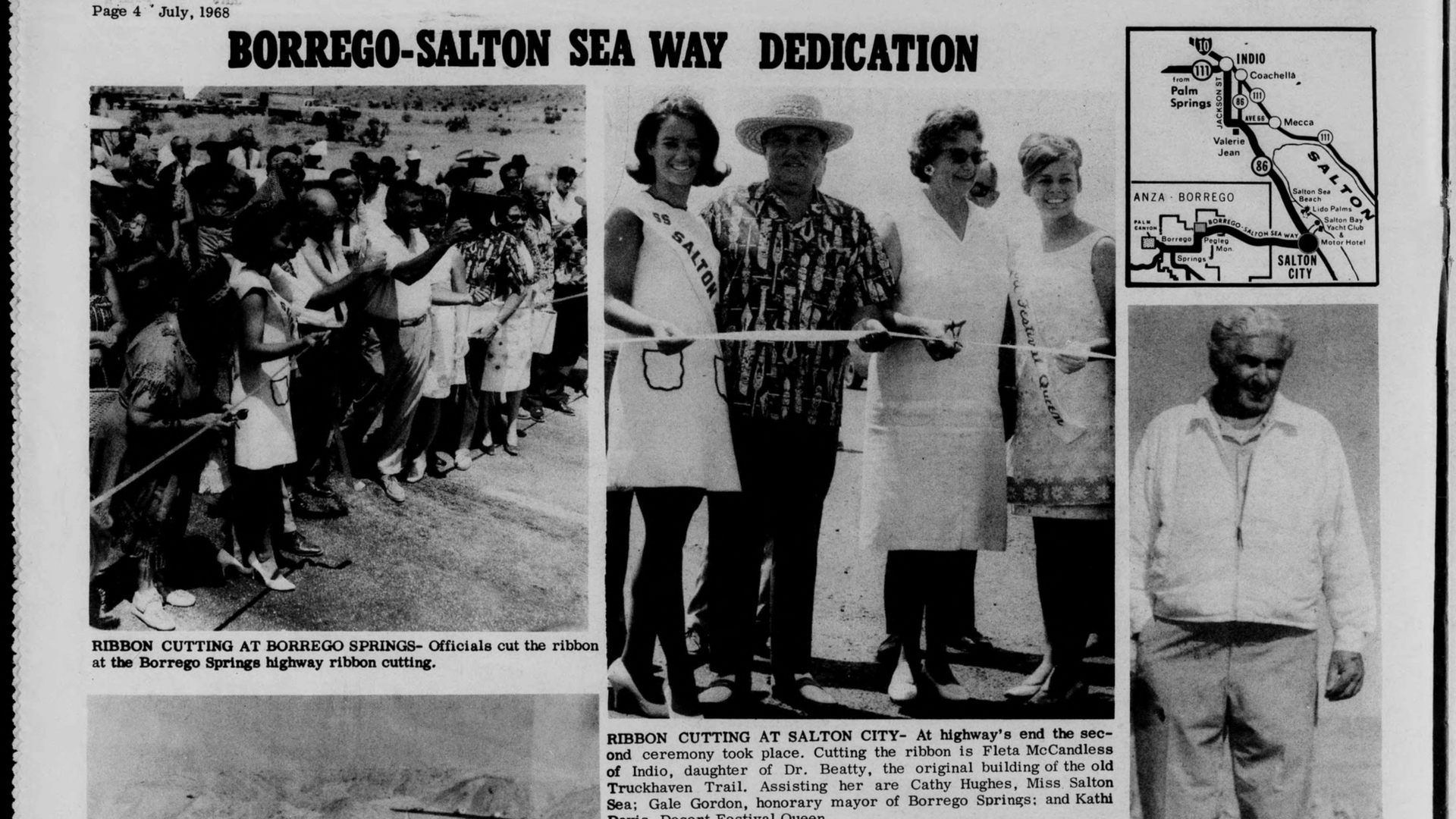
The Historic Salton Seafarer archive is now online, featuring issues from 1958-2008. Access this vital resource for local history today!
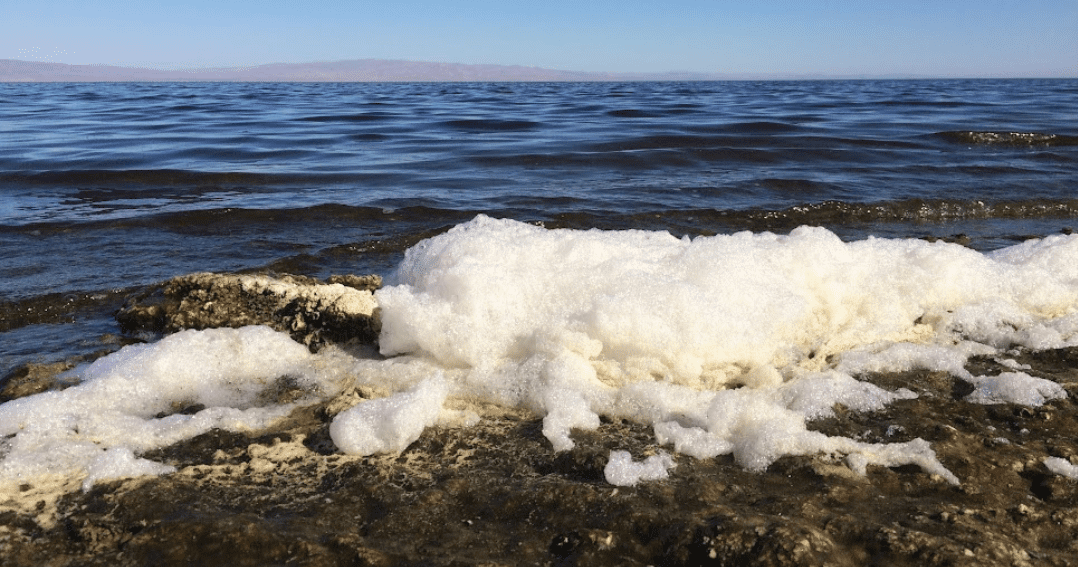
Speculative Fiction Grounded in Science Salton Sea Tales, a novel by Gabriel Wisdom A New Novel Rooted in Science and Imagination Author and broadcaster Gabriel Wisdom explores a timely environmental and geological premise in his latest novel, Salton Sea Tales. The book merges speculative storytelling with scientific research, weaving fact-based creative non-fiction into a “what if” scenario inspired by real evidence. From the Author Salton Sea Tales is a fast-paced adventure story which combines both the ‘what if’ elements of speculative fiction with more fact-based creative non-fiction, based upon verifiable geological evidence. An inland desert sea is drying up, causing an unlikely group of outlaws, stakeholders, and secretive Native Americans to join forces. The story imagines what would happen if geothermal and lithium mining operations at California’s Salton Sea were to accidentally set off the San Andreas Fault, which spans the 330 square mile lake perimeter. Half of the world’s lakes are less resilient to disturbance than they used to be (Advancing Earth and Space Sciences, 2024), impacting an estimated one in three people. Salton Sea Tales is a plot-driven fictional adventure based in part upon real events with a wildly plausible ending that hasn’t happened… yet. ALL PROCEEDS BENEFIT THE RAM MEDIA FOUNDATION Salton Sea Tales Giving Back Salton Sea Tales is a creative, story-driven look at California’s inland sea. Net proceeds from all sales—paperback, Kindle, and Audible—are donated to Ram Media Foundation, supporting awareness of the ecological crisis at the Salton Sea.
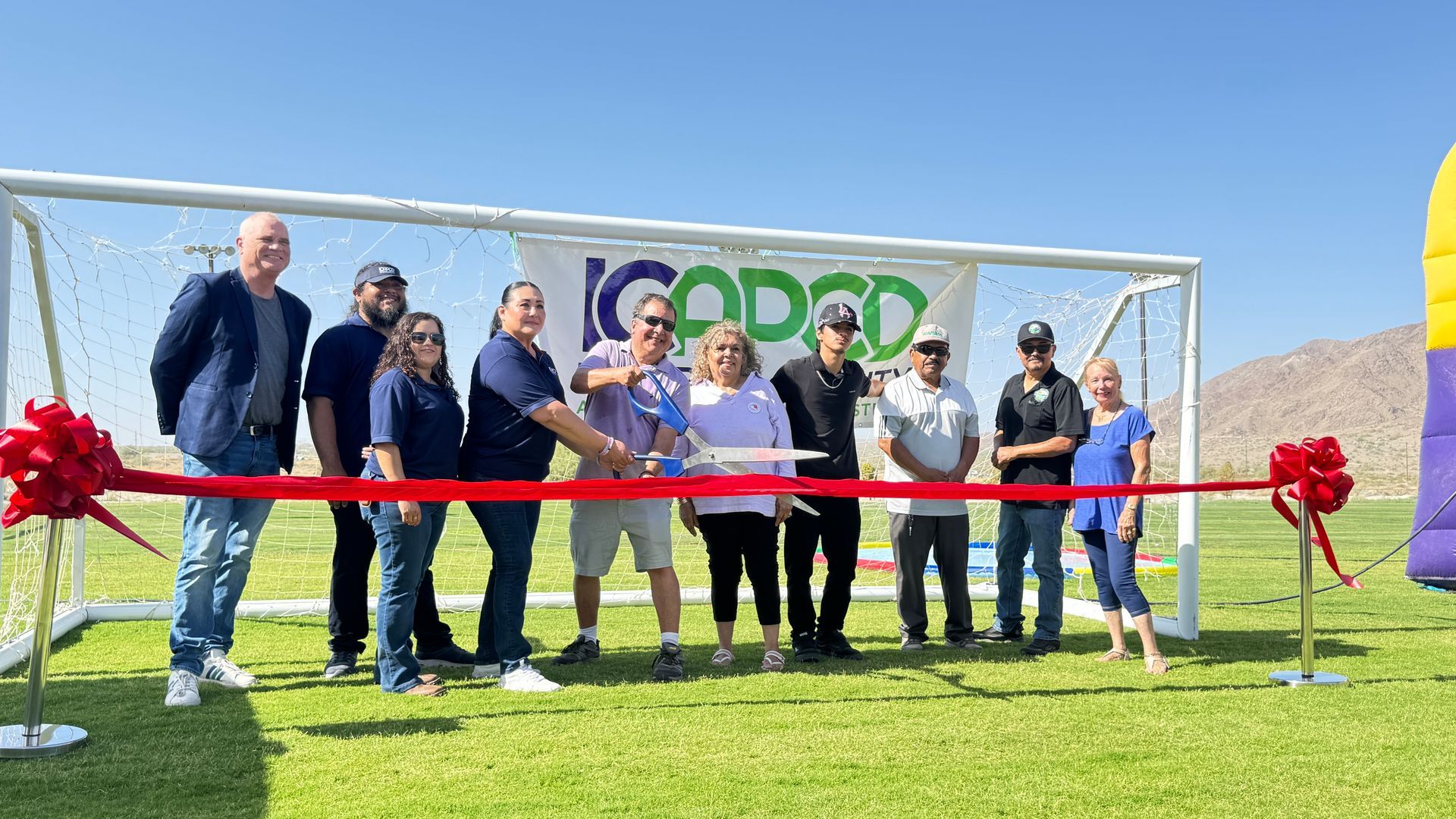
Celebrate the opening of Desert Shores Soccer Park Phase II, a new space for youth recreation. Join us in fostering community investment!

By: Explore Always on YouTube