Anza-Borrego Desert Natural History Association

Uncover Anza-Borrego's wonders through education and exploration

ABDNHA Calendar of Events

Uncover Anza-Borrego's wonders through education and exploration

ABDNHA Calendar of Events
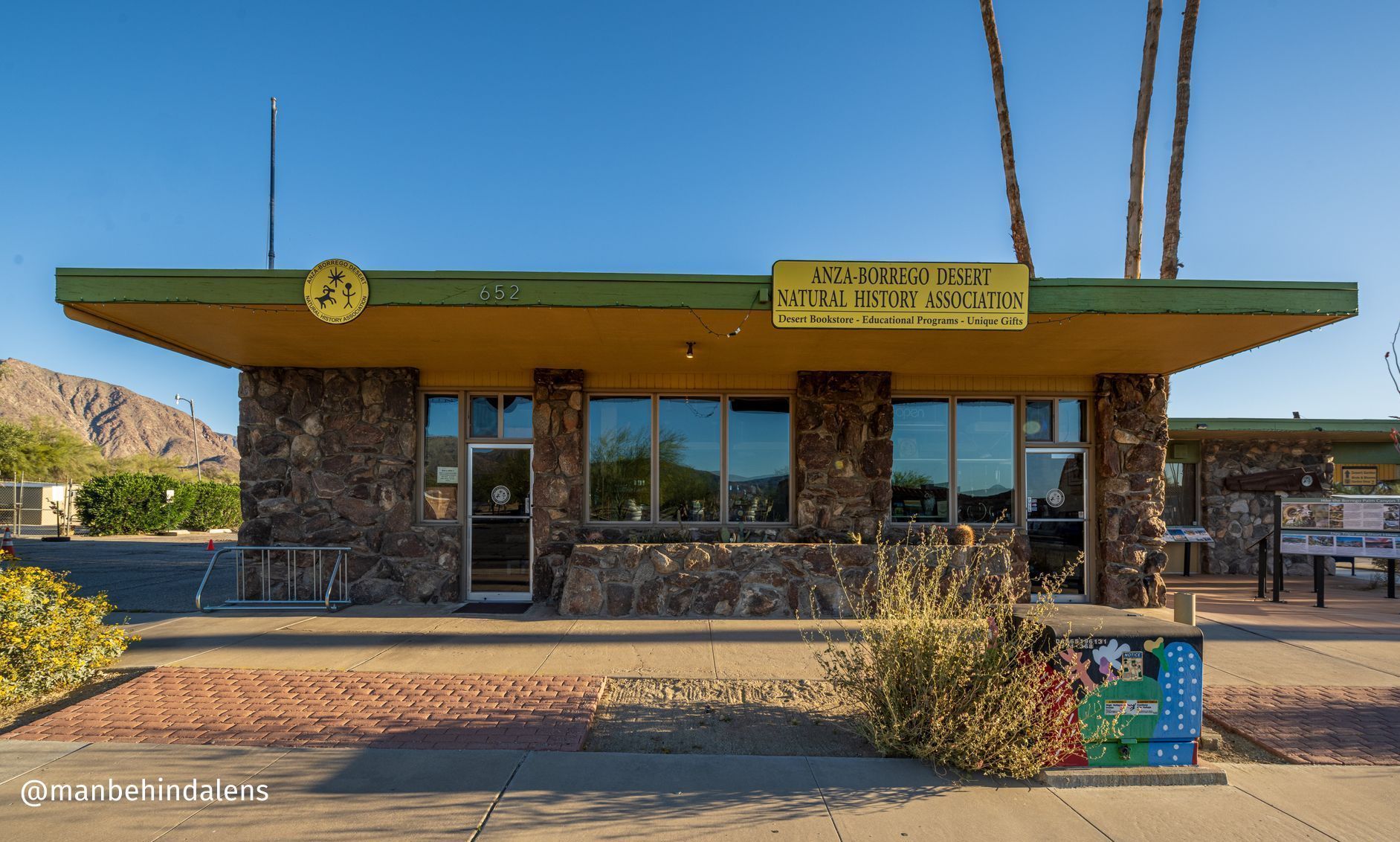
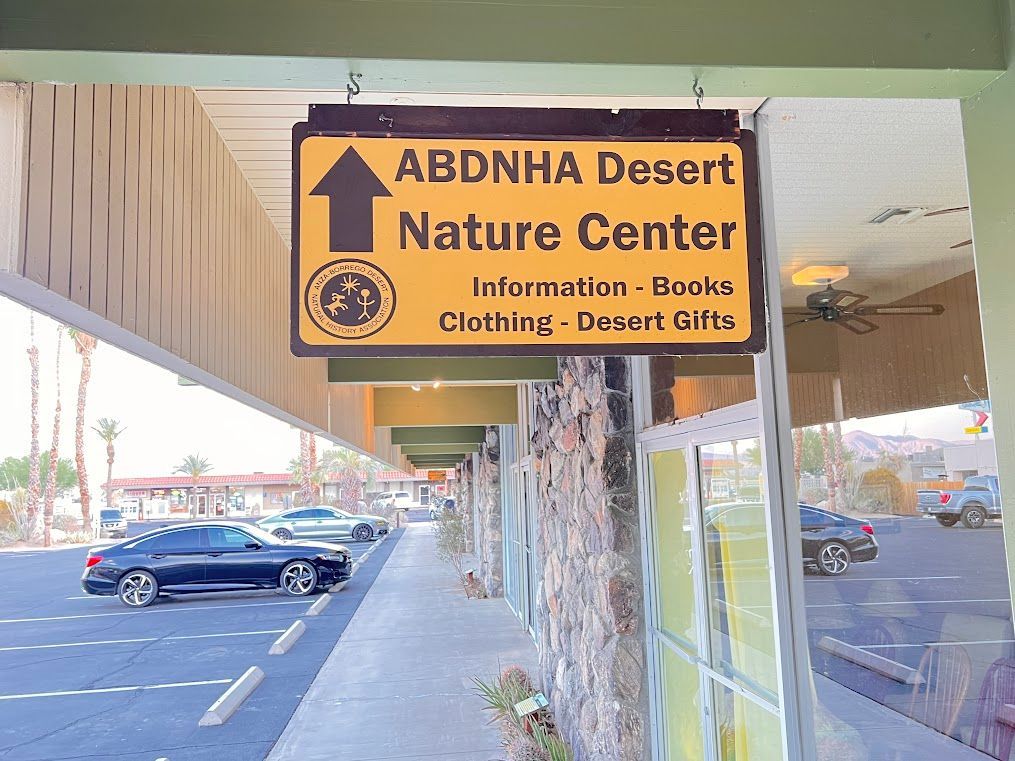
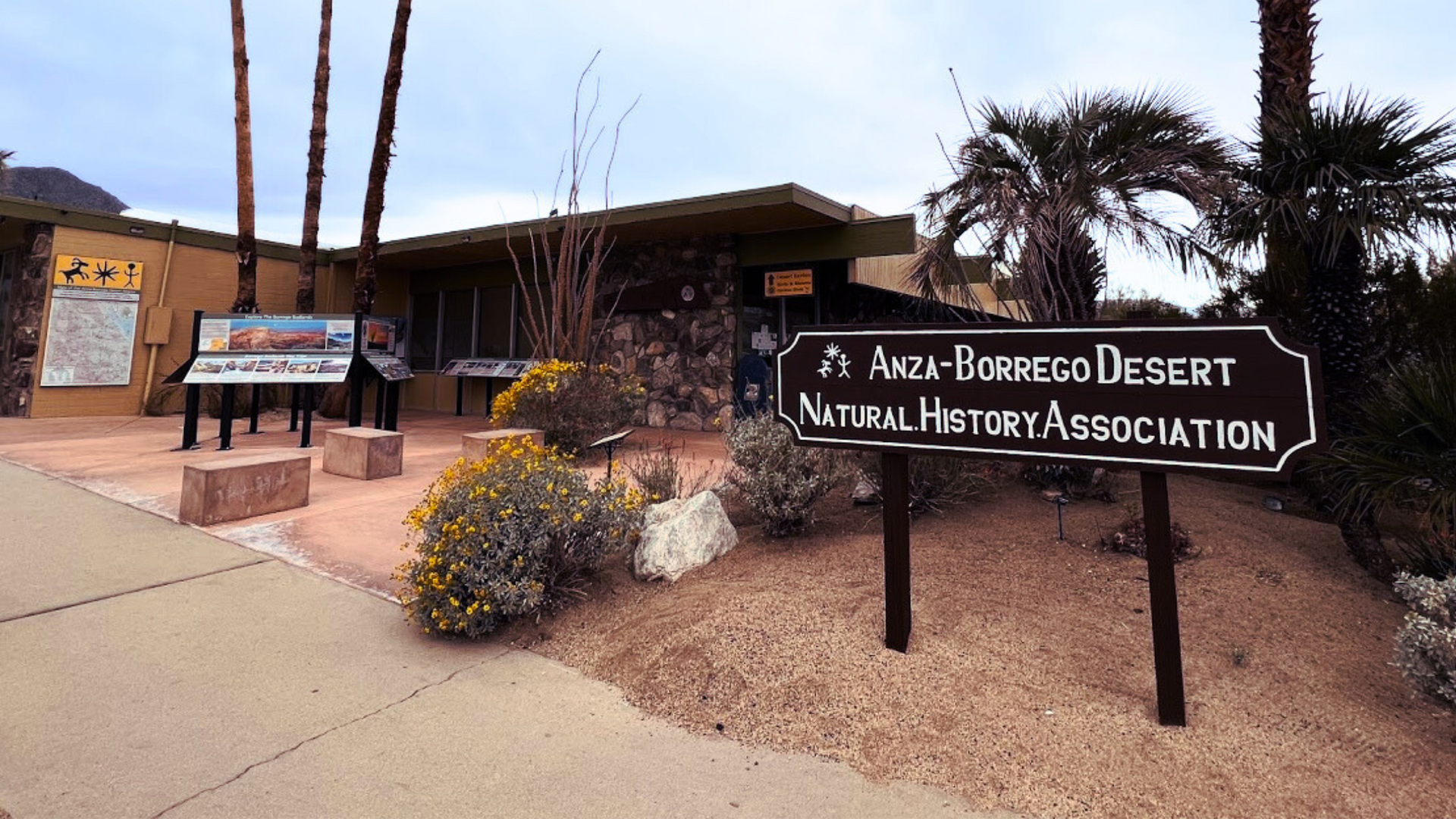
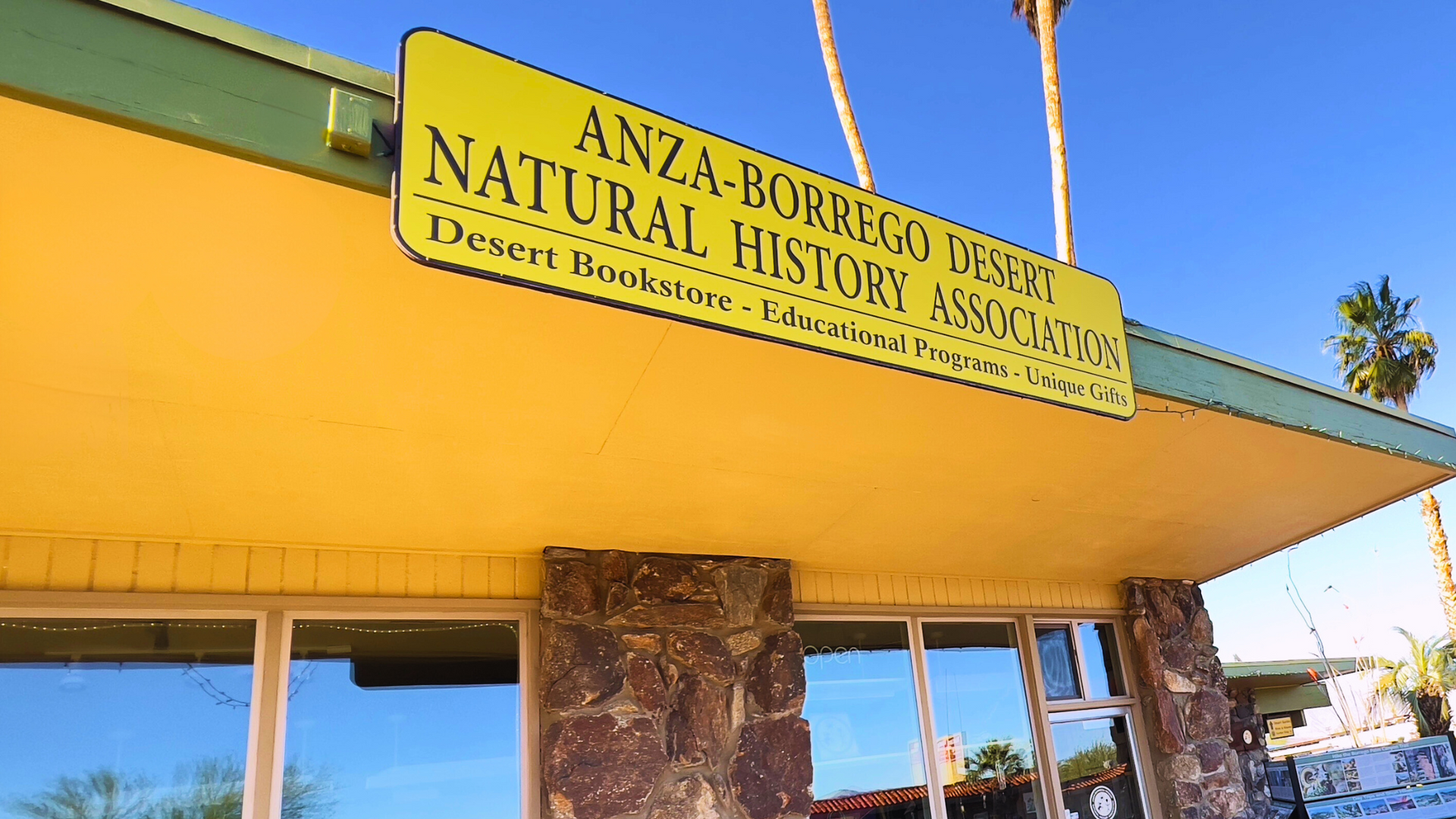
Yellow sign for Anza-Borrego Desert Natural History Association on a building entrance under a clear blue sky

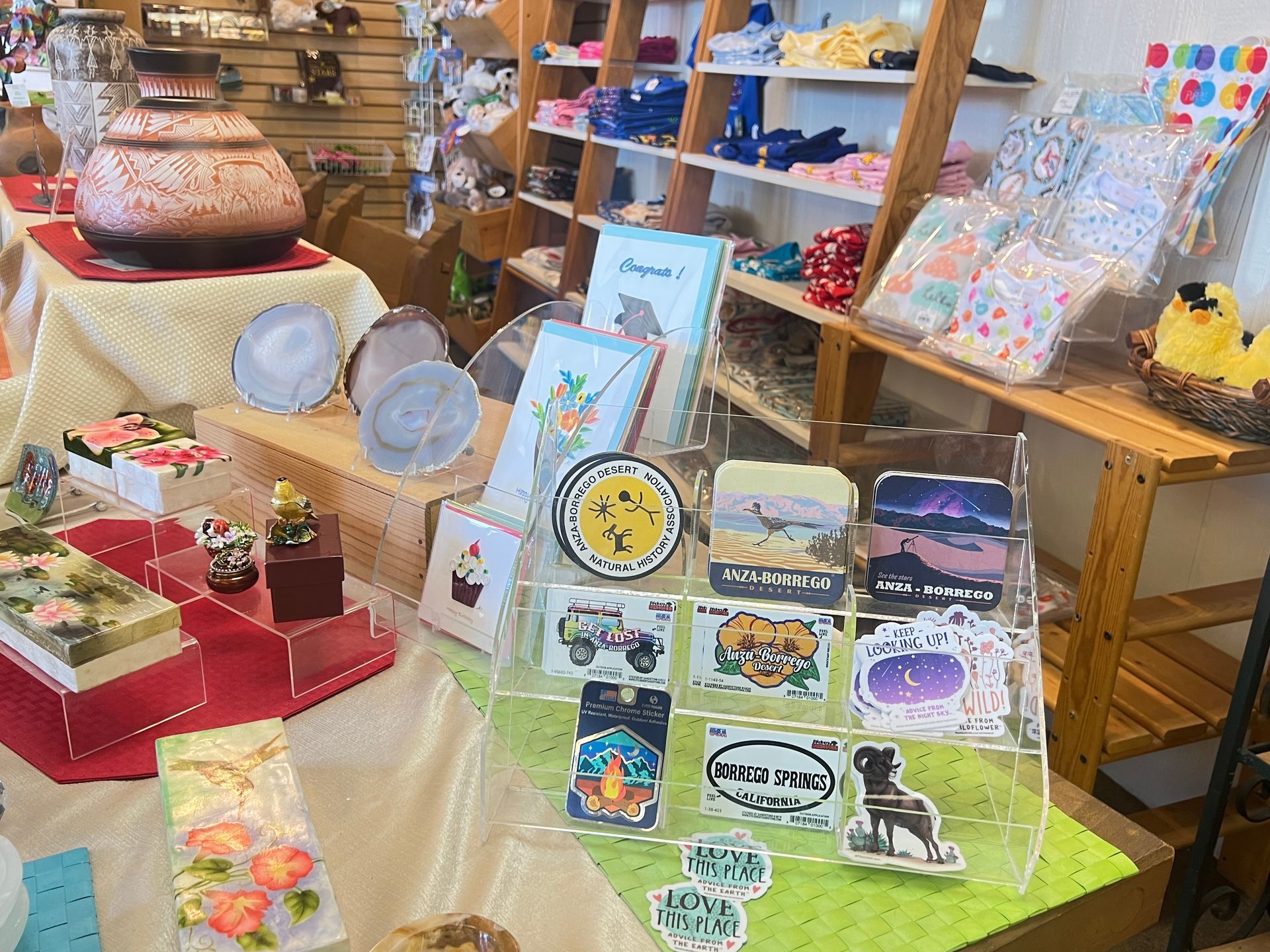
Visit ABDNHA's Desert Nature Center, Gift Shop In Borrego Springs

Your Local Source for Hiking Guides, Wildlife Books, Local Gifts, Expert Guidance, Educational Programs, and More, Located at 652 Palm Canyon Drive, Borrego Springs, CA.

Your Local Source for Hiking Guides, Wildlife Books, Local Gifts, Expert Guidance, Educational Programs, and More, Located at 652 Palm Canyon Drive, Borrego Springs, CA.

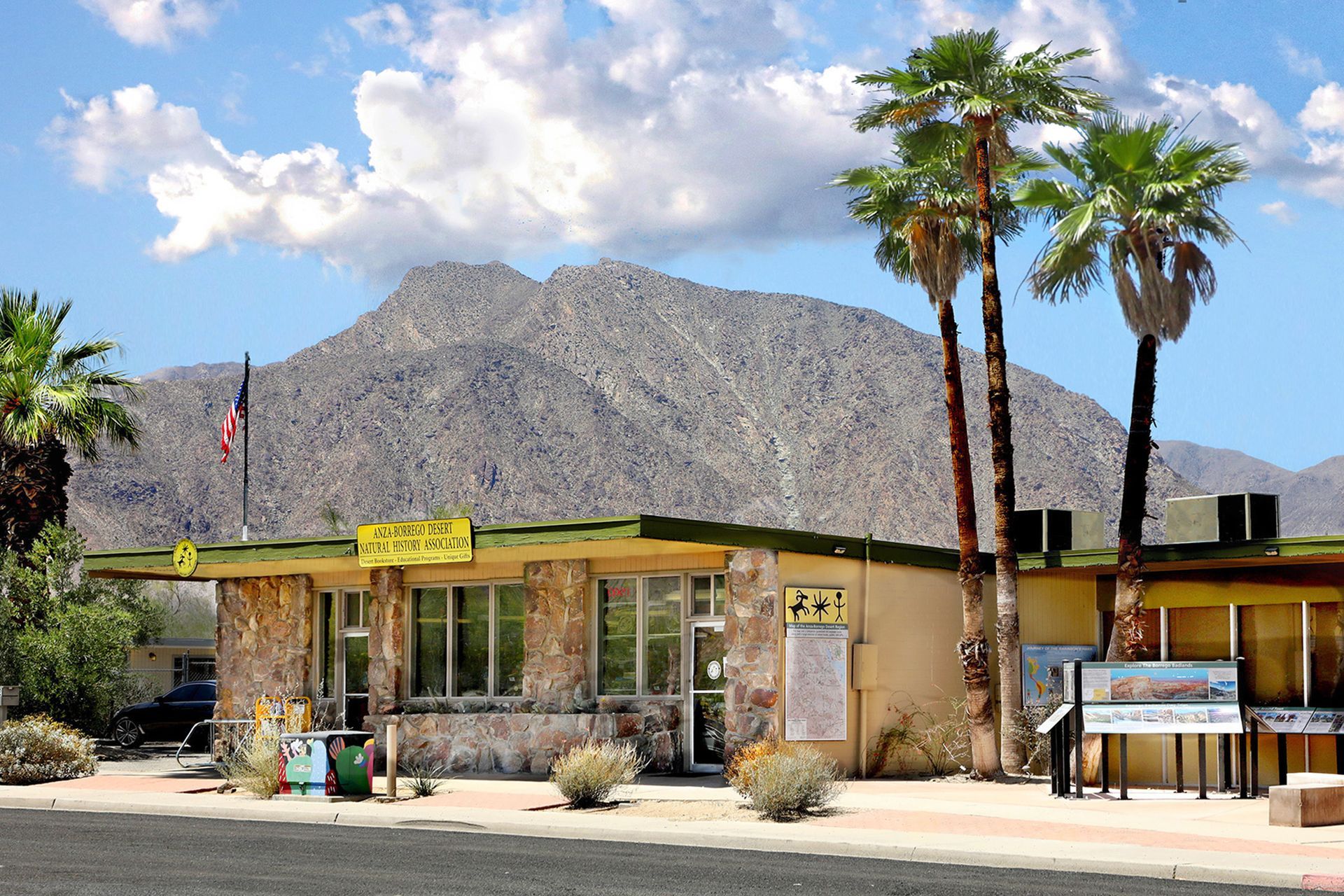
  • Small desert roadside building with palm trees and mountains under a cloudy sky

    Slide title

    Write your caption here
    Button
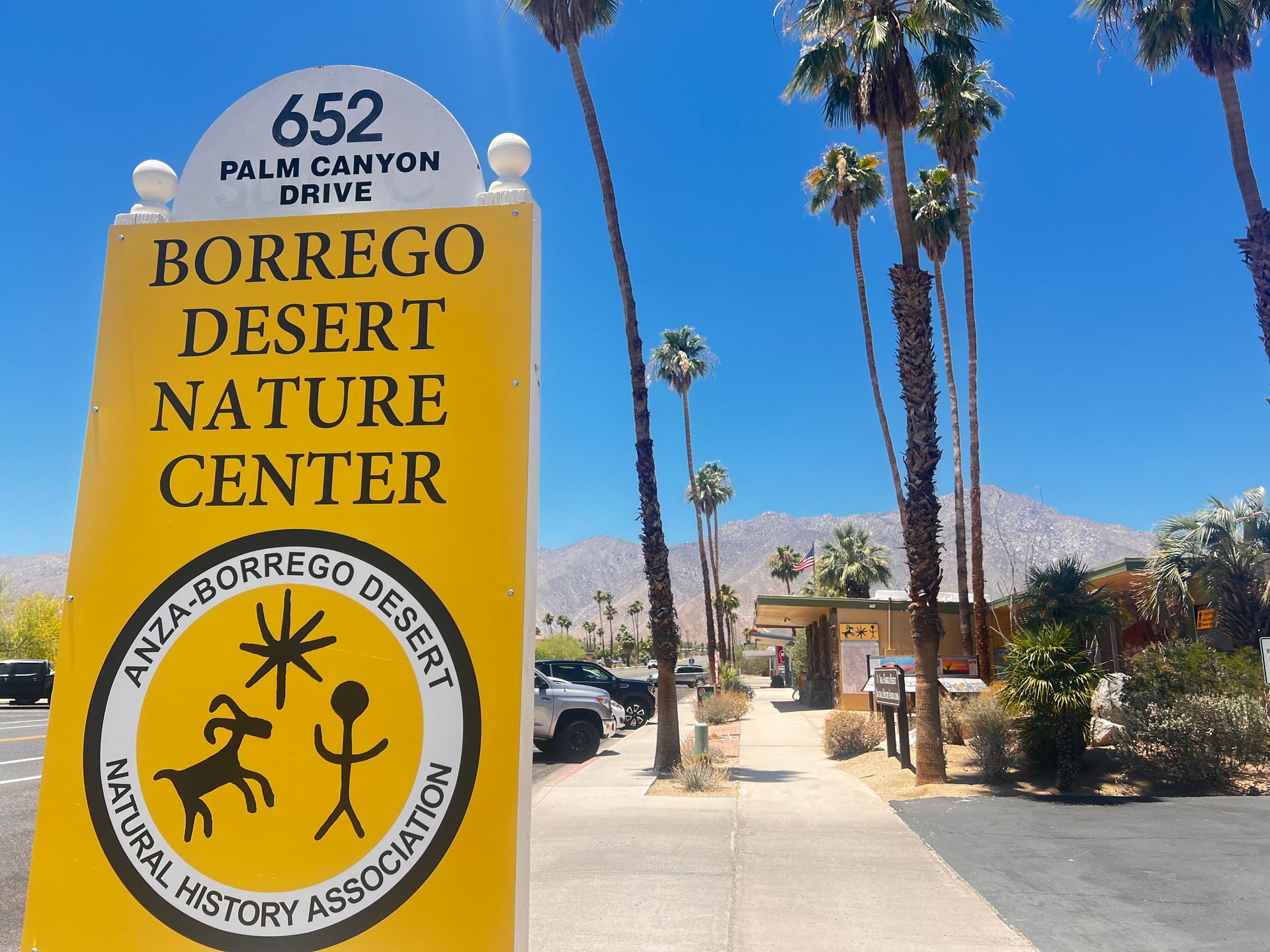
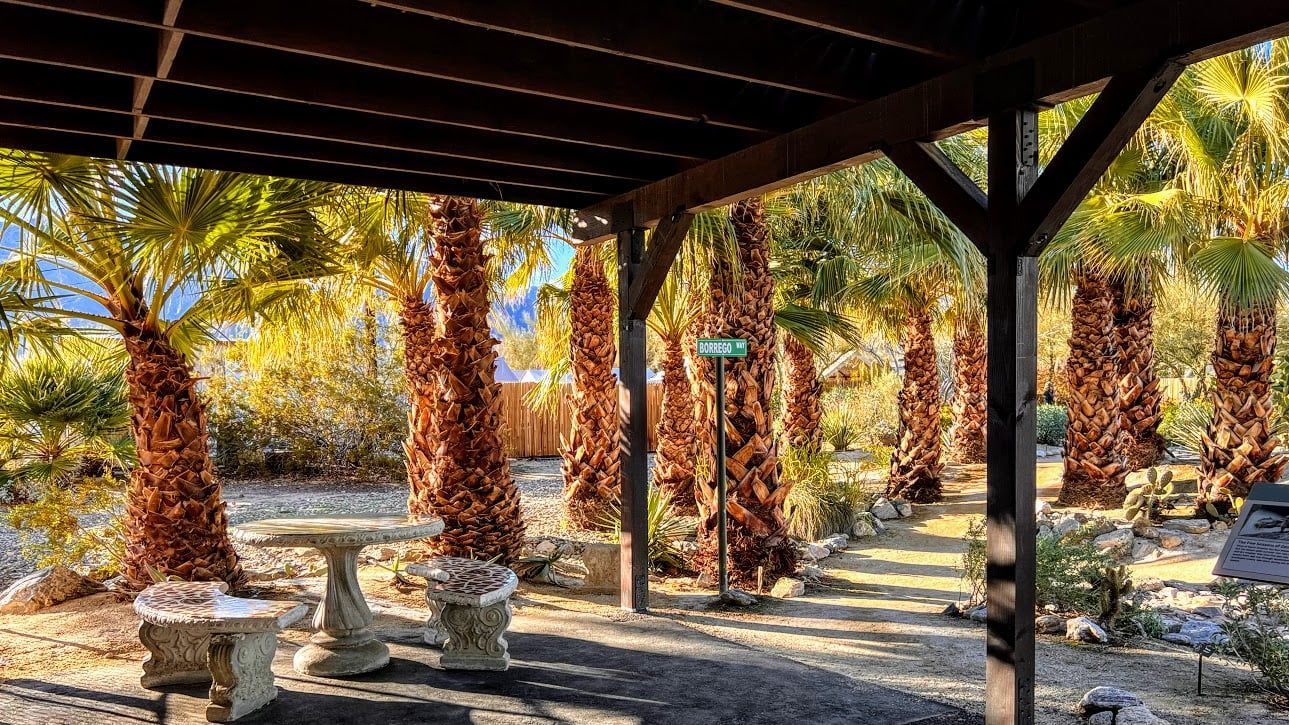
  • Borrego Desert Nature Center sign beside a sunny desert walkway with palm trees and mountains

    Slide title

    Write your caption here
    Button
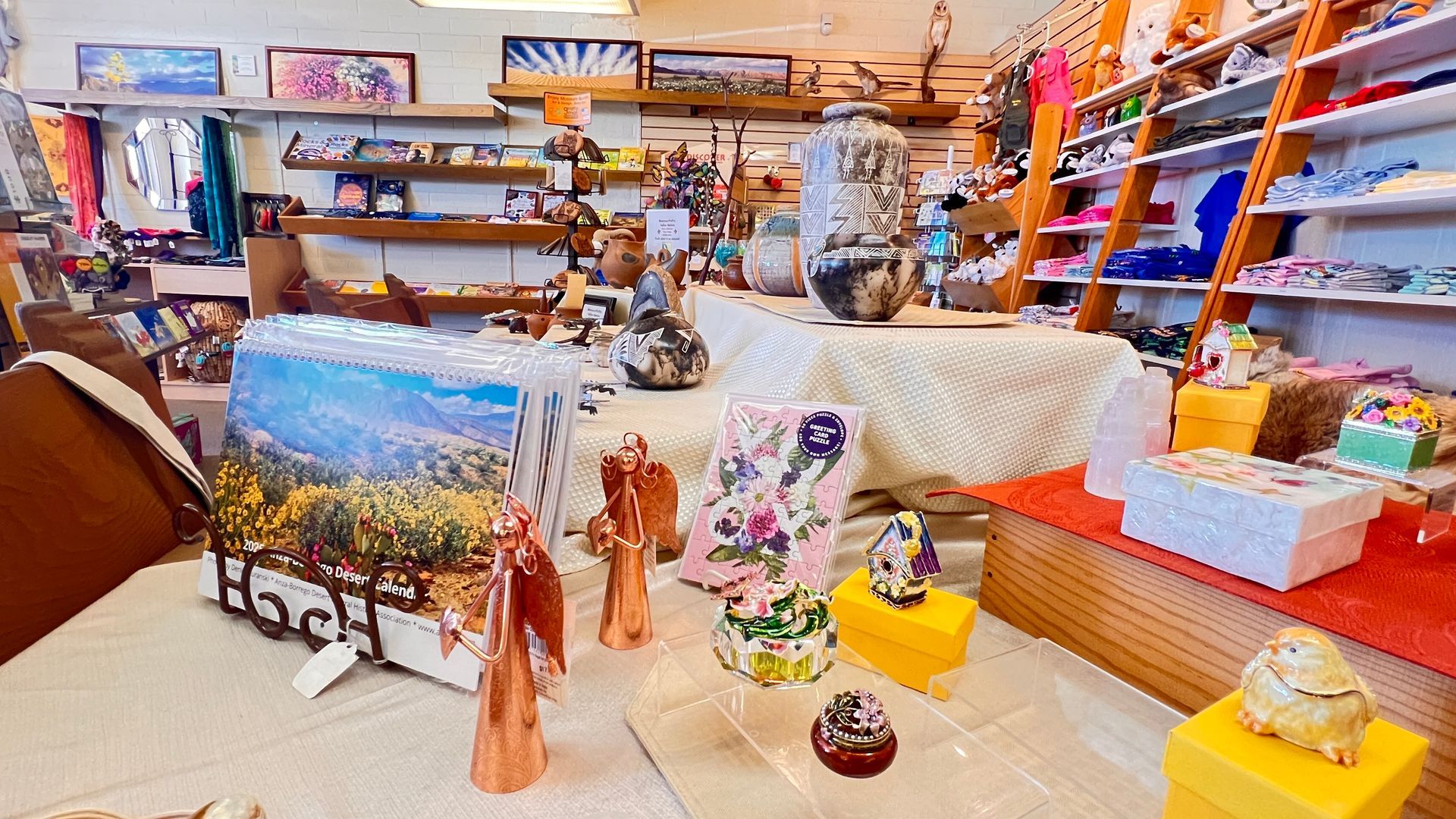
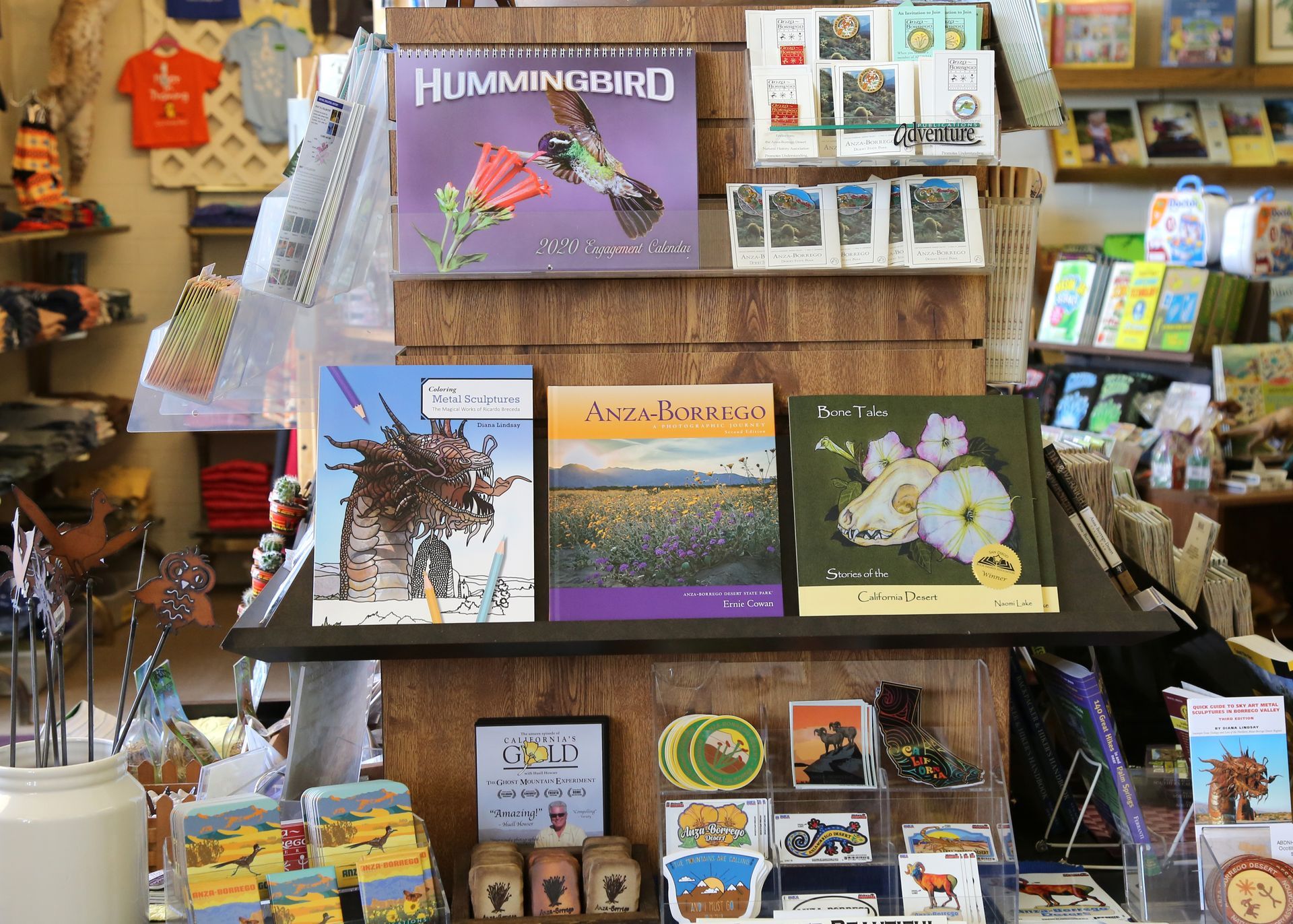
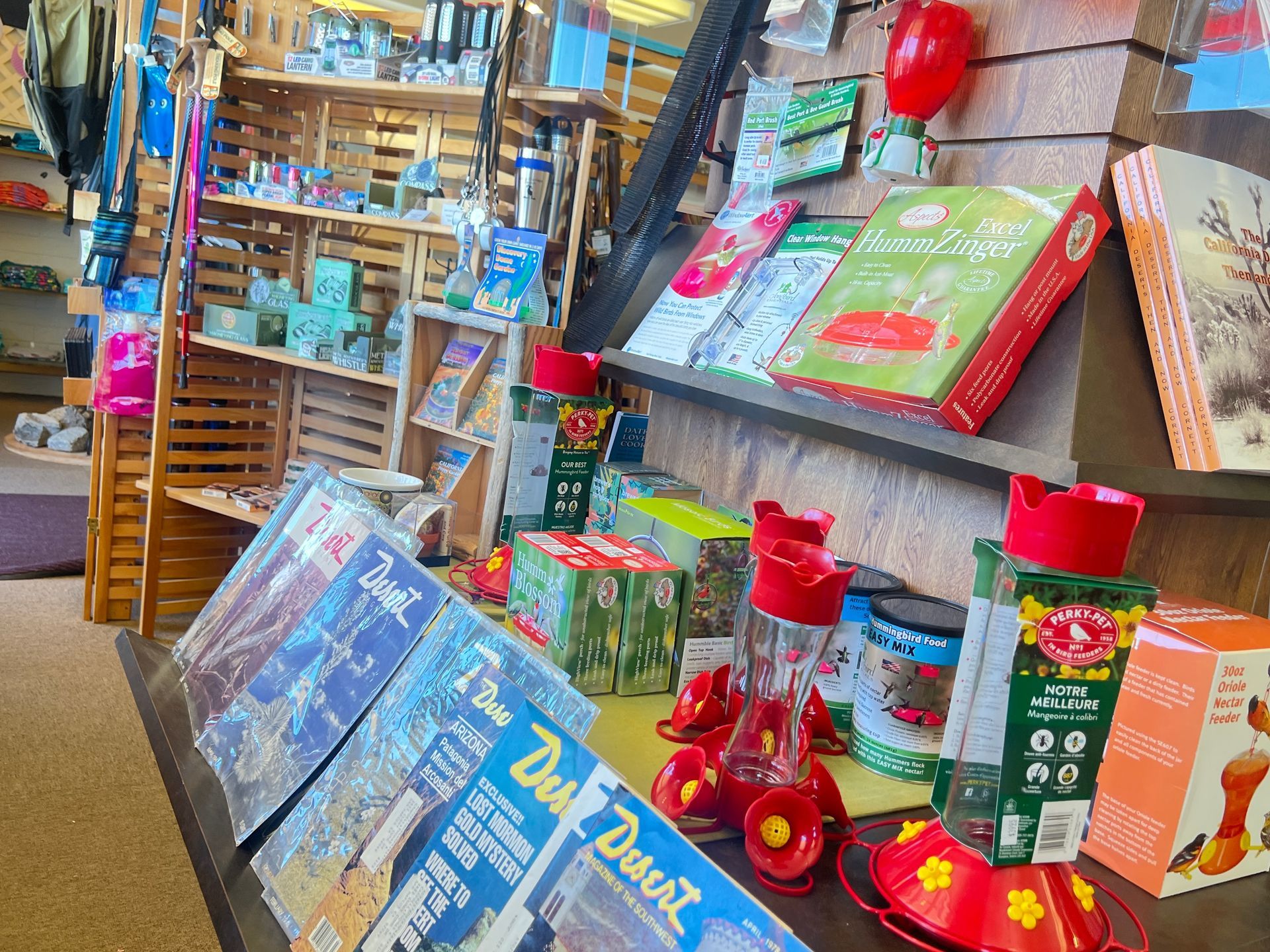
  • Colorful art and crafts shop with paintings, sculptures, and gift items displayed on shelves and tables

    Slide title

    Write your caption here
    Button
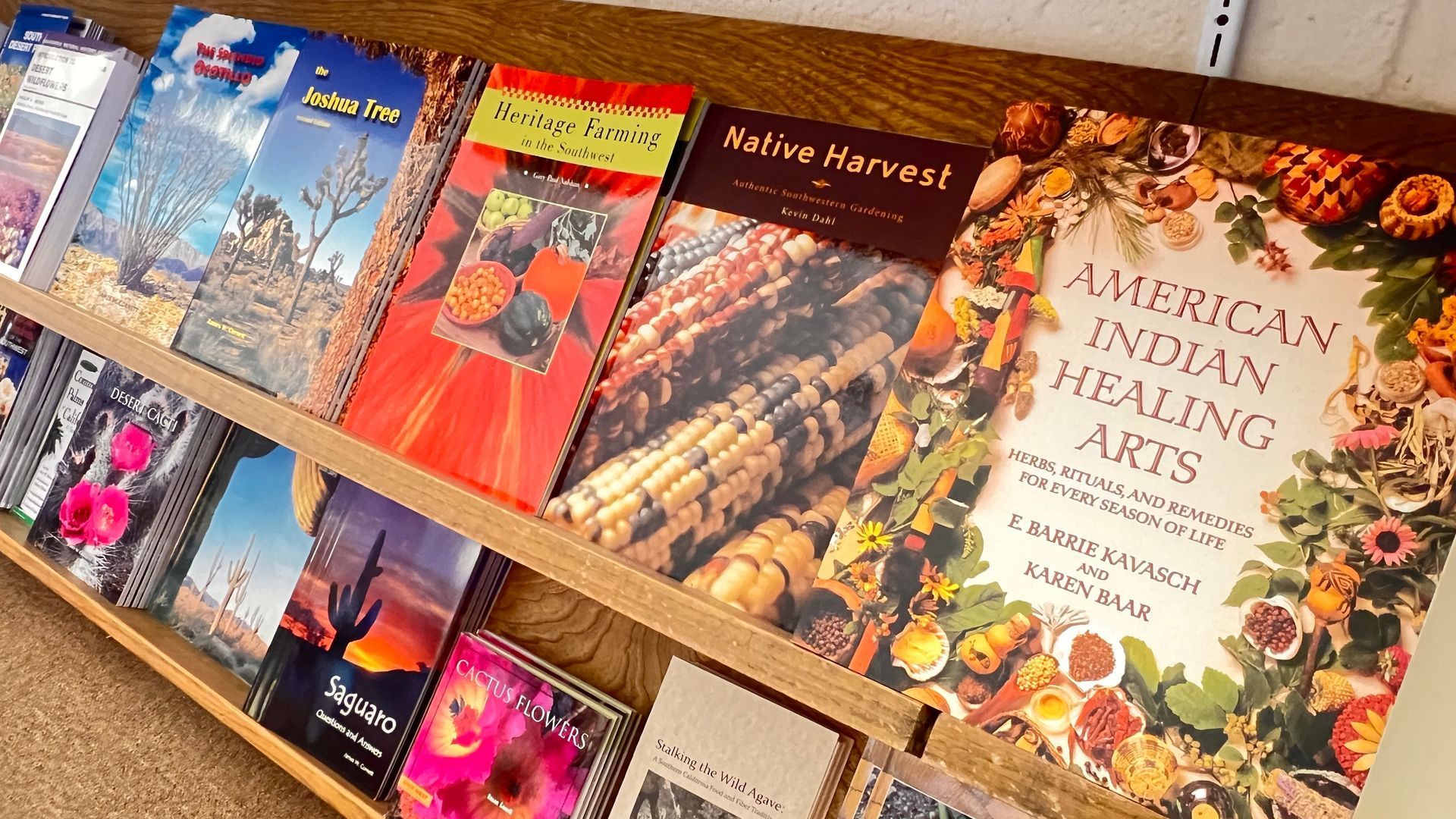
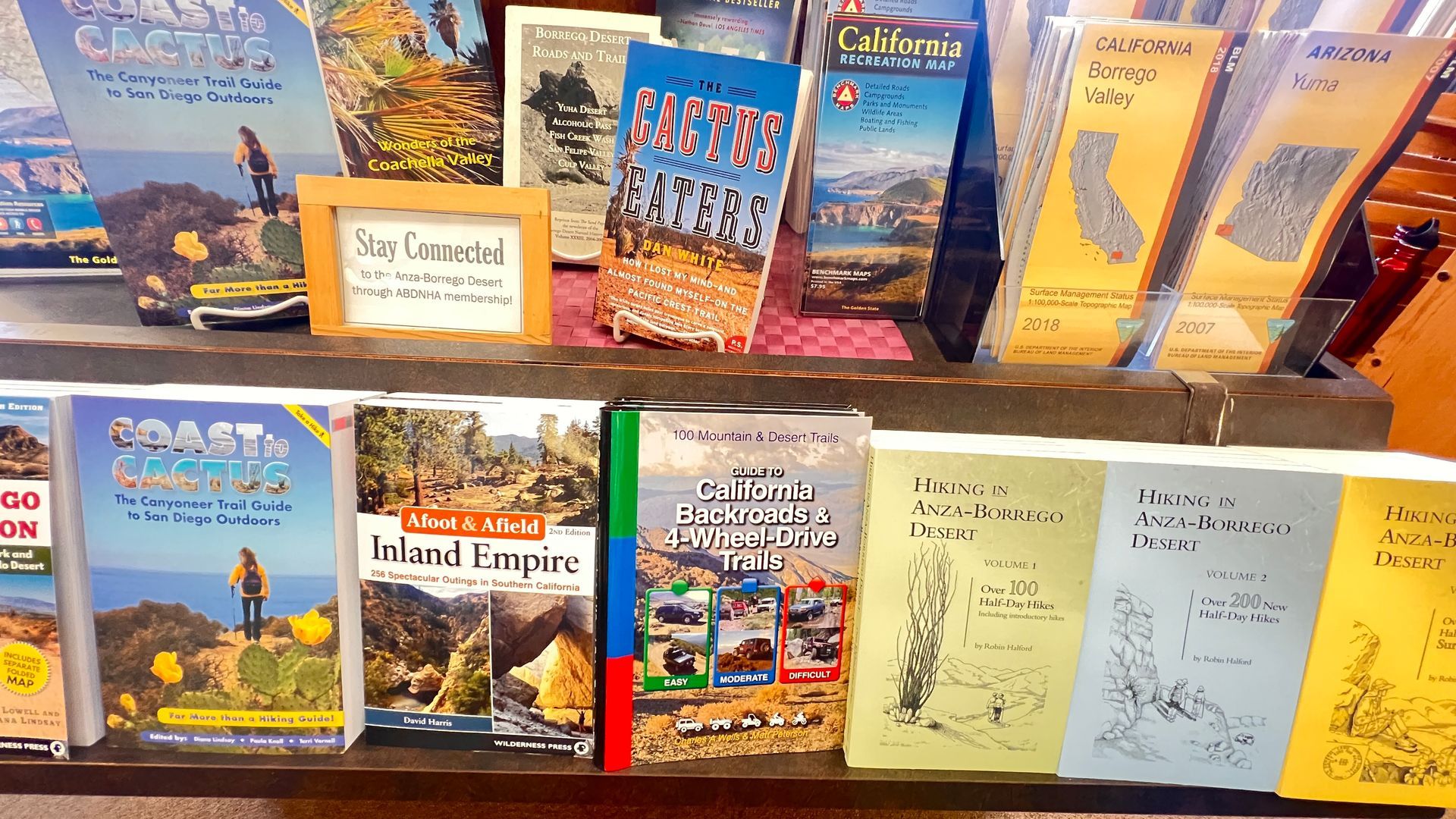
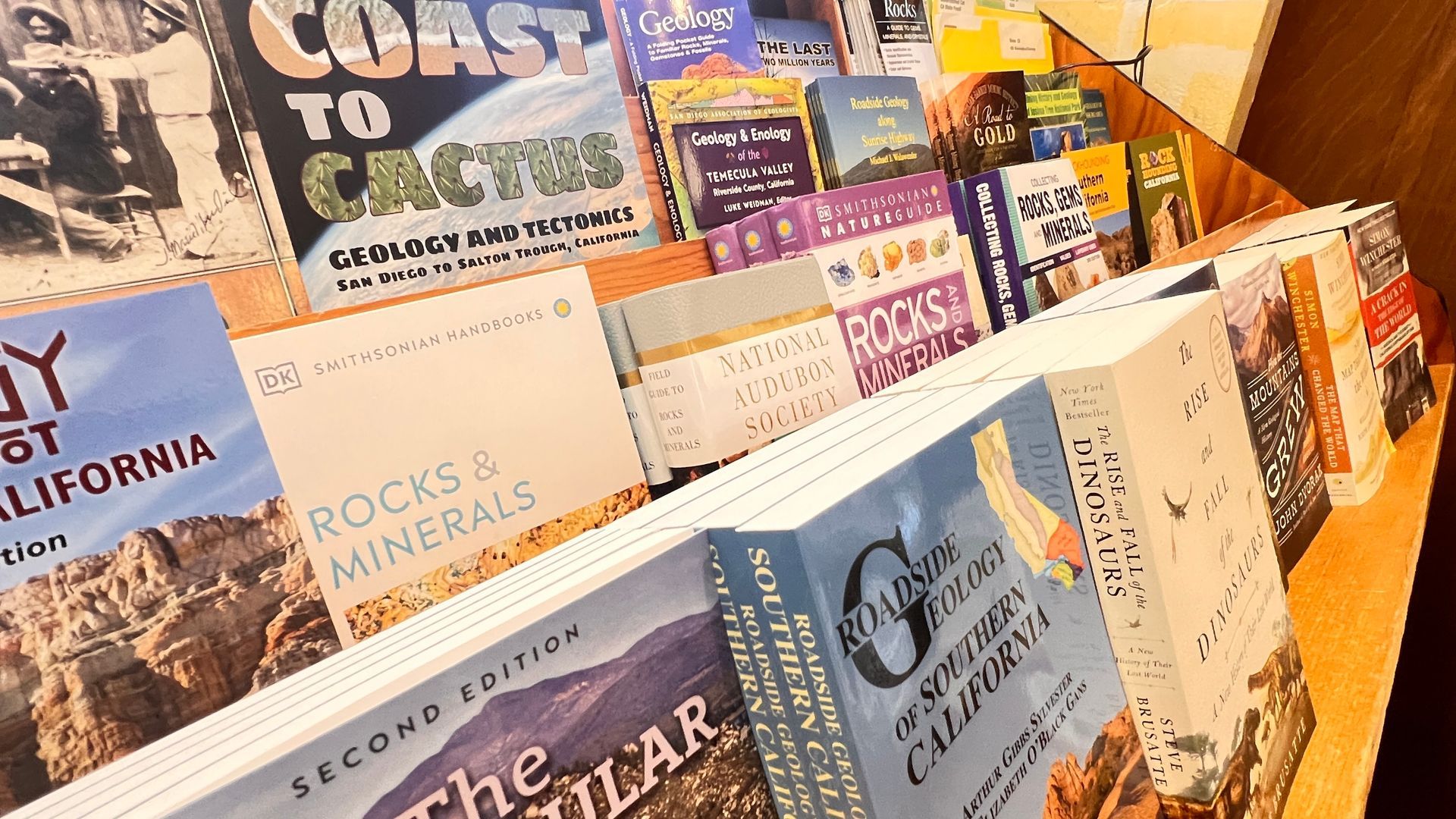
  • Books displayed on a wooden shelf, including colorful travel and cooking titles.

    Slide title

    Write your caption here
    Button
  • Art booth display of wildlife books, prints, and postcards on shelves and table racks

    Slide title

    Write your caption here
    Button
  • Travel brochures and maps displayed on a wooden rack, with colorful postcards and handwritten notes below.

    Slide title

    Write your caption here
    Button
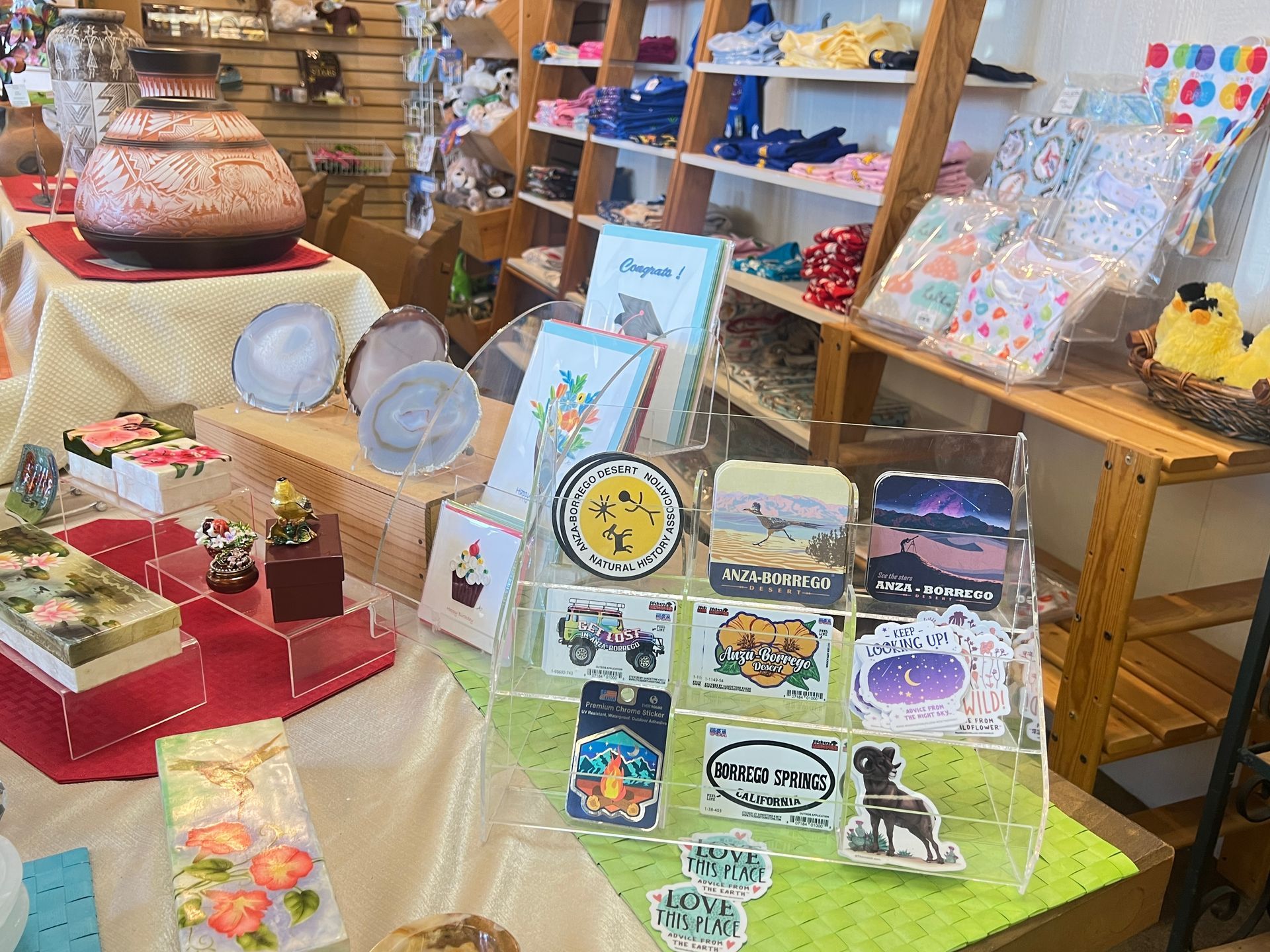
  • Colorful handmade crafts and small illustrated cards displayed on a shop table and shelves

    Slide title

    Write your caption here
    Button
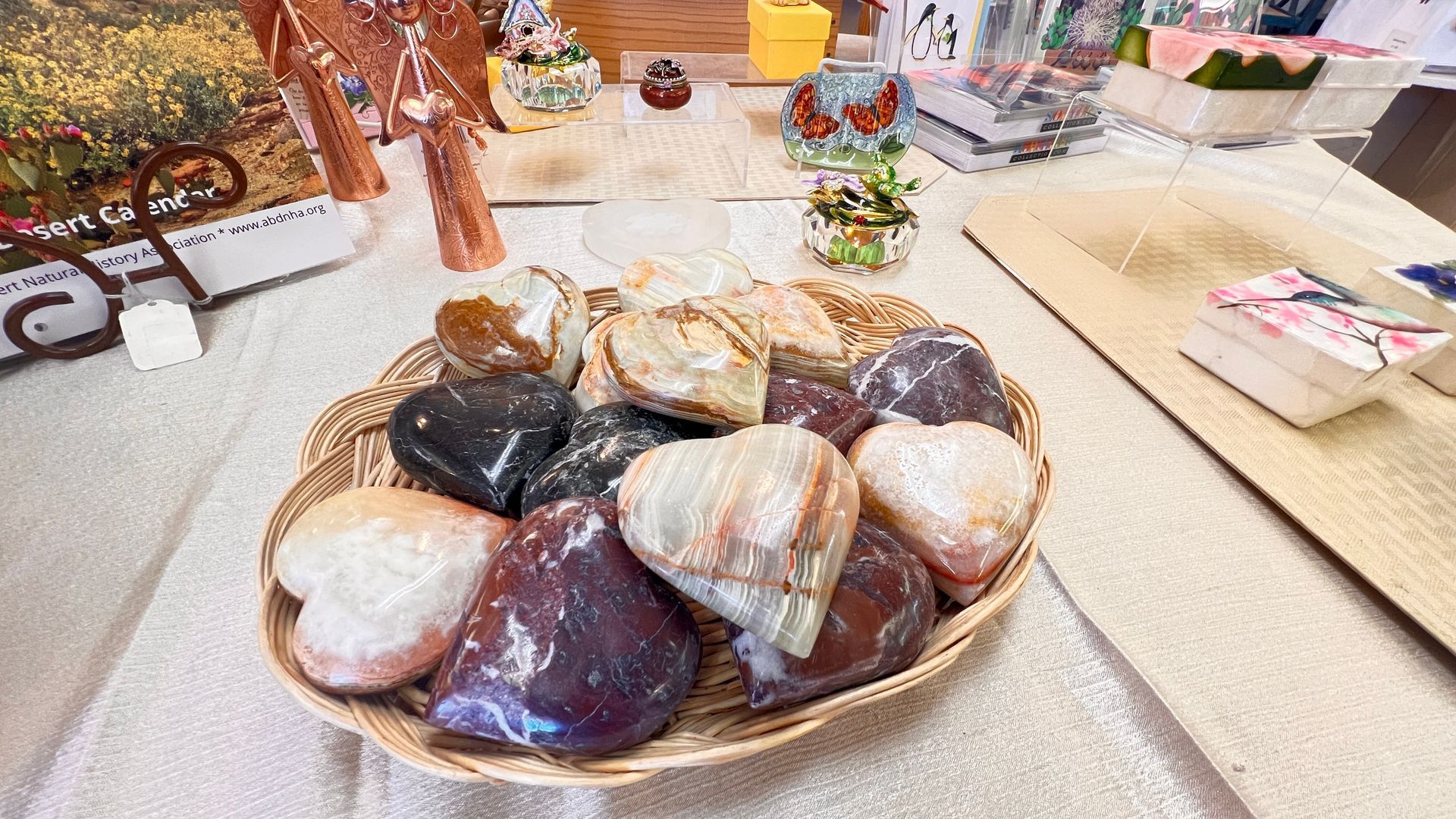
  • Basket of assorted polished stones and crystals on a table at an outdoor market

    Slide title

    Write your caption here
    Button
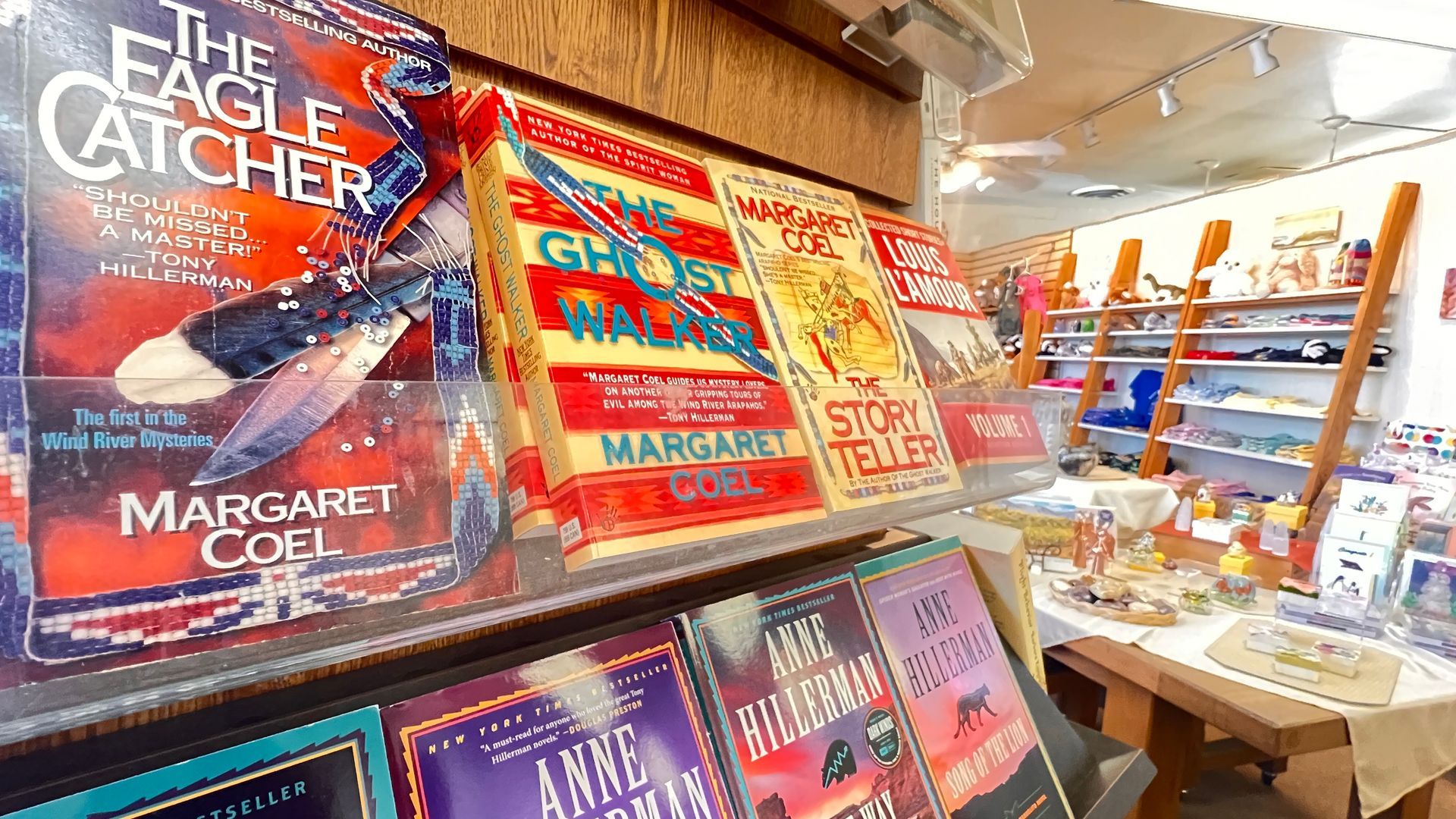
  • Bookstore display with colorful stacks of Margaret Atwood novels on a shelf.

    Slide title

    Write your caption here
    Button
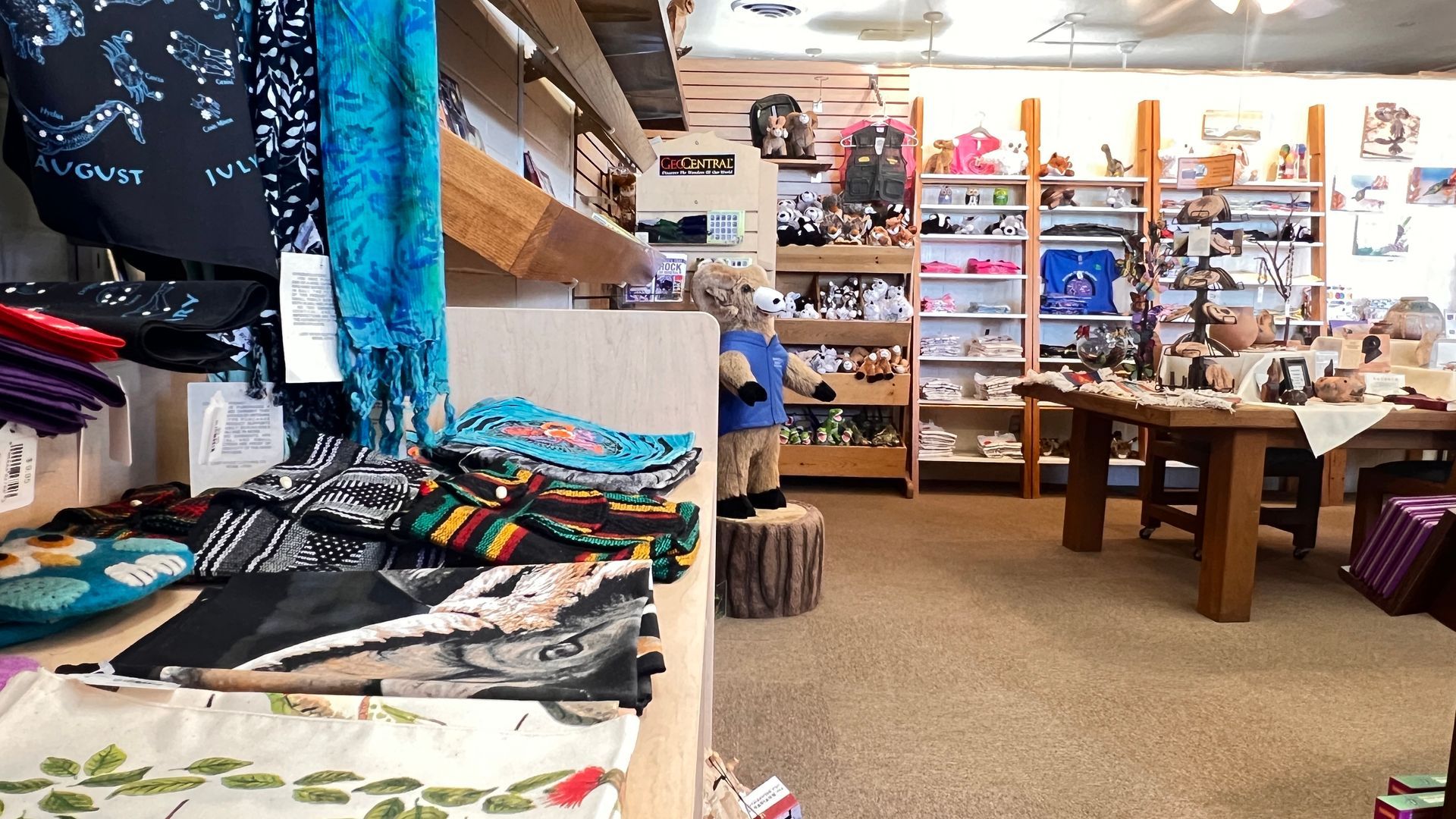
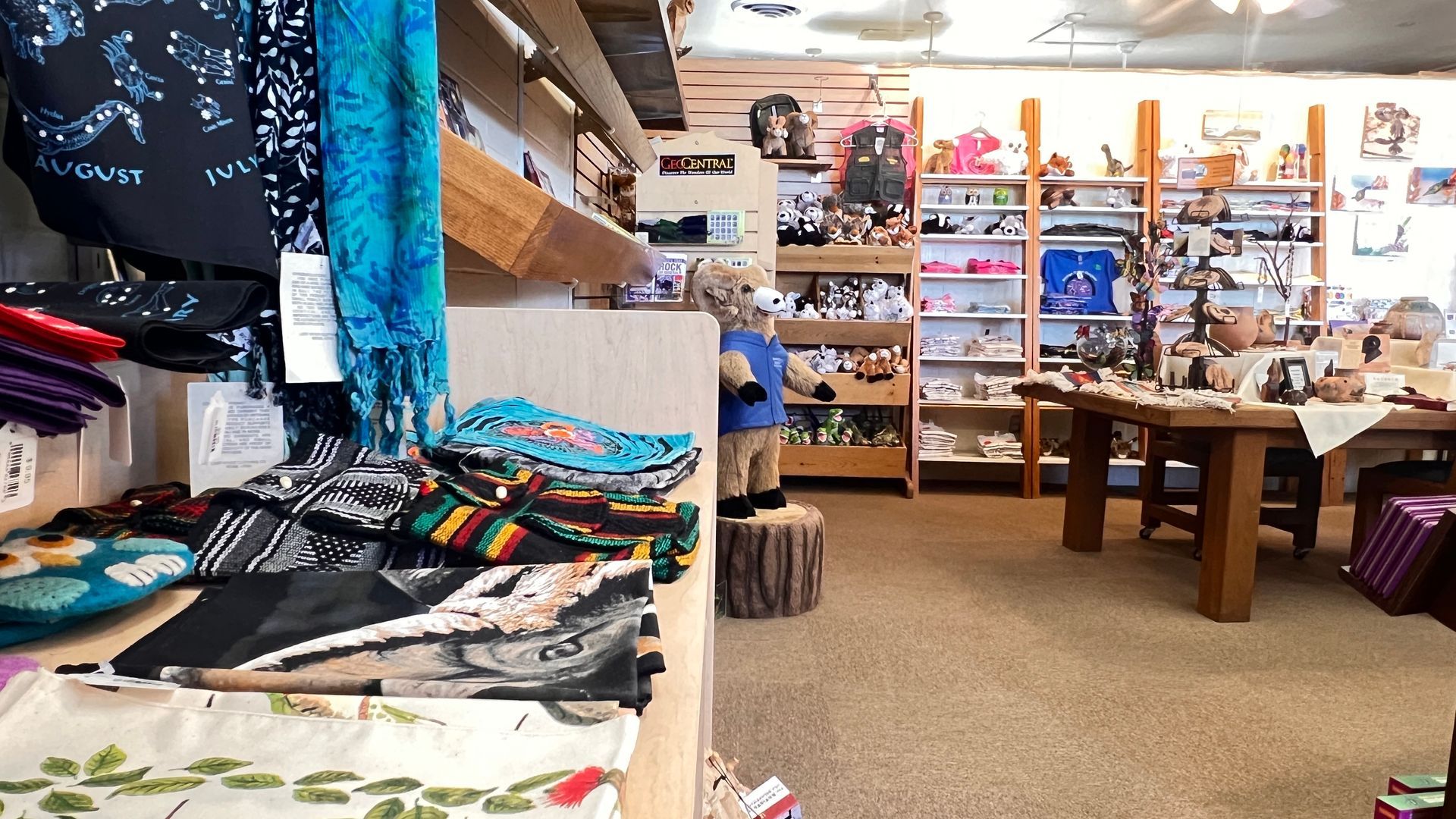
  • Brightly lit boutique with colorful folded textiles, wooden tables, and shelves of crafts and gifts

    Slide title

    Write your caption here
    Button
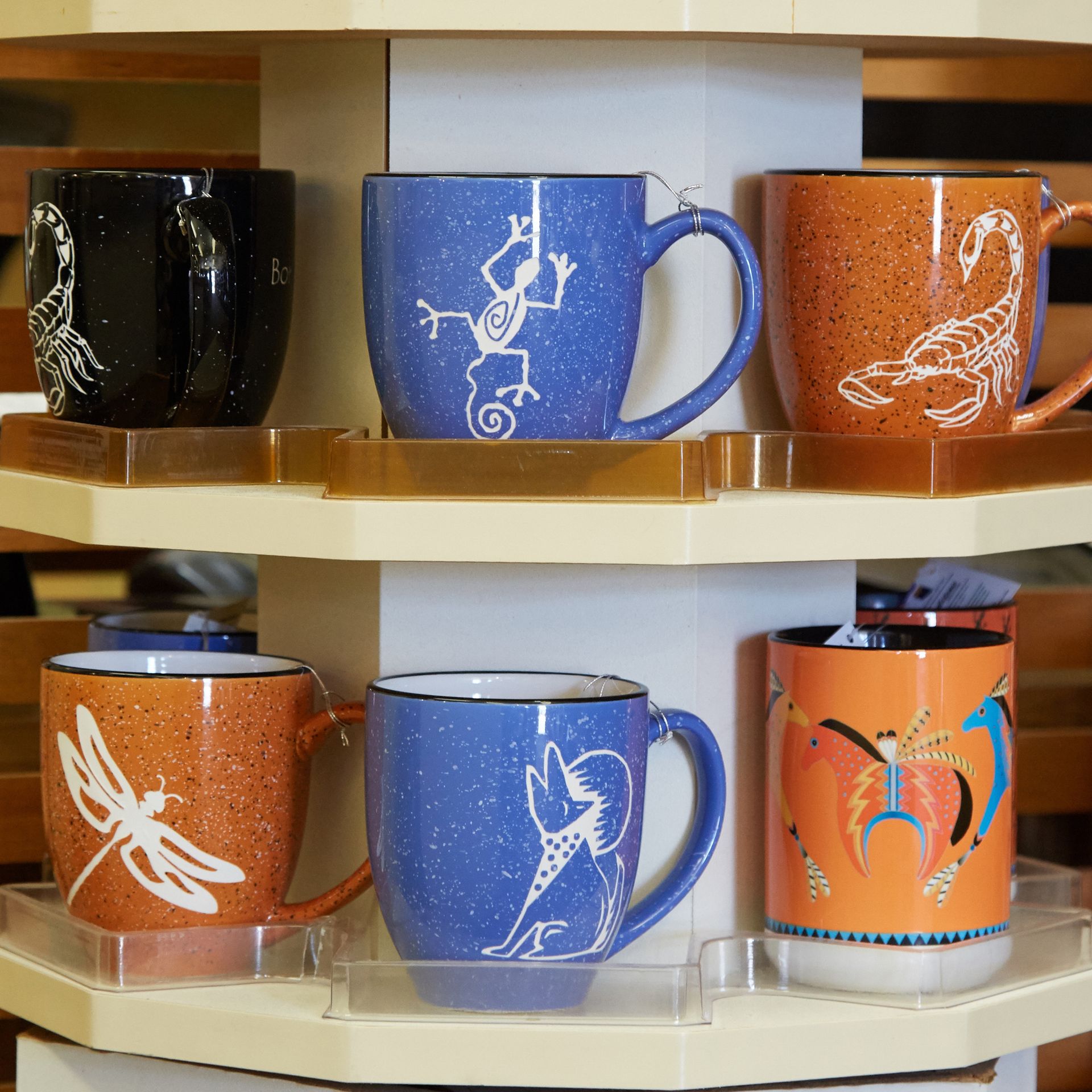
  • Six colorful ceramic mugs on a shelf, each with white bird designs.

    Slide title

    Write your caption here
    Button
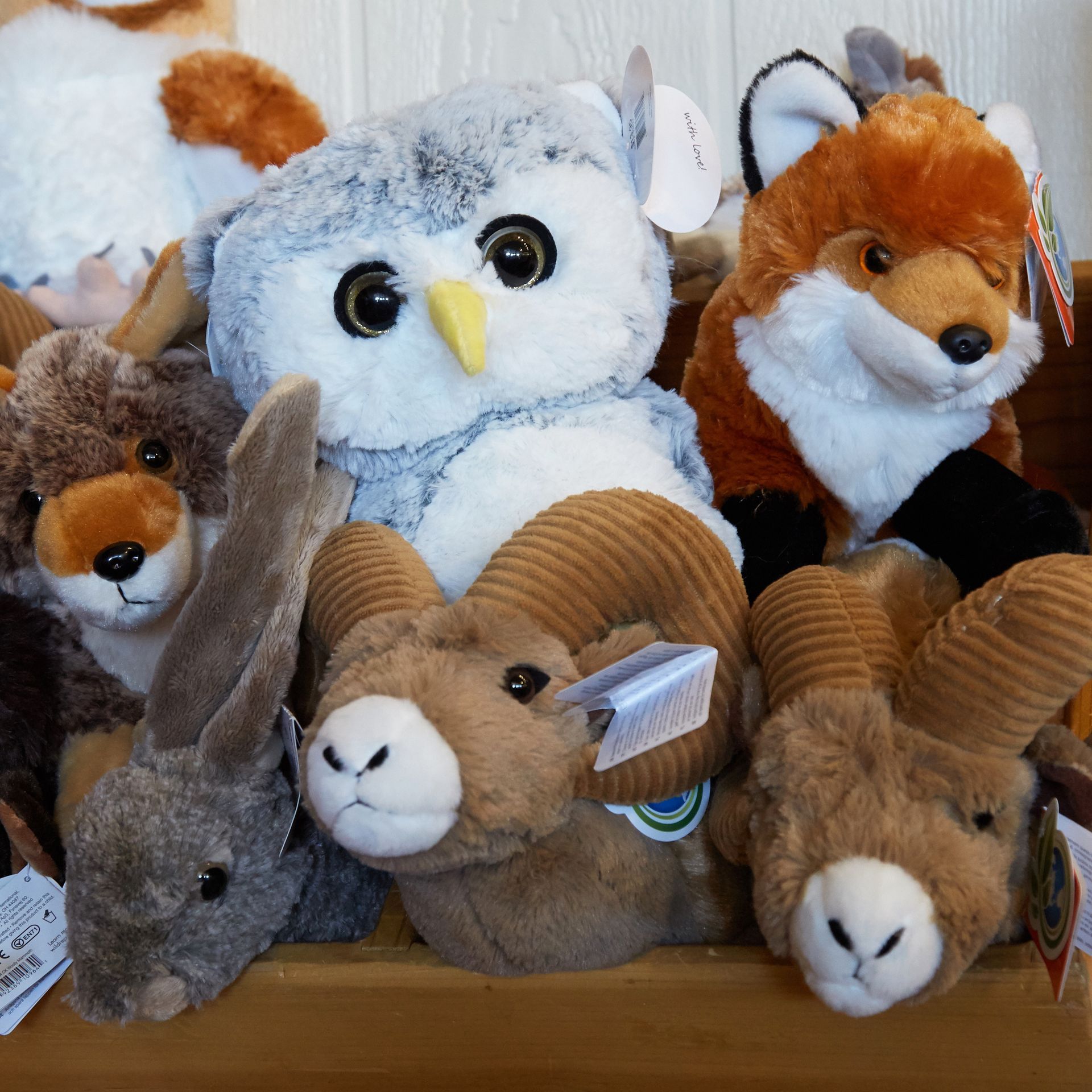
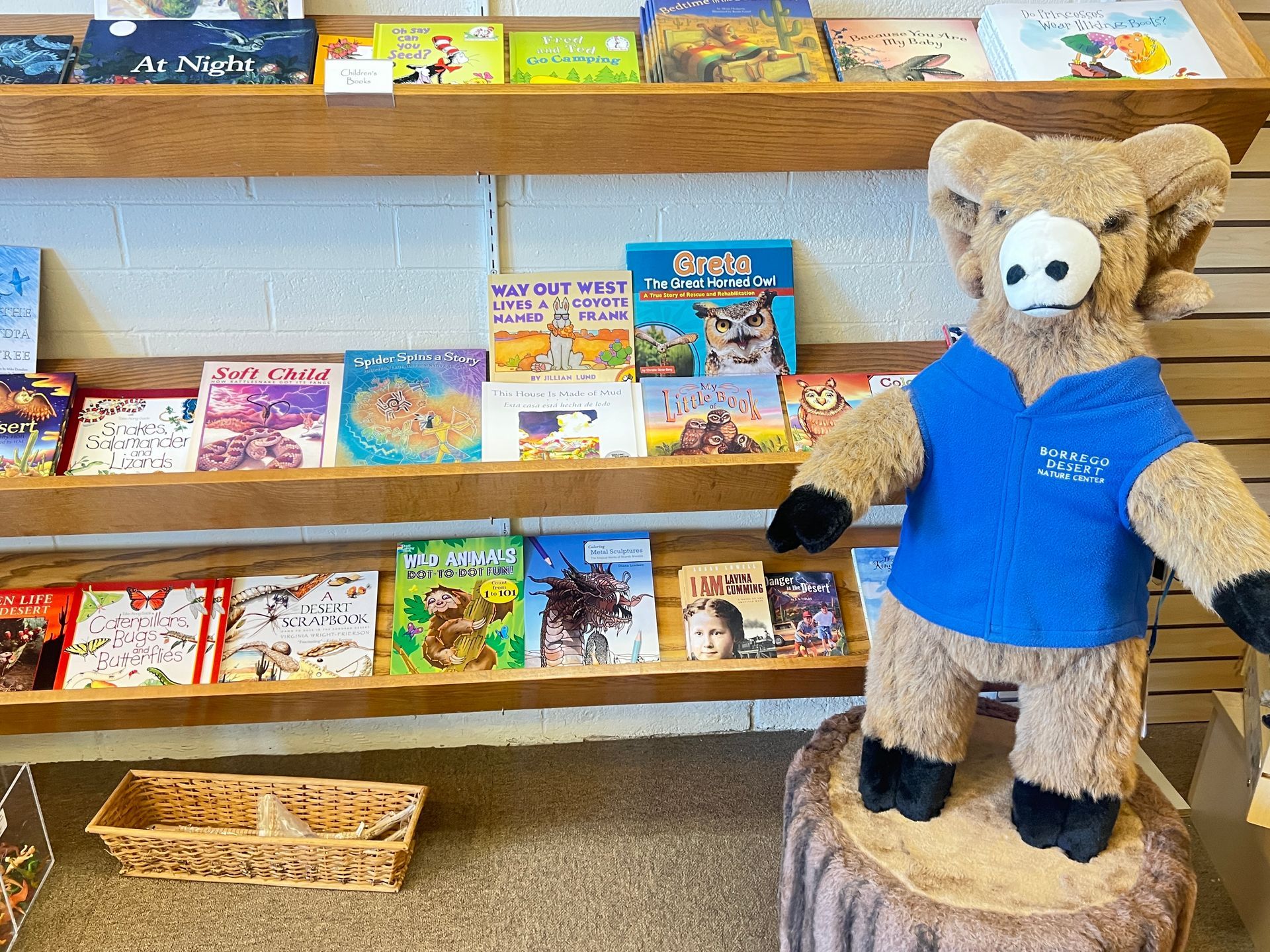
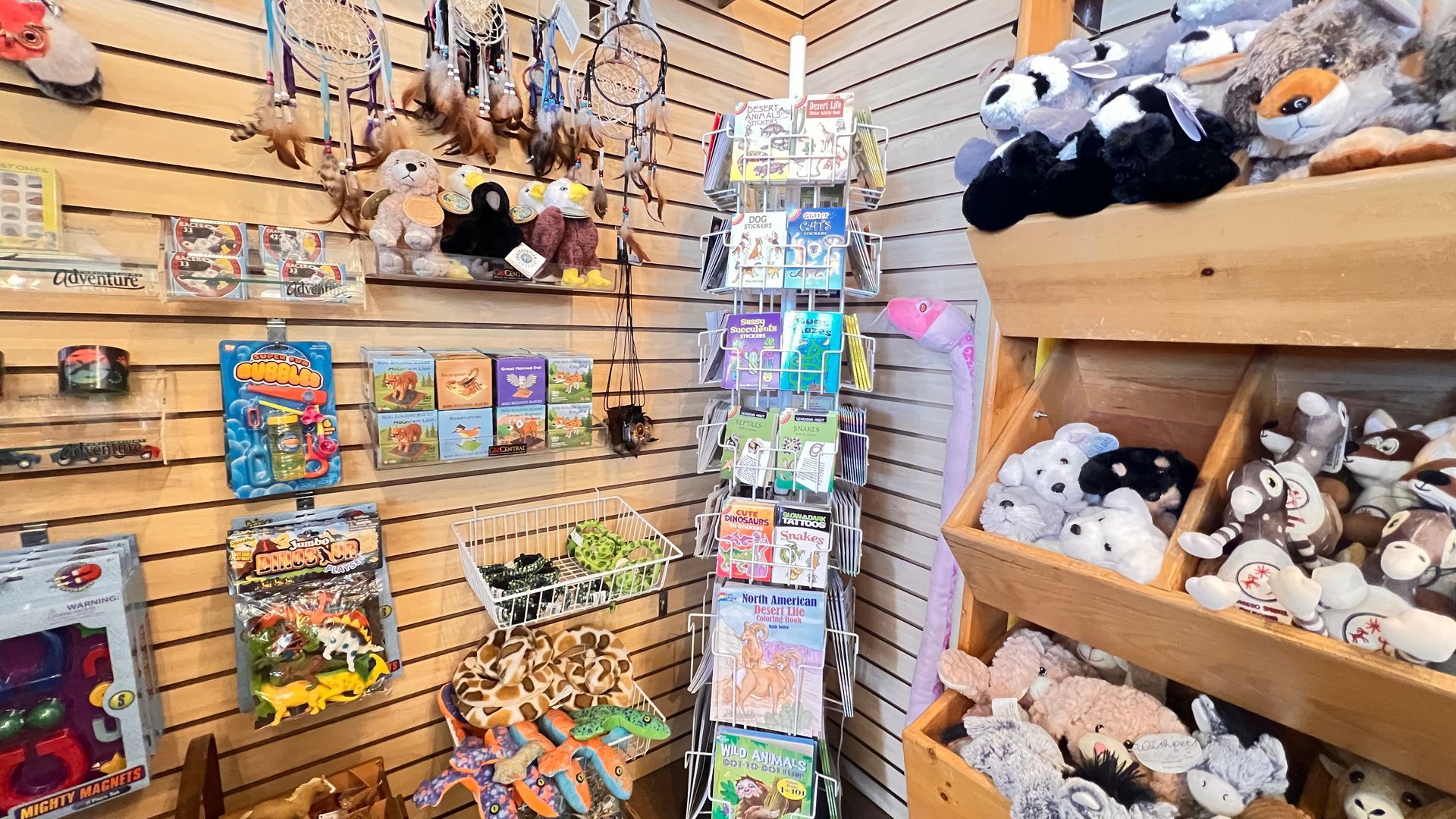
  • Stuffed animal display with foxes, owls, rabbit, and ram plush toys on a shelf.

    Slide title

    Write your caption here
    Button
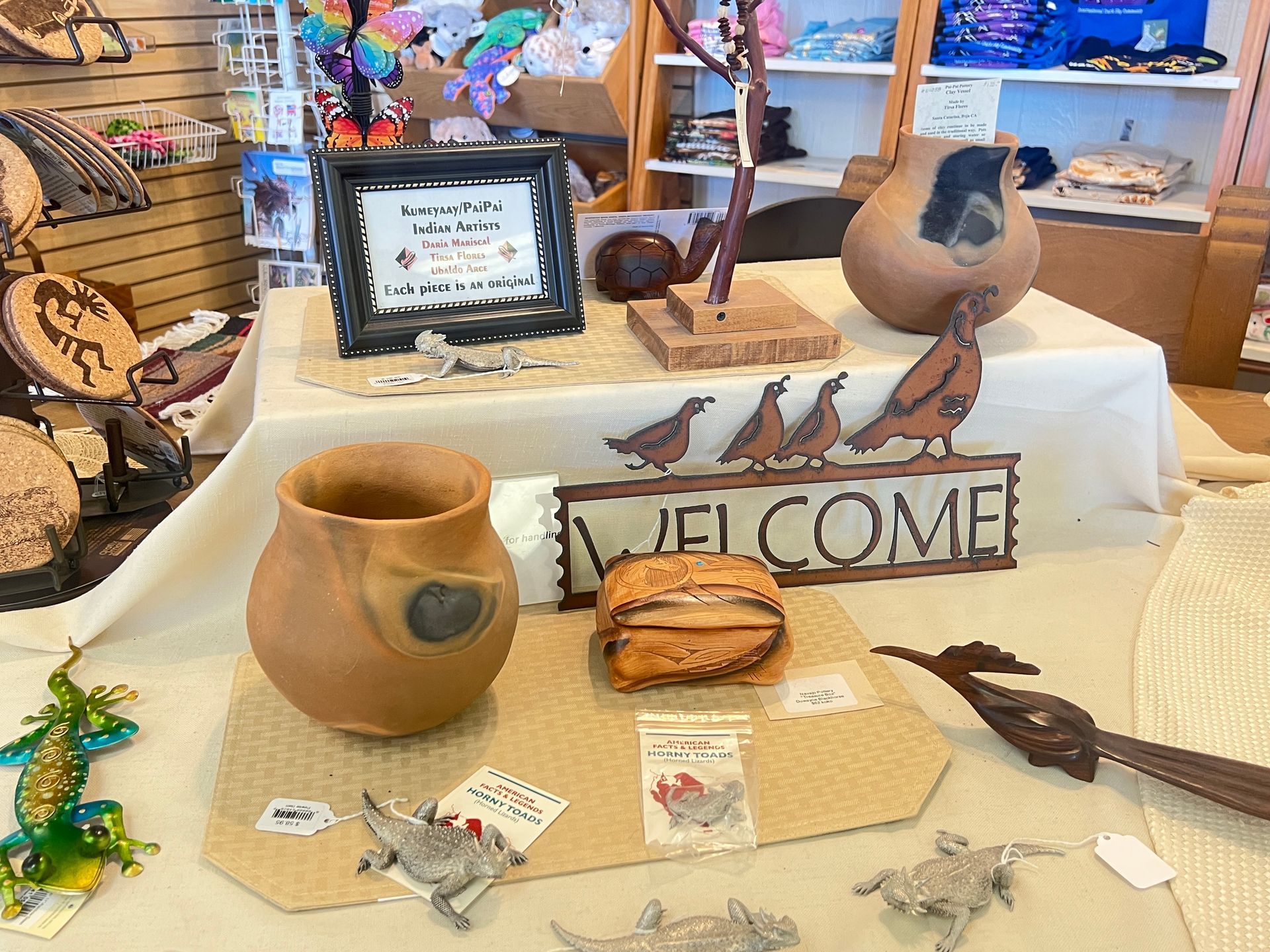
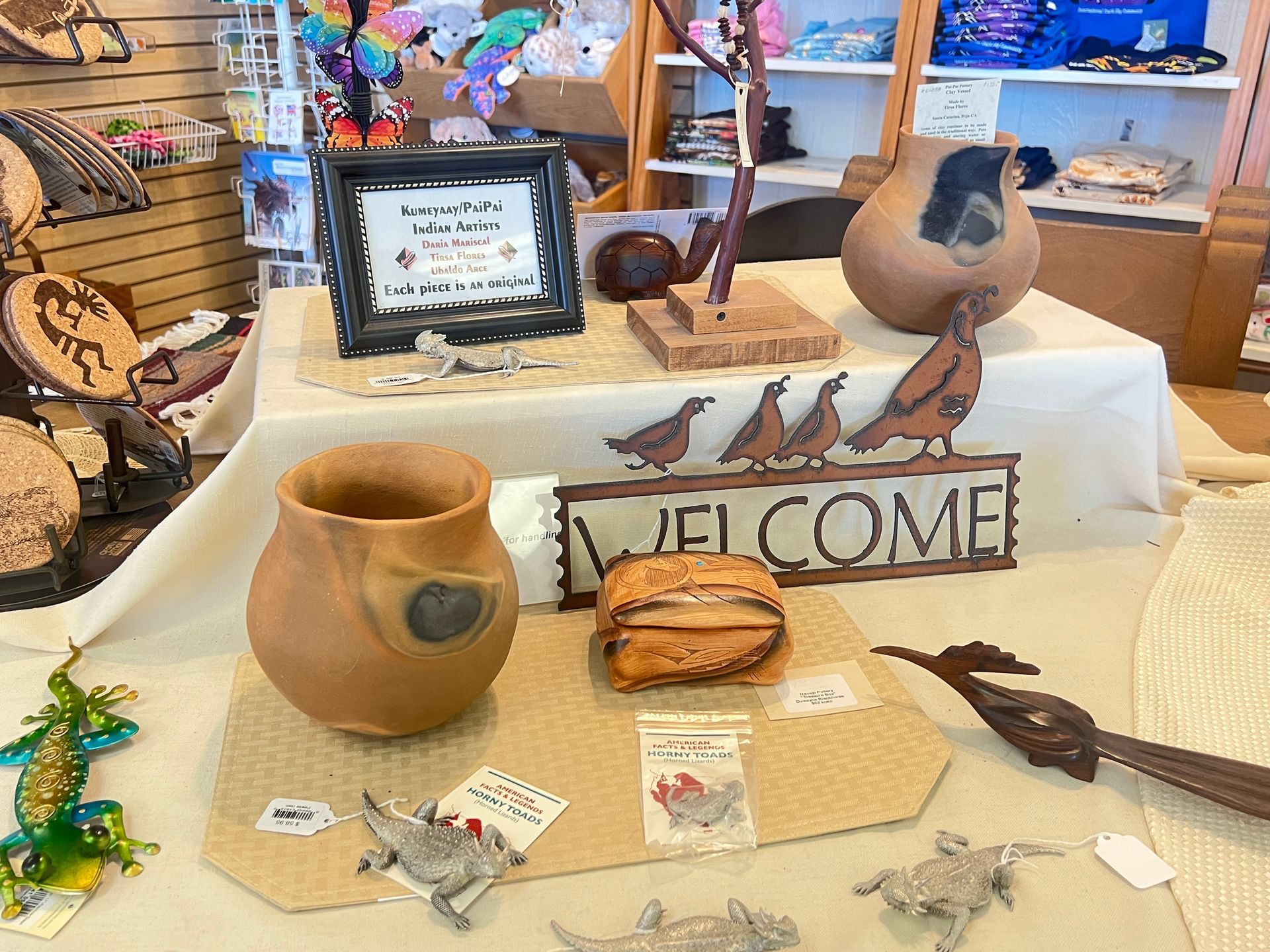
  • Gift shop display with a welcome sign, pottery, wood carvings, and small handmade items on a table.

    Slide title

    Write your caption here
    Button
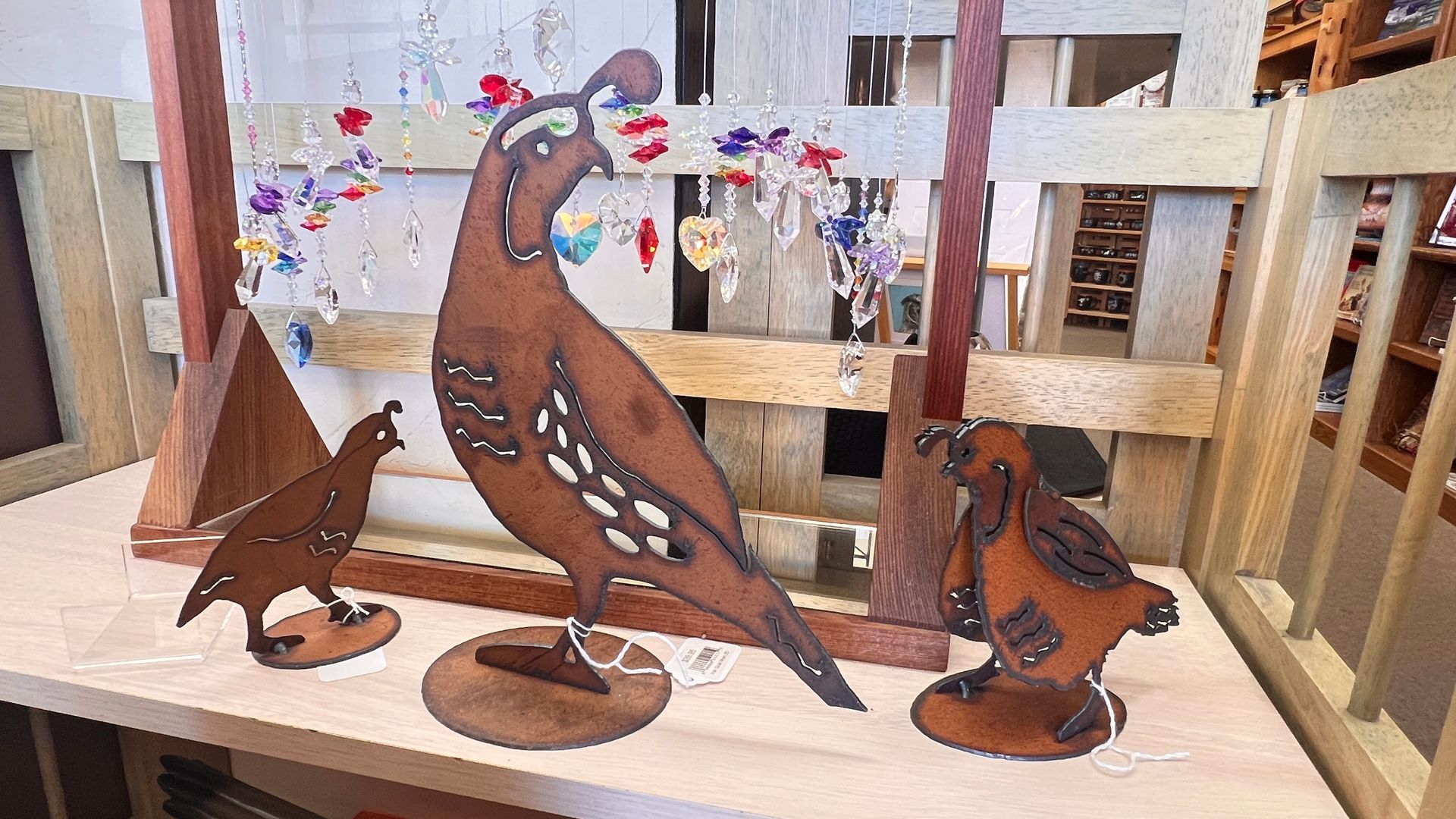
  • Rust-colored metal bird sculptures displayed indoors on a wooden shelf, with a larger bird in the center

    Slide title

    Write your caption here
    Button
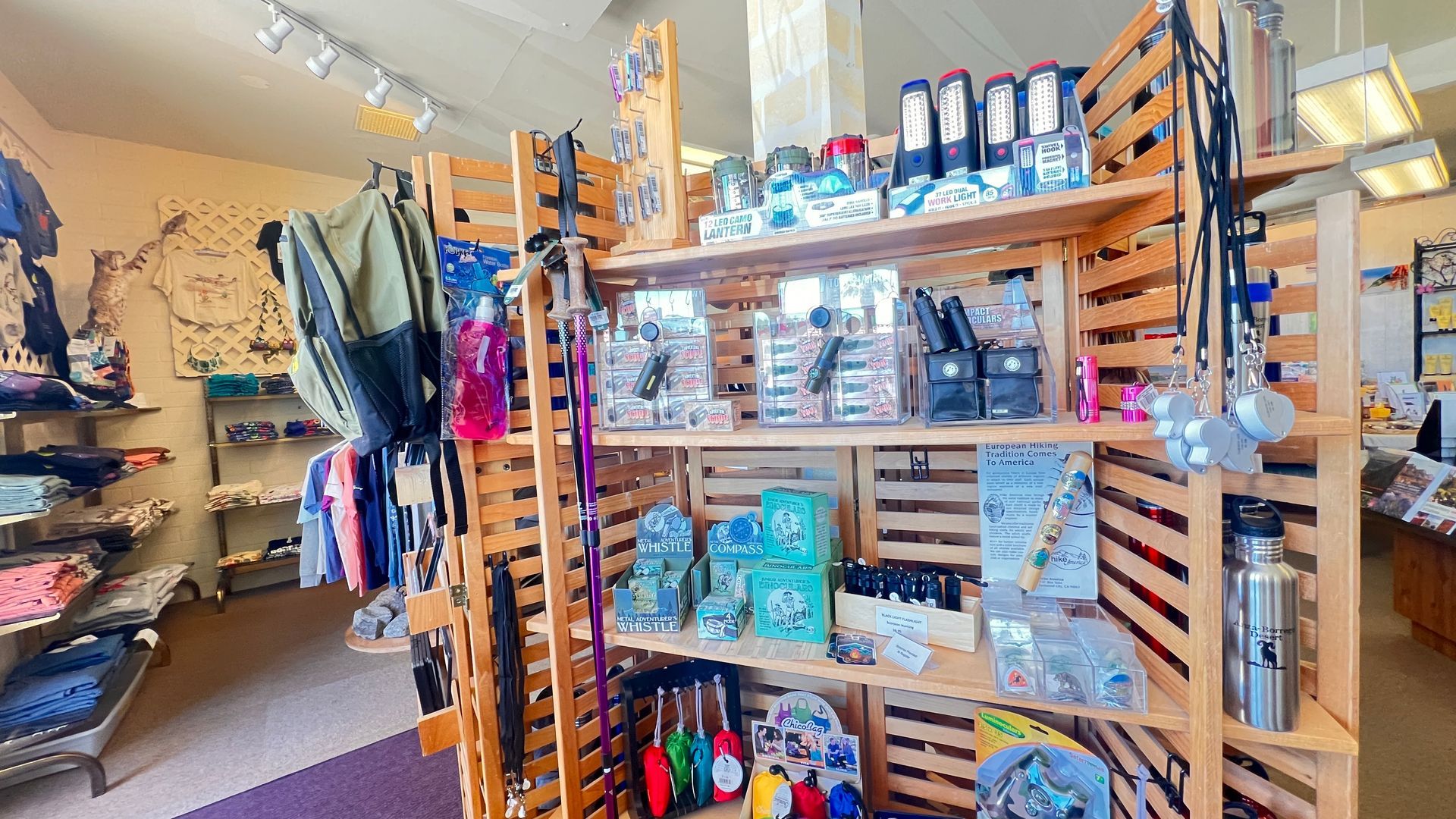
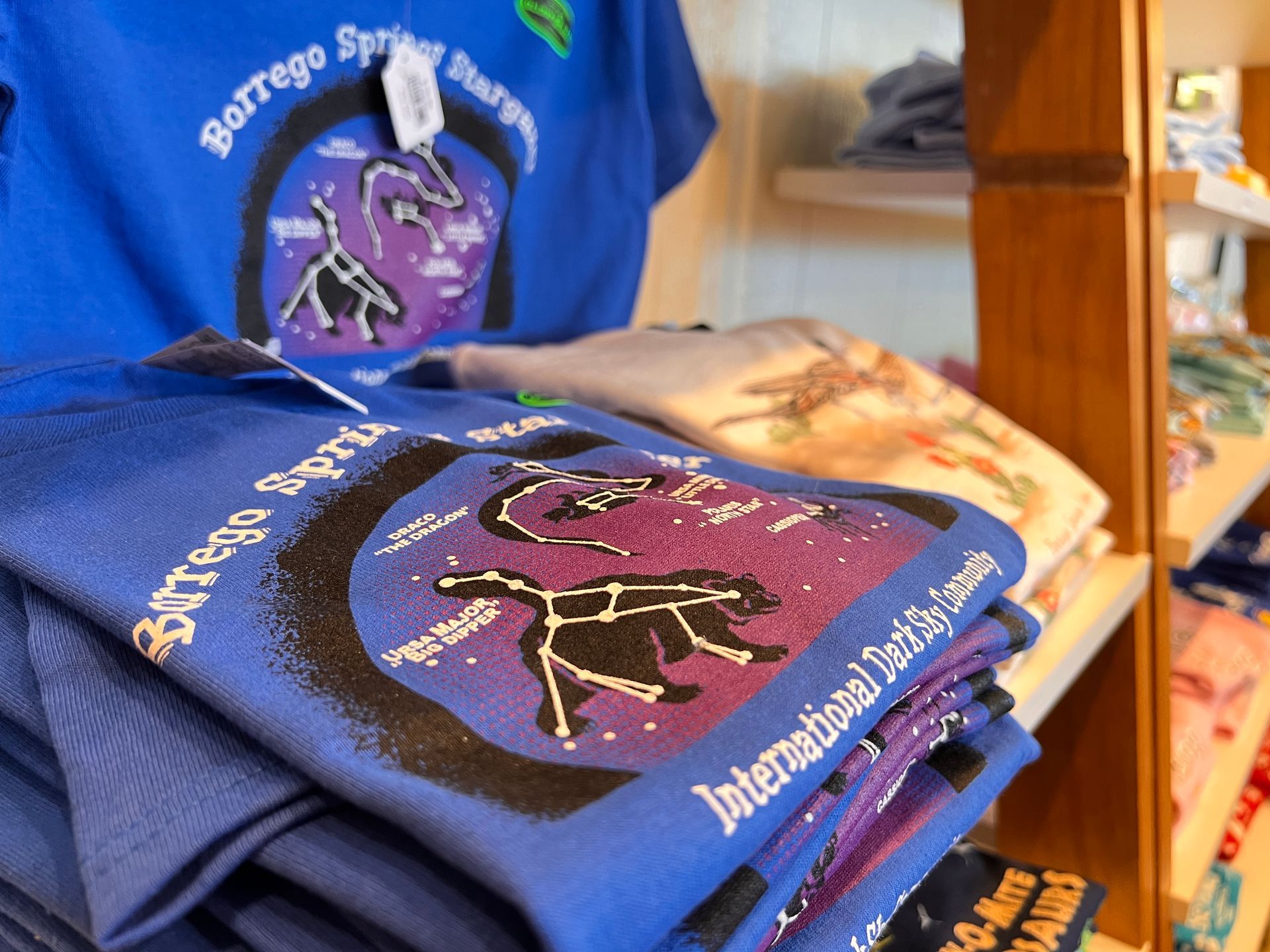
  • Retail store shelves stocked with colorful packaged goods, clothing racks, and wooden display tables

    Slide title

    Write your caption here
    Button
  • A shelf of yellow skincare products, including creams, lotion bottles, and tubes, displayed neatly on a wooden counter.

    Slide title

    Write your caption here
    Button
Shop ABDNHA Online

Support the Borrego Springs Community Concert Association's mission to educate and entertain through eclectic musical events. Your tax-deductible donations fund concerts for the community and local schools, sustaining the arts in Borrego Springs since 1975. 501c3 Non-Profit Corporation.


Shop ABDNHA Online

ABDNHA Visitor Plaza

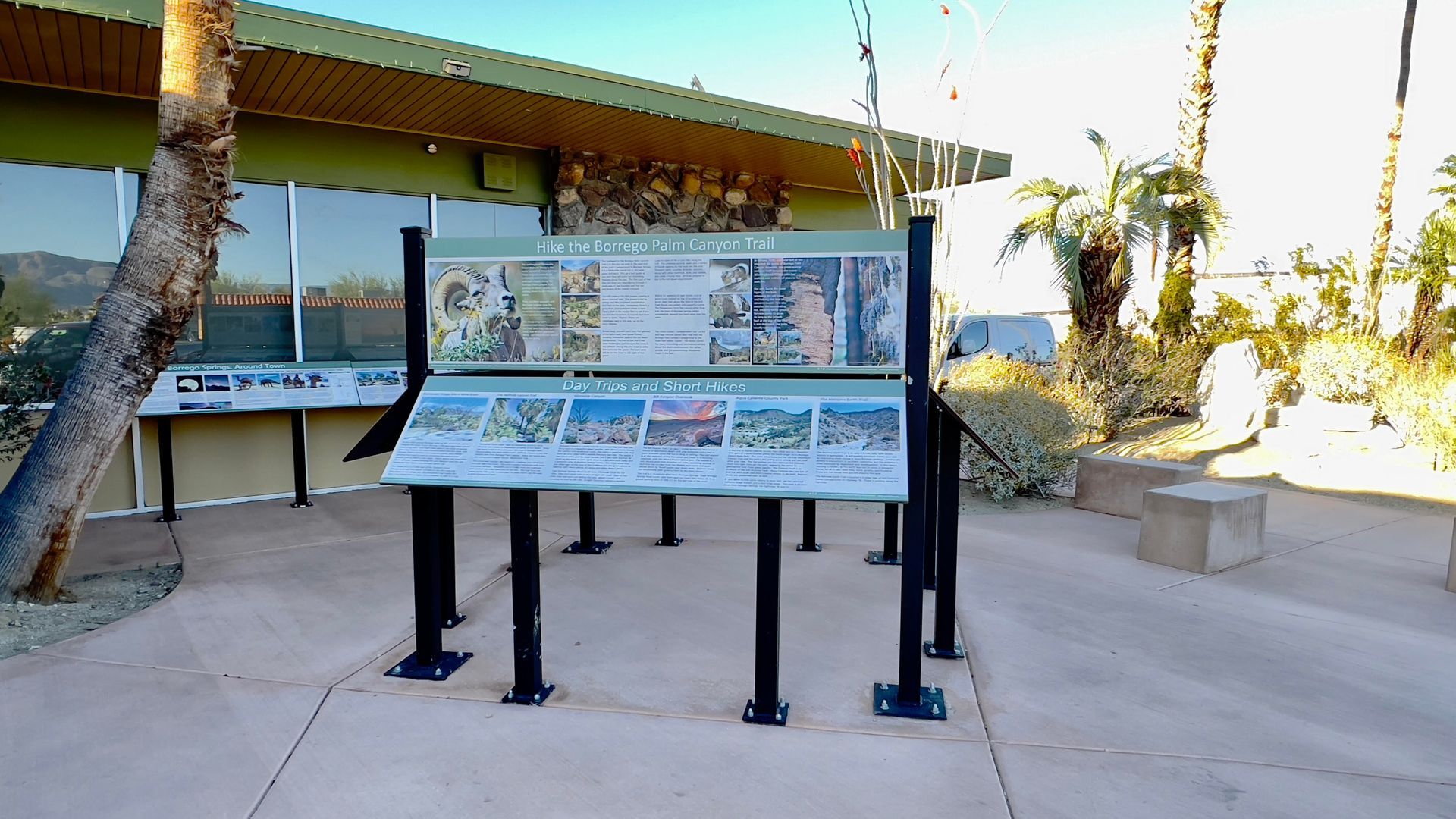
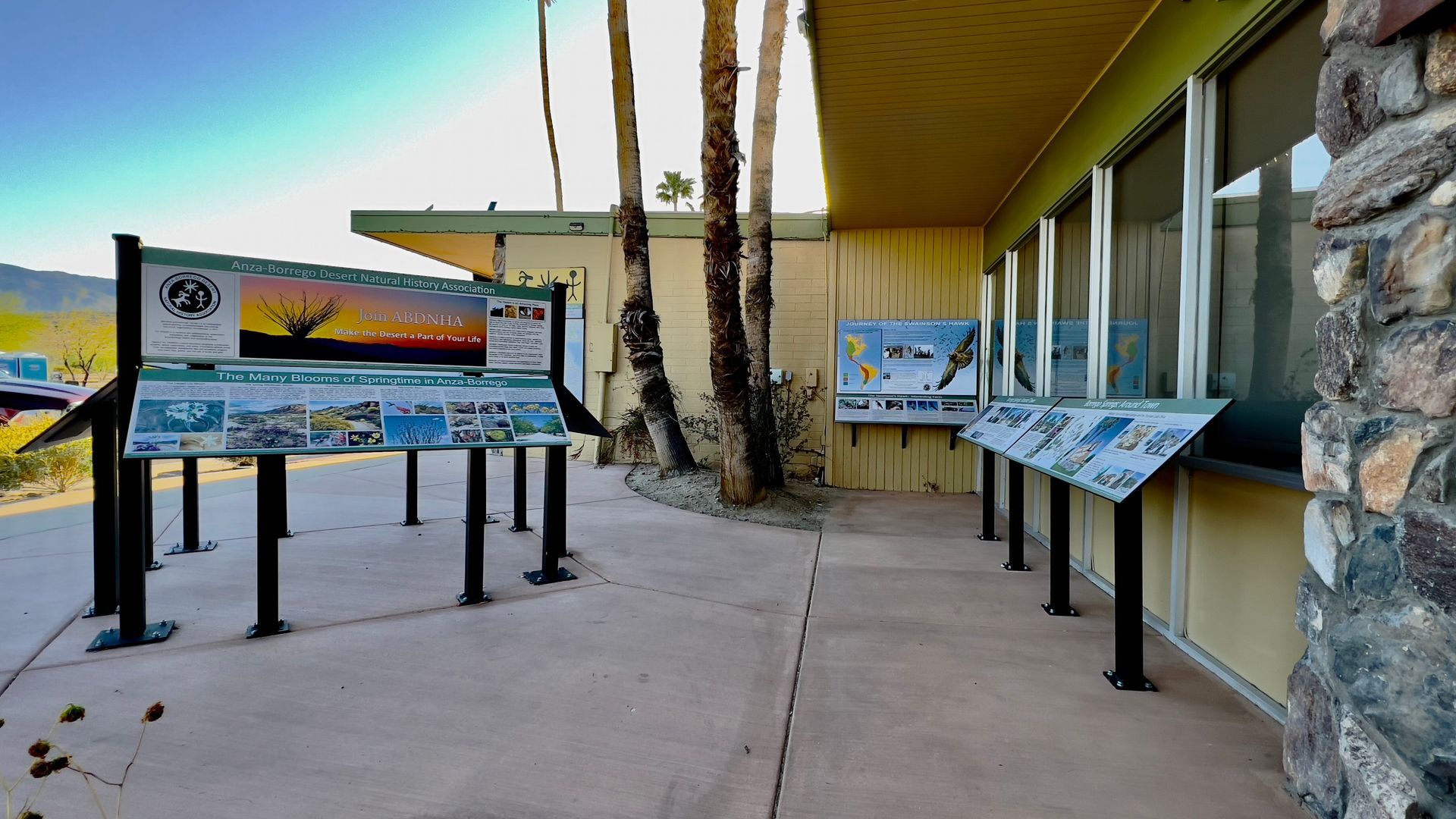
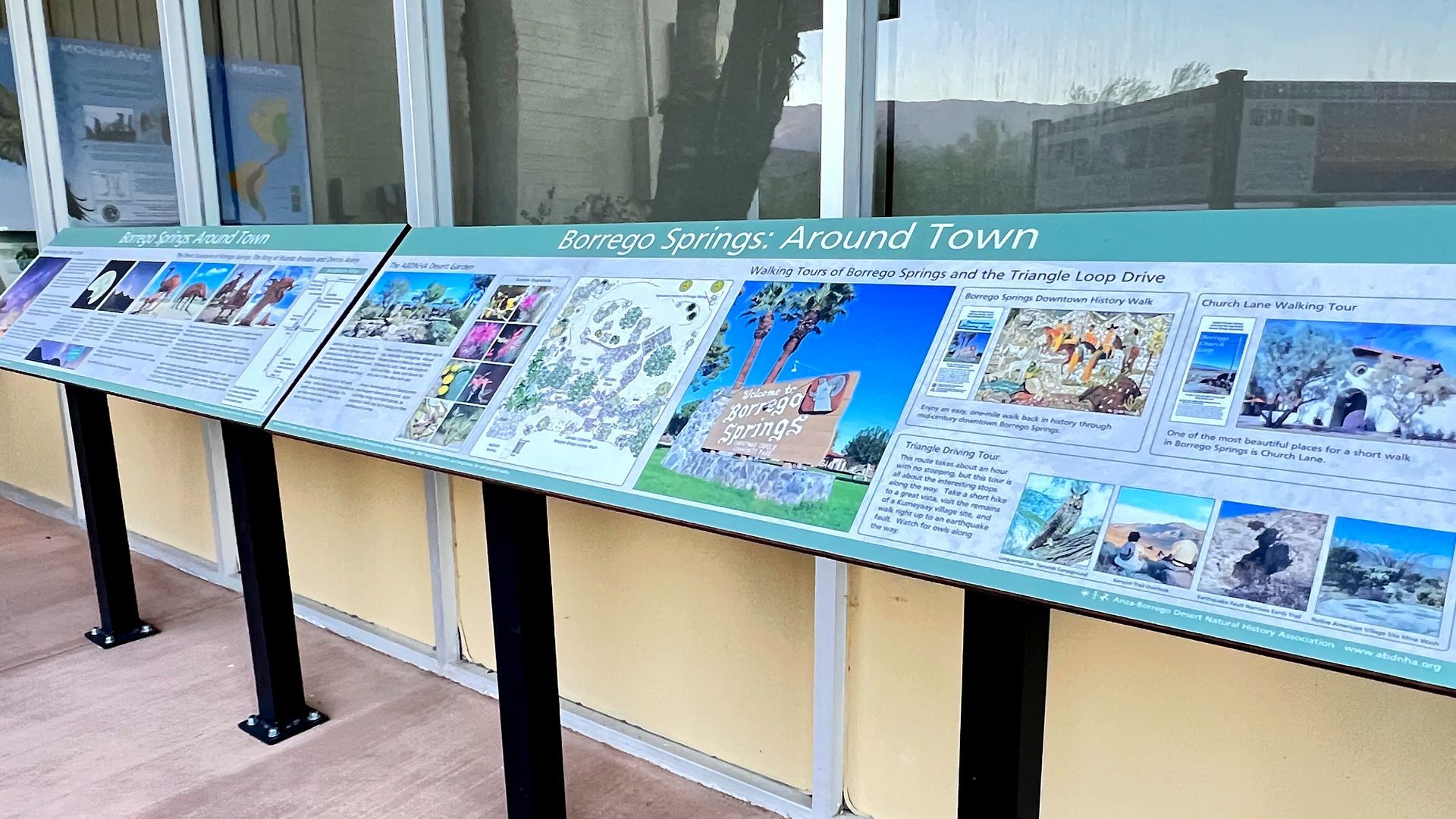
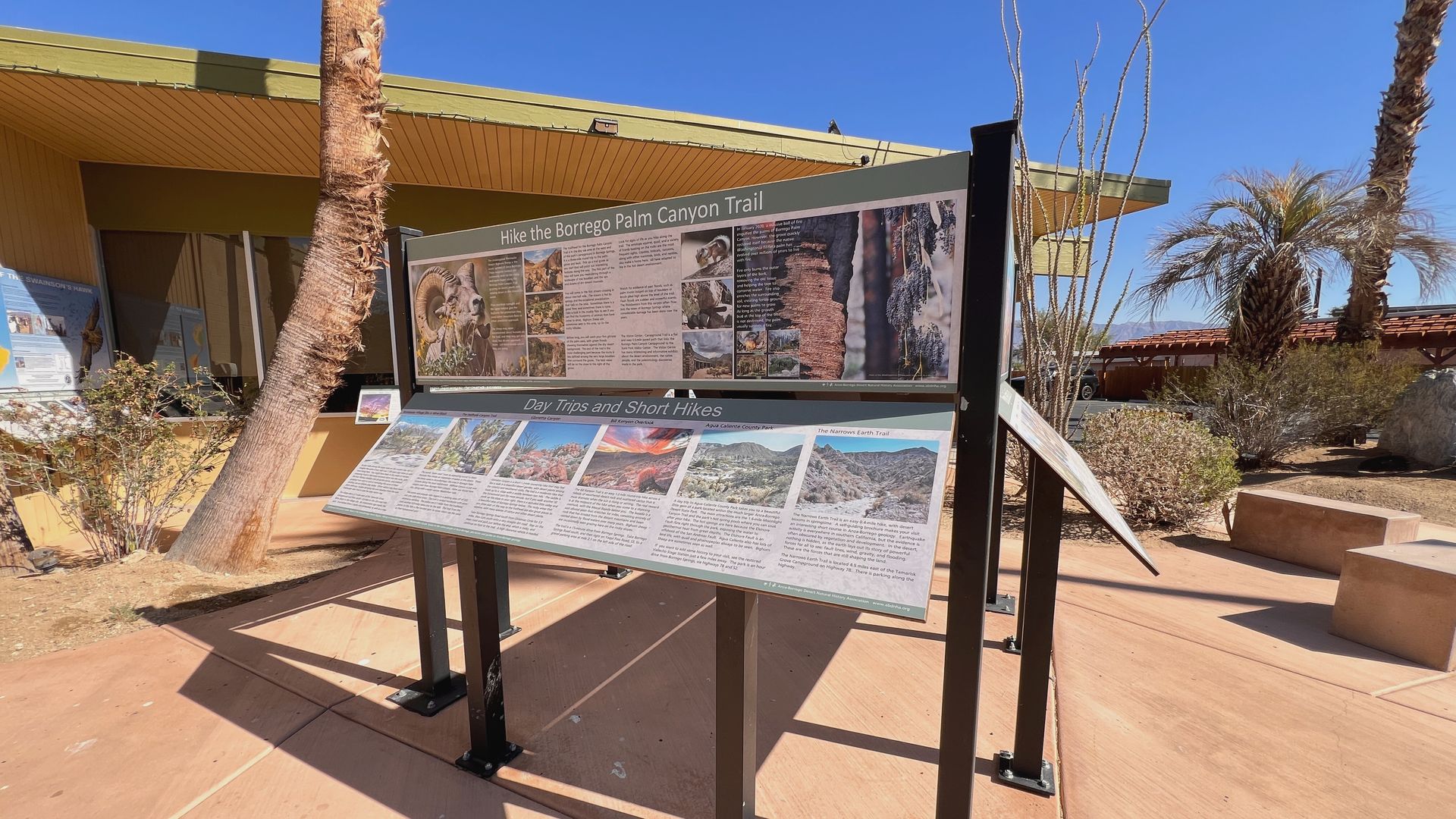
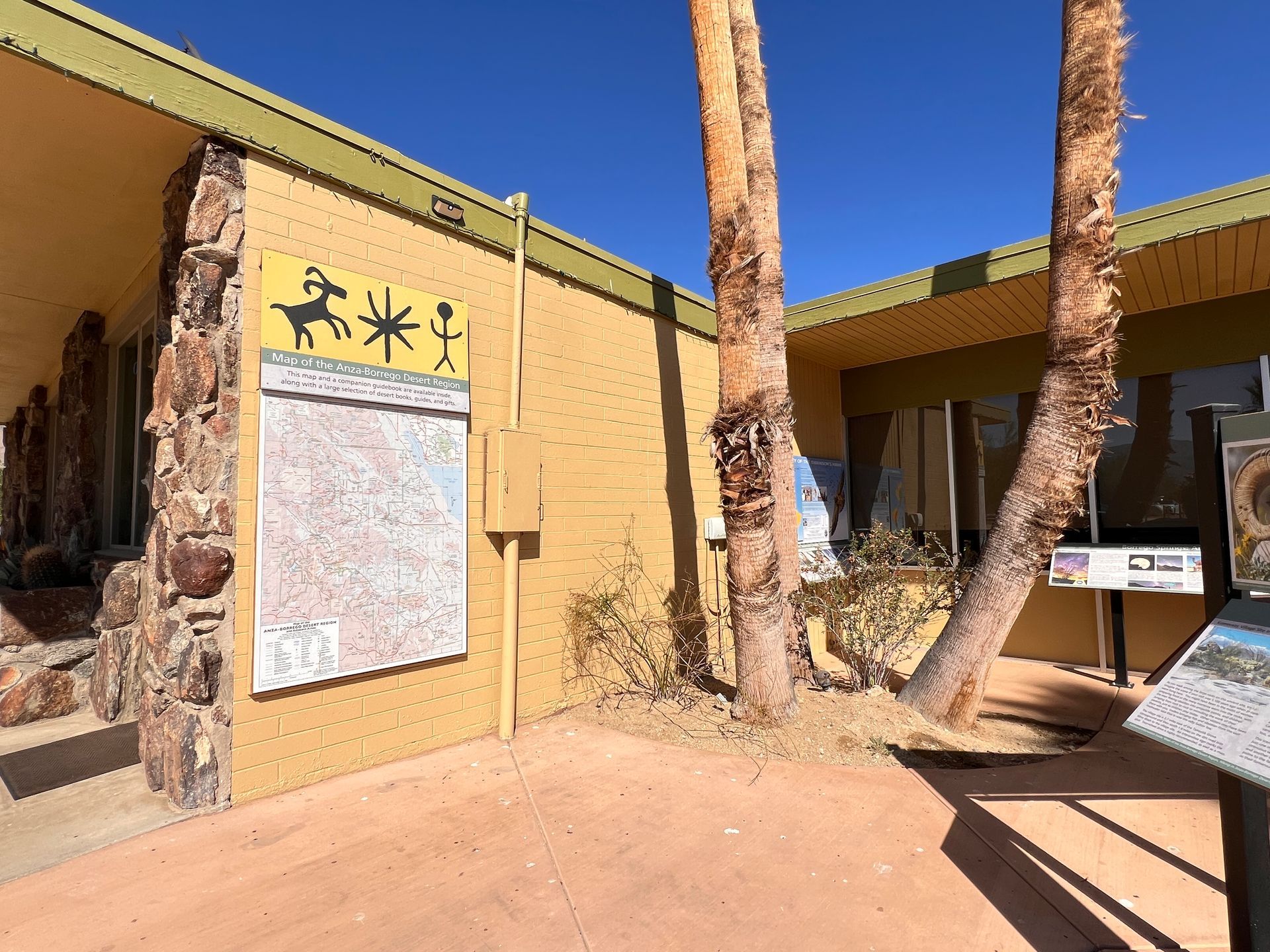
Take a leisurely walk around the building for enriching lessons on the area's history, geology, and wildlife, enhancing your Anza-Borrego Desert experience.

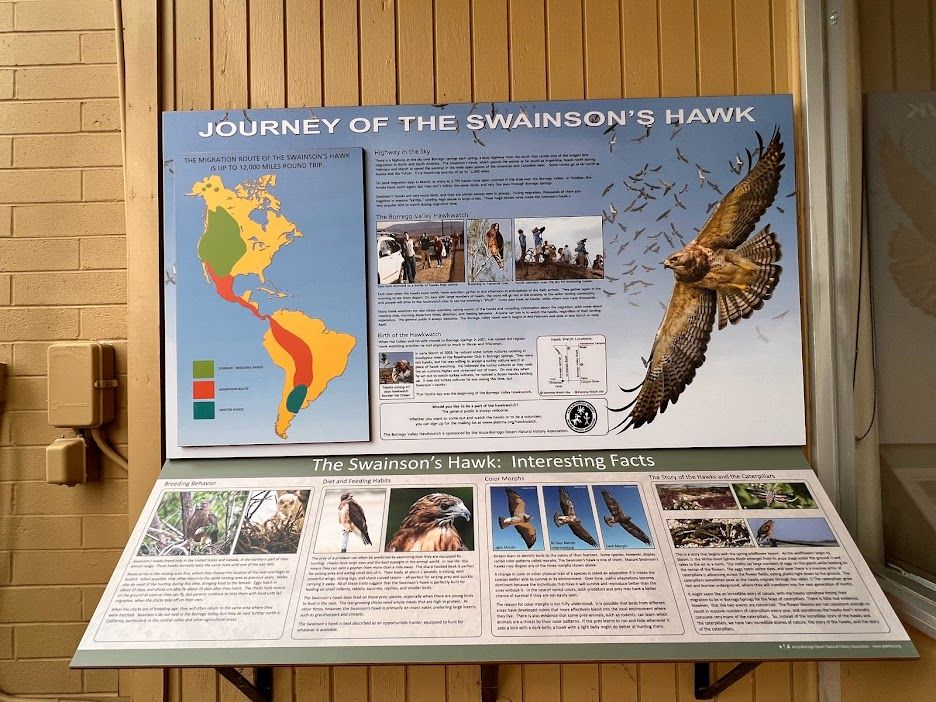
Outdoor museum display boards with maps and photos beside a walkway, under a shaded structure
Outdoor museum exhibit panels along a covered walkway beside a stone wall and windows.

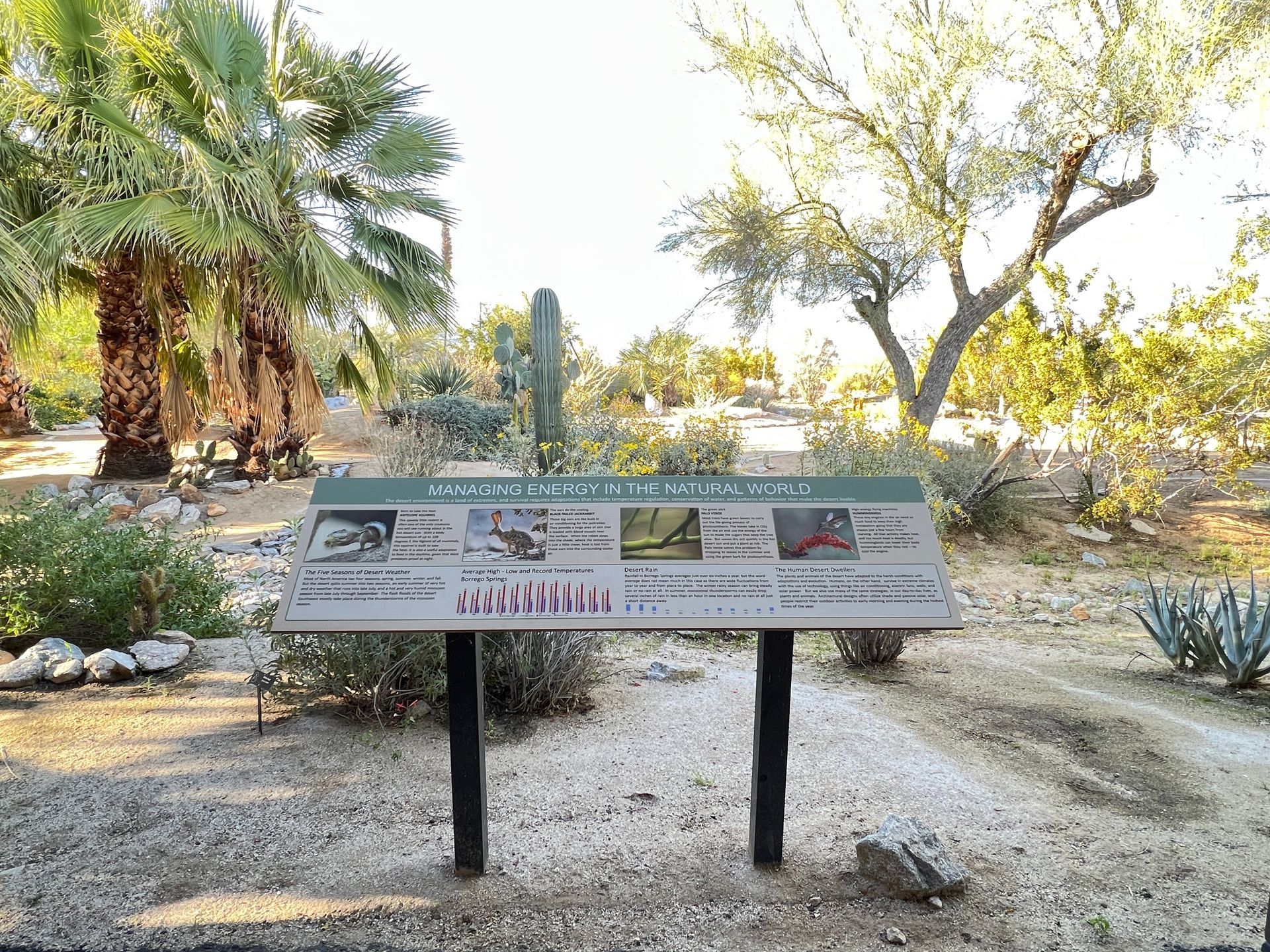
ABDNHA Desert Garden 

Visit & Relax

Visit & Relax

ABDNHA Desert Garden 

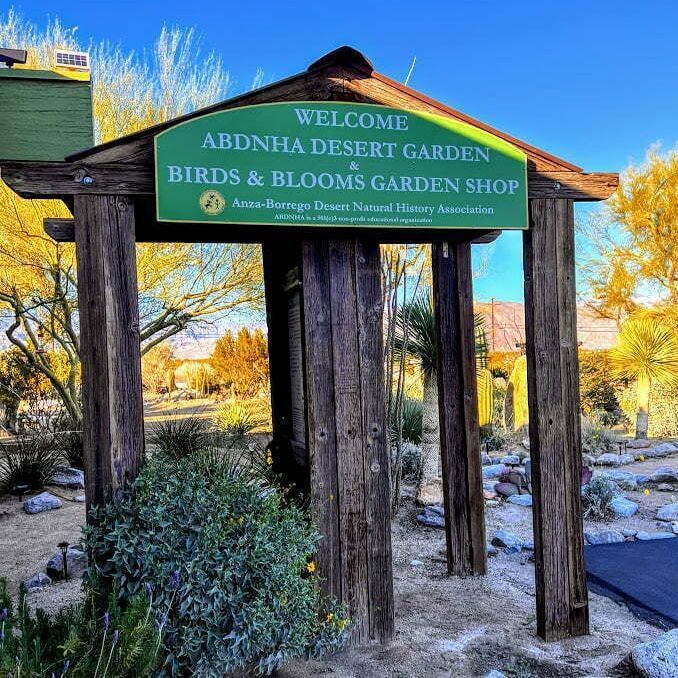
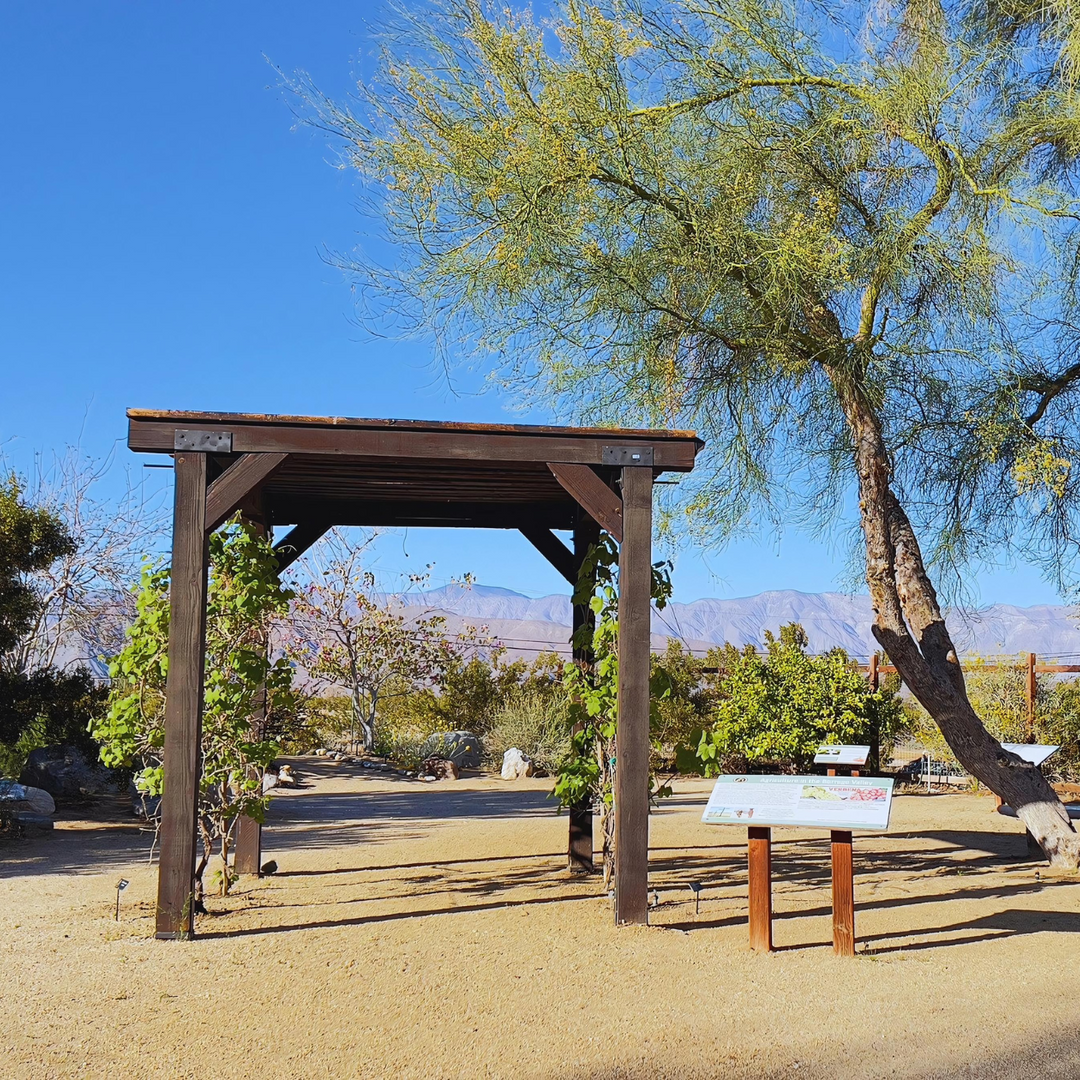
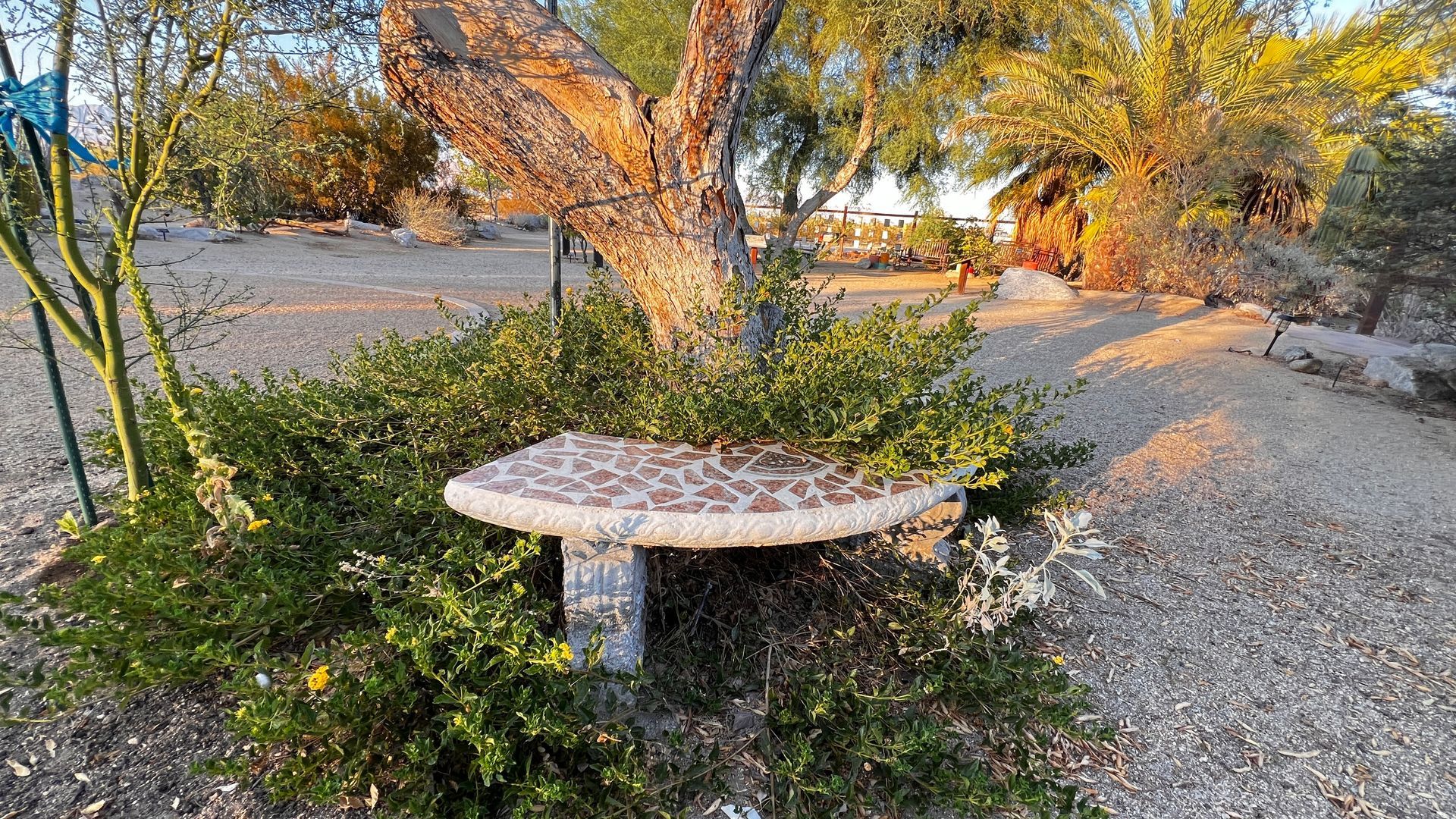
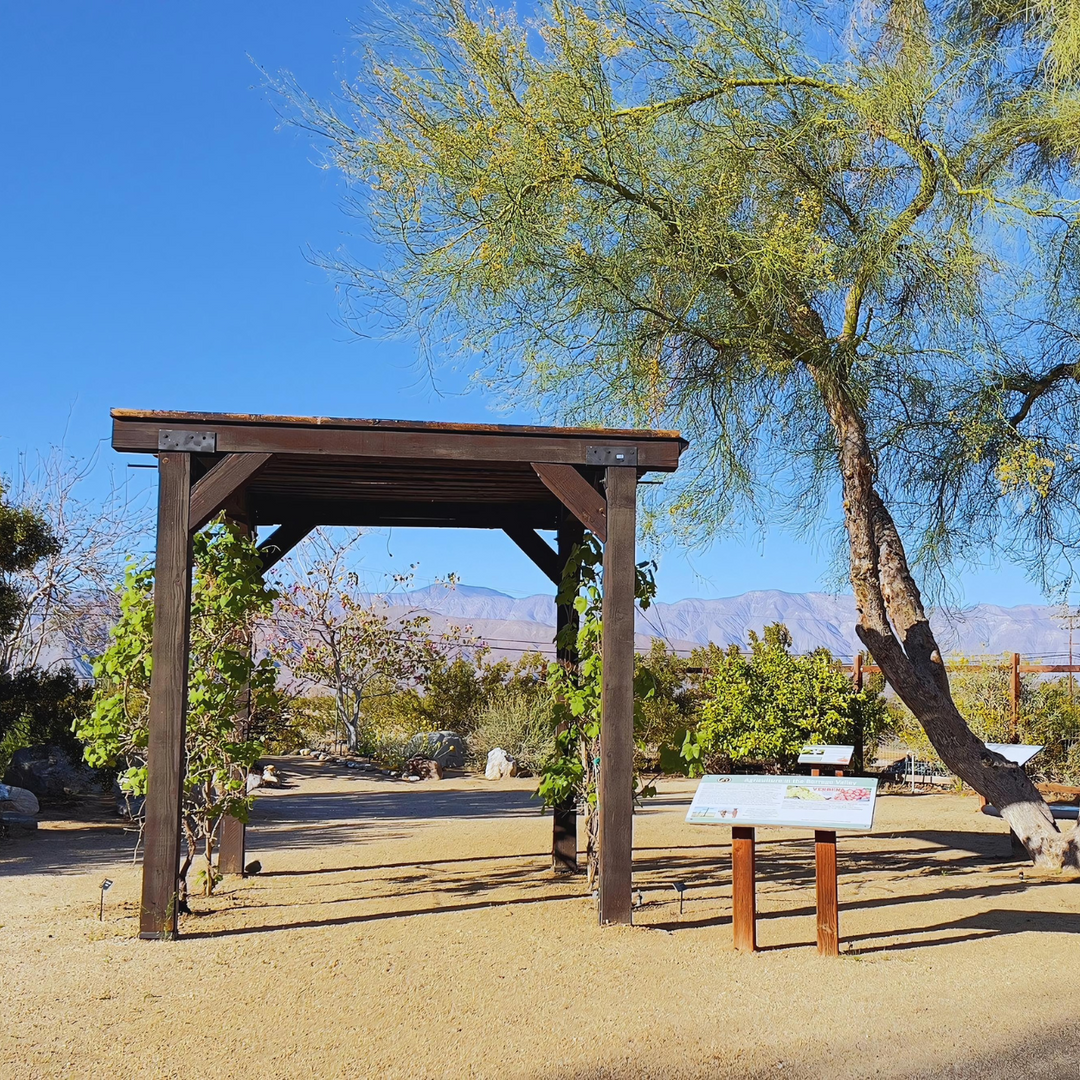
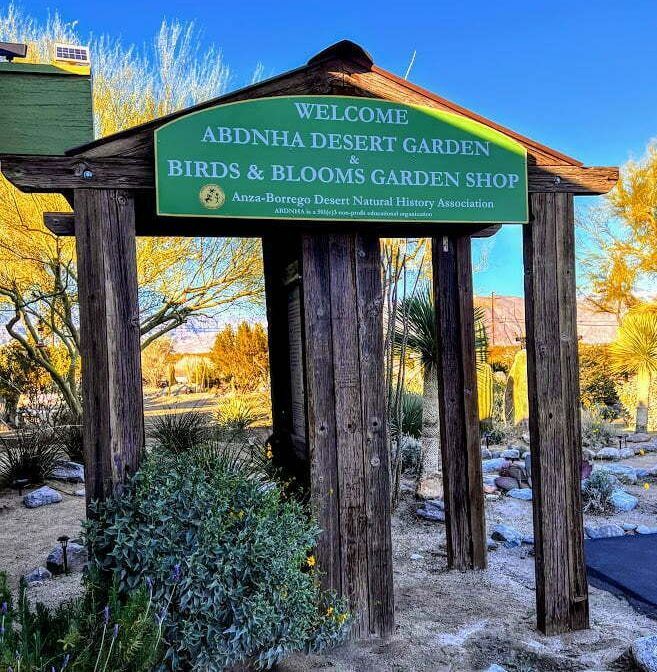
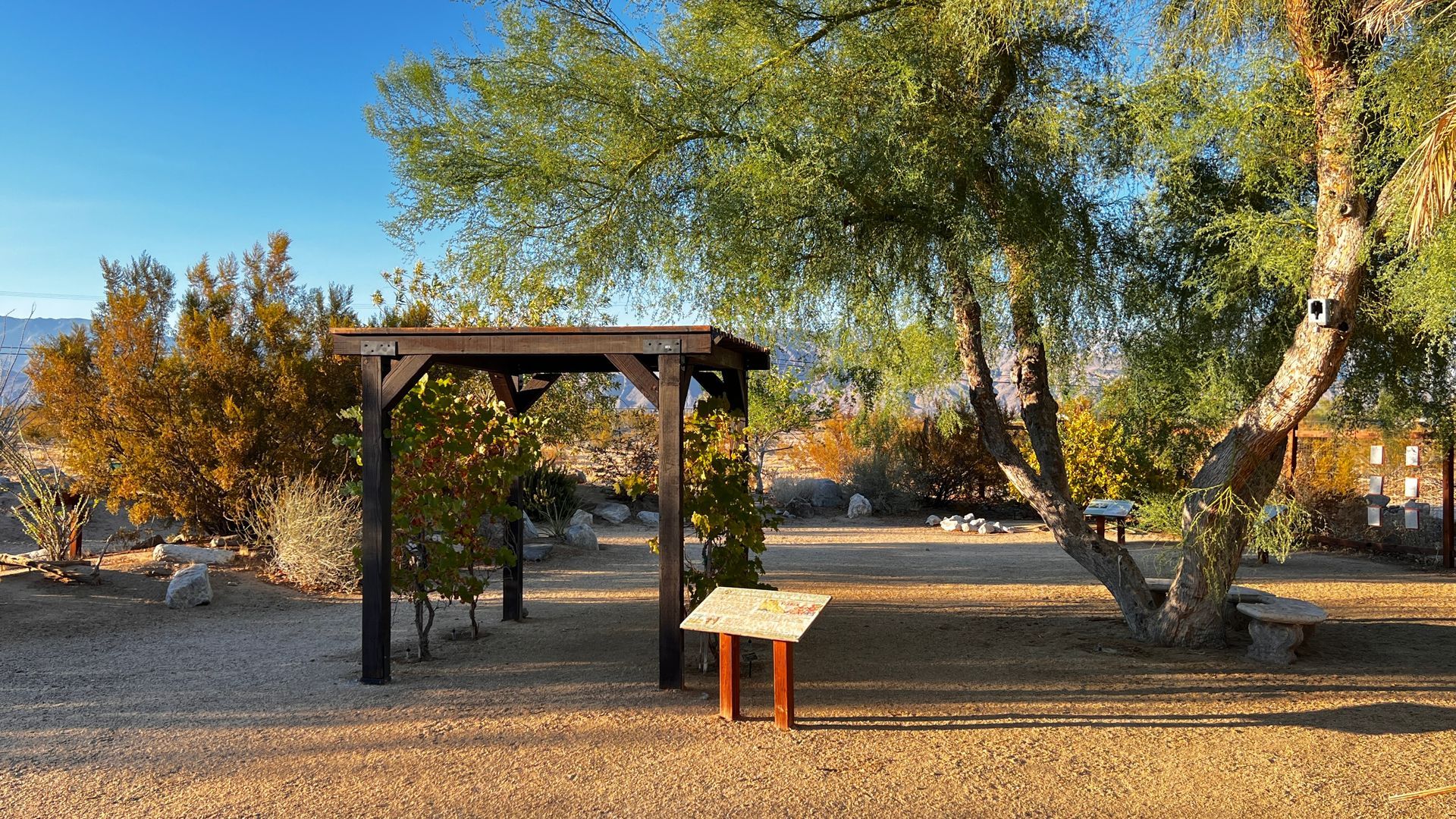
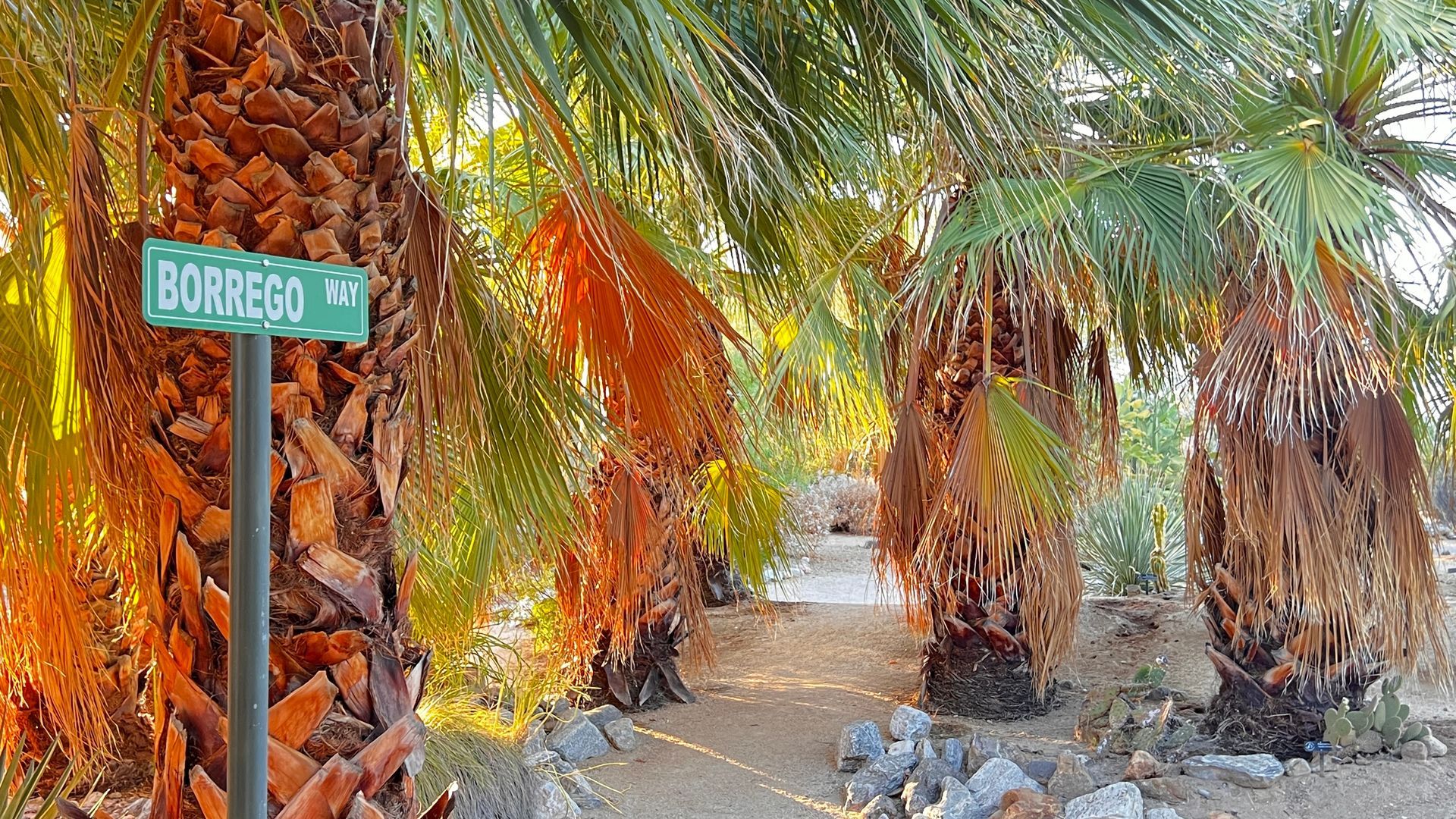
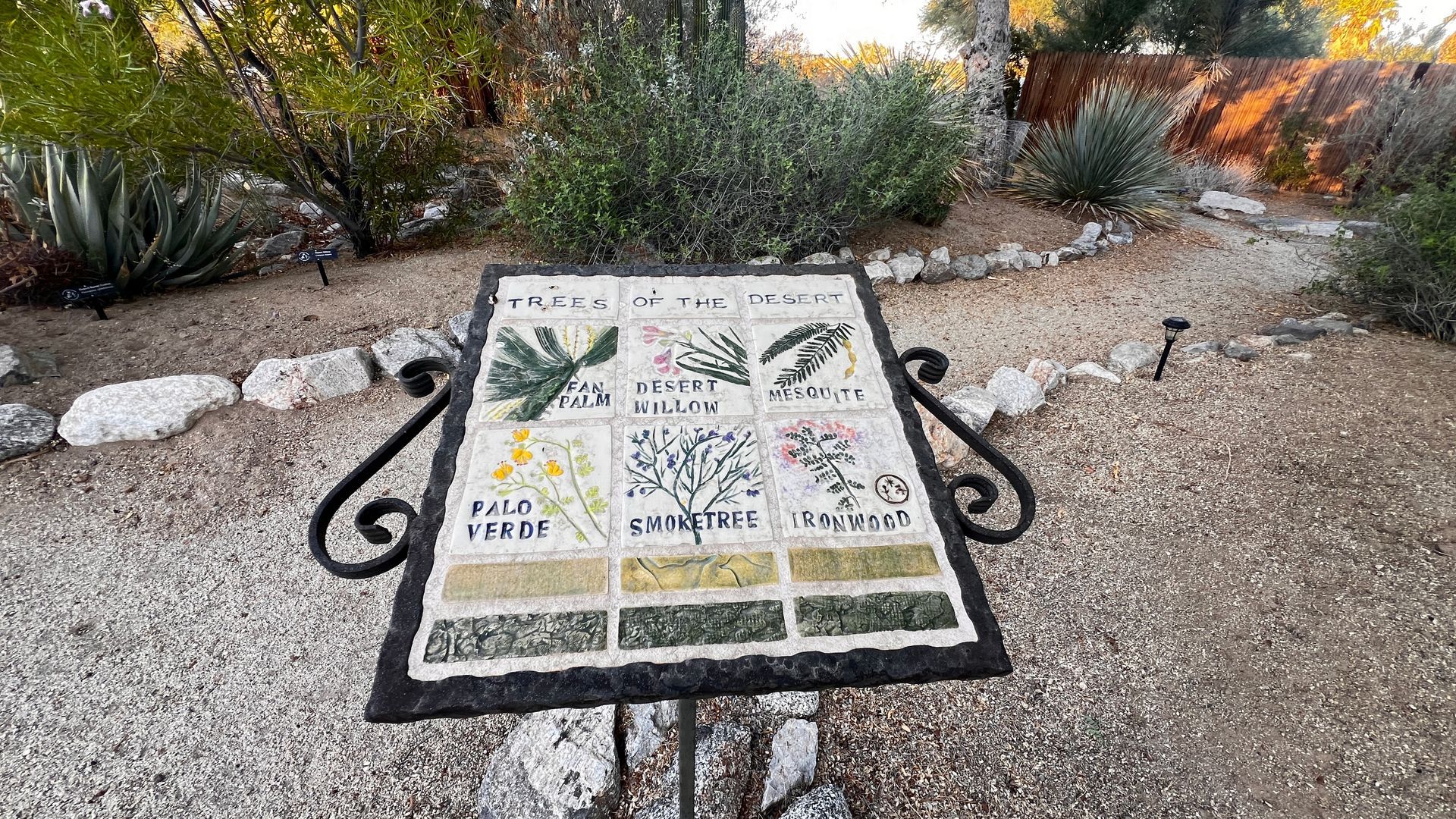
Explore the ABDNHA Desert Garden in Borrego Springs, where artistic landscapes meet a vibrant ecosystem of desert flora and fauna, open daily from sunrise to sunset. Enjoy shaded walkways, wildlife sightings, and a glimpse into local history, all in a serene setting.


This public oasis welcomes visitors for leisure and small-scale events by reservation.


Learn More
Borrego Dark Sky Coalition logo on an orange oval with black and white text

About The Borrego Springs Dark Sky Coalition

In 2007, Borrego Springs residents formed a committee to achieve Dark Sky Certification from the International Dark Sky Association, culminating in the approval of a comprehensive 90-page application in 2009, which included a lighting survey, educational initiatives, lighting modifications, and regulatory assurances for sustained low light levels. Learn more on darksky.org!


>>An Enlightening Interview, New Dark Sky President -  Article by Nancy McRae


“THE SAND PAPER” ABDNHA MEMBER NEWSLETTER

"The Sand Paper," published five times a year by ABDNHA, features in-depth articles on the Anza-Borrego region, ranging from natural history to cultural insights. Members receive early access to event information and exclusive opportunities to engage with the content and community activities.

Learn More
Anza-Borrego Desert Natural History Association circular logo with desert animals and a starburst

ABDNHA (founded 1971), a 501(c)(3) non-profit, educates and inspires desert appreciation. Visit their store (652 Palm Canyon Dr.) for info & events! Donate today and make a difference.

Donate Donate

Become a Member of the ABDNHA, a community passionate about desert education, conservation, and sharing its wonders.


Become a Member! Become a Member!
Arizona-Sonora Desert Museum entrance with sign, adobe-style building, desert landscaping, and palm trees

The Impact

Anza-Borrego Desert Natural History Association (ABDNHA)

The Anza-Borrego Desert Natural History Association (ABDNHA) plays a pivotal role in both the local community of Borrego Springs and the wider appreciation of the Anza-Borrego Desert region.


Here are some key impacts of the ABDNHA:

Educational Outreach

ABDNHA's educational programs, lectures, and tours provide invaluable learning opportunities for all ages. By offering a deeper understanding of the desert's ecology, geology, flora, and fauna, ABDNHA fosters a greater appreciation and respect for natural environments among residents and visitors alike.

Conservation Awareness

Through its various initiatives, ABDNHA raises awareness about the importance of conserving delicate desert ecosystems. Its efforts help to protect and preserve the natural beauty of the Anza-Borrego Desert for future generations, highlighting the critical balance between human activity and environmental stewardship.

Civic Participation

ABDNHA acts as a community hub, bringing together people with a shared interest in the desert's natural history and cultural heritage. Its events and programs create a sense of community among Borrego Springs residents and provide an inviting atmosphere for visitors, enhancing the social fabric of the area.

Economic Contribution

By attracting visitors to Borrego Springs for hikes, lectures, and special events, ABDNHA contributes to the local economy. Tourists and participants in ABDNHA programs often support local businesses, lodging, and dining establishments, thereby boosting economic activity in the region.

Research

ABDNHA supports and often collaborates in research projects and documentation efforts related to the Anza-Borrego Desert. These scholarly activities contribute to the scientific understanding of the area, adding to the body of knowledge on desert environments and informing conservation strategies.

Cultural Preservation

ABDNHA's work extends to the preservation of the cultural heritage of the Anza-Borrego Desert, including the history and traditions of its native peoples. By educating the public about the region's rich cultural past, ABDNHA ensures that this important aspect of the desert's identity is not forgotten.

Anza-Borrego Desert Natural History Association

P O BOX 310

652 Palm Canyon Drive.

 Borrego Springs, CA 92004


Office: 760-767-3052

Desert Store & Nature Center:

760-767-3098

Learn More About Anza Borrego
By Dennis Mammana August 6, 2026
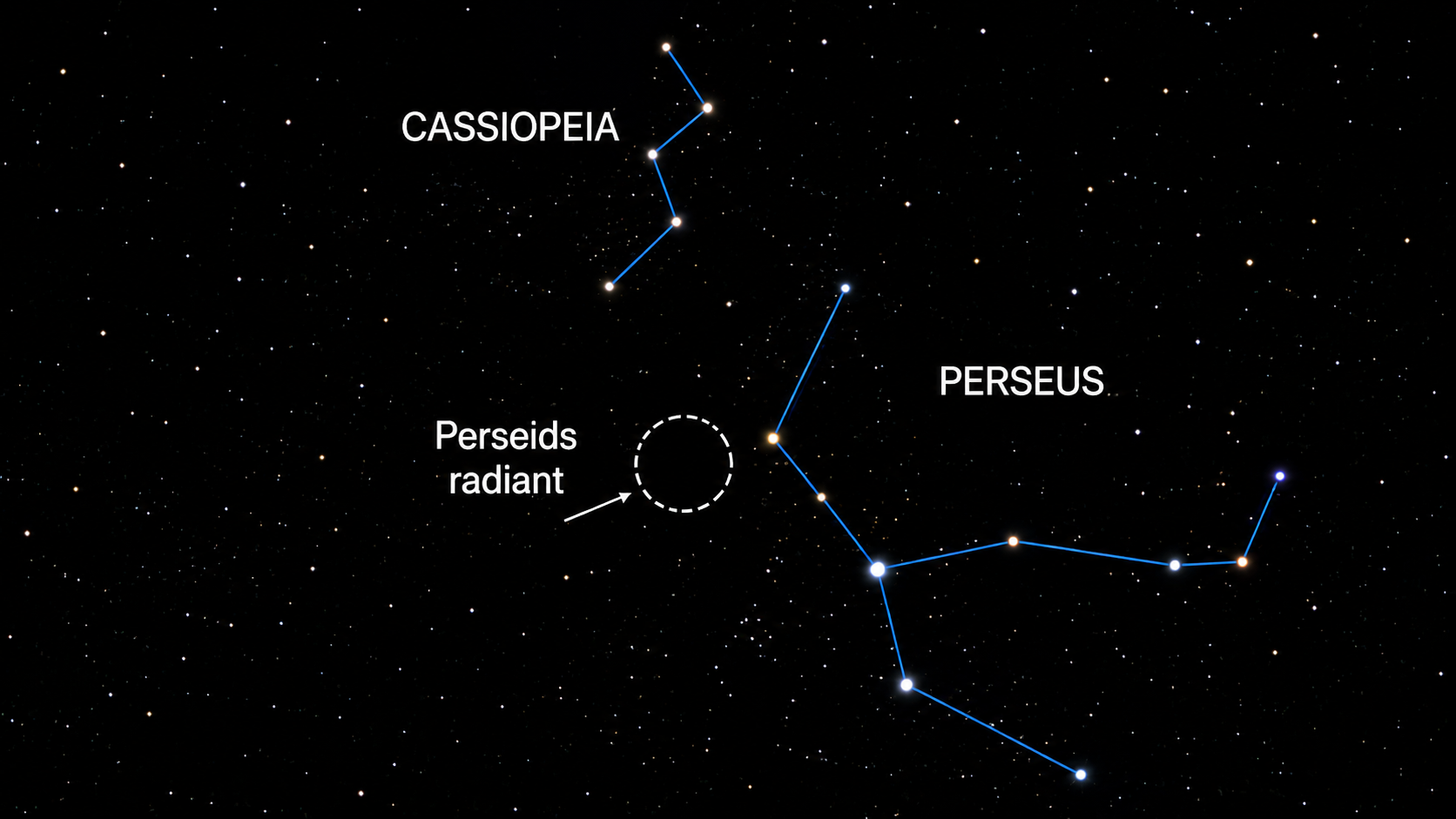
The Perseid meteor shower is expected to peak during the predawn hours of Thursday, Aug. 13.
By Dennis Mammana July 29, 2026
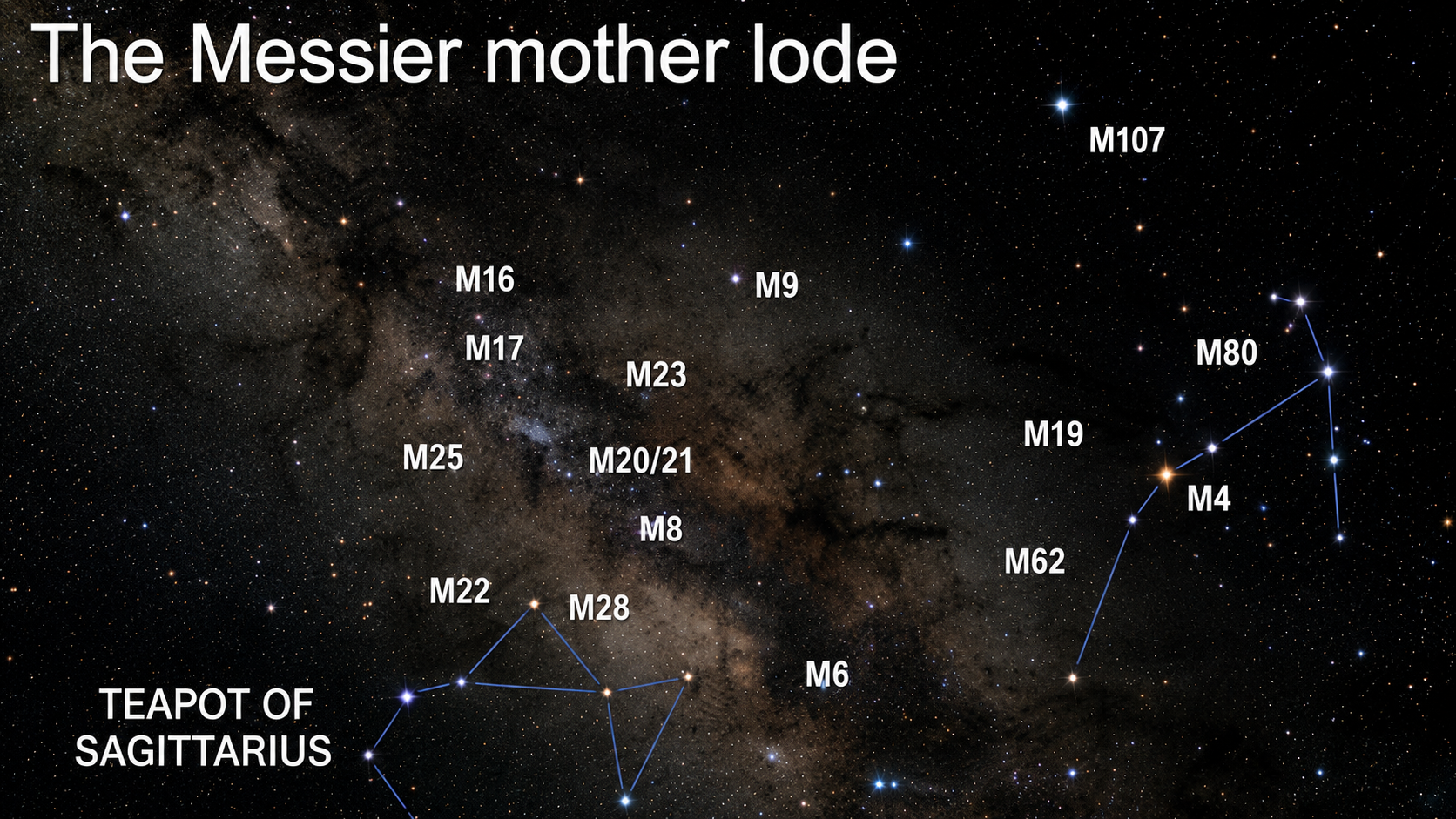
By Dennis Mammana Week of Aug 2-8, 2026  One of the most profound experiences a stargazer can have is to stand under the Milky Way on a clear August night far from city lights and see the wispy bunches of stars so tightly packed that they appear to the eye as a hazy band of light punctuated not only by bright individual stars but by tiny regions that appear as hazy clumps. Aim binoculars or a small telescope toward these "faint fuzzies," as astronomers affectionately call them, and you'll walk the same celestial path as Charles Messier did two and a half centuries ago. Messier was an 18th-century French astronomer who scanned the heavens in search of new comets, hoping that such discoveries would lead him to fame and fortune. He knew that comets often first appear as faint and colorless smudges of light that drift slowly among the stars, so that's what he was seeking. Along the way, however, he encountered dozens of such smudges that did not move. What these were he didn't know and, quite frankly, he didn't care. They weren't comets, so to avoid wasting more of his time on them — and to prevent other comet hunters from being similarly fooled — he began to compile a list of all these false comets he encountered on his nightly watch. Visit Dennis Mammana at dennismammana.com. To read features by other Creators Syndicate writers and cartoonists, visit the Creators Syndicate website at www.creators.com .
By Dennis Mammana July 23, 2026
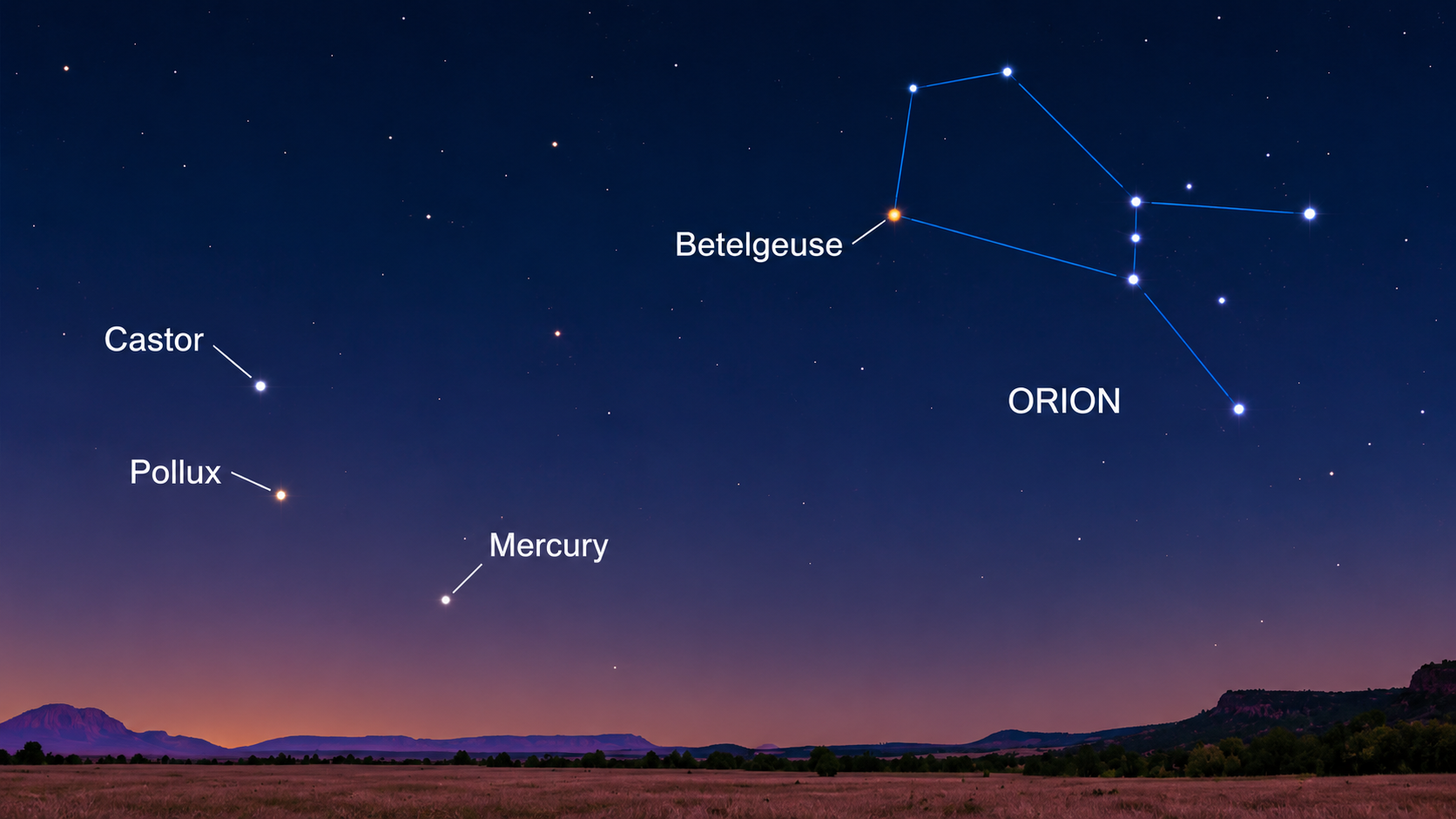
By Dennis Mammana Week of July 26 - Aug. 1, 2026 In a couple of weeks, I'll be telling you about the annual Perseid meteor shower. It should be a good one this year since moonlight won't reduce our view. Of course, if you've read my column regularly, you already know that stargazers will almost always see more meteors in the hours before dawn than during the evening, so that means we must rise early or stay awake all night. I know either can be quite a challenge for some, so this week I present to you an opportunity to practice getting up early and heading outdoors. Not for meteors — though you will almost certainly spot some early Perseids in the early morning sky — but to see two planets that haven't been visible during the evening hours for quite a while. During early dawn this week, early risers have the chance to see the only two planets of our solar system whose names begin with the letter M: Mars and Mercury. Before sunrise, look midway up in the eastern sky, and you'll spot a fairly bright reddish-orange light. Many people may think that's the Red Planet, but I assure you it's not. It's actually a star named Aldebaran, and it marks the fiery red eye of Taurus, the bull. Betelgeuse, in Orion, the hunter, also appears the same color. It's true that Mars also appears reddish-orange, but at this time, it appears 1.5 times fainter than Aldebaran and can be found to its lower left. Because it's so faint, you may have a tough time seeing its color easily, but aim binoculars or a small telescope in its direction and its ruddy hue will become quite apparent. Mars changes its distance from Earth, and therefore its brightness, quite dramatically over its orbit around the sun. It can go from about 35 million miles from us at its best oppositions; the next of these won't occur until September of 2035, when it will lie just 35.8 million miles from us. That will be a great time to view the planet with a small telescope, but right now, Mars lies nearly 186 million miles from us and appears quite small and faint. The other planet visible in the early morning hours this week is the elusive planet Mercury. I use the word elusive because this planet is the closest to the sun of all our solar system's worlds and, as such, never strays far from its glare. With its orbital motion combined with that of the Earth, Mercury flips from dusk to dawn about every three or four months, but it's always rather tough to spot. It's been said that the great 16th-century Polish astronomer Nicolaus Copernicus, who overturned the long-held notion that the Earth occupied the center of our planetary family, had never actually seen this world with his own eyes. Now I don't know if this is true, but it makes sense given what we know about weather conditions in Eastern Europe and how challenging Mercury is to spot. This week you can achieve something even the great Copernicus never could ... but you've got to get up pretty early to do it! Visit Dennis Mammana at dennismammana.com. To read features by other Creators Syndicate writers and cartoonists, visit the Creators Syndicate website at www.creators.com . 
By Dennis Mammana July 18, 2026
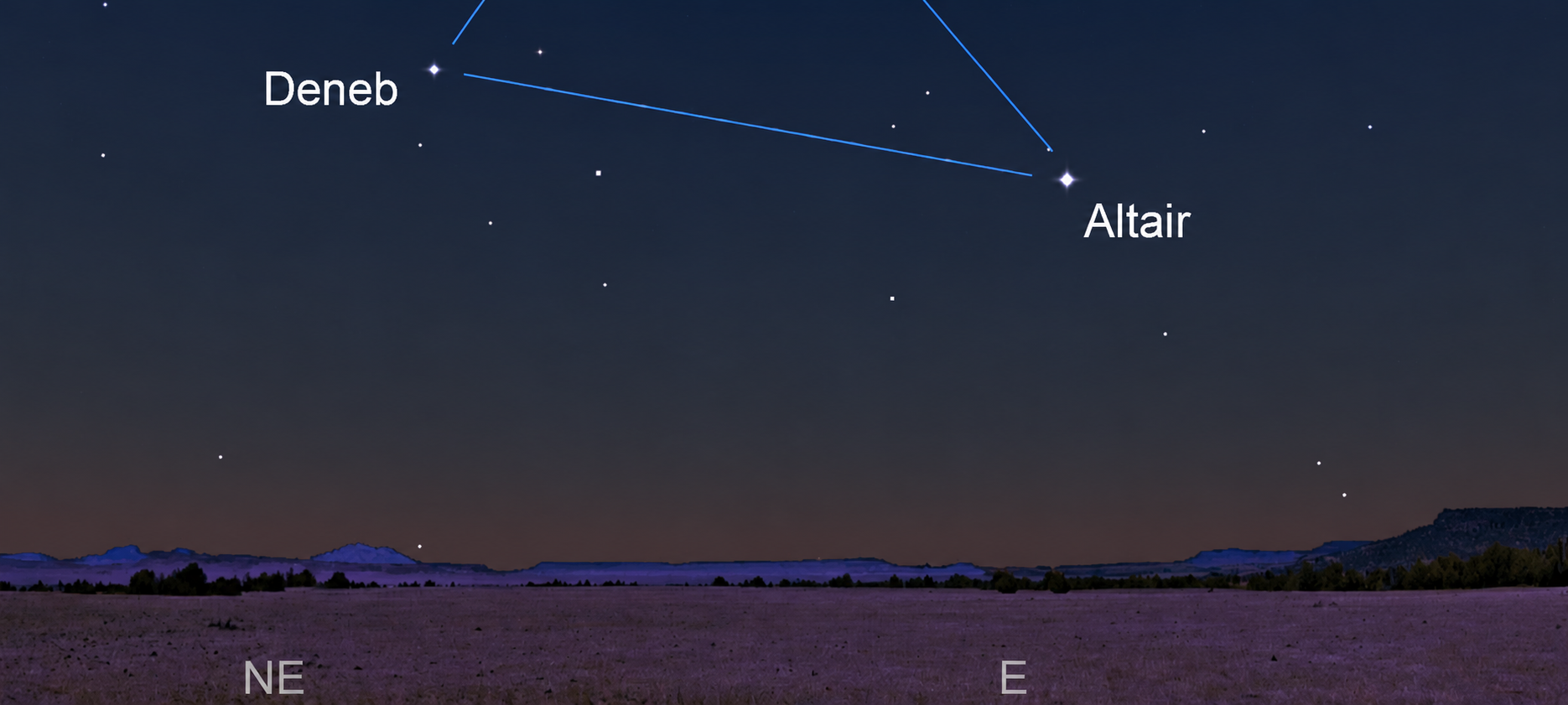
By Dennis Mammana Week of July 19-25, 2026 We can spend our time under the stars trying to find constellation figures from mythological times, but we'll always have limited success. If we really want to see pictures among the stars, I'm afraid we need to create our own. You may remember from previous articles that constellations are simply areas of the sky, and do not resemble their namesakes. Corvus looks nothing like a crow. Trying to find a bear in Ursa Major? Fuhgetaboutit! And Scorpius, the scorpion ... well, OK, there will always be one exception. No, if you want to see pictures among the stars, you must invent your own. And that's where asterisms come in. An asterism is a group of stars that we connect in our imaginations to look like something. Some of the easiest of these to create are geometrical figures. If you ever took a geometry class, you may recall that a point is the simplest of these — a figure with no length, width or depth. In the sky, every star forms a point; connect any three of these, and you'll create a triangle. One in particular, though, is different. It's larger and brighter, and we can find it midway up in our eastern sky after dark. It's called the Summer Triangle. It's not a constellation but rather an asterism made of three stars from three separate constellations, but that doesn't mean that early storytellers overlooked this prominent star grouping. For example, an ancient Chinese love tale tells that the star Deneb represents a magpie bridge over the Milky Way, which allows the separated lovers Altair and Vega to be reunited on only one summer night each year.  The brightest of the stellar trio — and highest in the sky this week — is Vega, the most prominent star in the constellation of Lyra, the harp. It lies 150 trillion miles from us (about 25 lightyears); in other words, the light arriving tonight from Vega began its journey toward our eyes in 2001. The southeasternmost of the three stars is Altair, the brightest in the constellation of Aquila, the eagle. Its name comes from the Arabic Al Nasr al Tair, meaning in English "the flying eagle." Altair lies about 96 trillion miles (17 lightyears) from us. Not only is Altair one of the nearest stars, it's also one of the most rapidly spinning, completing one rotation in just 6.5 hours! Finally, farthest to the northeast lies Deneb, marking the tail of the great swan Cygnus, more easily recognized as the Northern Cross. It's not certain, but we think that Deneb could lie as far away as 2,600 lightyears from Earth. If it's truly that distant, this star could be one of the most brilliant in our entire galaxy, with a luminosity equivalent to 200,000 suns, and would generate more light in one day than our sun has produced since the days of Marco Polo at the end of the 13th century! With the overwhelmingly bright moonlight this week and next, the brightest stars are about all we'll be able to see, but you can still head outdoors to check out the brightest of the summer — the Summer Triangle. Visit Dennis Mammana at dennismammana.com. To read features by other Creators Syndicate writers and cartoonists, visit the Creators Syndicate website at www.creators.com . Learn More About Borrego Springs
By Andrea McKenna July 13, 2026
Chase the Perseids in Borrego Springs: Summer’s Best Getaway Is Under the Stars If you've been waiting for a reason to visit Borrego Springs, t he Perseid meteor shower is a pretty great excuse. If you live nearby, consider this your reminder to book a staycation, get out of the house, and look up. Summer is one of the best values of the year. You'll find lower hotel rates, fewer crowds, and a slower pace , making it the perfect time to experience one of nature's most spectacular events. The Perseid meteor shower is active from July 17 through August 24 and is expected to peak the nights of August 12–13 . With little moonlight during the peak and Borrego Springs' internationally recognized dark skies, conditions are ideal for viewing. Under clear skies, you may see 50 to 100 meteors per hour , including brilliant fireballs that leave glowing trails across the sky. Borrego Springs is California's first International Dark Sky Community , making it one of the best places in Southern California to experience the Perseids. No telescope is needed. Just bring a chair or blanket, find a safe location away from lights, let your eyes adjust for about 30 minutes, and enjoy the show. The best viewing is generally after midnight through the hours before dawn, although meteors can appear throughout the night. During the day, take advantage of summer savings with a stay at La Casa del Zorro , a Stay & Play package at Rams Hill , or seasonal rates at The Palms at Indian Head . Sleep in, relax by the pool, enjoy lunch or dinner in one of Borrego's air-conditioned restaurants, and check BorregoEvents.com for local happenings. Browse the locally owned shops that remain open year-round, visit art galleries, enjoy some night photography, or take a stroll down Palm Canyon Drive and browse homes for sale in the windows of Coldwell Banker and other local real estate offices. Summer offers a quieter, more relaxed way to experience Borrego Springs. Whether you're planning a weekend getaway or just escaping for a night, there's no better time to discover why Borrego Springs is known for its dark skies, hospitality, and desert beauty. Come for the summer savings. Stay for the Perseids. Leave with memories—and maybe a few shooting stars.
By Andrea McKenna July 12, 2026
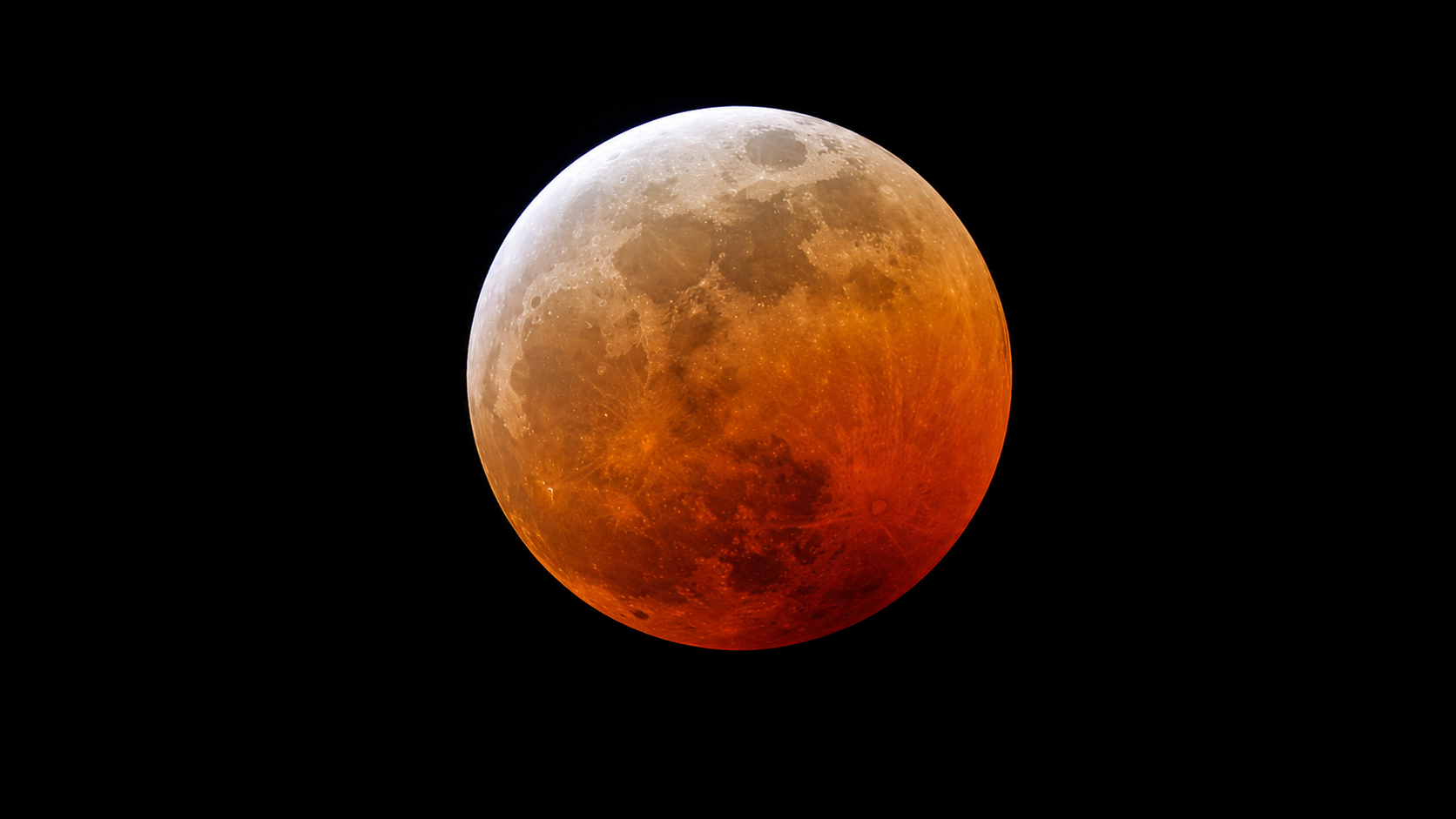
Reserve Your Spot for the Lunar Eclipse Spectacular
By Andrea McKenna July 12, 2026
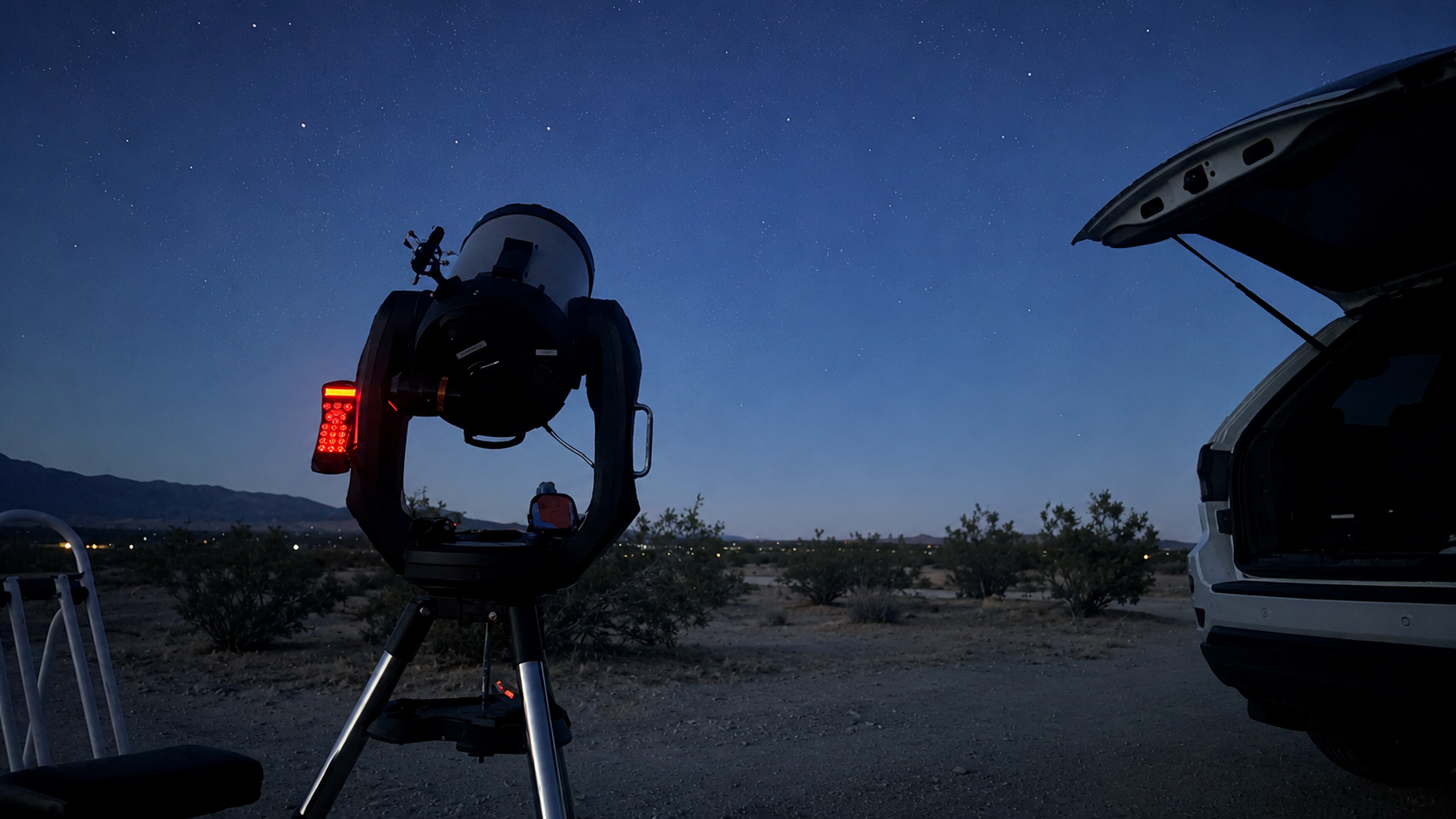
Participants experienced Borrego Springs' dark skies through guided telescope viewing and expert commentary.
By Andrea McKenna July 7, 2026
Make a Night Sky Tour Part of Your July Getaway
By Dennis Mammana July 5, 2026
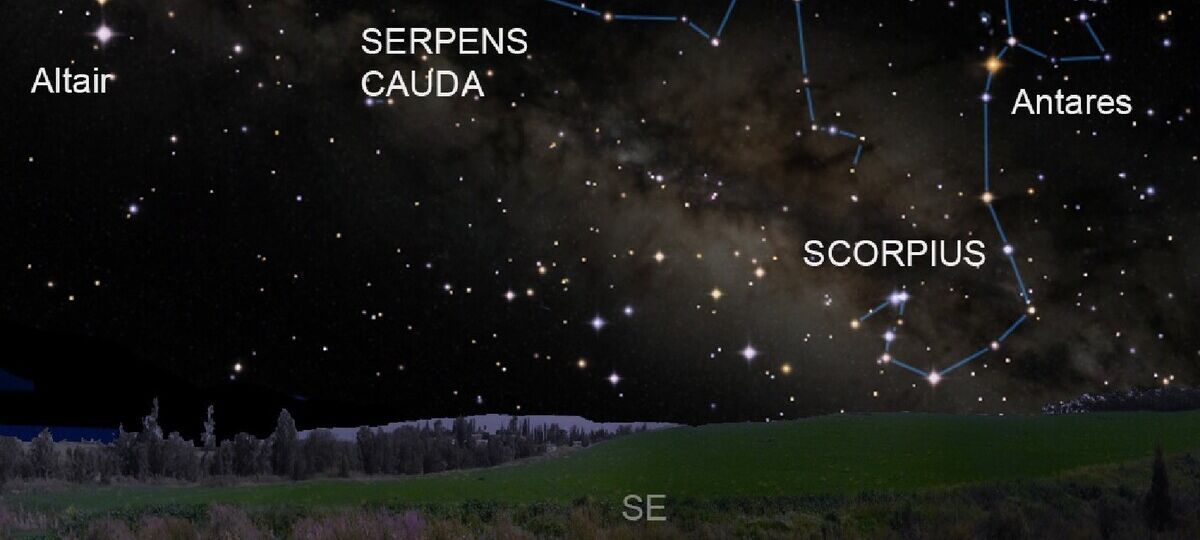
By Dennis Mammana Week of July 5-11, 2026 There's a constellation in our night sky right now that is somewhat unknown to stargazers. Despite being huge — it's the 11th-largest in all the heavens — it has no stars brighter than the North Star, so you won't find it easily without a pretty dark sky. Its name is Ophiuchus (oh-fee-YOU-kuhs), and if you'd like to find it this month, you'll need to get away from the city lights and gaze midway up in the southeast shortly after dark. Ophiuchus (the serpent-bearer) represents Aesculapiu, the ancient Greco-Roman god of medicine, healing and physicians, and its brightest star is named Rasalhague, which is Arabic for "Head of the Snake Charmer." Draped from one side of Ophiuchus to the other lies Serpens — the only two-part constellation in the heavens — with its head on one side (Serpens Caput) and its tail on the other (Serpens Cauda). I admit that it requires quite an imagination to find these star groupings, but once you do, you'll know them forever. In fact, you may even recognize this shape, especially if you've ever searched online for the name of a physician. Quite often, you'll find the image of two serpents wrapped around a vertical staff that appears topped by a round knob and is flanked by wings. It's known as the "caduceus," and since 1902, when the U.S. Army adopted it as the insignia of its Medical Corps, it has been the familiar emblem of the American medical profession. Many medical associations — including the World Health Organization — use what some consider to be the "correct" and traditional symbol of medicine: the staff of Asclepius, with a single serpent encircling a staff. Either way, people have long associated the serpent with medicine. Once you find its stars, you'll see that Ophiuchus lies along some of the thickest star clouds of the Milky Way. If you've managed to get yourself to a rural location with a non-light-polluted sky, you'll have little trouble finding the hazy band of the Milky Way passing near this constellation, along with the bright reddish-orange star Antares (the heart of Scorpius, the scorpion) just to its lower right. Be sure to take binoculars with you so you can scan this celestial region. Here you'll find countless "faint fuzzies" (as amateur astronomers affectionately call deep-sky objects). Many of these are star clusters — collections of dozens, hundreds or even thousands of stars held together by gravitation — and interstellar nebulae, where stars and planetary systems are constantly forming. Now, while you're gazing at the stars of Ophiuchus, here's a little tidbit to wrap your head around: This constellation is not one of the official signs of the zodiac, but it should be. Why, you ask? Because the sun spends three times as many days in front of the stars of Ophiuchus as it does in Scorpius. So why, then, is this constellation missing from the official zodiacal signs in horoscope tables? Your guess is as good as mine. Just remember, if you were born between Nov. 29 and Dec. 17, you're not a "Scorpio" or "Sagittarius," as you might have thought. You're actually an Ophiuchan! Make of that what you will... Visit Dennis Mammana at dennismammana.com. To read features by other Creators Syndicate writers and cartoonists, visit the Creators Syndicate website at www.creators.com . Learn More About Borrego Springs
Show More
Borrego Springs Community Concert Association banner with an orange “SCHEDULE” button on a blue background