Jake Hinton • February 28, 2026
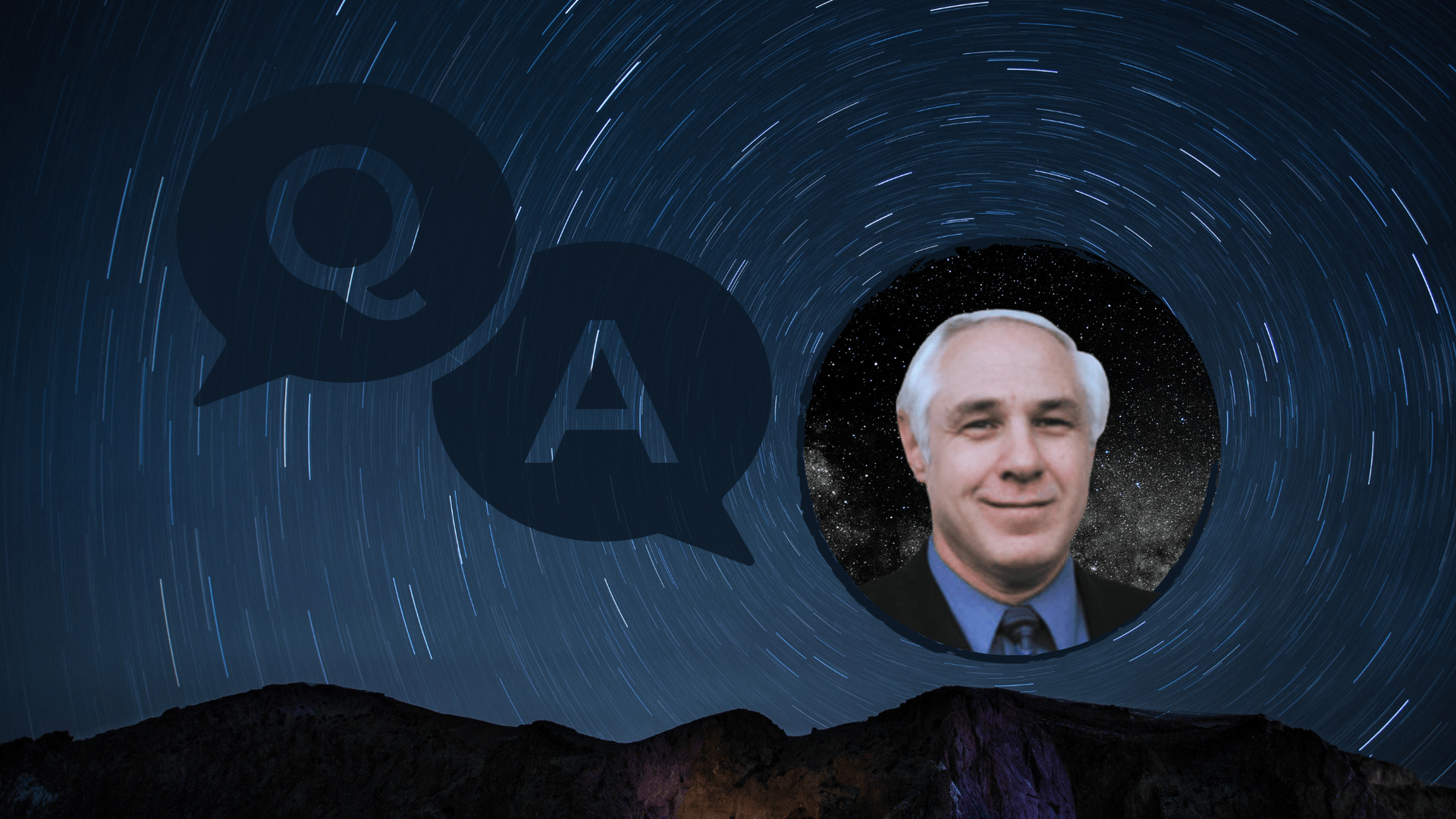
(Q&A) Dennis Mammana: Astronomy and Dark Skies
Share

Dennis Mammana: Bridge to Borrego Springs’ Dark Sky Legacy
Meet Dennis Mammana, a passionate astronomer with nearly five decades of experience in unraveling the mysteries of the cosmos. Dennis’s journey began in Easton, PA, where he was captivated by the launch of the first Earth-orbiting satellites in the late 1950s.
With a degree in physics and astronomy from Otterbein College, he pursued further studies at Vanderbilt University, where his research involved a year-long study of distant Seyfert galaxies. This journey culminated in a coveted one-year internship at the renowned Strasenburgh Planetarium.
Dennis’s career has taken him to prestigious institutions, including the Smithsonian Institution’s National Air & Space Museum, the University of Arizona, and the Reuben H. Fleet Space Theatre & Science Center in San Diego.
Beyond academia, Dennis is an accomplished night sky photographer, earning an invited membership in TWAN (The World at Night). His celestial images have graced international publications and NASA’s Astronomy Picture of the Day.
As a versatile public speaker, Dennis has captivated and enlightened audiences spanning the globe, from local gatherings to international venues, encompassing diverse age groups and backgrounds, and catering to both novice enthusiasts and seasoned experts. His expertise extends beyond conventional boundaries, as he has orchestrated numerous public observing and sky photo expeditions worldwide.
For over 32 years, STARGAZERS, Dennis Mammana’s beloved column, has been a window to the cosmos.
Borrego Springs International Dark Sky Community
Notably, Dennis has a deep connection to Borrego Springs, the only International Dark Sky Community in California. In 2009, he was honored as the Grand Marshal of the 44th Annual Borrego Days Desert Festival for his contributions to preserving its dark skies.
Q&A Interview with Dennis Mammana
1. What Inspired Your Astronomy Career?
Dennis : I began looking at the stars when I was just 7 or 8 years old. My father and I spent time outdoors watching for the first satellites that were launched from Earth, and I fell in love with the stars. Not long after that I got a small telescope and began peering deeper into the sky. And, when my eighth-grade teacher presented a unit on astronomy, I was hooked, and I knew that’s what I wanted to do with my life!
2. In what ways has technology enhanced the stargazing experience for enthusiasts and the general public?
Dennis : Over the past few decades, technology has trickled down from professional astronomy to amateur astronomers. Today, computerized telescopes, electronic imaging, remote observing, and more are being used nightly by thousands around the world. They are using small backyard telescopes to take photos that rival those of the largest observatories just a few years ago, and are doing valuable research on many cutting-edge topics in astronomy.
3. What technology trends do you foresee for the future?
Dennis
: If I were Isaac Asimov I might have a good answer for you… alas, I can only begin to imagine how technology will change astronomy in the future!
One way it might change for amateur astronomers is the use of adaptive optics in which the turbulence of our atmosphere is reduced to make our images sharper. I also suspect much more of astronomy will become robotic which, in a sense, is a shame since part of the magic of studying the universe is being outside under the stars.
4. Are you particularly excited about any specific stargazing or astronomical technologies, discoveries, events, or missions?
Dennis
: To me, the search for planets orbiting other stars is particularly exciting. As of today, we know of more than 5,500 planets in orbit around other stars, and astronomers are now using technology to study the atmospheres of those planets for signs of life. I was fortunate to co-author the first book on the search for these worlds, so I may be a bit biased!
And, of course, large ground-based and spaceborne telescopes are growing at an unprecedented rate. The Hubble Telescope (which has been revolutionizing our concept of the universe since 1990) coupled with the recent launch of the James Webb Space Telescope and the upcoming 30- and 39-meter telescopes are ushering in a truly golden age of astronomy.
5. Are there any television shows, documentaries, or movies that you suggest to people who want to learn about Astronomy?
Dennis : Of course, there are the standard Nova programs about space and astronomy—those are always excellent. And any books by Carl Sagan are at the top of my list!
As for movies, perhaps my favorite is the 1997 film “Contact” (story by Carl Sagan) in which Jodie Foster plays a radio astronomer in search of signals of extraterrestrial intelligent life, while Matthew McConaughey plays a Christian philosopher who, as her love interest, creates quite an intellectual struggle for her. While the plot is interesting, it’s the subtext (the constant conflict between science and belief) that captivates me.
6. What tools do you suggest for a beginner if they want to start learning more about astronomy?
Dennis : My first recommendation is to get out under the stars to begin learning constellations, the movements of the moon and planets, and how the sky changes during the weeks and months. There are plenty of apps to help, though I find them only marginally useful since information appears quite tiny on a smartphone.
I also recommend keeping up with my syndicated column “
Stargazers ”; if it doesn’t appear in the local newspaper, one can subscribe to it free via email. The “subscribe” button is tiny, and located at the bottom of each column near my photo.
Another way to learn is to visit your local planetarium, as well as become involved with your
local amateur astronomy club ; many communities have one!
7. What steps should Borrego Springs take to continue highlighting its dark sky designation? Is there another city that we should look to as an example?
Dennis : I think that, for as small as it is, Borrego Springs is doing great in highlighting our International Dark Sky designation—it’s quite a selling point. As one who regularly sees people visiting here from around the world and participating in my Borrego Night Sky Tours, I’m very happy about how many people have learned about us from the Chamber of Commerce, the State Park, ABDNHA and elsewhere.
8. What are your visions for the future of Borrego Springs as an International Dark Sky Community?
Dennis : I hope we can continue to enjoy a dark sky in the face of increasing light pollution from cities around us. We must make sure that lighting in our town is aimed downward and shielded, and that any new buildings follow or exceed the strict ordinances put forth by San Diego County. Our dark sky is one of the reasons that many enjoy our desert town, and why many choose to live here. DarkSky (formerly the International Dark Sky Association) shares with the public many ways we can help preserve our dark sky while, at the same time, having all the outdoor light we need and saving money on electricity.
9. What is the best time to visit Borrego Springs to get the best view of the sky?
Dennis : There really is no “best time”. The sky during every season is always exciting, but the weather can be good or bad, just like anywhere else. In the summer months (for example July and August) we have the best view of the Milky Way, while in the winter months (January and February) we see some of the most brilliant stars of the entire year.
On average, Borrego does tend to see more clouds (and occasionally some rain) during the late summer and winter months, but this can be quite variable from year to year, and there is often no way to predict sky conditions any particular night until that night.
Helpful links:
The Sky Tonight: Ruben H Fleet
‘Stargazers’ by Dennis Mammana
Dark Sky Guidance and Practices
In Appreciation: Dennis Mammana’s Enduring Impact
Dennis now pursues his passion as an astronomy writer, lecturer, and photographer beneath the pristine, star-studded skies of Southern California’s Anza-Borrego Desert, where he also conducts captivating night sky tours in Borrego Springs and Anza Borrego State Park.
We extend our sincere appreciation to Dennis Mammana for his time and dedication. His contributions to Borrego Springs’ Dark Sky Community and the field of astronomy are invaluable.
Learn More About The Night Sky