February 19, 2025

Free Birthday Golf at Rams Hill – Here’s How to Get Yours

Share

Get Your Free Birthday Round!

Celebrate Your Birthday with a Round of Golf in Borrego Springs


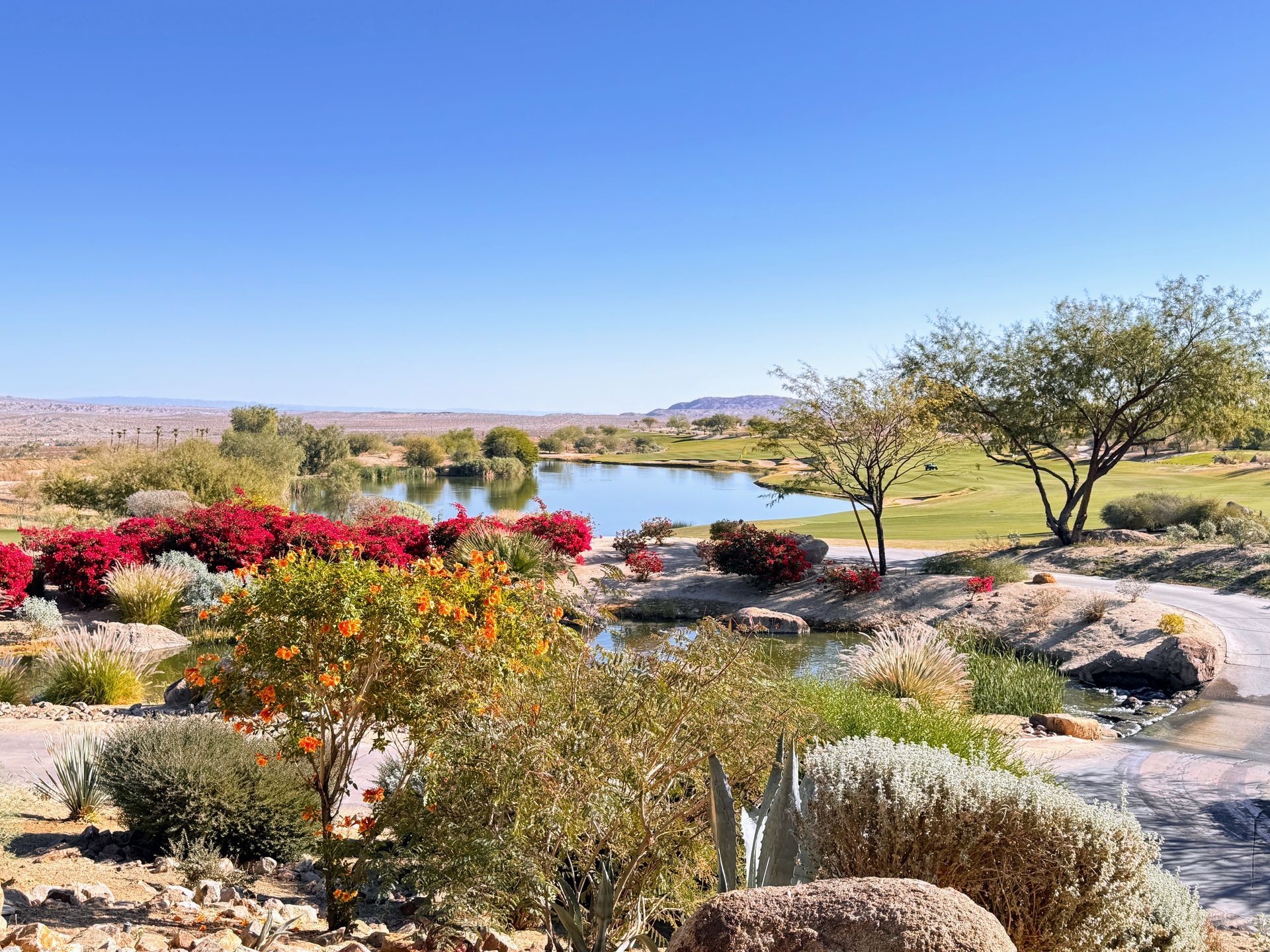
Borrego Springs offers stunning desert landscapes, dark sky stargazing, and one of California’s top-ranked golf courses. If you love golf, there’s an extra reason to visit—Rams Hill Golf Club offers a free round on your birthday.


This is a great opportunity to experience a Fazio-designed course set against the breathtaking backdrop of Anza-Borrego Desert State Park. Whether you’re a local golfer or planning a trip, this offer makes it even easier to enjoy a round in the desert.


How to Claim Your Free Birthday Golf Round

Getting a complimentary round at Rams Hill is simple:


  • Subscribe to the Rams Hill newsletter by providing your name, email, and birthday.
  • Receive an email with details on how to redeem your birthday round.
  • Book a tee time and enjoy a day of golf in Borrego Springs.
  • Check the details here.


Why Golfers Visit Borrego Springs


  • Play on a nationally ranked Fazio course with excellent course conditions.


  • Enjoy the beauty of Anza-Borrego Desert State Park, with sweeping mountain views and desert scenery.


  • Extend your stay with golf house rentals or nearby lodging options.


  • Experience sustainable golf, with Rams Hill powered by solar energy and committed to water conservation.

Plan a Golf Getaway in Borrego Springs

Stay and Play Packages Available!

Book Today!

Plan a Golf Getaway in Borrego Springs


A birthday round at Rams Hill is just one of many reasons to visit Borrego Springs. The area is known for its wide-open spaces, quiet atmosphere, and opportunities for hiking, stargazing, and exploring the desert. Whether you come for a day or a long weekend, Borrego Springs offers a unique escape from the city.


Visit Borrego Springs and experience golf in a one-of-a-kind desert setting.


Learn More About Borrego Springs

June 5, 2026
Source: Rams Hill Golf You Tube
Borrego Springs County Park - Tails Up Dog Park
By Andrea McKenna June 3, 2026
Discover Borrego Springs County Park, a pet-friendly haven with separate areas for small and large dogs, ample play spaces, safety features like double-gate entries, and amenities including water faucets and waste bags. Enjoy clean, spacious areas for pets and scenic views, making it the perfect destination for relaxation and fun..
By Andrea McKenna June 3, 2026
ABF’s latest blog explores the surprising chain of events that led to the creation of Camp Borrego.
By Dennis Mammana June 2, 2026
By Dennis Mammana Week of June 7-13, 2026 During one of my recent night sky tours, an elderly guest gazed into the sky and asked if the stars ever move. He said the constellations look the same now as when he was a child, and he was convinced that nothing in the heavens ever changes. It was an excellent observation but one that didn't consider an important fact: Human time scales are considerably different than cosmic time scales. Even the healthiest of humans will live at most about a century, and during our lives, we measure time in seconds, minutes, hours, days, weeks, months, years and decades. The cosmos, on the other hand, has been around for nearly 14 billion years, and everything takes much longer to occur. To recognize changes in the universe, astronomers must think on a more cosmic scale. When we do, we find that the universe is remarkably active. Stars are forming, consuming their nuclear fuel, and dying, and all are racing through our galaxy at tremendous speeds. Expecting to see changes in any star's appearance or the shapes of constellations over even a full human lifespan just isn't possible. To understand this, consider Barnard's Star, visible only through a telescope from the Earth's Southern Hemisphere. This star tears through our galaxy at a speed of some 88 miles per second, yet from our terrestrial vantage point six lightyears away, Barnard's Star requires three and a half centuries to cross a segment of the sky only the width of your outstretched little finger. Of course, we can't watch this movement with our eyes — or even through powerful telescopes — but by using sophisticated earthbound and satellite technology, astronomers can precisely measure these stellar speeds and directions of motion. Measure the speeds and directions of enough stars, and we find some interesting patterns. For example, stars that appear roughly in the direction of the summer star Vega (now shining low in the northeastern sky after dark) seem to be spreading out from a central point, while those on the opposite side of the sky (near Sirius, setting in the southwest around sunset) appear to be converging on one another. What this means is fascinating. Our sun's own motion is carrying it (along with the planets of our solar system) toward the stars near Vega — a point we know as the solar apex — and away from those near Sirius (known as the solar antapex). This phenomenon isn't difficult to visualize. Imagine you're driving along a highway from one city to another. The buildings in front of you appear to become more widely separated as you approach, while those behind you appear to converge more tightly. This is exactly what's happening in our section of the galaxy. Our sun is moving at some 12 miles per second toward a point in our sky not far from the bright star Vega. Of course, we can't see this movement, but it's fun to stand outdoors on a clear night and imagine our sun and Earth racing outward toward Vega. Now, if you're worried about a collision with this star ... well, fuhgetaboutit. Even at this remarkable speed, we'd need some 5,300 human lifetimes to get there! Visit Dennis Mammana at dennismammana.com. To read features by other Creators Syndicate writers and cartoonists, visit the Creators Syndicate website at www.creators.com. Learn More About Borrego Springs
By Dennis Mammana May 21, 2026
By Dennis Mammana Week of May 24-30, 2026 When you hear the phrase "once in a blue moon," what do you think? If you're like most people, you think of something that doesn't happen often. So what exactly is a blue moon, and why is it so rare? First off, a blue moon isn't all that rare. It occurs on average about once every 2.72 years. Secondly, the moon doesn't appear blue at all; it's just a regular ol' full moon that happens to be the second one in any particular month. You know this phenomenon if you receive a paycheck every two weeks. You'll usually get two checks a month, but occasionally you'll receive a third. It's not that uncommon, and neither is a blue moon, despite the popular meaning of the term. A second full moon in a month occurs occasionally because our calendar isn't synced with the lunar phases, even though the word "month" derives from the word "moon". What we call a month — approximately one-twelfth of a year — is longer than the moon's "synodic" period — the average time between one full moon and the next (29.53059 days). So every once in a while — every blue moon, one might say — two full moons will occur during the same calendar month. We'll see the next one on Saturday night, May 30. Be sure to watch as the moon rises in the southeast just after sunset that night. Chances are that it will first appear rather orange or red because its light must pass through a long column of air on its way to our eyes, and normal particulate matter suspended in the air scatters the moon's light and colors it orange. Some have defined the blue moon differently. Most seasons of the year will experience three full moons, but occasionally a fourth will sneak in. In that case, the fourth of the season would be known as a "blue moon." This seasonal definition may have originated from a 1943 question-and-answer column in Sky and Telescope magazine in which Laurence J. Lafleur traced the term to a 1937 "Maine Farmers' Almanac." Three years later, it seems, folklorist Philip Hiscock wrote in the same magazine an article that gave birth to the "second full moon in a month" idea. Neither of these situations is particularly unusual, so where did the rarity idea originate? Occasionally, especially thick smoke or volcanic ash particles suspended in our atmosphere can remove enough red moonlight to make the moon appear bluish. It is said that, after the Krakatoa volcanic eruption in 1883, the moon appeared blue for more than a year. As you might imagine, this is extremely rare. In fact, one might say that it happens ... only once in a blue moon! Now there's one more thing about the full moon that we'll see this coming weekend. It reaches its orbital "apogee" at 4:45 a.m. EDT / 1:45 a.m. PDT, its farthest point from the Earth (about 250,517 miles away). This means that it will appear as the smallest full moon of this year. You might hear it called a blue "mini moon," though most stargazers won't be able to see much difference from a normal full moon. Visit Dennis Mammana at dennismammana.com. To read features by other Creators Syndicate writers and cartoonists, visit the Creators Syndicate website at www.creators.com. Learn More About Borrego Springs

Walk of the Cosmos
By Andrea McKenna May 17, 2026
Experience the Walk of the Cosmos in Borrego Springs—a journey through the solar system in a beautiful desert park with playgrounds, sports courts, and stargazing opportunities.
By Dennis Mammana May 12, 2026
By Dennis Mammana Week of May 17-23, 2026 That brilliant light now glistening in the west at sunset is again the "star" of the show. It is, of course, the planet Venus, and this week it'll pair up with two other celestial wanderers: Jupiter and the moon. Jupiter, another very bright planet, has been descending farther to the west as the spring months progress, and it is now approaching a close encounter with Venus by the end of the month. This occurs because these worlds, along with the Earth, orbit the sun, and our constantly changing viewpoint makes them appear to drift slowly against the more distant and "fixed" stars. Over the next week, though, another solar system body will enter the scene: the moon. Since our celestial neighbor orbits the Earth once a month, we can see it change its position in the sky from night to night. Shortly after sunset on May 17, you might try searching very low in the west for the tiny and delicate crescent moon, but to find it, you'll need a very clear sky and a low horizon, and possibly binoculars. If you don't succeed, don't worry. It'll be pretty tough to spot, but if you wait until the next night, it'll be much easier to see. On the 18th, it will appear not far from Venus. Of course, the moon won't really be next to this planet; they will be separated by 124 million miles that evening, but since both lie roughly along the same line of sight, they'll appear together in the sky. For a really amazing view, check out the pair through binoculars! The following night, May 19, the moon will have moved eastward along its orbit and will appear about midway between Jupiter and Venus. If your sky is clear on May 20, check out the western sky again, and you'll notice that the moon is not only a significantly thicker crescent but now lies above Jupiter. Of course, this whole view is purely an illusion caused by our inability to see true depth in the cosmos, but it does result in a truly pretty picture. And speaking of pretty pictures, this week offers a good opportunity to try your hand at photographing the spectacle. Since the trio appears low enough in the sky at dusk, you can frame the scene with a foreground subject — a dramatic tree, building, sculpture or person, for example. You don't need fancy or expensive equipment to do this; just a regular camera or smartphone will do fine. You may find, however, that zooming in a bit will produce a more compelling image. If you shoot half an hour or so after sunset, you can probably trust the automatic settings of your camera or phone. Much later, though, you may need to adjust settings as you go because the light at dusk changes rapidly. Don't be afraid to experiment; if some photos turn out poorly, you can always hit "delete," and no one will ever know! I hope your skies are clear this week so you can enjoy the planetary sky show. And if you get some nice photos, please email me. I'd love to share your success!  Visit Dennis Mammana at dennismammana.com. To read features by other Creators Syndicate writers and cartoonists, visit the Creators Syndicate website at www.creators.com. Learn More About Borrego Springs

May 9, 2026
BY: Colt Knedler Rams Hill Golf Club
April 19, 2026
More than 400 people served through a coordinated community effort at the CRC
April 18, 2026
Soroptimist awarded Marina Lopez $1,500 to help grow her baking business.
Pizza in Borrego Springs: Top Local Spots
By Jake Hinton April 6, 2026
Discover freshly made pizza in Borrego Springs at Carlee’s and Calico’s, two family-run spots offering delicious options for both vegetarians and meat lovers in casual, welcoming settings.

March 21, 2026
Tai Chi with Jill Feltovich
Show More

Share This Post