Dennis Mammana • May 21, 2026

Enjoy This Month's Blue Mini Moon

Share
By Dennis Mammana


Week of May 24-30, 2026


When you hear the phrase "once in a blue moon," what do you think? If you're like most people, you think of something that doesn't happen often. So what exactly is a blue moon, and why is it so rare?

First off, a blue moon isn't all that rare. It occurs on average about once every 2.72 years.


Secondly, the moon doesn't appear blue at all; it's just a regular ol' full moon that happens to be the second one in any particular month. You know this phenomenon if you receive a paycheck every two weeks. You'll usually get two checks a month, but occasionally you'll receive a third. It's not that uncommon, and neither is a blue moon, despite the popular meaning of the term.


A second full moon in a month occurs occasionally because our calendar isn't synced with the lunar phases, even though the word "month" derives from the word "moon". What we call a month — approximately one-twelfth of a year — is longer than the moon's "synodic" period — the average time between one full moon and the next (29.53059 days).


So every once in a while — every blue moon, one might say — two full moons will occur during the same calendar month. We'll see the next one on Saturday night, May 30.


Be sure to watch as the moon rises in the southeast just after sunset that night. Chances are that it will first appear rather orange or red because its light must pass through a long column of air on its way to our eyes, and normal particulate matter suspended in the air scatters the moon's light and colors it orange.


Some have defined the blue moon differently. Most seasons of the year will experience three full moons, but occasionally a fourth will sneak in. In that case, the fourth of the season would be known as a "blue moon."


This seasonal definition may have originated from a 1943 question-and-answer column in Sky and Telescope magazine in which Laurence J. Lafleur traced the term to a 1937 "Maine Farmers' Almanac." Three years later, it seems, folklorist Philip Hiscock wrote in the same magazine an article that gave birth to the "second full moon in a month" idea.


Neither of these situations is particularly unusual, so where did the rarity idea originate? Occasionally, especially thick smoke or volcanic ash particles suspended in our atmosphere can remove enough red moonlight to make the moon appear bluish. It is said that, after the Krakatoa volcanic eruption in 1883, the moon appeared blue for more than a year. As you might imagine, this is extremely rare. In fact, one might say that it happens ... only once in a blue moon!


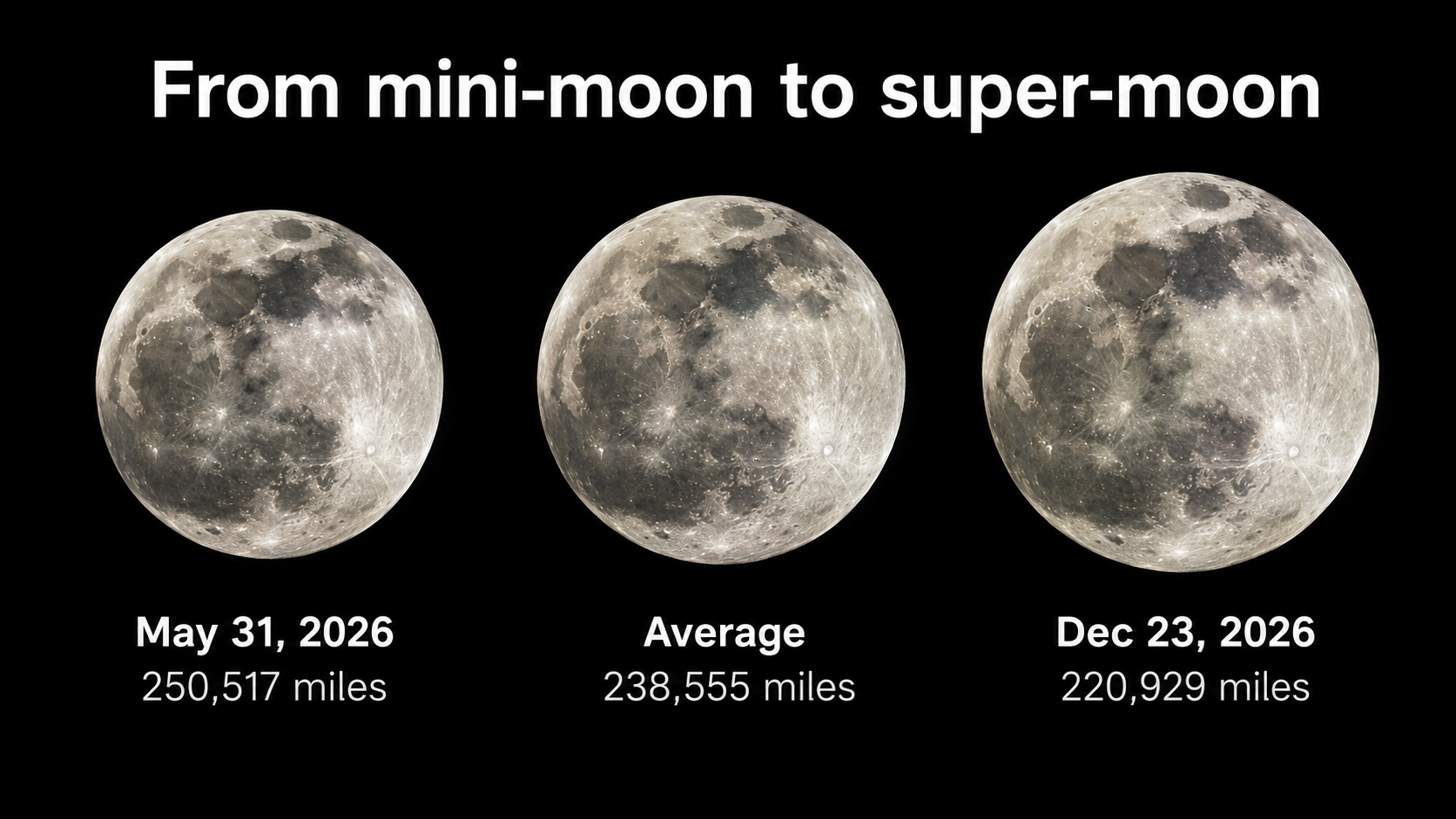
Now there's one more thing about the full moon that we'll see this coming weekend. It reaches its orbital "apogee" at 4:45 a.m. EDT / 1:45 a.m. PDT, its farthest point from the Earth (about 250,517 miles away). This means that it will appear as the smallest full moon of this year. You might hear it called a blue "mini moon," though most stargazers won't be able to see much difference from a normal full moon.


Visit Dennis Mammana at dennismammana.com. To read features by other Creators Syndicate writers and cartoonists, visit the Creators Syndicate website at www.creators.com.


Learn More About Borrego Springs

By Andrea McKenna August 19, 2026
Wing-Walking, Skydiving and Stunt Flying in Borrego Springs
By Under the Borrego Sky August 19, 2026
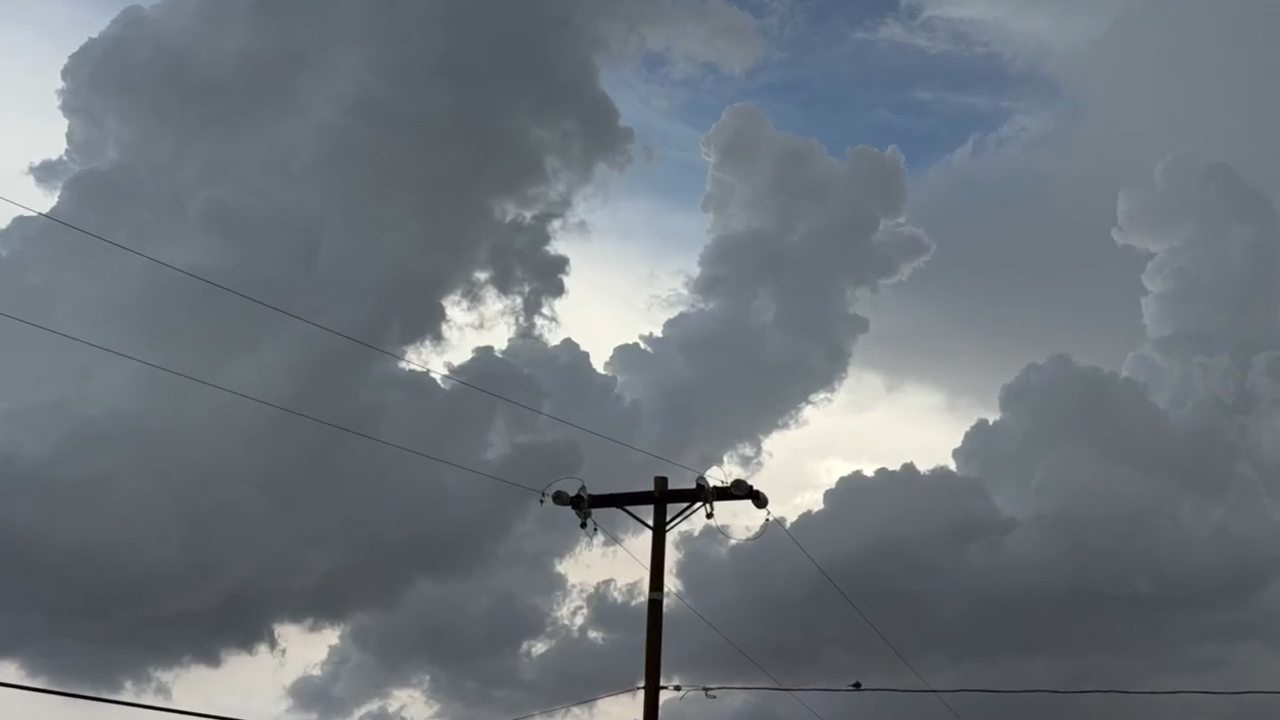
Power Outages in Borrego Springs If you live in Borrego Springs, power outages are part of desert life. The electricity goes out, everything suddenly gets quiet, and the waiting begins. Borrego Springs resident and writer Shannon Cheesman , creator of Under the Borrego Sky , recently shared a video showing what one of these outages looks like from a local perspective. When the Power Goes Out Power outages can be especially noticeable in Borrego Springs, where air conditioning and other cooling systems are important during the warmer months. In her video, Shannon takes viewers along during an outage at her home, capturing the sudden quiet and uncertainty that comes with not knowing how long the electricity will be off. It is a simple look at an experience many year-round residents recognize. Managing Electricity in the Desert In a previous Under the Borrego Sky video, Shannon also shared how her household manages summer electric costs. Her strategies include using paid-off solar panels, avoiding laundry during peak hours, raising the thermostat while away, alternating between central air and a swamp cooler, and making monthly payments toward the household’s annual SDG&E bill. Together, the videos offer a practical look at two realities of living in the desert: managing the cost of keeping a home cool and being prepared for times when the power goes out. Under the Borrego Sky Under the Borrego Sky is Shannon Cheesman’s personal chronicle of life in Borrego Springs, California. Her videos feature seasonal nature reports, local discoveries, and everyday experiences filmed in and around Borrego Springs. Sometimes that means spectacular desert scenery. Other times, it is simply waiting for the power to come back on. Subscribe on YouTube: www.youtube.com/@under-the-borrego-sky Read more from Under the Borrego Sky, at: www.undertheborregosky.com
By Fr. Michael Plekon August 18, 2026
Finding Faith, Belonging and Purpose Beyond Sunday Services
By Wade Beane August 18, 2026
Growing this Summer If you have landscaping or a garden, you have probably spent time this summer wondering if your plants are going to make it. There have been many days I’ve walked outside, looked at a plant and said, “Sorry little feller, I feel your struggle!”  Be patient with your plants. In Borrego, nighttime heat is one of the biggest challenges. During the summer, plants need cooler nights to breathe. When night temperatures stay in the 80s, plants struggle because they conserve water by closing their stomata, which are tiny pores used for gas exchange. On hot nights these pores stay closed to prevent plants from losing more water than they can afford. But then they struggle to breathe. Cool nights are what allow desert plants to absorb carbon dioxide so they can create energy. In simple terms, hot nights keep plants from breathing, which slows the creation of sugars they need to be happy and survive. Look at the plants that naturally grow around us. There is a reason so many desert plants have small, thick leaves covered in wax. A smaller leaf has less surface area where water can escape. Waxy leaves create another protective layer that helps hold moisture inside the plant. Creosote and other plants have spent a very long time figuring out how to live wisely in the desert. Other landscape plants are less adapted to living through a Borrego summer. Even cacti struggle with the heat and get sunburned. And when a plant looks stressed, giving it more water is not always the answer. Too much water can complicate problems even further for many desert plants. Summer is a good time to practice patience. Pause for a moment and let the plant tell you what it needs. Sometimes plants need an extra drink and some shade cloth. Other times a little pruning will focus good energy on what is still alive. And when all else fails, slow down for a moment and talk to your plants. They are good listeners and appreciate words of encouragement. It has been a hot summer, and the plants are struggling just like the wildlife and many of us are. Wander outside and offer a little extra attention to everything that is surviving this summer. A few caring words and a little patience can make all the difference.
By City News Service August 18, 2026
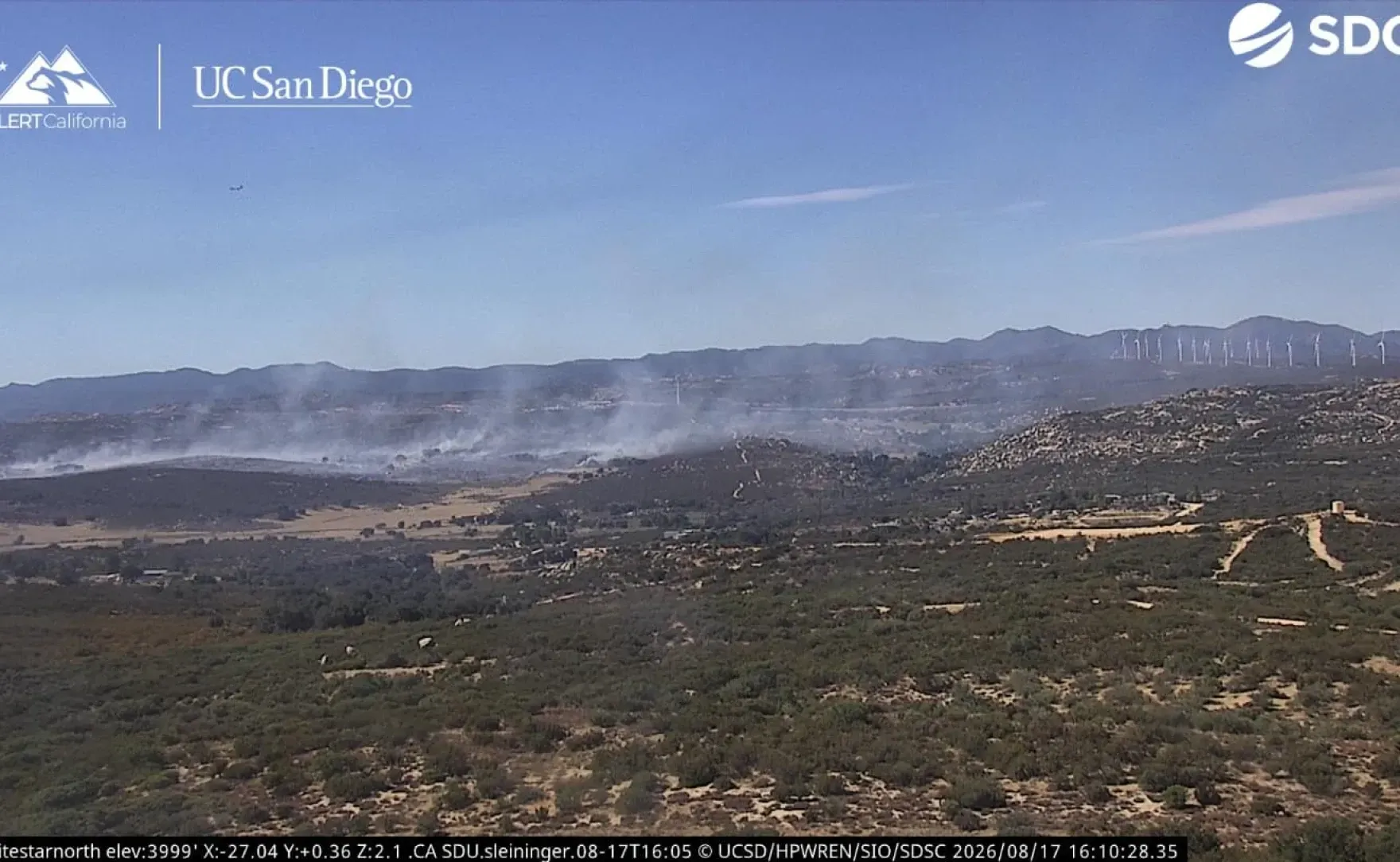
Smoke from the Church 2 Fire near Campo rises into the sky on Aug. 17, 2026. A brush fire spread over swaths of brushy open terrain in the rural southeastern reaches of the San Diego area Monday, blackening scores of acres and threatening structures as ground and airborne crews worked to subdue the flames. Church 2 FireThe blaze, dubbed the Church 2 Fire, erupted for unknown reasons shortly before 2:30 p.m. off the 36800 block of Church Road in Campo, east of Lake Morena and about a mile south of Interstate 8, according to Cal Fire. Advertisement Within a half-hour, the fire had grown to encompass roughly 20 acres, the state agency reported. The flames were posing potential hazards to some developed areas as firefighters battled the blaze, officials said. As of 3:45 p.m., the size of the burn zone had grown to about 132 acres, Cal Fire advised. EvacuationsAuthorities issued an evacuation order for sparsely populated locales around the intersection of Live Oak Springs Road and Old Highway 80, and advised people living somewhat farther to the east to prepare to clear out of their homes on short order. A temporary shelter for the displaced was in operation at Golden Acorn Casino in Campo.
By Andrea McKenna August 17, 2026
Wednesday, August 26
By Andrea McKenna August 17, 2026
Wednesdays from 6 to 7 p.m.
By Andrea McKenna August 17, 2026
Saturdays from 11 to 1 p.m
By Matt Bosson August 15, 2026
Monthly
Show More
Subscribe for Free Updates!

Share This Post