July 16, 2024

Best Stargazing Spots in Anza-Borrego Desert State Park

Share
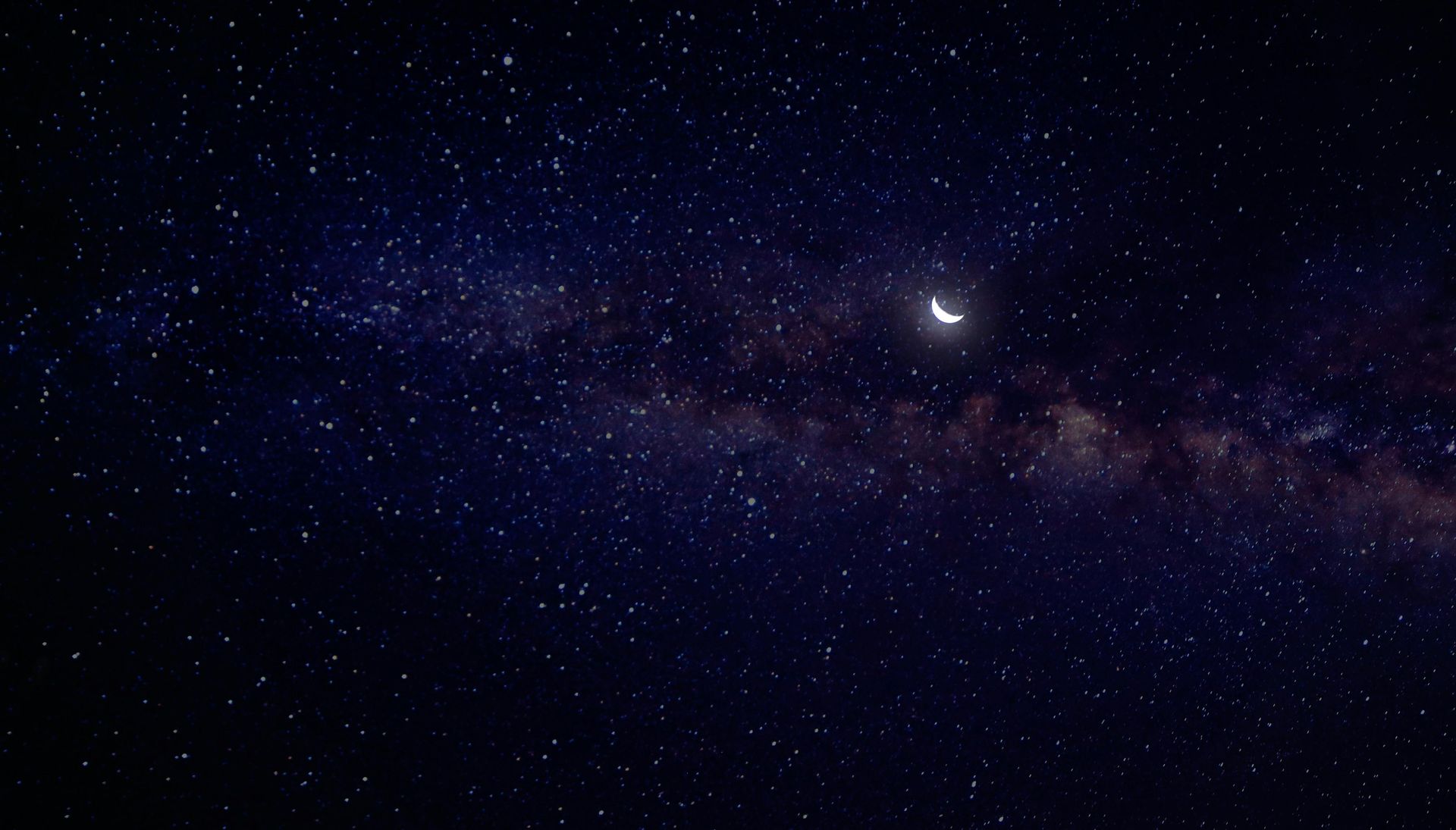
Explore the Best Places to See the Stars in Southern California

Anza-Borrego Desert State Park, the largest state park in California, is a premier destination for stargazing due to its low light pollution and expansive desert landscapes. Whether you're new to stargazing or an avid astronomer, the park offers unparalleled views of the night sky. Below are some of the best spots within the park for a night under the stars.

Culp Valley

Located about 3,500 feet above sea level, Culp Valley offers cooler temperatures and dark, clear skies perfect for stargazing. The Culp Valley Primitive Campground is easily accessible by most vehicles and provides a remote spot away from city lights, making it one of the best places to see the stars without any distractions.

Blair Valley

Blair Valley, known among astronomers as "Astronomy Way," is another fantastic spot for stargazing. The valley’s remote location and the surrounding desert provide some of the darkest skies in the park. The Blair Valley Primitive Campground allows you to camp and stargaze in the same spot, making it a convenient option.

Learn more about Blair Valley here.

Fish Creek Primitive Campground

For those with a high-clearance or 4WD vehicle, the Fish Creek Primitive Campground offers an off-the-beaten-path stargazing experience. Its rugged terrain and remoteness provide an extraordinary dark sky environment, perfect for viewing celestial objects with minimal interference.

Mountain Palm Springs

Another remote location requiring a 4WD vehicle, Mountain Palm Springs Primitive Campground is nestled in the southern part of the park. It provides an excellent backdrop for stargazing with its palm groves and isolated terrain. This site is perfect for those looking for a more secluded experience.

Carrizo Badlands Overlook

This easily accessible overlook in the southernmost part of the park is ideal for visitors who want to combine dramatic desert landscapes with stargazing. The Carrizo Badlands are known for their geological beauty, and the overlook offers stunning, clear views of the sky.

Learn more about Carrizo Badlands at Visit California.

Tips for Stargazing in Anza-Borrego Desert State Park

  • Visit during a new moon: To maximize visibility, plan your trip around a new moon when the sky is at its darkest.

  • Bring a red flashlight: Red light preserves your night vision, allowing you to observe the stars without adjusting your eyes repeatedly.

  • Dress warmly: Even in the desert, nighttime temperatures can drop significantly, so it’s essential to bring layers.

  • Be patient: Give your eyes time to adjust to the darkness for the best stargazing experience.

Don't Miss Borrego Springs

Just outside the park, Borrego Springs is the gateway to the Anza-Borrego Desert State Park and an International Dark Sky Community. This small town is a great place to base your stargazing adventures, offering amenities such as resorts and campgrounds. While exploring Borrego Springs, don’t forget to visit the metal sculptures of Galleta Meadows during the day and return at night to see them silhouetted against the starry sky.

Find out more about Borrego Springs at Borrego Springs Chamber of Commerce.

Whether you're camping under the stars or taking a quick trip from Borrego Springs, Anza-Borrego Desert State Park promises a spectacular stargazing experience year-round.

For more information, be sure to check out maps and stargazing guides from the Anza-Borrego Desert Natural History Association and the Anza-Borrego Foundation.
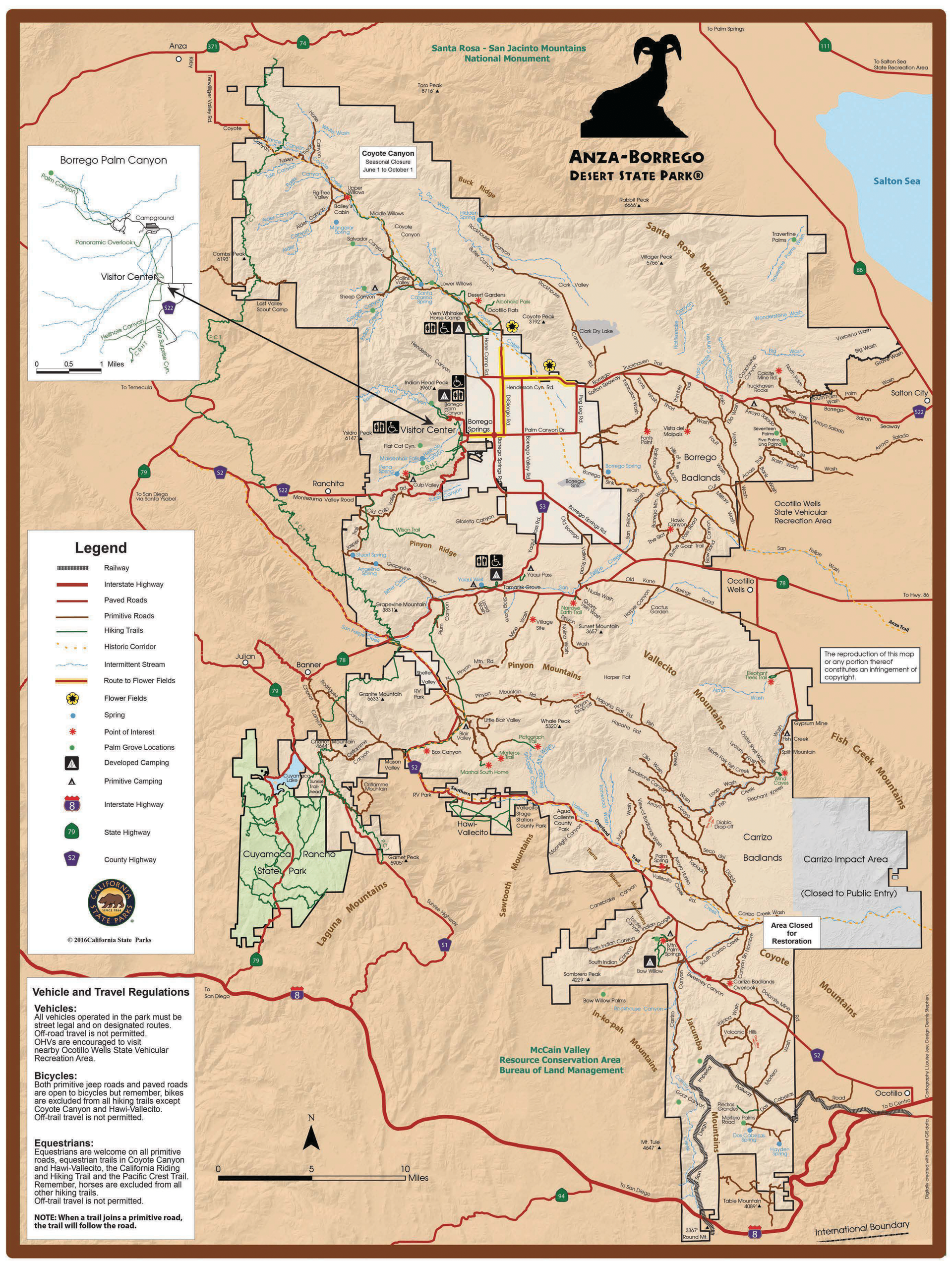
Anza Borrego State Park Map

Learn More About Borrego Springs

March 6, 2026
By Dennis Mammana Week of March 8-14, 2026 If you hear the word "superstar," what immediately comes to mind? Perhaps names like Tom Hanks, Taylor Swift or LeBron James? That's certainly understandable; they are all undisputed superstars who attract the attention of paparazzi and fans alike. If you're an astronomer, however, you may answer this question differently. For example, when I hear the word "superstar," I think of UY Scuti, WOH G64 or RSGC1-F01. Yes, these are superstars, but not quite how people may think. These are some of the largest stars known in our galaxy and, for that reason, are quite intriguing to us celestial paparazzi. Regular readers of this column know that our sun is also a star. It appears big and bright in our daytime sky because not only is it rather close (about 93 million miles away), it's also pretty large (nearly a million miles across). It sounds huge, but our star is rather small on a cosmic scale, and believe it or not, there are stars out there that would dwarf our sun and make it look tiny. These are the true superstars! Until recently, the largest star known was given the hopelessly poetic name of UY Scuti. At a distance of some 9,500 lightyears from Earth, UY Scuti is what is known as a red hypergiant star, with a diameter some 1,700 times that of the sun! All that changed recently, however, when astronomers found a gargantuan star some 2,150 times larger than our sun! It's named Stephenson 2-18, and if you'd like to get a peek at this stellar behemoth, you'll need more than your eyes. At a distance of some 18,900 lightyears, it appears 5,100 times fainter than we can see without a telescope. If you have no telescope but would still like to see a celestial superstar, you're in luck. There's one shining in our night sky right now; it's one of the brightest up there and is named Betelgeuse. Betelgeuse sparkles brightly in the northeastern corner of Orion, the hunter, and you can see its orange light midway up in the southern sky after dark this week. With about 15-20 times more mass than our sun, Betelgeuse is known as a red supergiant star for good reason. While we could align 109 Earths across the face of our sun, we would need at least 700 suns to cross the face of Betelgeuse! Indeed, this star is so immense that if it replaced our sun at the center of our planetary system, Betelgeuse would engulf the orbits of Mercury, Venus, Earth and Mars, and stretch part of the way to Jupiter! Yet it appears as a simple point of light in our night sky because of its tremendous distance from us — some 3,100 trillion miles, or about 520 lightyears. Betelgeuse is easily one of the largest known stars, though its size fluctuates by as much as 60% as the star shudders and pulsates on its way to an eventual supernova explosion, thousands or millions of years from now. Or tonight. We just don't know.  I hope you'll step out under the night sky soon to meet this remarkable superstar for yourself! Visit Dennis Mammana at dennismammana.com. To read features by other Creators Syndicate writers and cartoonists, visit the Creators Syndicate website at www.creators.com. Learn More About Borrego Springs

February 25, 2026
By Dennis Mammana Week of March 1-7, 2026 Attention, night owls and insomniacs! The sky show this week is just for you! Much of North America is about to see the moon experience one of nature's most beautiful sky shows: a total lunar eclipse. A lunar eclipse occurs when the full moon slips into the Earth's shadow far out in space, either partially or completely, and that's just what will happen during the wee hours of March 3. Skywatchers throughout North America will see the start of this eclipse (weather permitting, of course), but depending on where you live, you may see only a portion of the sky show. In general, the farther west you live, the more of the eclipse you will see before the moon sets behind the western horizon. The eclipse begins at 12:44 a.m. PST (3:44 a.m. EST), when the moon enters the Earth's light outer shadow (known as the penumbra), but this shadow is so thin that no one will notice a darkening of the moon's appearance. Within an hour or so, that will change significantly. As the moon approaches the dark inner shadow of the Earth (known as the umbra), skywatchers will notice the eastern side of the moon beginning to darken slightly. The real show begins at 1:50 a.m. PST (4:50 a.m. EST) when the moon officially enters the umbra. No one gazing skyward will have any doubt that a "bite" has been taken out of the moon — a bite that will grow larger with each passing minute. For the next hour or so, the moon will dim as it slips more deeply into our planet's umbra, until 3:04 a.m. PST (6:04 a.m. EST) when it's completely engulfed and the total eclipse begins. Unfortunately, those in the far eastern part of North America may miss this since the moon will lie quite close to (or even below) the western horizon. During the total phase, the moon will take on a dim coppery hue. This occurs because sunlight passing through our atmosphere is reddened and bent inward toward the darkened surface of the eclipsed moon, now suspended eerily against the stars of Leo, the lion. Only those viewing from the Midwest to the West Coast will see mid-eclipse, which occurs at 3:33 a.m. PST (5:33 a.m. CST). Those in the Midwest may miss the end of totality at 4:02 a.m. PST (6:02 a.m. CST), however, as the moon will be setting in the west. The entire event will end at 5:17 a.m. PST (4:17 a.m. MST) with the moon approaching the western horizon for viewers in western North America. Unlike an eclipse of the sun, a lunar eclipse is perfectly safe to view without protective filters. Your eyes are all you need to enjoy the show, but you'll have even more fun viewing through binoculars or a small telescope. If the sky is cloudy that morning, or if you live where the eclipse won't be visible, you can watch a livestream of the sky show online. Visit timeanddate.com and click on "Sun, Moon & Space" at the top to find details for your location, as well as links to view the eclipse live online. Visit Dennis Mammana at dennismammana.com. To read features by other Creators Syndicate writers and cartoonists, visit the Creators Syndicate website at www.creators.com.  Learn More About Borrego Springs

By Dennis Mammana February 11, 2026
Among Eridanus’ prominent stars is Epsilon Eridani. Creators.com illustration
By Dennis Mammana January 22, 2026
The Great Orion Nebula is visible with the unaided eye.
By Jake Hinton January 10, 2026
This segment aired on KTLA's Off the Clock on Jan. 7, 2026.
By Jake Hinton January 4, 2026
COLOR dive at The Gallery
Show More

Share This Post