May 29, 2024

Anza-Borrego State Park: Your Base in Borrego Springs

Share
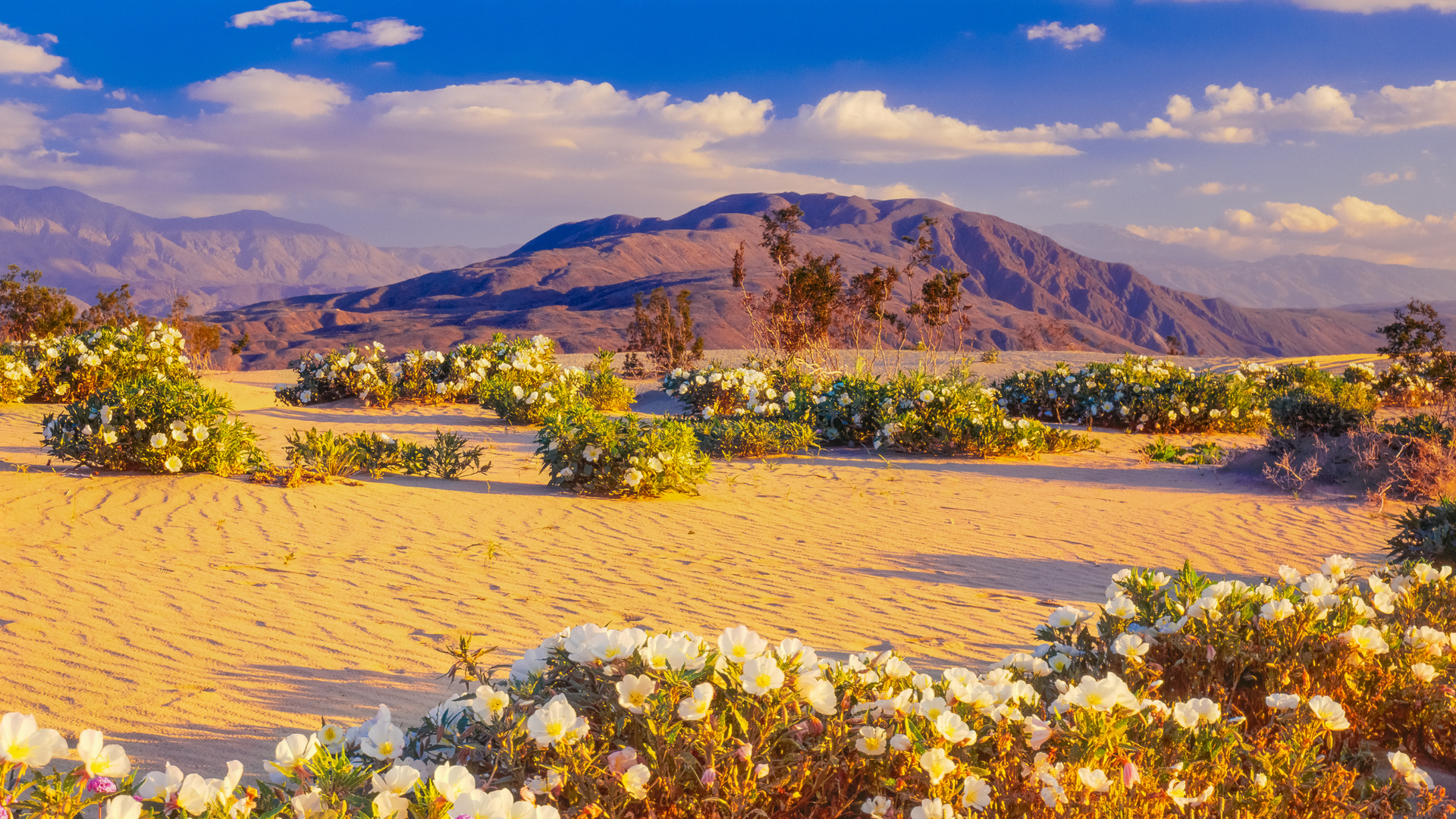
Explore Over 100 Trails Without Camping


If you're planning a trip to Anza-Borrego Desert State Park, Borrego Springs is the perfect base for your adventures. Nestled in the heart of California’s largest state park, this small desert town offers everything you need to explore and return to comfort each day.
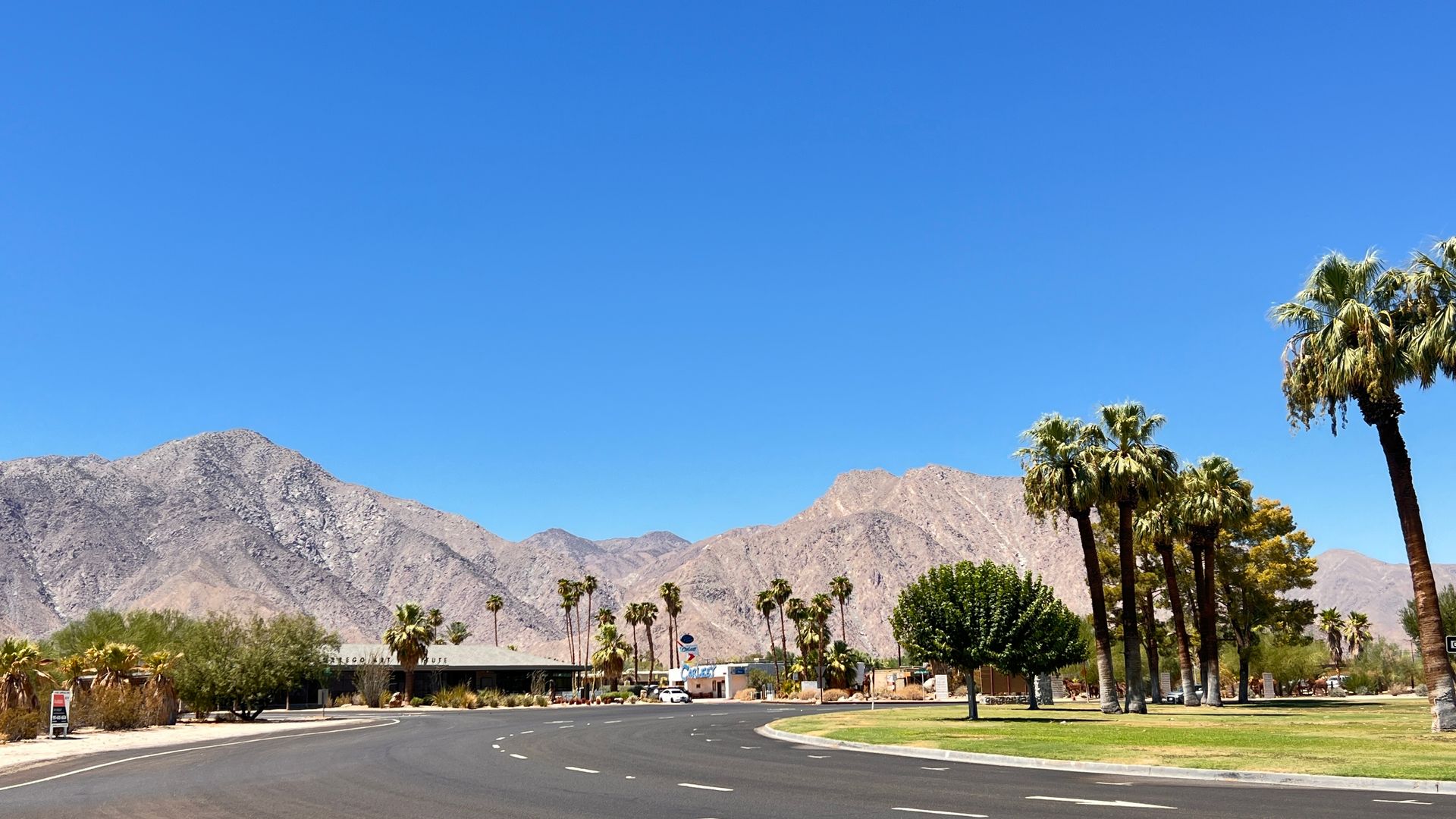


Why Borrego Springs is the Perfect Base


Borrego Springs is the only town located within the park's boundaries, making it a strategic starting point for all your park explorations. From here, you’re just minutes away from trailheads, scenic spots, and the park's Visitor Center. You can venture out in the morning and return by evening without the need to camp.


  • Central location: Easy access to trails and park attractions


  • Amenities: Restaurants, hotels, and local shops make it easy to relax after a day of hiking


Over 100 Trails to Explore


Anza-Borrego Desert State Park spans over 600,000 acres, offering more than 100 hiking trails. From short, family-friendly hikes to more challenging treks, there's something for every level of explorer.


  • Palm Canyon Trail: A 3-mile round trip to a hidden palm oasis


  • The Slot: A narrow, winding canyon perfect for photography


  • Font's Point: A scenic viewpoint overlooking the rugged badlands


Most trails can be completed in just a few hours, allowing you to enjoy multiple hikes without needing overnight camping gear. This makes Borrego Springs a convenient hub for day trips.


A Park for Everyone


Anza-Borrego Desert State Park offers much more than hiking. Whether you’re into birdwatching, stargazing, or exploring the unique desert landscape, there’s something for everyone.


  • Wildlife: Spot bighorn sheep, coyotes, and desert reptiles along the trails


  • Stargazing: The park is recognized as a Dark Sky Park, offering incredible views of the night sky


Experience the Best of Both Worlds


One of the key benefits of staying in Borrego Springs is the perfect blend of outdoor adventure and town charm. Spend your days exploring the vast Anza-Borrego Desert State Park, then return to Borrego Springs to unwind and enjoy the town's unique offerings.


  • Dining: Savor local cuisine at Borrego Springs’ restaurants, ranging from casual cafes to fine dining spots featuring regional flavors.


  • Rest: Choose from an array of accommodations, including hotels, resorts, off-grid bungalows, and short-term rentals, many with mid-century modern architecture, giving the town a distinctive style.


  • Shopping: Explore local boutiques and thrift stores for one-of-a-kind items, from artisanal goods to unique souvenirs. Borrego Springs’ small, uncrowded shopping scene adds to the relaxed, intimate experience.


  • Art and Culture: Visit the Borrego Art Institute and its ArtPark for a mix of fine art and outdoor sculptures. Explore the surrounding Galleta Meadows for its striking metal sculptures that dot the desert landscape.

  • Outdoor Recreation: Enjoy more than just hiking! Head to Borrego Springs County Park for tennis, basketball, or enjoy a round of golf at one of the area’s stunning courses, all surrounded by desert beauty. For those seeking a more serene experience, take a yoga class at La Casa Del Zorro resort, where wellness meets the peaceful desert landscape.


  • Nature Exploration: Don’t miss the ABDNHA Desert Garden and Nature Center, offering insights into the local flora and fauna.


These spots are perfect for peaceful walks and learning about the desert ecosystem. With so much to do in Borrego Springs, you can balance adventure and relaxation, making your visit a complete desert experience.


Plan Your Adventure Today


With its central location, comfortable amenities, and easy access to over 100 trails, Borrego Springs is the ultimate base for exploring Anza-Borrego Desert State Park. Whether you're seeking a quick hike or an all-day adventure, the park offers endless possibilities—all within a short drive from town.


Here are five great websites for more hiking information and experiences in Borrego Springs and Anza-Borrego Desert State Park:


  • AllTrails
    AllTrails offers comprehensive trail information, including detailed maps, user reviews, and difficulty levels for hikes in Anza-Borrego Desert State Park. Perfect for planning your next outdoor adventure.


  • California State Parks - Anza-Borrego
    The official California State Parks website provides detailed information on Anza-Borrego's trails, rules, maps, and visitor center hours, making it a key resource for your visit.


  • Experience Borrego
    Experience Borrego offers personalized hiking tours and guided explorations throughout the park. It's a fantastic resource for discovering lesser-known trails and enhancing your desert adventure.


March 6, 2026
By Dennis Mammana Week of March 8-14, 2026 If you hear the word "superstar," what immediately comes to mind? Perhaps names like Tom Hanks, Taylor Swift or LeBron James? That's certainly understandable; they are all undisputed superstars who attract the attention of paparazzi and fans alike. If you're an astronomer, however, you may answer this question differently. For example, when I hear the word "superstar," I think of UY Scuti, WOH G64 or RSGC1-F01. Yes, these are superstars, but not quite how people may think. These are some of the largest stars known in our galaxy and, for that reason, are quite intriguing to us celestial paparazzi. Regular readers of this column know that our sun is also a star. It appears big and bright in our daytime sky because not only is it rather close (about 93 million miles away), it's also pretty large (nearly a million miles across). It sounds huge, but our star is rather small on a cosmic scale, and believe it or not, there are stars out there that would dwarf our sun and make it look tiny. These are the true superstars! Until recently, the largest star known was given the hopelessly poetic name of UY Scuti. At a distance of some 9,500 lightyears from Earth, UY Scuti is what is known as a red hypergiant star, with a diameter some 1,700 times that of the sun! All that changed recently, however, when astronomers found a gargantuan star some 2,150 times larger than our sun! It's named Stephenson 2-18, and if you'd like to get a peek at this stellar behemoth, you'll need more than your eyes. At a distance of some 18,900 lightyears, it appears 5,100 times fainter than we can see without a telescope. If you have no telescope but would still like to see a celestial superstar, you're in luck. There's one shining in our night sky right now; it's one of the brightest up there and is named Betelgeuse. Betelgeuse sparkles brightly in the northeastern corner of Orion, the hunter, and you can see its orange light midway up in the southern sky after dark this week. With about 15-20 times more mass than our sun, Betelgeuse is known as a red supergiant star for good reason. While we could align 109 Earths across the face of our sun, we would need at least 700 suns to cross the face of Betelgeuse! Indeed, this star is so immense that if it replaced our sun at the center of our planetary system, Betelgeuse would engulf the orbits of Mercury, Venus, Earth and Mars, and stretch part of the way to Jupiter! Yet it appears as a simple point of light in our night sky because of its tremendous distance from us — some 3,100 trillion miles, or about 520 lightyears. Betelgeuse is easily one of the largest known stars, though its size fluctuates by as much as 60% as the star shudders and pulsates on its way to an eventual supernova explosion, thousands or millions of years from now. Or tonight. We just don't know.  I hope you'll step out under the night sky soon to meet this remarkable superstar for yourself! Visit Dennis Mammana at dennismammana.com. To read features by other Creators Syndicate writers and cartoonists, visit the Creators Syndicate website at www.creators.com. Learn More About Borrego Springs
March 2, 2026
Borrego Springs, CA The Anza-Borrego Desert Natural History Association (ABDNHA) will host the 2026 Borrego Home & Garden Tour on Saturday, March 14, 2026, from 9:00 a.m. to 3:00 p.m. The public is invited to explore four private homes and gardens at their own pace in Borrego Springs. This annual tour is a fundraiser benefiting ABDNHA, the educational 501(c)(3) nonprofit that supports interpretation, education, and stewardship connected to the Anza-Borrego Desert region. Event details Event: 2026 Borrego Home & Garden Tour Date: Saturday, March 14, 2026 Time: 9:00 a.m. to 3:00 p.m. Format: Self-guided tour of four private homes and gardens Tickets $30 General Public $24 ABDNHA Members $20 ABDNHA Volunteers Early purchase discount: Buy by March 8 and save $2 per ticket . How to purchase Tickets are available online at abdnha.org/gardentour and in person at the ABDNHA Desert Nature Center , 652 Palm Canyon Drive, Borrego Springs . Questions: (760) 767-3098 Important guidelines Tickets are non-refundable . For guest safety and property rules, no strollers or dogs are permitted. About ABDNHA The Anza-Borrego Desert Natural History Association (ABDNHA) is a nonprofit organization that supports education and interpretation in and around Anza-Borrego Desert State Park through programs, exhibits, and community engagement. Media Contact: ABDNHA Desert Nature Center 652 Palm Canyon Drive, Borrego Springs, CA (760) 767-3098 abdnha.org/gardentour
February 25, 2026
By Dennis Mammana Week of March 1-7, 2026 Attention, night owls and insomniacs! The sky show this week is just for you! Much of North America is about to see the moon experience one of nature's most beautiful sky shows: a total lunar eclipse. A lunar eclipse occurs when the full moon slips into the Earth's shadow far out in space, either partially or completely, and that's just what will happen during the wee hours of March 3. Skywatchers throughout North America will see the start of this eclipse (weather permitting, of course), but depending on where you live, you may see only a portion of the sky show. In general, the farther west you live, the more of the eclipse you will see before the moon sets behind the western horizon. The eclipse begins at 12:44 a.m. PST (3:44 a.m. EST), when the moon enters the Earth's light outer shadow (known as the penumbra), but this shadow is so thin that no one will notice a darkening of the moon's appearance. Within an hour or so, that will change significantly. As the moon approaches the dark inner shadow of the Earth (known as the umbra), skywatchers will notice the eastern side of the moon beginning to darken slightly. The real show begins at 1:50 a.m. PST (4:50 a.m. EST) when the moon officially enters the umbra. No one gazing skyward will have any doubt that a "bite" has been taken out of the moon — a bite that will grow larger with each passing minute. For the next hour or so, the moon will dim as it slips more deeply into our planet's umbra, until 3:04 a.m. PST (6:04 a.m. EST) when it's completely engulfed and the total eclipse begins. Unfortunately, those in the far eastern part of North America may miss this since the moon will lie quite close to (or even below) the western horizon. During the total phase, the moon will take on a dim coppery hue. This occurs because sunlight passing through our atmosphere is reddened and bent inward toward the darkened surface of the eclipsed moon, now suspended eerily against the stars of Leo, the lion. Only those viewing from the Midwest to the West Coast will see mid-eclipse, which occurs at 3:33 a.m. PST (5:33 a.m. CST). Those in the Midwest may miss the end of totality at 4:02 a.m. PST (6:02 a.m. CST), however, as the moon will be setting in the west. The entire event will end at 5:17 a.m. PST (4:17 a.m. MST) with the moon approaching the western horizon for viewers in western North America. Unlike an eclipse of the sun, a lunar eclipse is perfectly safe to view without protective filters. Your eyes are all you need to enjoy the show, but you'll have even more fun viewing through binoculars or a small telescope. If the sky is cloudy that morning, or if you live where the eclipse won't be visible, you can watch a livestream of the sky show online. Visit timeanddate.com and click on "Sun, Moon & Space" at the top to find details for your location, as well as links to view the eclipse live online. Visit Dennis Mammana at dennismammana.com. To read features by other Creators Syndicate writers and cartoonists, visit the Creators Syndicate website at www.creators.com.  Learn More About Borrego Springs
By Dennis Mammana February 11, 2026
Among Eridanus’ prominent stars is Epsilon Eridani. Creators.com illustration
By Dennis Mammana January 22, 2026
The Great Orion Nebula is visible with the unaided eye.
By Jake Hinton January 10, 2026
This segment aired on KTLA's Off the Clock on Jan. 7, 2026.
Show More

Share This Post