Andrea McKenna • May 17, 2026

Walk of the Cosmos in Borrego Springs

Share
Walk of Cosmos in Borrego Springs

Visit the Walk of the Cosmos in Borrego Springs

Borrego Springs is home to a unique attraction that offers visitors an immersive experience combining the vastness of space with the serene beauty of the desert. The Walk of the Cosmos, located within the Borrego Springs Park and Library complex, invites you to take a journey through our solar system while enjoying a variety of outdoor amenities.


2580 Country Club Road

Borrego Springs, California 92004

Get Directions


Journey Through the Solar System


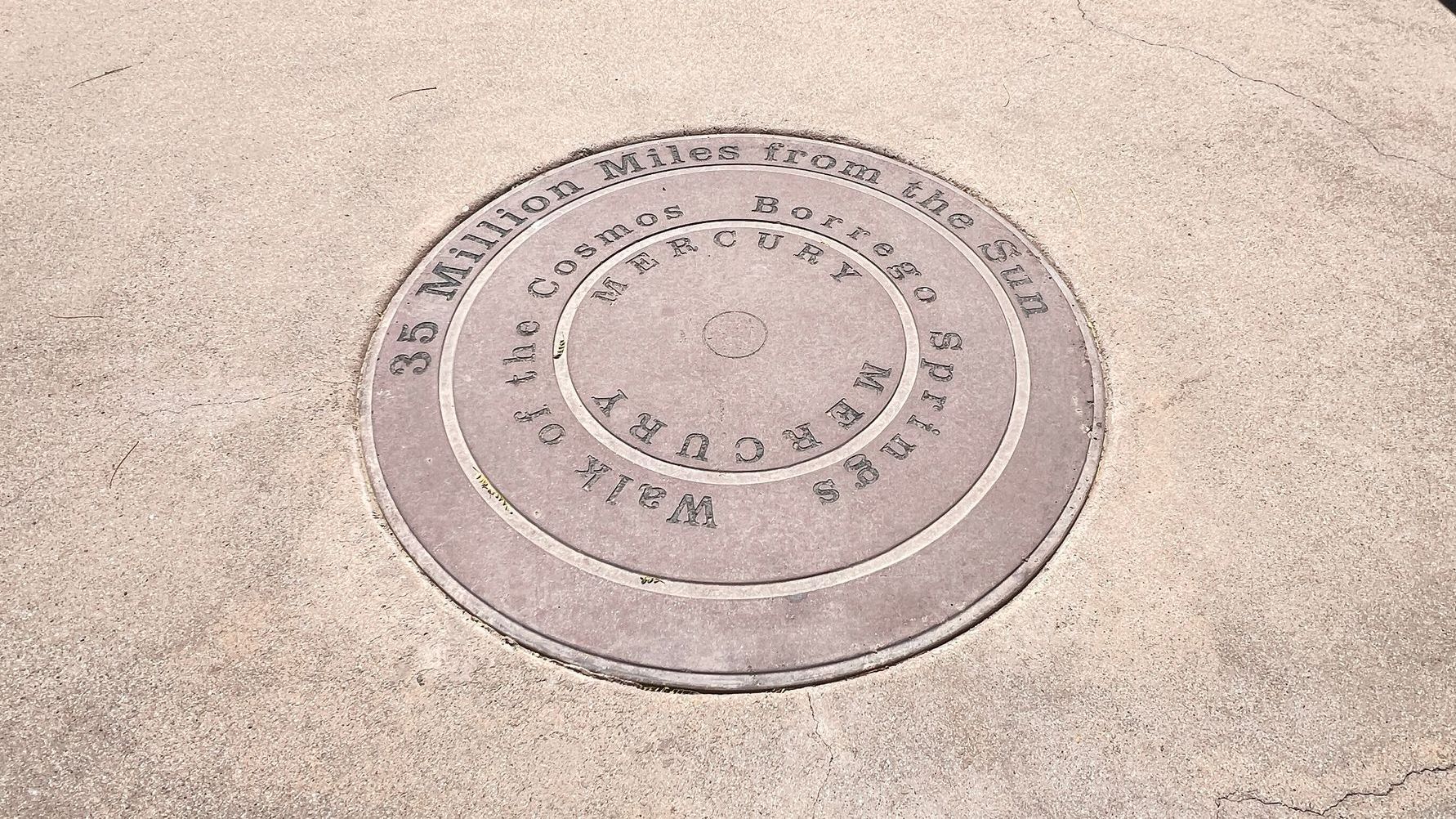
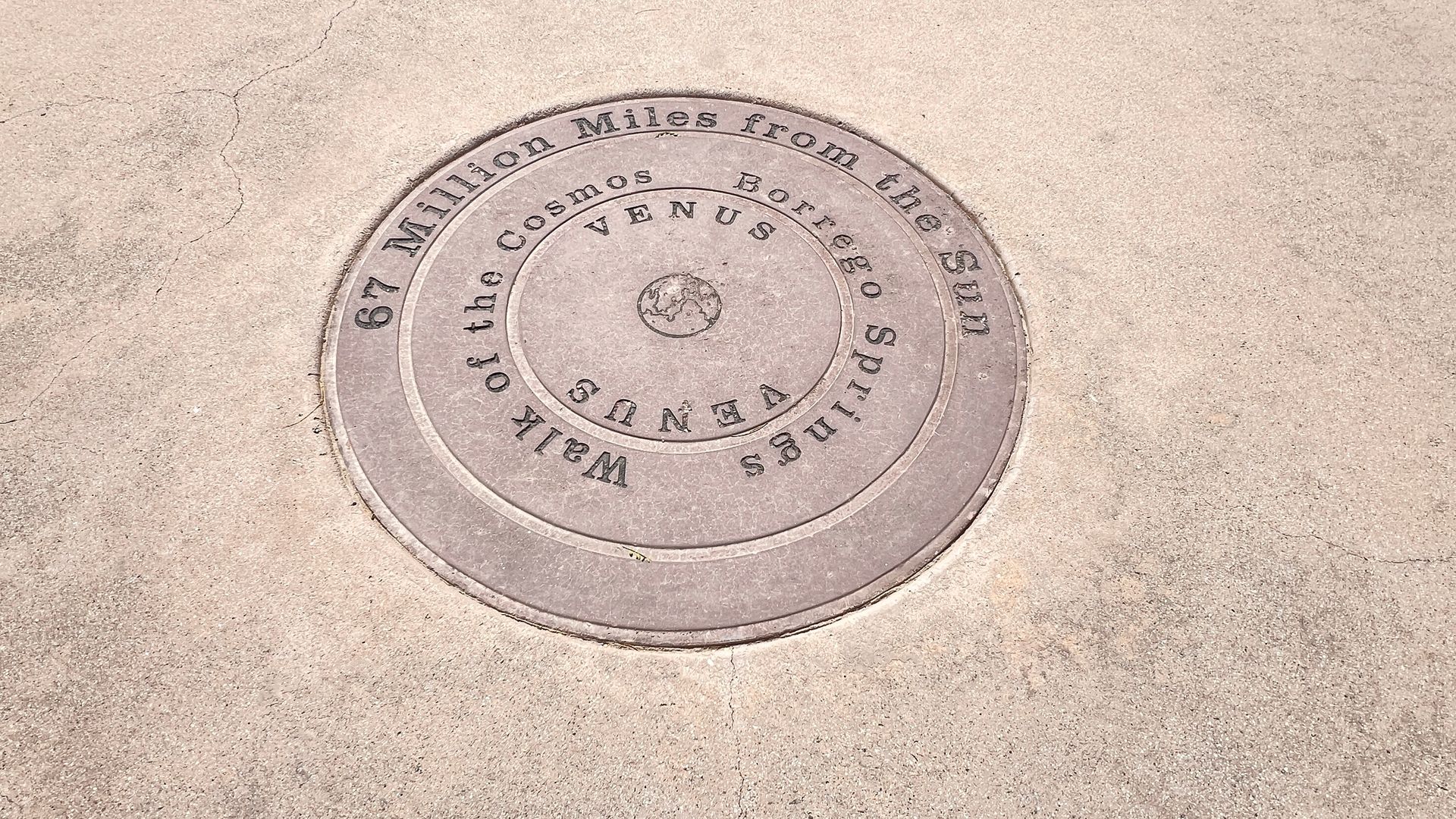
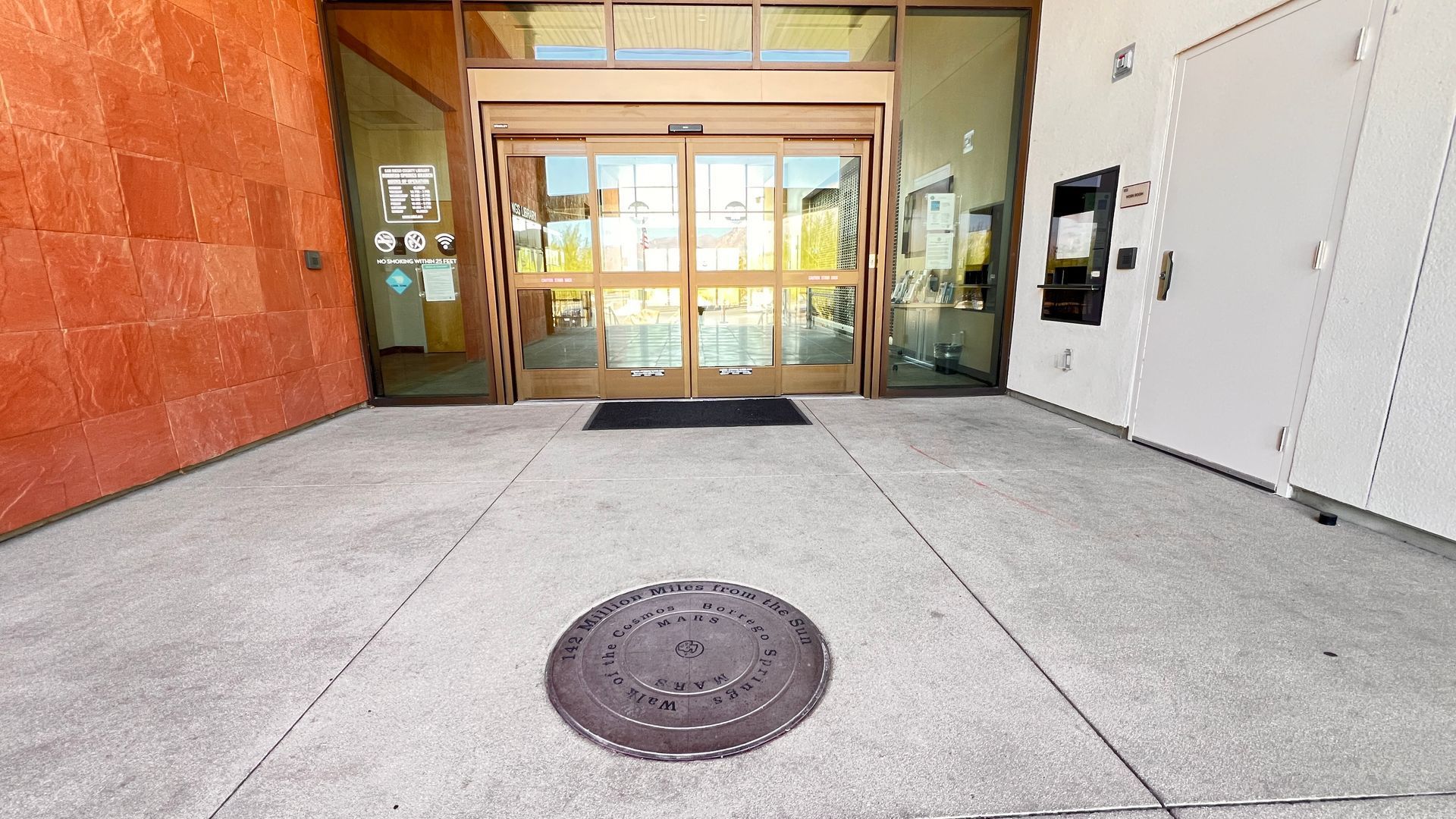
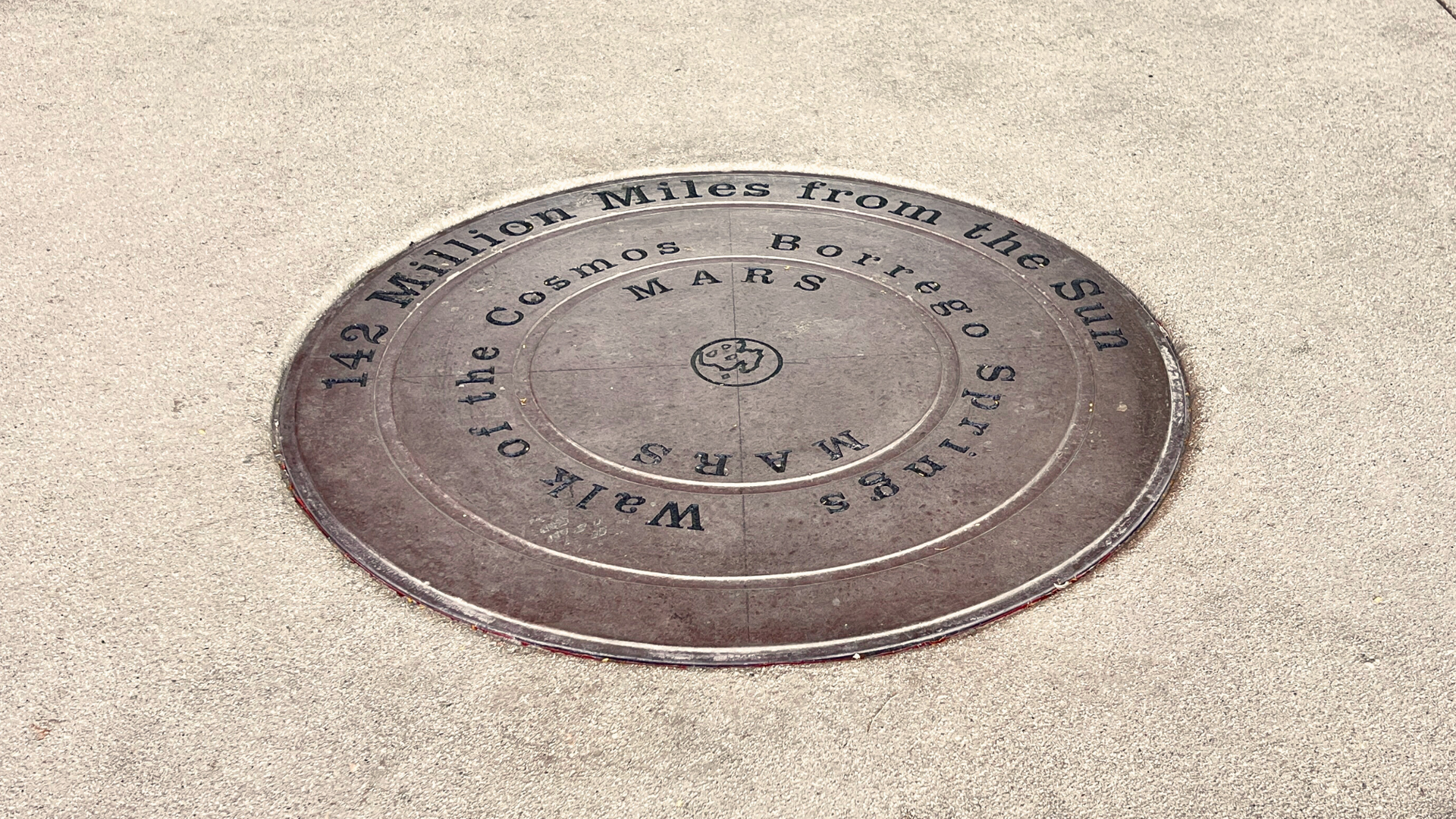
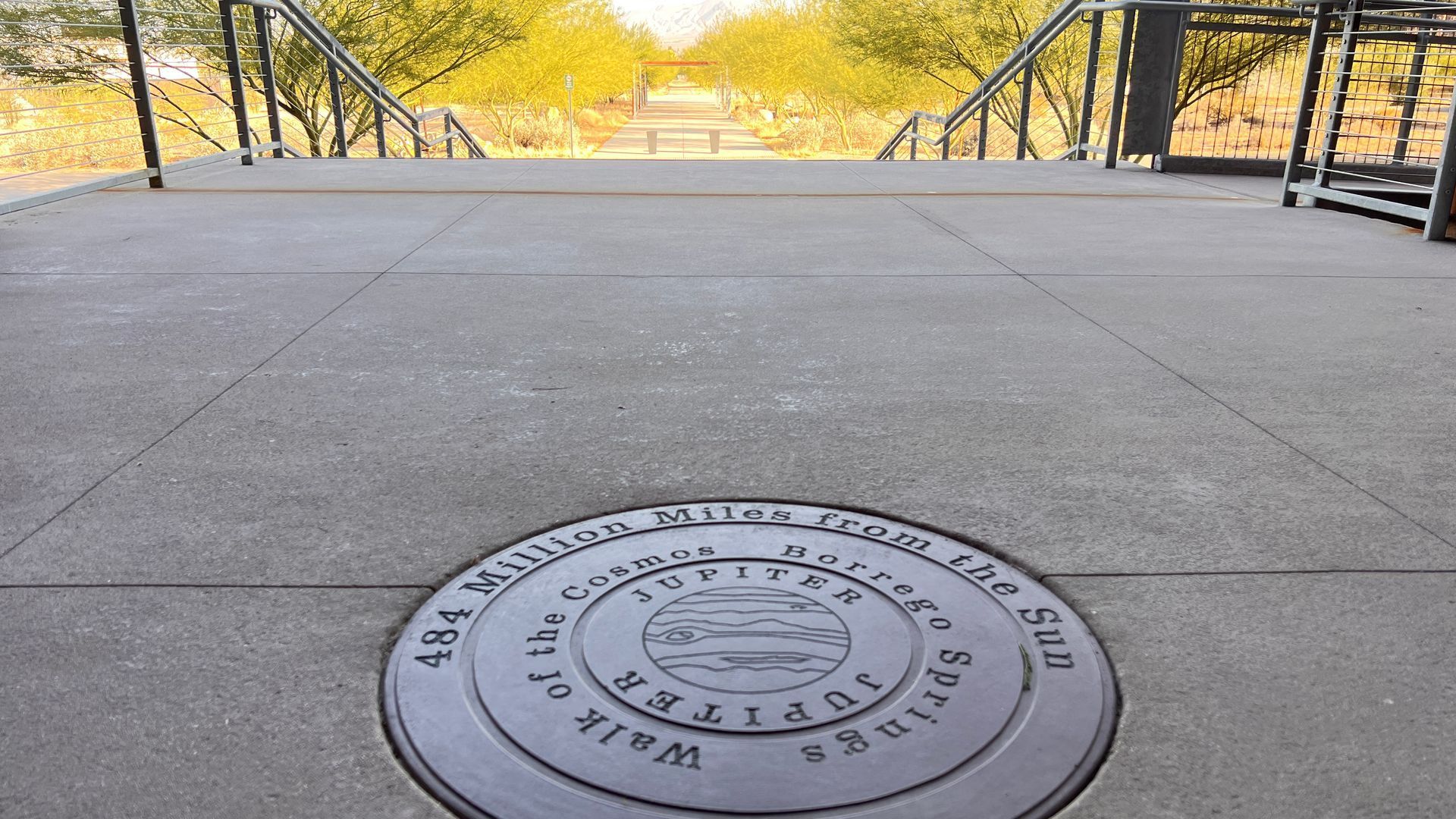
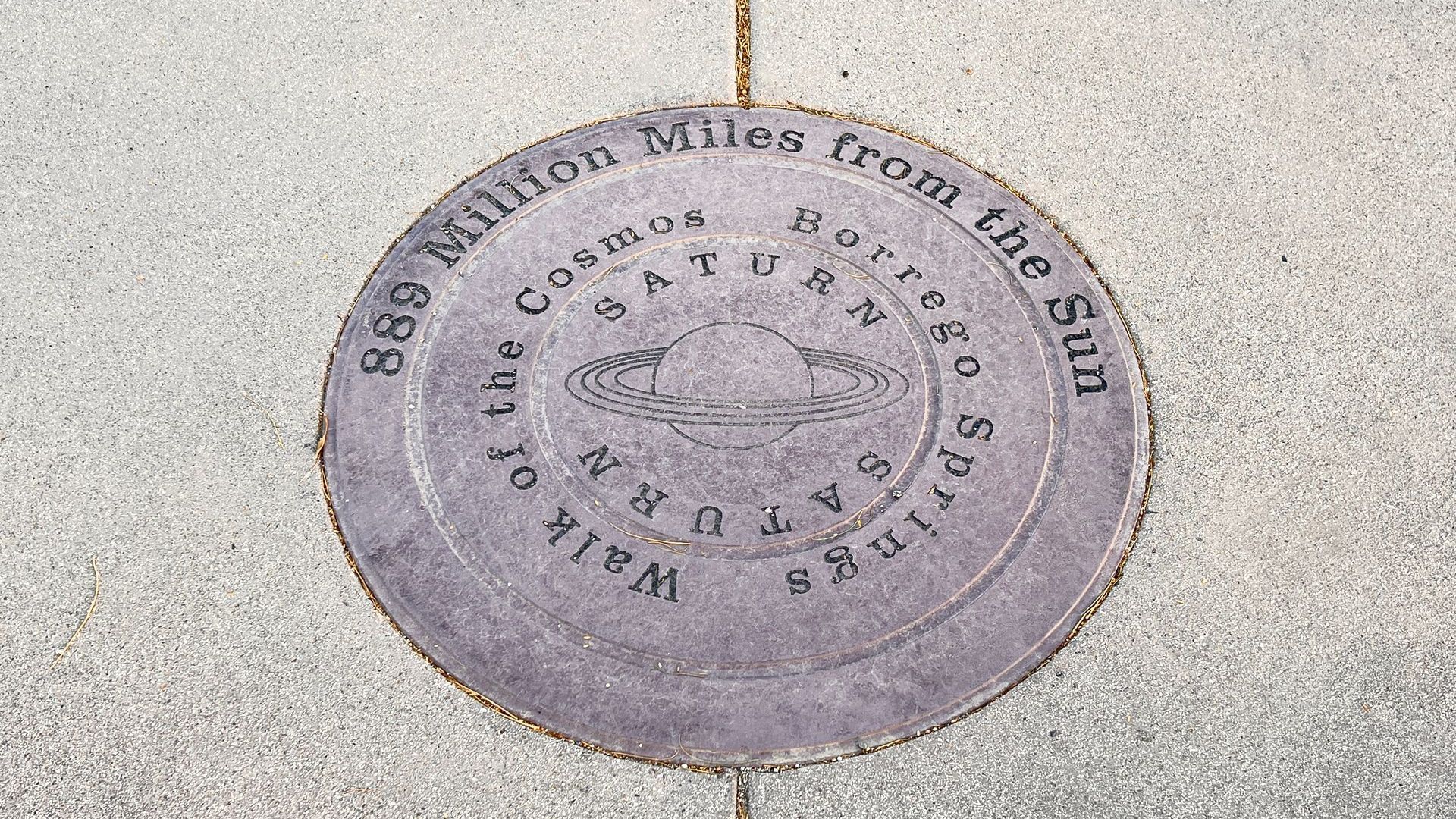
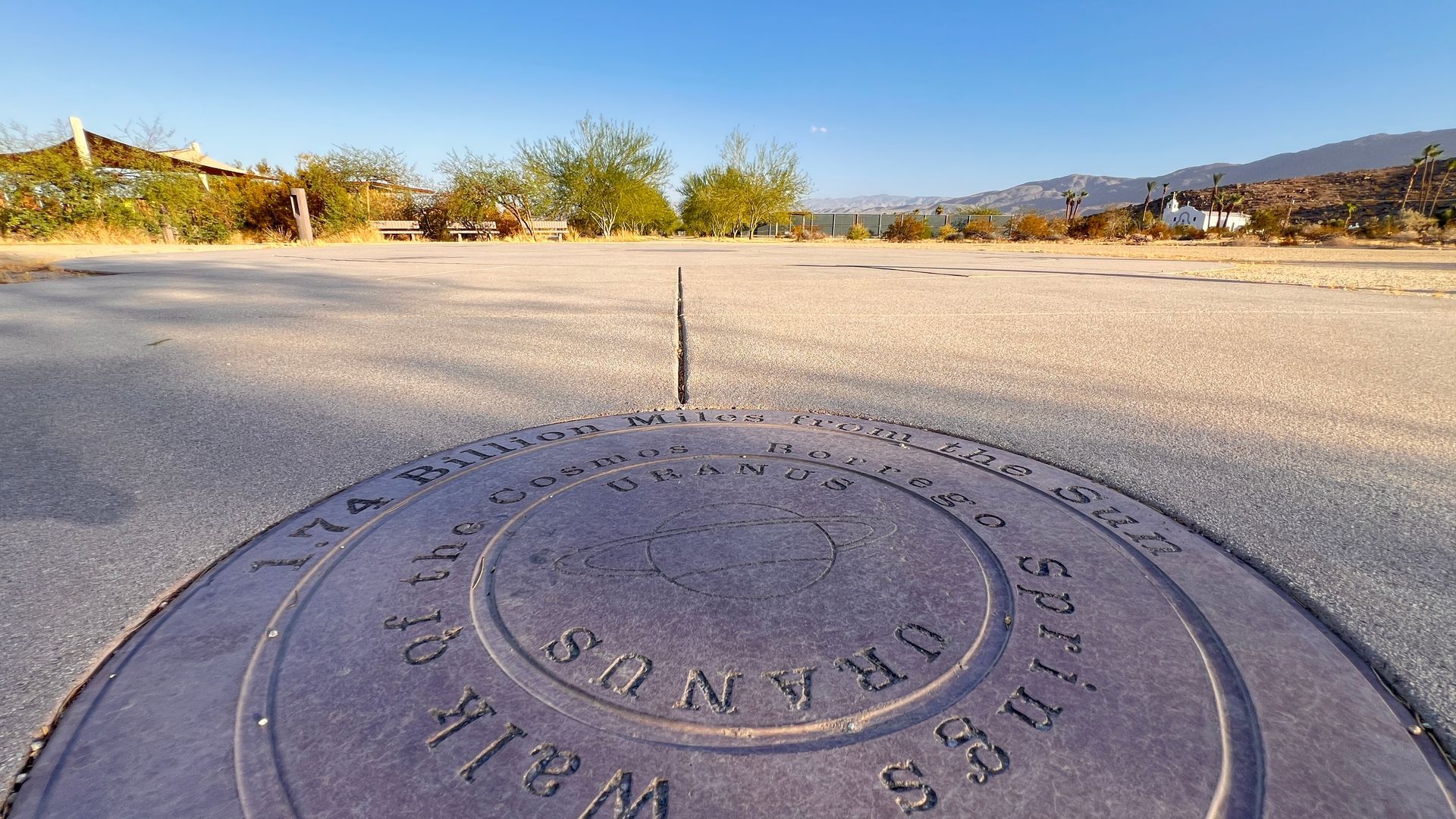
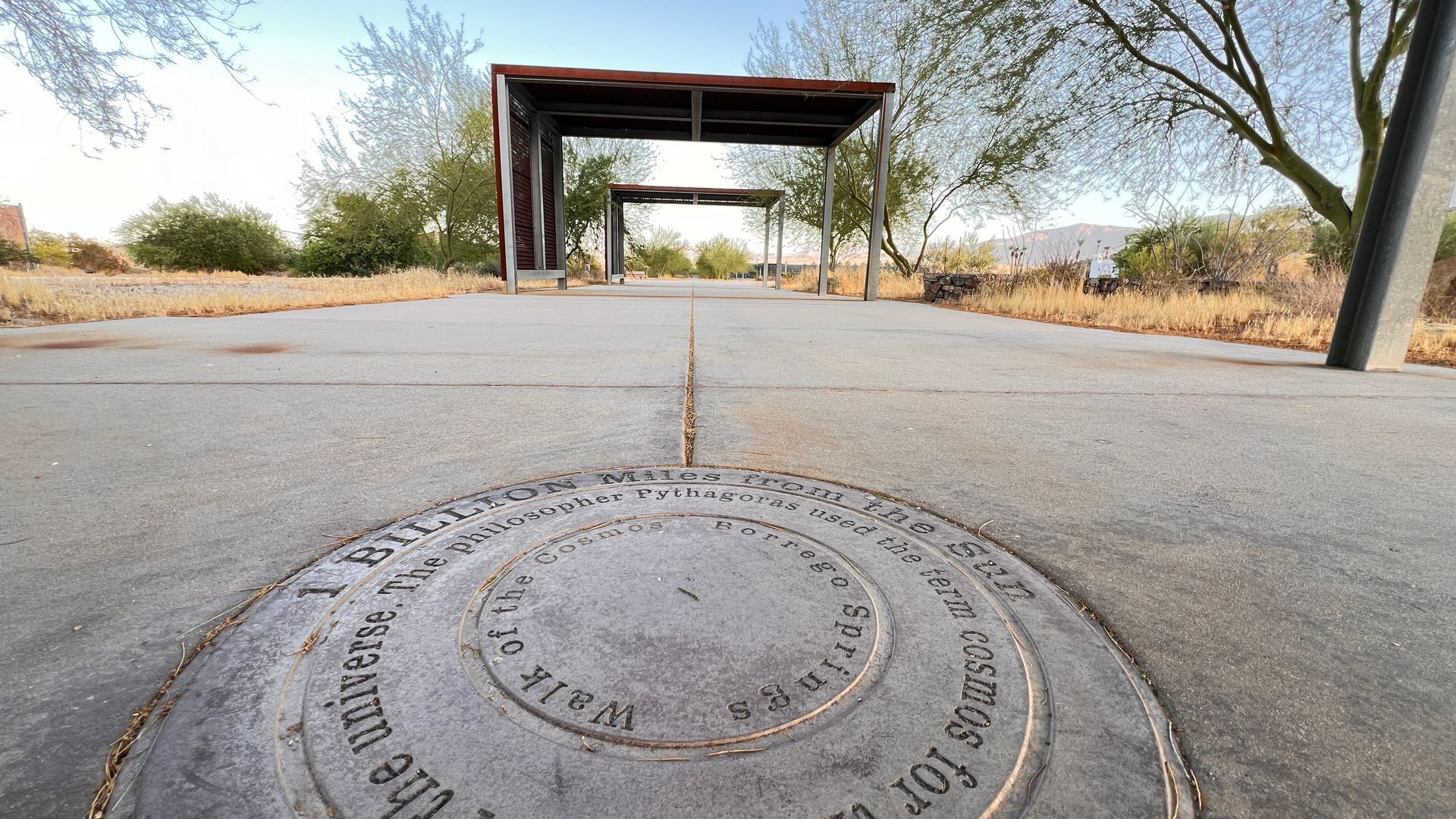
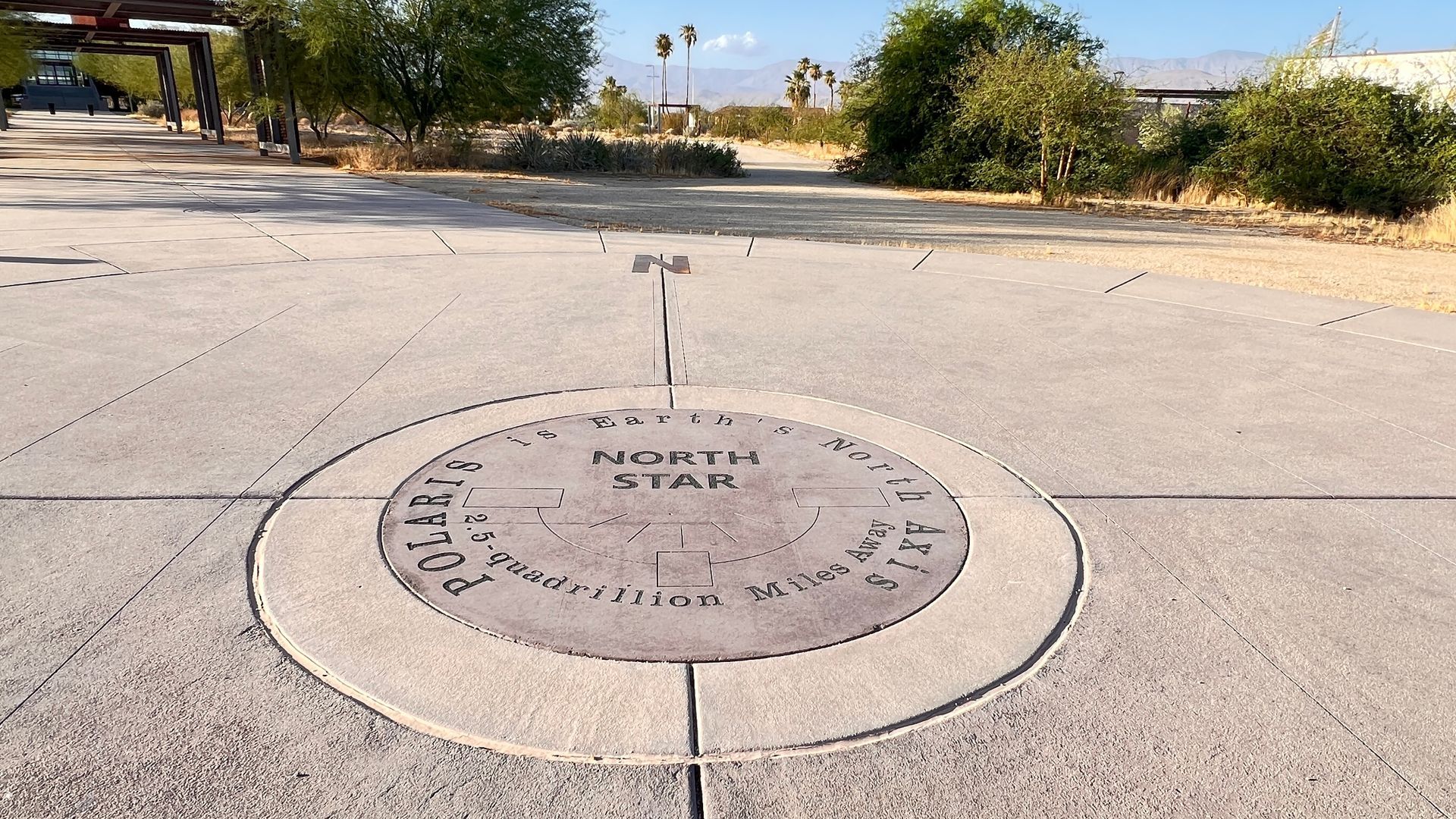
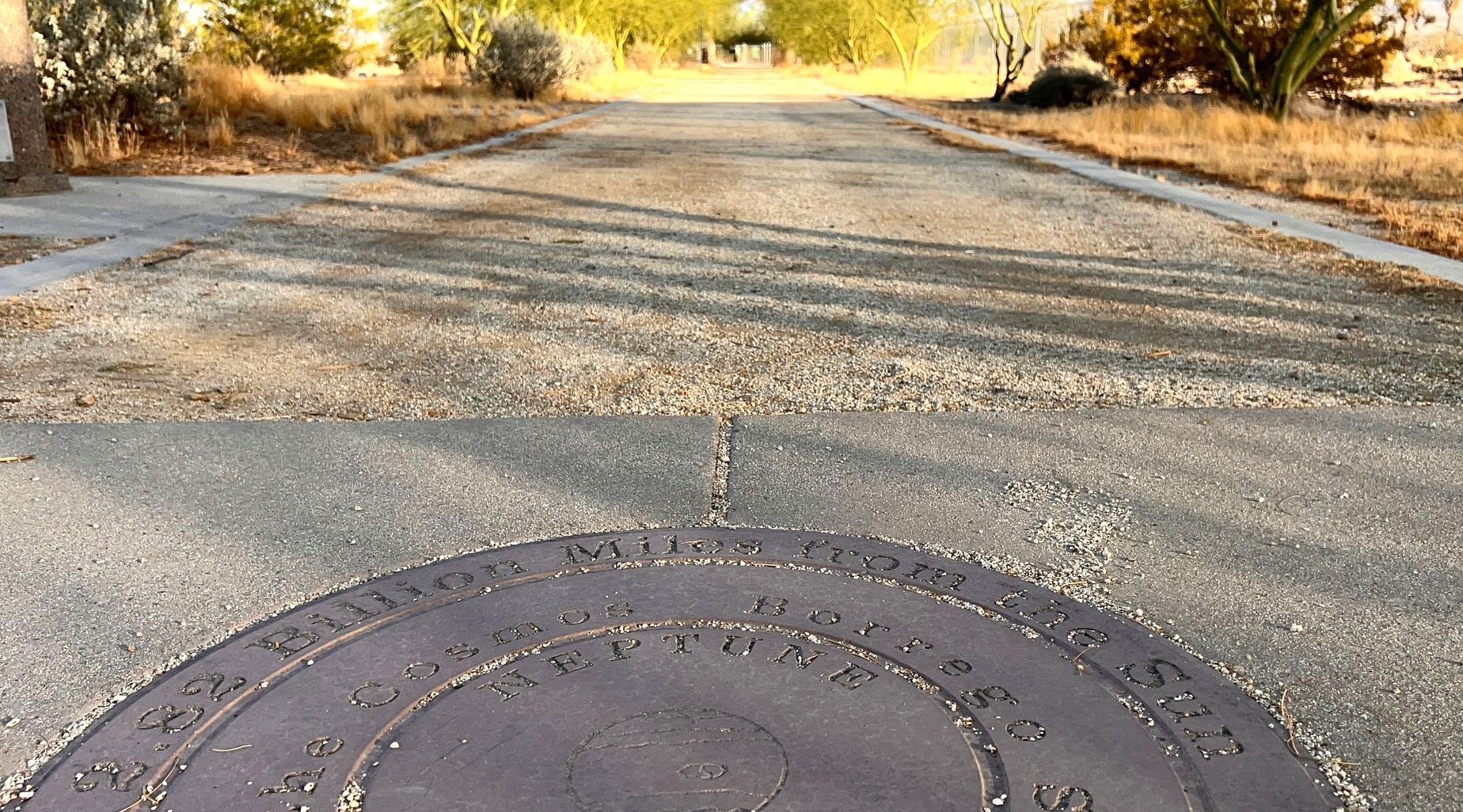
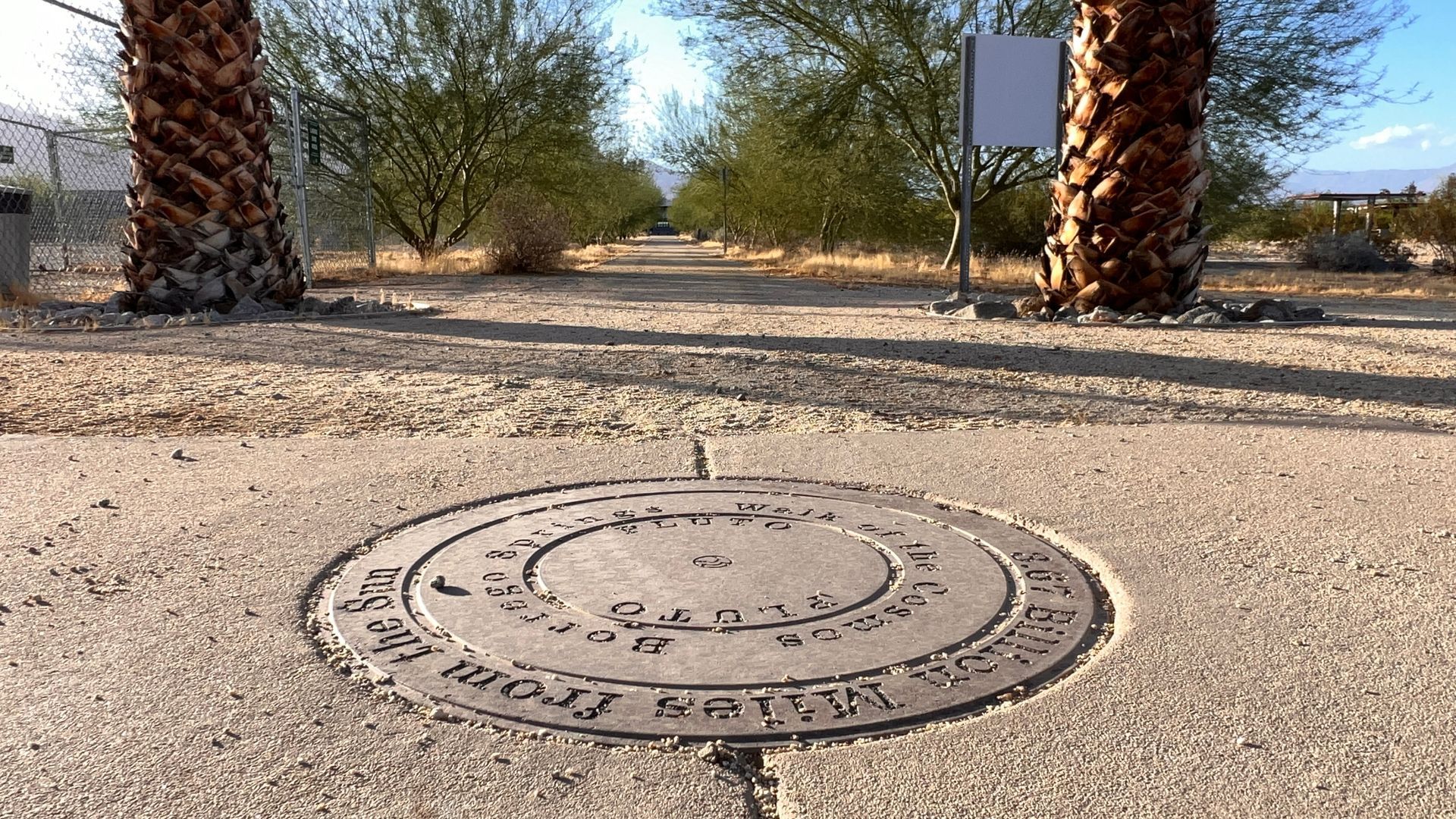
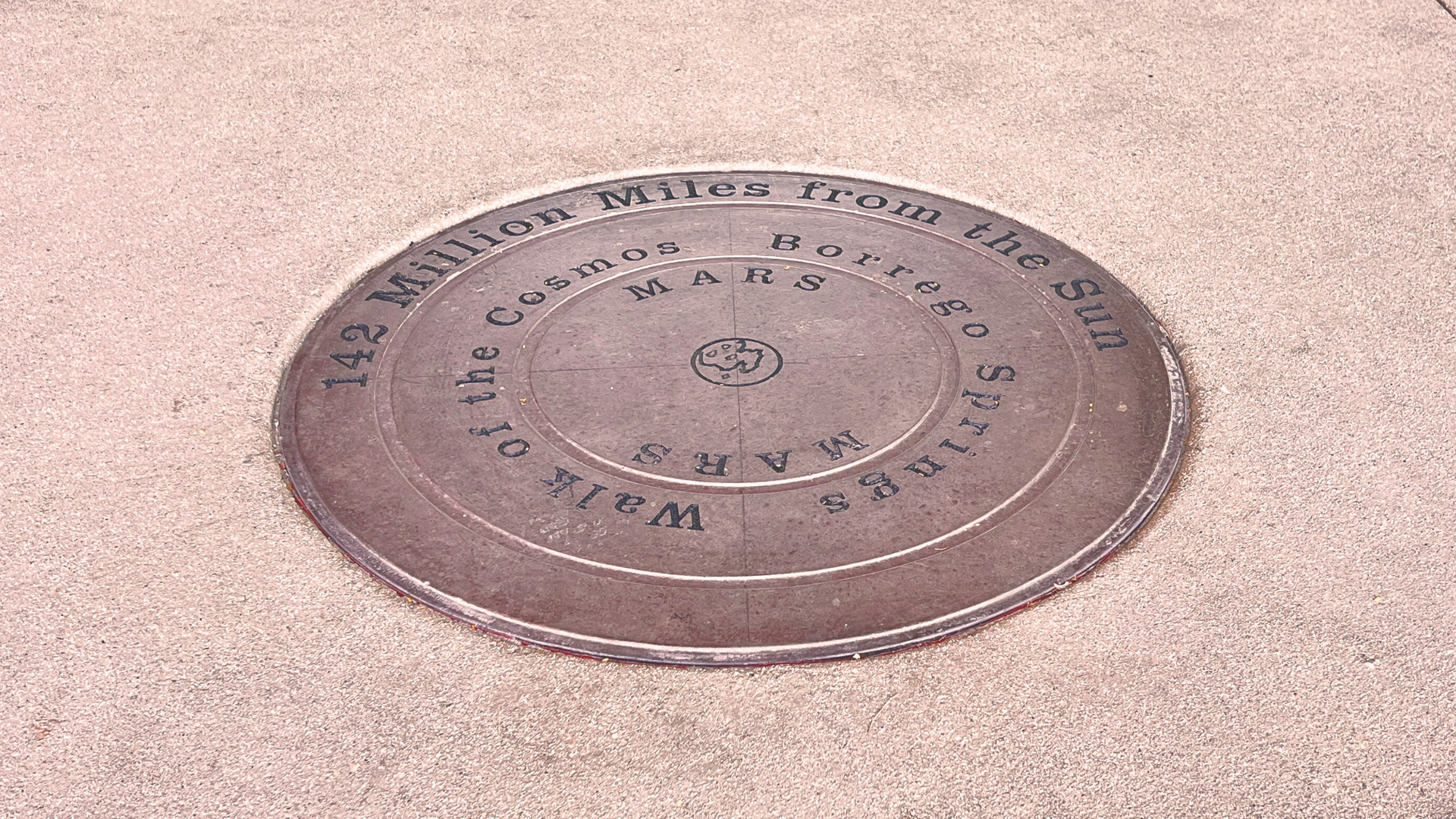
The Walk of the Cosmos begins at the entrance of the Borrego Springs Library and leads you on a fascinating journey through our solar system. The path is lined with engraved markers that represent each planet, positioned at scaled distances from the Sun. As you walk along this trail, you'll gain a deeper understanding of the immense distances between the planets while taking in the tranquil desert surroundings.


Each marker along the path provides educational information about the planets, making the walk both informative and engaging for visitors of all ages.


Whether you're a space enthusiast or simply looking for a peaceful walk, the Walk of the Cosmos offers a unique way to connect with the universe.


Follow the Path to Pluto at Borrego Springs Library


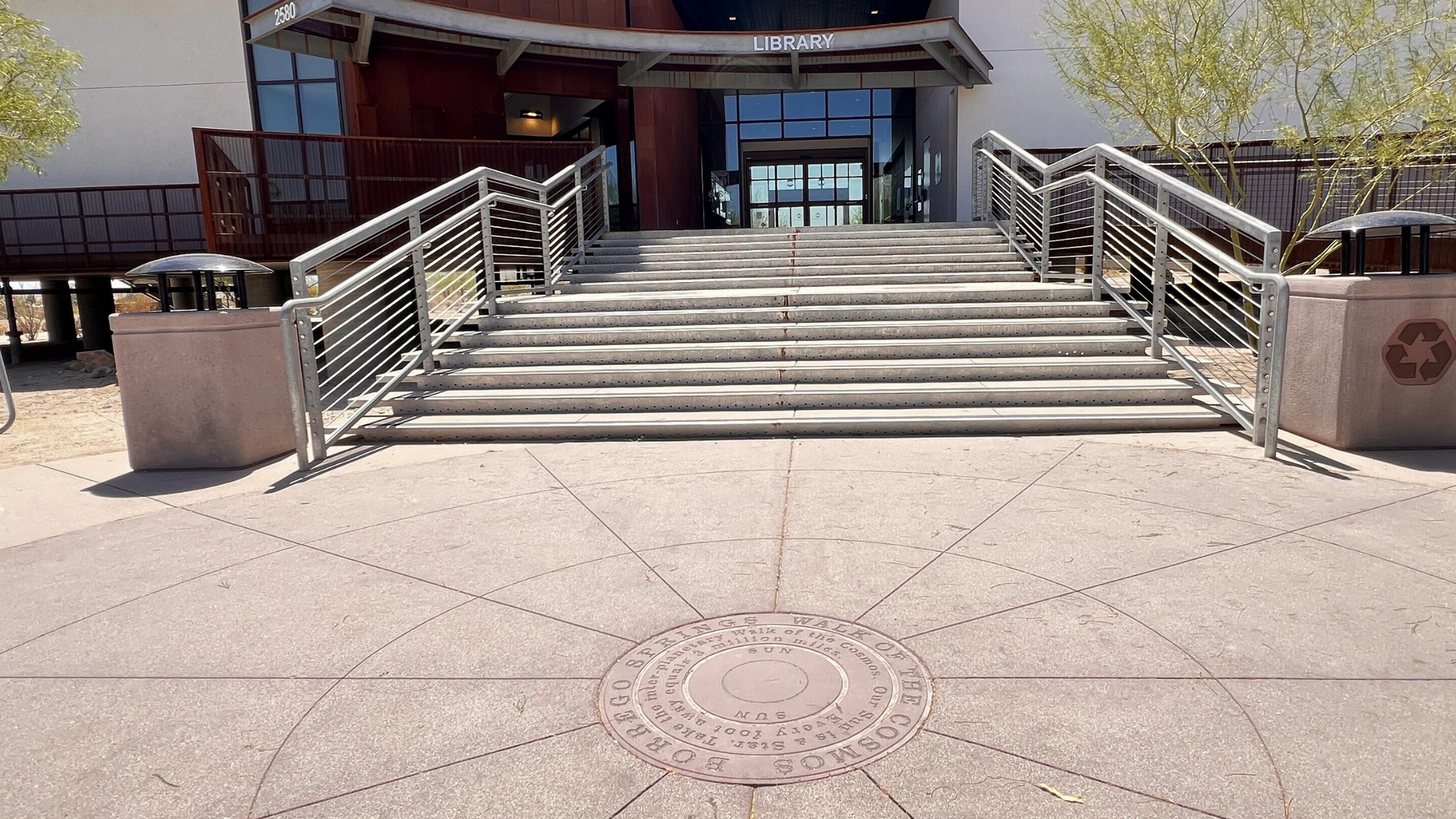
Begin your journey at the Sun near the front entrance of the Borrego Springs Library. Step inside, then exit through the back door to follow the path that guides you all the way to Pluto at the end.


Scroll Through The Images
  • Walk of the Cosmos

    Slide title

    Write your caption here
    Button
  • Slide title

    Write your caption here
    Button
  • Slide title

    Write your caption here
    Button
  • Walk of the Cosmos

    Slide title

    Write your caption here
    Button
  • Slide title

    Write your caption here
    Button
  • Slide title

    Write your caption here
    Button
  • Slide title

    Write your caption here
    Button
  • Slide title

    Write your caption here
    Button
  • Walk of the Cosmos in Borrego Springs

    Slide title

    Write your caption here
    Button
  • Walk of the Cosmos in Borrego Springs

    Slide title

    Write your caption here
    Button
  • Walk of the Cosmos in Borrego Springs - Neptune

    Slide title

    Write your caption here
    Button
  • Walk of the Cosmos in Borrego Springs

    Slide title

    Write your caption here
    Button
  • Walk of the Cosmos in Borrego Springs - Play Area

    Slide title

    Write your caption here
    Button

Explore Borrego Springs Public Park


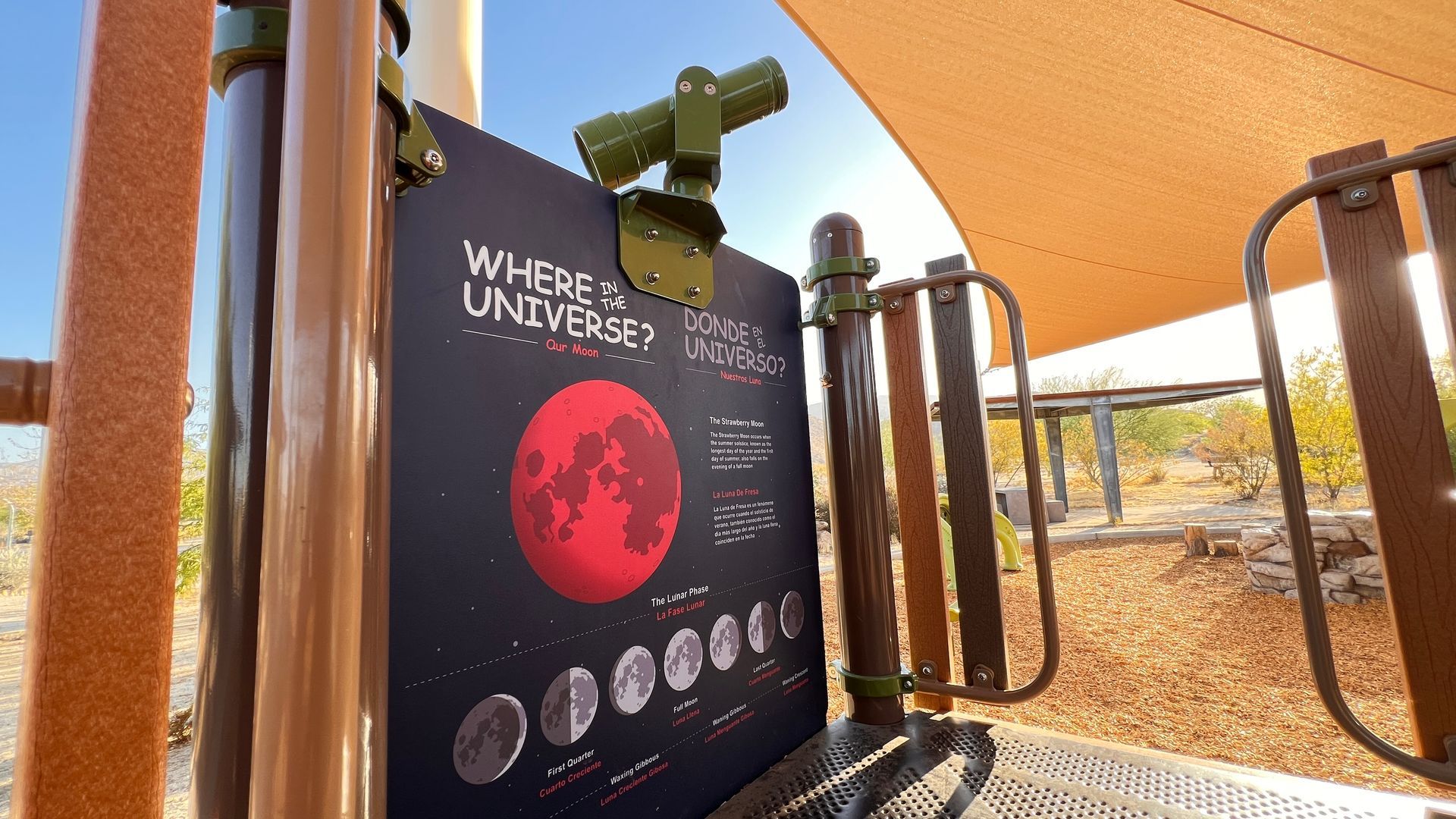
The Walk of the Cosmos is just one part of the Borrego Springs County Park, a well-equipped recreational area that offers something for everyone. The park features a spacious play area, perfect for families with children. Here, kids can enjoy various playground structures, all while surrounded by the natural beauty of the desert.


For those looking to stay active, the park includes tennis and basketball courts, providing a great opportunity for some friendly competition or a casual game under the clear Borrego Springs skies. The park's off-leash dog area is another highlight, offering a safe and enjoyable space for your furry friends to run and play.


In the evening, the park’s amphitheater becomes a prime spot for stargazing. Borrego Springs is designated as a Dark Sky Community, making it one of the best places in Southern California to observe the night sky. The amphitheater provides a comfortable setting for visitors to sit back and marvel at the stars, planets, and constellations visible in the desert sky.


A Must-Visit Destination in Borrego Springs


The Walk of the Cosmos and Borrego Springs County Park offer an enriching and enjoyable experience for visitors. Whether you're exploring the solar system on foot, enjoying the park's recreational facilities, or gazing at the stars in the amphitheater, this destination is a perfect addition to your Borrego Springs itinerary.


Located just minutes from the heart of Borrego Springs, the park is easily accessible and free to visit year-round. It’s a place where education, recreation, and natural beauty come together, offering a memorable experience for everyone who visits.


Learn More About Borrego Springs

By Andrea McKenna August 6, 2026
Anza-Borrego Night Hike Experience Anza-Borrego after dark on a guided 2–3 mile hike across natural desert terrain. Participants may observe shifting shadows, nighttime sounds, and nocturnal wildlife such as bats, owls, and scorpions. Event Details Date: Saturday, August 29, 2026 Time: 6:30–9:30 p.m. Meeting Location: Anza-Borrego Foundation Store, 587 Palm Canyon Dr. #110, Borrego Springs Cost: $28 ABF members, $33 non-members, $17 students The group will meet at the ABF store and carpool or caravan to the trailhead. The hike will be led by Wilderness First Responder Matt Nagy. Bring sturdy closed-toe shoes, a flashlight or headlamp, at least 2 liters of water, and snacks.  Register Today Space may be limited, so early registration is recommended.
By Dennis Mammana August 6, 2026
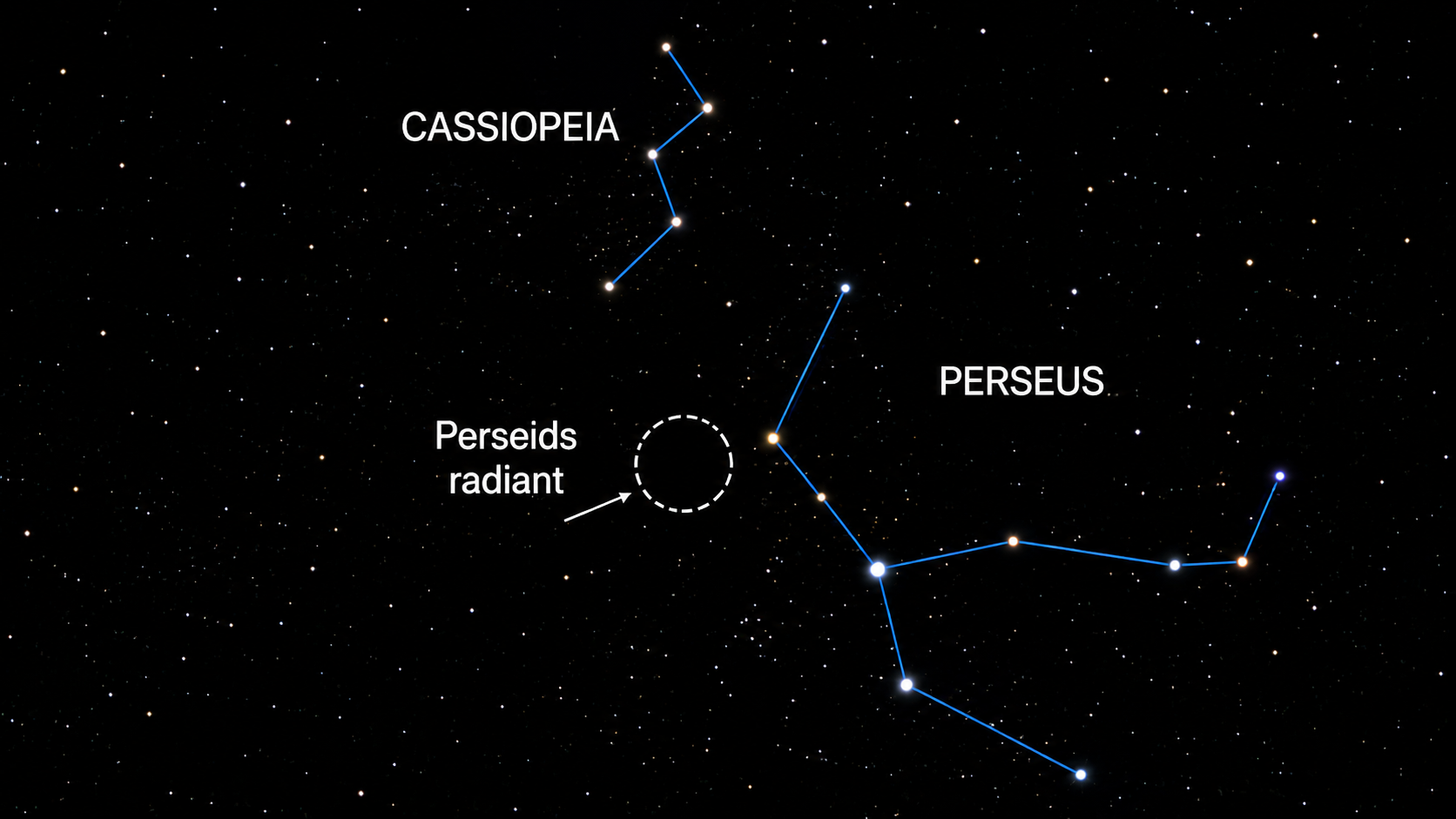
The Perseid meteor shower is expected to peak during the predawn hours of Thursday, Aug. 13.
By Andrea McKenna August 5, 2026
Creative classes for adults and families continue throughout August.
By Borrego Springs High School August 5, 2026
Join Borrego Springs High School in supporting the San Diego Blood Bank High School Challenge.
By Matt Bosson August 3, 2026
Free Summer Movies Continue in Borrego Springs This August
By Palm Springs Aerial Tramway July 31, 2026
Complimentary Tram Admission in August for Qualifying First Responders
By East County Performing Arts July 29, 2026
Award-Winning Cellist Ruslan Biryukov Performs Two Concerts in Julian
By Dennis Mammana July 29, 2026
By Dennis Mammana Week of Aug 2-8, 2026  One of the most profound experiences a stargazer can have is to stand under the Milky Way on a clear August night far from city lights and see the wispy bunches of stars so tightly packed that they appear to the eye as a hazy band of light punctuated not only by bright individual stars but by tiny regions that appear as hazy clumps. Aim binoculars or a small telescope toward these "faint fuzzies," as astronomers affectionately call them, and you'll walk the same celestial path as Charles Messier did two and a half centuries ago. Messier was an 18th-century French astronomer who scanned the heavens in search of new comets, hoping that such discoveries would lead him to fame and fortune. He knew that comets often first appear as faint and colorless smudges of light that drift slowly among the stars, so that's what he was seeking. Along the way, however, he encountered dozens of such smudges that did not move. What these were he didn't know and, quite frankly, he didn't care. They weren't comets, so to avoid wasting more of his time on them — and to prevent other comet hunters from being similarly fooled — he began to compile a list of all these false comets he encountered on his nightly watch. Visit Dennis Mammana at dennismammana.com. To read features by other Creators Syndicate writers and cartoonists, visit the Creators Syndicate website at www.creators.com .
By Andrea McKenna July 27, 2026
Photo by Kamala Venkatesh
By Matt Bosson July 24, 2026
Free Summer Movies Continue in Borrego Springs This August
By Dennis Mammana July 23, 2026
By Dennis Mammana Week of July 26 - Aug. 1, 2026 In a couple of weeks, I'll be telling you about the annual Perseid meteor shower. It should be a good one this year since moonlight won't reduce our view. Of course, if you've read my column regularly, you already know that stargazers will almost always see more meteors in the hours before dawn than during the evening, so that means we must rise early or stay awake all night. I know either can be quite a challenge for some, so this week I present to you an opportunity to practice getting up early and heading outdoors. Not for meteors — though you will almost certainly spot some early Perseids in the early morning sky — but to see two planets that haven't been visible during the evening hours for quite a while. During early dawn this week, early risers have the chance to see the only two planets of our solar system whose names begin with the letter M: Mars and Mercury. Before sunrise, look midway up in the eastern sky, and you'll spot a fairly bright reddish-orange light. Many people may think that's the Red Planet, but I assure you it's not. It's actually a star named Aldebaran, and it marks the fiery red eye of Taurus, the bull. Betelgeuse, in Orion, the hunter, also appears the same color. It's true that Mars also appears reddish-orange, but at this time, it appears 1.5 times fainter than Aldebaran and can be found to its lower left. Because it's so faint, you may have a tough time seeing its color easily, but aim binoculars or a small telescope in its direction and its ruddy hue will become quite apparent. Mars changes its distance from Earth, and therefore its brightness, quite dramatically over its orbit around the sun. It can go from about 35 million miles from us at its best oppositions; the next of these won't occur until September of 2035, when it will lie just 35.8 million miles from us. That will be a great time to view the planet with a small telescope, but right now, Mars lies nearly 186 million miles from us and appears quite small and faint. The other planet visible in the early morning hours this week is the elusive planet Mercury. I use the word elusive because this planet is the closest to the sun of all our solar system's worlds and, as such, never strays far from its glare. With its orbital motion combined with that of the Earth, Mercury flips from dusk to dawn about every three or four months, but it's always rather tough to spot. It's been said that the great 16th-century Polish astronomer Nicolaus Copernicus, who overturned the long-held notion that the Earth occupied the center of our planetary family, had never actually seen this world with his own eyes. Now I don't know if this is true, but it makes sense given what we know about weather conditions in Eastern Europe and how challenging Mercury is to spot. This week you can achieve something even the great Copernicus never could ... but you've got to get up pretty early to do it! Visit Dennis Mammana at dennismammana.com. To read features by other Creators Syndicate writers and cartoonists, visit the Creators Syndicate website at www.creators.com . 
By Dennis Mammana July 18, 2026
By Dennis Mammana Week of July 19-25, 2026 We can spend our time under the stars trying to find constellation figures from mythological times, but we'll always have limited success. If we really want to see pictures among the stars, I'm afraid we need to create our own. You may remember from previous articles that constellations are simply areas of the sky, and do not resemble their namesakes. Corvus looks nothing like a crow. Trying to find a bear in Ursa Major? Fuhgetaboutit! And Scorpius, the scorpion ... well, OK, there will always be one exception. No, if you want to see pictures among the stars, you must invent your own. And that's where asterisms come in. An asterism is a group of stars that we connect in our imaginations to look like something. Some of the easiest of these to create are geometrical figures. If you ever took a geometry class, you may recall that a point is the simplest of these — a figure with no length, width or depth. In the sky, every star forms a point; connect any three of these, and you'll create a triangle. One in particular, though, is different. It's larger and brighter, and we can find it midway up in our eastern sky after dark. It's called the Summer Triangle. It's not a constellation but rather an asterism made of three stars from three separate constellations, but that doesn't mean that early storytellers overlooked this prominent star grouping. For example, an ancient Chinese love tale tells that the star Deneb represents a magpie bridge over the Milky Way, which allows the separated lovers Altair and Vega to be reunited on only one summer night each year.  The brightest of the stellar trio — and highest in the sky this week — is Vega, the most prominent star in the constellation of Lyra, the harp. It lies 150 trillion miles from us (about 25 lightyears); in other words, the light arriving tonight from Vega began its journey toward our eyes in 2001. The southeasternmost of the three stars is Altair, the brightest in the constellation of Aquila, the eagle. Its name comes from the Arabic Al Nasr al Tair, meaning in English "the flying eagle." Altair lies about 96 trillion miles (17 lightyears) from us. Not only is Altair one of the nearest stars, it's also one of the most rapidly spinning, completing one rotation in just 6.5 hours! Finally, farthest to the northeast lies Deneb, marking the tail of the great swan Cygnus, more easily recognized as the Northern Cross. It's not certain, but we think that Deneb could lie as far away as 2,600 lightyears from Earth. If it's truly that distant, this star could be one of the most brilliant in our entire galaxy, with a luminosity equivalent to 200,000 suns, and would generate more light in one day than our sun has produced since the days of Marco Polo at the end of the 13th century! With the overwhelmingly bright moonlight this week and next, the brightest stars are about all we'll be able to see, but you can still head outdoors to check out the brightest of the summer — the Summer Triangle. Visit Dennis Mammana at dennismammana.com. To read features by other Creators Syndicate writers and cartoonists, visit the Creators Syndicate website at www.creators.com . Learn More About Borrego Springs

Show More

Share This Post