Dennis Mammana • August 6, 2026

The Perseids Are Coming! | Week of Aug. 9-15, 2026

Share

The Perseid meteor shower is expected to peak during the predawn hours of Thursday, Aug. 13.

By Dennis Mammana


Week of Aug 9-15, 2026


August has become one of my favorite months for several reasons.


For one thing, the blistering heat of the desert where I live is nearing an end. Thankfully! Another reason is that the Milky Way appears to arch beautifully overhead after dark. And finally, I get to watch one of the two best meteor showers of the year as it reaches its peak this month.


I'm referring, of course, to the famous Perseid meteor shower.


It's been a couple of years since we've had a Perseid display without interference from bright moonlight, so I'm especially looking forward to this one.


The Perseid shower occurs each August when the Earth slams into dusty debris expelled by the ancient Comet Swift-Tuttle. As this cometary litter falls into our upper atmosphere, it is incinerated and produces the phenomena we know as meteors (aka "shooting stars" or "falling stars").


Most meteors are specks of interplanetary dust (known as "meteoroids") no larger than a grain of sand. They slam into our atmosphere at more than 100,000 miles per hour and are extinguished in a dramatic burst of light. When this happens, we call it a "meteor." The Perseid shower can produce as many as one or two meteors every minute.


So when and where should we look? The "when" part is easy to answer: Astronomers expect this year's shower to reach its peak during the predawn hours of Thursday, Aug. 13.


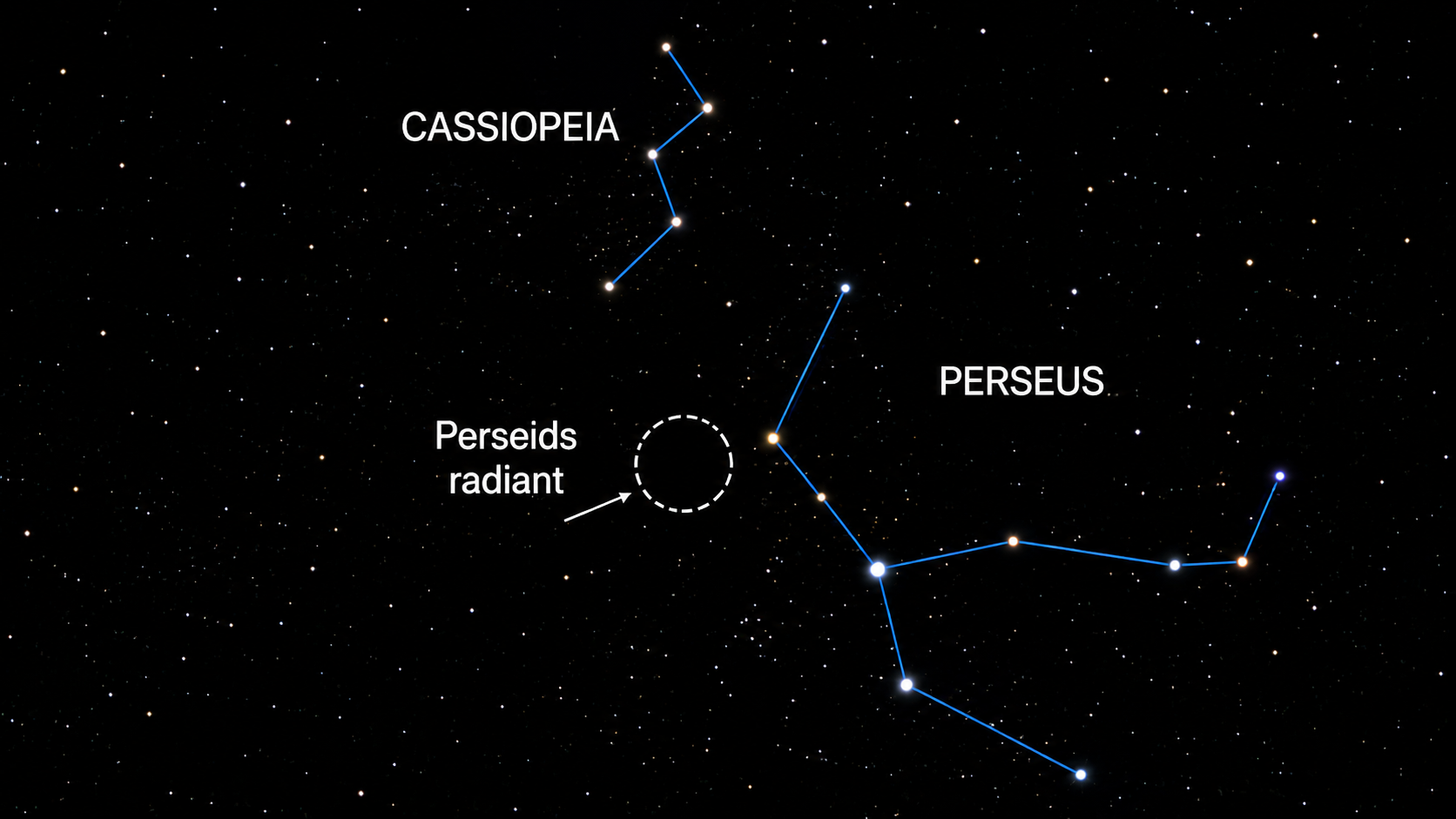
Where to look is another matter altogether. Meteors will appear to fall all around the sky, but if you watch carefully and trace their paths backward, you'll discover that most appear to radiate from one general area in the sky.


This spot is known as the shower's "radiant" and is often named for the constellation against which it appears. That's why this month's shower is known as the Perseids; its radiant lies in the constellation of Perseus. Any meteors that seem to come from elsewhere are called "sporadic" meteors and are flecks of dust not part of the Swift-Tuttle swarm.


To get the best view, drive away from city lights to the mountains, deserts or countryside. No equipment is required; all you need to enjoy the sky show is your eyes, but binoculars could be helpful to check out long smoke trails left behind by any exploding fireballs. You may also wish to take a lawn chair or sleeping bag, and a blanket or hot chocolate to keep warm — yes, even in the summer — so you can gaze skyward comfortably. Your biggest challenge will be just to stay awake!


Can't we go out during the evening to watch the show? Of course, but we won't see much. Since the Earth is plowing into this cloud of dusty debris, our best view of the shower usually comes when we're peering out the Earth's "front window," and that occurs just before dawn.


Few sights are as thrilling as the fiery spectacle known as a meteor, and one of them is enjoying a shower of them. I hope you'll make the effort this week to get away from city lights to enjoy one of nature's most amazing spectacles: the Perseid meteor shower.


Visit Dennis Mammana at dennismammana.com. To read features by other Creators Syndicate writers and cartoonists, visit the Creators Syndicate website at www.creators.com.


About the Author: Dennis Mammana


Dennis Mammana is an internationally recognized astronomy author, lecturer, astrophotographer and science communicator who has spent decades helping people explore and understand the wonders of the night sky through books, articles, photography and public presentations.


Learn More About Borrego Springs

By Andrea McKenna August 6, 2026
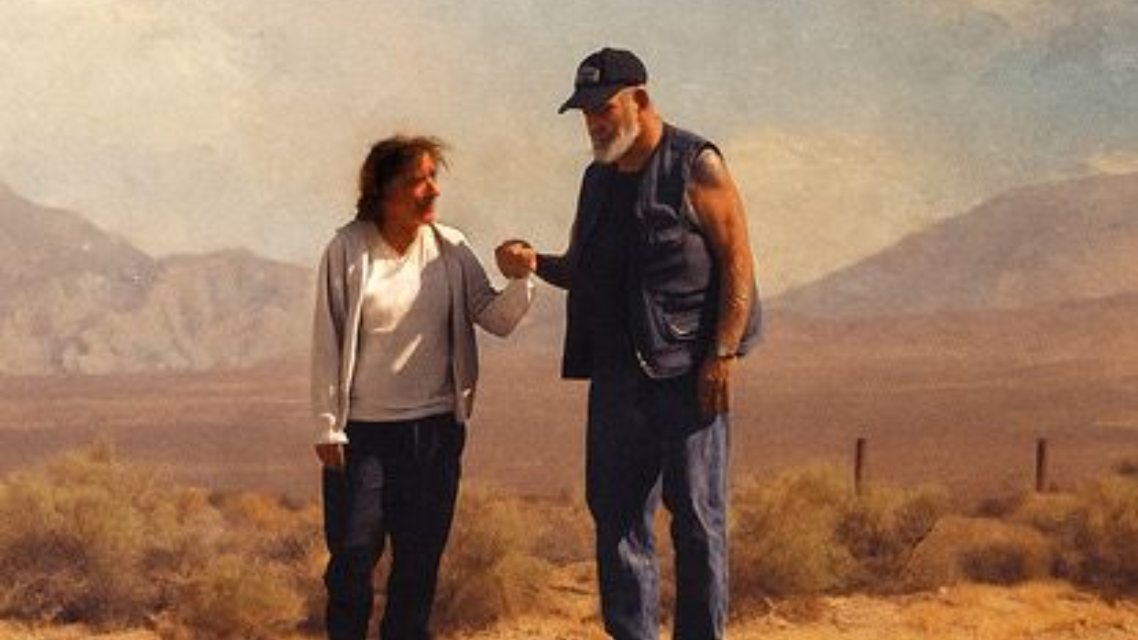
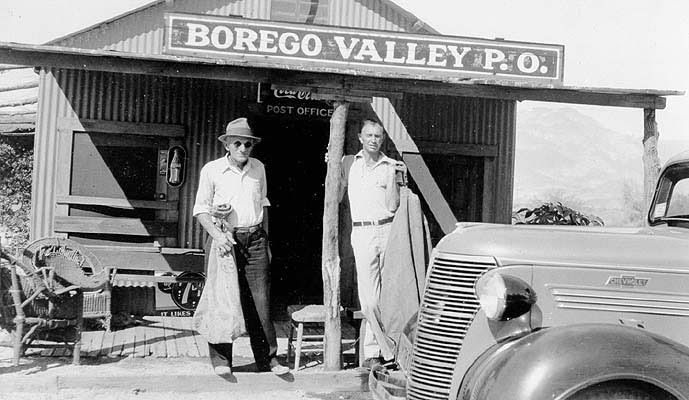
A firsthand account of the Beaty family's homestead, ranching life, the original Borrego school, General Patton's desert training, and the people who helped shape the Borrego Valley.
By Andrea McKenna August 6, 2026
Anza-Borrego Night Hike Experience Anza-Borrego after dark on a guided 2–3 mile hike across natural desert terrain. Participants may observe shifting shadows, nighttime sounds, and nocturnal wildlife such as bats, owls, and scorpions. Event Details Date: Saturday, August 29, 2026 Time: 6:30–9:30 p.m. Meeting Location: Anza-Borrego Foundation Store, 587 Palm Canyon Dr. #110, Borrego Springs Cost: $28 ABF members, $33 non-members, $17 students The group will meet at the ABF store and carpool or caravan to the trailhead. The hike will be led by Wilderness First Responder Matt Nagy. Bring sturdy closed-toe shoes, a flashlight or headlamp, at least 2 liters of water, and snacks.  Register Today Space may be limited, so early registration is recommended.


By Andrea McKenna August 6, 2026
Former agricultural land near Anza-Borrego Desert State Park could be restored with native wildflowers and desert vegetation A proposal would restore approximately 261 acres of former agricultural land at Bauer Ranch into native desert habitat as part of a potential California Proposition 4 climate grant project. Bauer Ranch is a Borrego Water District property located adjacent to Anza-Borrego Desert State Park , within the Borrego Palm Canyon and Clark Lake area north of central Borrego Springs. The project documents identify the site as fallowed agricultural land that is no longer in production because of groundwater-use reductions. The project is titled “From Fallowed Fields to Wildflowers: A Desert Revival & Restoration Initiative.” The Anza-Borrego Foundation would serve as the lead applicant, while the Borrego Water District was asked to consider participating as the landowner and co-applicant. California State Parks is anticipated to become the long-term owner and steward of the restored habitat if the proposal moves forward. Restoring former farmland Agricultural production on the property was discontinued as part of efforts to reduce groundwater pumping in the Borrego Springs Subbasin. According to the proposal, the former fields would be restored with native wildflowers and other desert vegetation to improve ecological function and long-term landscape resilience. The project documents explain that large areas of exposed, fallowed farmland can contribute to dust, higher surface temperatures and degraded soil conditions. Restoring native vegetation could help stabilize the soil, reduce dust and improve habitat near the state park. Proposed project goals The proposal identifies four main goals: Restore approximately 261 acres of fallowed farmland to native desert habitat. Increase vegetation to reduce exposed soil, dust and extreme-heat impacts. Evaluate opportunities to support groundwater recharge through soil improvements and land recontouring. Include Tribal consultation, community education and long-term stewardship in the planning process. The restoration could include soil work, land recontouring, native seed development, habitat establishment and long-term monitoring. Hydrologic, biological and cultural studies would also be completed during the planning process. Proposition 4 funding Funding would be sought through California’s Proposition 4 Extreme Heat Grant Program , which supports projects intended to reduce extreme-heat impacts and improve community resilience. The Anza-Borrego Foundation approached the Borrego Water District about the grant opportunity. Helix Environmental Planners was selected to assist with developing and submitting the application and to explain the responsibilities and possible costs associated with the Water District serving as a co-applicant. Potential model for other fallowed land The proposal describes Bauer Ranch as a possible model for restoring former agricultural land throughout the Borrego Valley and other groundwater-limited desert regions. Project documents estimate that approximately 9,000 acres of agricultural land in the Borrego Valley could be fallowed by 2040 as groundwater pumping is reduced. If successful, the Bauer Ranch project could demonstrate how those lands might be managed to reduce dust, restore habitat and improve climate resilience. The Bauer Ranch project remains a proposal . The Borrego Water District was asked to receive an overview and consider whether it should participate as a co-applicant in the grant process. The project documents do not establish that restoration work has been approved or funded. Source: Borrego Water District July 14, 2026 Board Package
By Andrea McKenna August 5, 2026
Creative classes for adults and families continue throughout August.
By Karen Pearlman August 5, 2026
By Karen Pearlman, East County Magazine Aug. 4, 2026 (Descanso) — Three months after the San Diego Humane Society took custody of more than 700 neglected animals, including more than 150 horses, from the Villa Chardonnay property in Julian, some of the animals are trotting off to the next chapter of their lives. Eight of the horses have found a forever home in East County at Horses of Tir Na Nog in Guatay, near Descanso. Established in 2003, the volunteer-powered nonprofit is the longest-operating equine sanctuary in San Diego County, serving as a non-riding safe haven for horses with medical conditions and advanced age. The arrival of the new horses was a bittersweet moment for the rescued horses-focused sanctuary that is also home to alpacas, sheep, goats, llamas pigs, ducks, cats and dogs: Horses of Tir Na Nog is concurrently mourning the passing of several of its aging, longtime residents, including several horses and burros. “Although we are excited to welcome home the new horses from San Diego Humane Society’s Villa Chardonnay case, the joy of their arrival is tempered by the pain of a number of recent losses,” said Amy Pat Rigney, Administrator for Horses of Tir Na Nog. “As a forever home for residents with medical conditions and often advanced ages, saying goodbye is part of the nature of our sanctuary work. However, it never gets easier to lose a resident.” The San Diego Humane Society reports that other rescued horses are stepping into entirely new roles. Oscar, a horse previously highlighted by SDHS, left last week for the Unconditional Love Foundation in Murrieta, where he will serve as a therapy horse for veterans with PTSD, SDHS officials report. Oscar didn’t make the trip alone; he was accompanied by his pony “girlfriend,” Loretta Lynn, and a horse named Knight King Julian. They join Runner and Alfred, two other horses previously rescued from the Julian property by Unconditional Love Foundation. Of the roughly 165 horses and ponies originally rescued from Villa Chardonnay, 48 remain in SDHS care, with 37 currently ready for adoption. In July, the remaining horses were relocated from Julian to the Willow Glen Equestrian Centre in El Cajon to make them more accessible for staff, volunteers and potential adopters. Four horses requiring more advanced care are now housed at the SDHS Escondido Campus. The 37 horses waiting for homes are looking for patient, experienced owners, SDHS officials report. Because many received little to no veterinary care in the years prior to their rescue, they are being adopted out strictly as companion animals. SDHS notes their rideability is unknown, and riding should not be expected. Interested adopters must complete an application at sdhumane.org/horses and, if approved, make an appointment to meet the horses in El Cajon. The ongoing placements mark a significant milestone in what SDHS officials have called one of the largest and most complex rescues in their history that raised awareness throughout Southern California earlier this year. On May 1, SDHS carried out a massive, multi-agency rescue operation and authorities served a search warrant at the 40-acre Villa Chardonnay, Horses With Wings LLC property amid bankruptcy proceedings and mounting reports of extreme animal neglect. While the Julian area encompasses the County of San Diego and its Department of Animal Services’ jurisdiction, due to the scale of the situation, DAS handed the case to SDHS. The case was officially transferred from DAS to SDHS on April 24, due to the extreme scope of the rescue and complexities stemming from the bankruptcy issue. SDHS was subsequently granted legal ownership of all 728 animals on site — including cats, dogs, farm animals and equines — many of which were suffering from emaciation, untreated injuries and a severe lack of basic care. The investigation into the Julian facility remains ongoing.
By Andrea McKenna August 5, 2026
Nearly every issue from 1958 to 2008 is now searchable online.
By Borrego Springs High School August 5, 2026
Join Borrego Springs High School in supporting the San Diego Blood Bank High School Challenge.
By Andrea McKenna August 4, 2026
If you've been planning one more relaxing day by the pool, be sure to mark your calendar. Saturday, August 8 is the last day the Borrego Springs High School pool will be open for the summer. The team at the high school look forward to welcoming pool guests back when the season returns in 2027. If you haven't had a chance to cool off this summer, this weekend is your final opportunity before the pool closes for the season.
By Andrea McKenna August 4, 2026
60th Borrego Days Festival Set for October 17–18, 2026
Show More

Share This Post