Jake Hinton • November 13, 2025

Veterans Day 2025 Address by Fr. Michael Plekon

Share

Delivered at the Veterans Day Ceremony, Christmas Circle, Borrego Springs

Commander, members of the Post, veterans and all of you assembled here.
My thanks for inviting me to talk on this Veteran’s Day. I am Fr Michael Plekon, assistant priest at
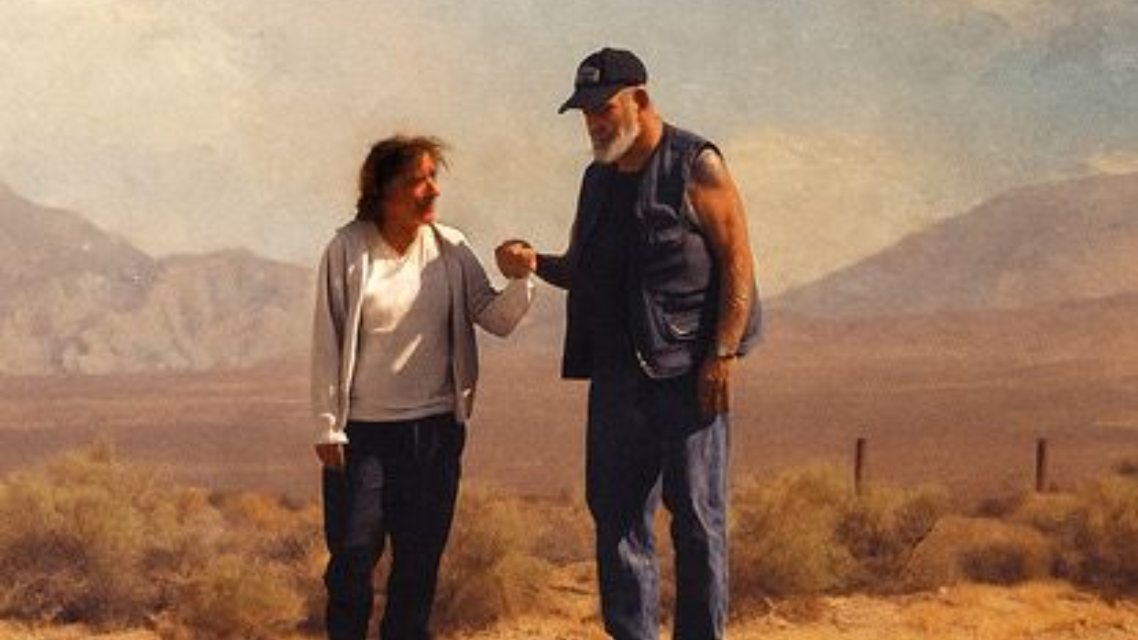
St Barnabas Episcopal Church here and co-chair of the BMA. I want to share with you the story of a 26 year old who was there in the first wave of Army Engineers on D-Day at Omaha Beach in Normandy on June 6, 1944. He was born Hrihori or Gregory Plekon in Nanticoke PA May 17, 1918. He died January 6, 1991. He was my father.


Since the teacher could pronounce Hrihori, he became first Harry, which he didn’t like, then later Henry. One of four brothers, like most of them, left the coal region as most of them did. On Easter in 1940, in Yonkers NY, my maternal grandmother heard a young priest chanting the service in church, went to him afterwards and found he was the son of a boy she’d grown up with in the village of Burkaniew in what’s now western Ukraine. She invited the priest over for dinner and he brought his brother Henry, who immediately fell in love with my grandma’s remaining daughter, Helen. But Henry and Helen had been waiting to do so since he enlisted in the Army when war broke out in 1941.


The real story today is that of my father’s courageous service. Like thousands of other soldiers, he was part of the long training in England for months. The ultimate goal was a massive invasion of occupied France, the largest attack in history.


Which brings us to June 6, 1944. The Army Engineers, who still do huge projects like clearing and demoing burnt structures in burned out Pacific Palisades, were the first line of the assault, there to clear barbed wire, and other structures on the beach that would block the infantry, tanks, jeeps and trucks. My father hardly ever spoke of that day or any other day in his service in WWII. But on the 40th anniversary of D-Day in 1984 he spoke to a local newspaper reporter. He was awarded the Purple Heart for being wounded in combat and the Silver Star. Here is the citation attached.


My father rejoined his 121st Engr Bn to rebuild bridges in Germany, liberate towns and I believe a concentration camp. He returned to his beloved, they married in May , 1946 and I came along in 1948, with two brothers to follow. My father bore within the scars of what had happened to him, the suffering and death he’d seen.


We only realized this much later in his life. He was in family life as he was in the service: quiet, humble, hard working. He and my Mom said our evening prayers with us. We were in church every Sunday, why I have been a priest for over 40 years.

Today we give thanks for his service and that of so many other courageous women and men. In Ukraine, during the struggle now against Russian invasion and oppression, there is a cry that is also a prayer and it is most appropriate for Veterans Day: Slava Hero’iim. Glory to the heroes, those who suffered and died to keep us free. May they inspire us to continue the struggle for our democracy and freedom in this Land. Amen.



By Dennis Mammana June 27, 2026
By Dennis Mammana Week of June 28 - July 4, 2026 It was bound to happen: The heat of summer has arrived at my desert home. As I write these words, it's 115 F outside, and it's just the beginning of the blistering heat we'll experience for months. This is no surprise, of course. We're all quite familiar with this seasonal pattern; in fact, most of us learned in grade school about the seasons and what causes them, but you'd be surprised how little some people remember of those basic lessons. I was stunned when I first heard of a 1987 video in which filmmakers Matthew H. Schneps and Philip Sadler of the Harvard-Smithsonian Center for Astrophysics interviewed recent Harvard University graduates, faculty members and alumni — some with science backgrounds — and asked them a simple question: What causes our seasons? Twenty-one of the 23 people interviewed did not know the answer. This is Harvard, people. Harvard! If you can't believe it, watch it online here. Oh, sure, they offered elaborate explanations and tried to be convincing, but it's obvious they had no clue. The most common reason they cited for the summertime heat was that the Earth lies closest to the sun at that time of year, and the cold of winter is caused by our greater distance from the sun. Sounds perfectly reasonable, doesn't it? But it's wrong. So very wrong. Now it is true that our planet orbits the sun not in a circular path but in an elliptical path, and that our distance from the sun varies throughout the year, but only by about 3%. What seems counterintuitive, however, is that we're closest to the sun not during our Northern Hemisphere summer but during our winter! In 2026, the Earth will reach its farthest point from the sun ("aphelion") on July 6, when we will lie 94,502,961 miles from our star. This occurs during the Northern Hemisphere summer. The Earth's nearest point ("perihelion") won't arrive until Jan. 2, 2027 (during our winter), when we'll be 91,406,556 miles from the sun. Of course, if you happen to live in the Southern Hemisphere, where seasons are reversed from those north of the equator, our planet's perihelion does occur during their summertime. But that's a story for another time. So, if our distance from the sun doesn't cause seasonal temperature changes throughout the year, what does? Well, as we all learned in third grade, it's the tilt of the Earth's axis. Our planet is tipped about 23.4 degrees to the plane of its orbit around the sun. From mid-March to mid-September, the Earth's Northern Hemisphere is tilted toward the sun, allowing solar rays to beat directly down upon us. During these longer days, heat accumulates in our atmosphere while having little time to escape into space during the much shorter nights. In other words, it's not our changing distance from the sun that causes the buildup of summer heat; it's the tilt of our planet that produces long days and short nights — just as it always has. Unfortunately, few still seem to understand this simple phenomenon, and I suspect if we did this same interview today, we'd see even less informed answers than four decades ago! Visit Dennis Mammana at dennismammana.com. To read features by other Creators Syndicate writers and cartoonists, visit the Creators Syndicate website at www.creators.com . Learn More About Borrego Springs


By Miriam Raftery June 27, 2026
By Miriam Raftery - www.eastcountymagazine.org June 26, 2026 (San Diego’s East County)— The Society of Professional Journalists’ San Diego Chapter last night presented four Excellence in Journalism awards to ECM editor Miriam Raftery and associate editor Karen Pearlman. The awards honored ECM’s coverage of issues involving the El Capitan Dam in Lakeside, aerial firefighting readiness, the impacts of mass deportations, and our guide to travel in San Diego County’s desert regions. Raftery received a first place award for an audio feature titled “ Who will be there when they come for you ?” Hear the interview with immigration attorney Nora Milner, which aired on East County Magazine’s radio show on KNSJ. You can also read a summary of that interview by Alex Schorr. In the interview, Milner voiced alarm over blatant denials of due process for immigrants under the Trump administration, warned that even citizens are not safe, and offered tips for those concerned about being visited by ICE or detained for potential deportation. Pearlman took second place for investigative/enterprise story in the daily reporting category for “ Proposed Lakeside sand mine owner sues city of San Diego for damages from water release at El Capitan Dam .” Her investigative reporting detailed the dangerous conditions of the old earthen dam and the potentially catastrophic loss of life if it were to rupture. He report spotlighted how the city’s failure to repair or rebuild the dam necessitated releasing water which raised the water table, resulting in a downstream property owner suing the city for destroying the site’s sand-mining potential. Third place for investigative/enterprise reporting went to Raftery for her article, “ Does the San Diego region have adequate aerial firefighting capability for the coming season? ” Raftery initiated the investigative report after learning that Cal Fire’s Ramona air base would be closed for nearly a year and that an SDG&E air crane on which fire authorities had relied for aerial firefighting support was no longer available to the manufacturer declining to renew the lease. Pearlman and Raftery shared a third place award for travel writing for their comprehensive piece titled “ Our Guide to San Diego’s desert destinations .” The article was written as part of a series of regional guides for East County Magazine’s newly launched “ Visit East County ” section highlighting travel and tourism destinations in San Diego’s inland region.
By Christmas Circle Board of Directors June 26, 2026
Written bids are due July 20 for ongoing landscape maintenance services beginning Aug. 1, 2026.
By Mia Garcia: Borrego Sun Youth Intern June 26, 2026
Borrego Sun youth intern Mia Garcia shares a poem about courage and her first live performance.
By San Diego County June 26, 2026
FY 26/27 application and instructions will be available on July 1, 2026.
By Andrea McKenna June 25, 2026
The Emmy Award-winning host called the sculptures "the most remarkable metal sculptures to be found anywhere in the world."

Share This Post