Borrego Springs Local • May 14, 2023

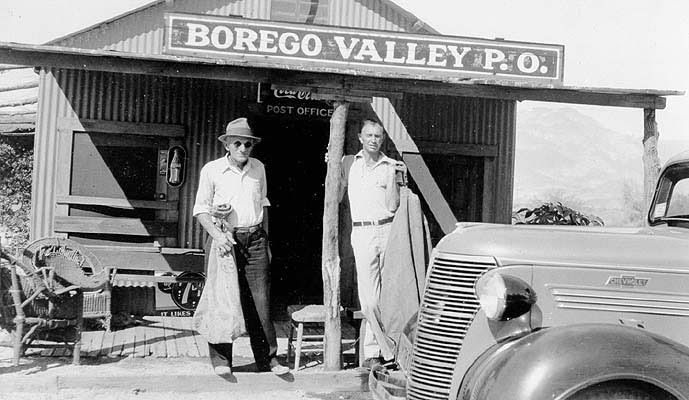
History Of Collins Valley: Anza Borrego State Park

Share

A Brief History of John Collins and the Collins Valley


Meeting the Collins Family


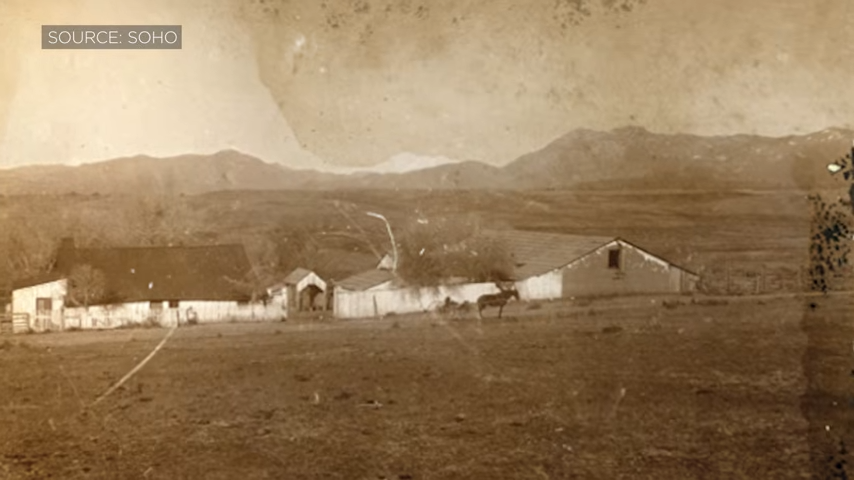
In October 1900, John Collins ventured into the remote desert wilderness of Coyote Creek to prospect for valuable minerals and seek out new opportunities for his family. During his journey, Collins discovered a prime location for a homestead, which he believed would provide an ideal life for his family. The Collins family soon established their home, embodying the frontiersman spirit that defined their time. John Collins, his wife, and their children embraced the challenges of life in the desert, adapting to the harsh environment and learning to thrive in their new surroundings.


Life in the Desert


The Collins family forged strong bonds with the local Indian tribe, learning from their new neighbors and sharing resources. This relationship was invaluable in their quest to survive and prosper in the unforgiving desert. Bernado Segundo, the chief of the San Ignacio Reservation, played a crucial role in the lives of the Collins family. He offered guidance and support, helping them navigate the challenges of life in the desert. Despite the hardships, the Collins family managed to create a peaceful life for themselves, embracing the beauty and solitude of the desert. However, their tranquility would soon be disrupted by a series of unfortunate events.


The Joel Reed Homestead and Land Disputes


Joel Reed, a previous settler in the region, had filed a claim for 160 acres near Santa Catarina Spring on January 3, 1888. His claim would later become a source of conflict with the Collins family. Joel Reed faced challenges to his claim from both Bill Fain in the late 1880s and John Collins in the early 1900s. Collins, who had brought his family to the valley in the late 1890s, believed Reed’s claim was faulty and attempted to file his own homestead over it in 1902.

The dispute between Reed and Collins escalated, with both men trying to force the other out of the valley. In the end, both of their cabins were burned to the ground, marking a tragic turn in the Collins family’s story.


The Final Straw: Arson and a Forced Departure


In a devastating act of arson, the Collins family’s tent and wagon were burned to the ground, leaving them with little choice but to abandon their homestead in Coyote Creek. Although the Collins family identified the person responsible for the arson, the local authorities provided no protection or recourse for the family. This lack of support further contributed to their decision to leave the valley.


A New Chapter: Life After Coyote Creek


After leaving Coyote Creek, the Collins family relocated to a cabin near Julian. The local Indian tribe, with whom they had forged strong bonds, continued to support them in their new life. John Collins continued his prospecting endeavors, seeking new opportunities for his family. Eventually, the Collins family moved to Long Beach, leaving the harsh desert life behind but maintaining their connection to the region.


Despite their departure from the valley, the Collins family’s legacy lived on. The valley that once was their home now bears their name as a testament to their courage, determination, and resilience in the face of adversity. The story of John Collins and his family continues to inspire those who visit Collins Valley in Borrego State Park.


Directions to Collins Valley and Exploring the Area:


Collins Valley is located in San Diego County, Southern California, at a latitude of 33.38309° north and longitude of -116.46085° west. It has an elevation of 1,398 feet (426 meters).


To reach Collins Valley, take Highway 78 to Borrego Springs Road, then head south towards the Borrego State Park. From there, follow the signs to Coyote Canyon Road, which leads you to the entrance of the valley.

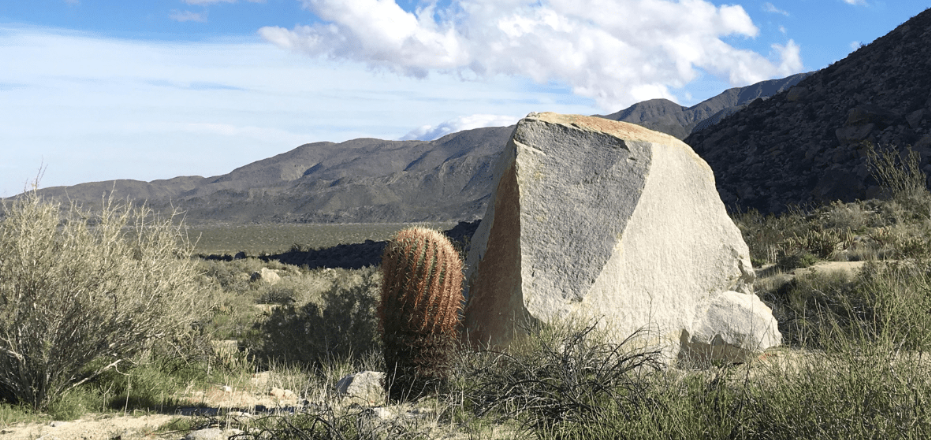
The area is known for its rugged beauty and diverse plant and animal life. As you explore the valley, you’ll be surrounded by vast expanses of desert wilderness, punctuated by canyons, creeks, and stunning vistas.


Vehicle Requirements and Dry Camping:


A high-clearance, four-wheel-drive vehicle is recommended for reaching Collins Valley, as the roads can be rough and sandy. Always exercise caution when driving in the desert, and be prepared for changing conditions.

For those looking to fully immerse themselves in the desert wilderness, dry camping is an excellent option. There are no facilities or amenities in Collins Valley, so campers must be self-sufficient and prepared to “leave no trace.” This type of camping allows you to experience the serenity and beauty of the desert while honoring the legacy of John Collins and his family.


In conclusion, Collins Valley is a testament to the strength and determination of the Collins family, who overcame great challenges to make a life for themselves in the desert wilderness. By visiting the valley and learning about its history, you can gain a deeper appreciation for the natural beauty and rich heritage of this remarkable region.


By Andrea McKenna August 6, 2026
A firsthand account of the Beaty family's homestead, ranching life, the original Borrego school, General Patton's desert training, and the people who helped shape the Borrego Valley.
By Karen Pearlman August 5, 2026
By Karen Pearlman, East County Magazine Aug. 4, 2026 (Descanso) — Three months after the San Diego Humane Society took custody of more than 700 neglected animals, including more than 150 horses, from the Villa Chardonnay property in Julian, some of the animals are trotting off to the next chapter of their lives. Eight of the horses have found a forever home in East County at Horses of Tir Na Nog in Guatay, near Descanso. Established in 2003, the volunteer-powered nonprofit is the longest-operating equine sanctuary in San Diego County, serving as a non-riding safe haven for horses with medical conditions and advanced age. The arrival of the new horses was a bittersweet moment for the rescued horses-focused sanctuary that is also home to alpacas, sheep, goats, llamas pigs, ducks, cats and dogs: Horses of Tir Na Nog is concurrently mourning the passing of several of its aging, longtime residents, including several horses and burros. “Although we are excited to welcome home the new horses from San Diego Humane Society’s Villa Chardonnay case, the joy of their arrival is tempered by the pain of a number of recent losses,” said Amy Pat Rigney, Administrator for Horses of Tir Na Nog. “As a forever home for residents with medical conditions and often advanced ages, saying goodbye is part of the nature of our sanctuary work. However, it never gets easier to lose a resident.” The San Diego Humane Society reports that other rescued horses are stepping into entirely new roles. Oscar, a horse previously highlighted by SDHS, left last week for the Unconditional Love Foundation in Murrieta, where he will serve as a therapy horse for veterans with PTSD, SDHS officials report. Oscar didn’t make the trip alone; he was accompanied by his pony “girlfriend,” Loretta Lynn, and a horse named Knight King Julian. They join Runner and Alfred, two other horses previously rescued from the Julian property by Unconditional Love Foundation. Of the roughly 165 horses and ponies originally rescued from Villa Chardonnay, 48 remain in SDHS care, with 37 currently ready for adoption. In July, the remaining horses were relocated from Julian to the Willow Glen Equestrian Centre in El Cajon to make them more accessible for staff, volunteers and potential adopters. Four horses requiring more advanced care are now housed at the SDHS Escondido Campus. The 37 horses waiting for homes are looking for patient, experienced owners, SDHS officials report. Because many received little to no veterinary care in the years prior to their rescue, they are being adopted out strictly as companion animals. SDHS notes their rideability is unknown, and riding should not be expected. Interested adopters must complete an application at sdhumane.org/horses and, if approved, make an appointment to meet the horses in El Cajon. The ongoing placements mark a significant milestone in what SDHS officials have called one of the largest and most complex rescues in their history that raised awareness throughout Southern California earlier this year. On May 1, SDHS carried out a massive, multi-agency rescue operation and authorities served a search warrant at the 40-acre Villa Chardonnay, Horses With Wings LLC property amid bankruptcy proceedings and mounting reports of extreme animal neglect. While the Julian area encompasses the County of San Diego and its Department of Animal Services’ jurisdiction, due to the scale of the situation, DAS handed the case to SDHS. The case was officially transferred from DAS to SDHS on April 24, due to the extreme scope of the rescue and complexities stemming from the bankruptcy issue. SDHS was subsequently granted legal ownership of all 728 animals on site — including cats, dogs, farm animals and equines — many of which were suffering from emaciation, untreated injuries and a severe lack of basic care. The investigation into the Julian facility remains ongoing.




By Andrea McKenna August 5, 2026
Nearly every issue from 1958 to 2008 is now searchable online.
By Karen Pearlman July 21, 2026
By Karen Pearlman, East County Magazine July 20, 2026 (Ramona) — San Diego County’s aerial firefighting capabilities have been boosted with the reopening of the modernized Ramona Air Attack Base, where state and local officials on Monday morning unveiled nearly $20 million in upgrades designed to get aircraft back into the air faster and expand around-the-clock wildfire response. The renovated base at 2498 Montecito Road now houses a new 4,000-gallon CAL FIRE C-130 Hercules air tanker, a night-capable S-70 CAL FIRE Hawk Helicopter, two S-2 air tankers and an OV-10 Air Tactical aircraft. The group of aircraft is creating what officials called one of California’s most advanced aerial firefighting hubs. The base’s aging infrastructure has been replaced with a modern retardant mixing plant capable of storing 20,000 gallons of fire retardant, redesigned aircraft loading bays that dramatically reduce turnaround times, and expanded ramp space to accommodate additional air tankers during major wildfire incidents. “This base is a regional asset,” CAL FIRE/San Diego County Fire Chief Tony Mecham said at a press conference that was livestreamed on YouTube . “When there is smoke in the sky, the citizens don’t care what color the fire engine is or what patch is on the uniform. They just want people to show up quickly.” The improvements come as California faces increasingly destructive wildfire seasons fueled by hotter temperatures, prolonged drought and more extreme weather conditions. CAL FIRE Director and Fire Chief Joe Tyler said the Ramona facility reflects years of investment in modernizing California’s aerial firefighting fleet. Over the past two years, CAL FIRE aircraft have flown more than 11,500 flight hours annually while maintenance crews logged more than 90,000 hours keeping aircraft mission-ready, Tyler said. Among the most significant additions is the C-130 Hercules air tanker, capable of dropping 4,000 gallons of fire retardant — more than three times the capacity of CAL FIRE’s traditional S-2 air tankers. The aircraft is part of the state’s new fleet of converted military transport planes that entered service beginning in 2024. Also based in Ramona is the county’s new S-70 Firehawk helicopter, which can perform water drops after dark — a capability officials said is already proving invaluable. It has an integrated 1,000-gallon water tank with hoist rescue capability and the ability to transport helicopter crews into remote terrain. San Diego County Board of Supervisors Chair Terra Lawson-Remer pointed to last week’s Thorn Fire, where the Firehawk flew nighttime suppression missions that slowed the fire’s progression and helped prevent flare-ups the following morning. “Our days are getting hotter, our nights are getting warmer, the winds are stronger and fuels are drier,” Lawson-Remer said. “Wildfire does not stop when the sun goes down.” She urged residents to prepare for wildfire emergencies by signing up for emergency alerts, planning evacuation routes and heeding evacuation orders when issued. For East County backcountry communities, the upgrades could mean quicker aerial response to fires threatening homes. Aircraft assigned to Ramona regularly respond throughout the county. Mecham twice shared the importance of coordinated and consolidated efforts between firefighting agencies across the county. “We fight fire without boundaries and without egos,” he said. Mecham said the modernization project focused on improving efficiency as much as expanding capabilities. Previously, air tankers were forced to maneuver awkwardly into a single retardant loading area, creating backups during major wildfire incidents. The redesigned facility features three drive-through loading pits that allow aircraft to taxi in, reload and immediately return to the fire. “The S-2s can reload in about two to three minutes,” Mecham said. “The C-130, under 10 minutes, it’s on the ground here at Ramona before it’s back in the sky responding to the next fire.” The expanded ramp now allows up to six air tankers to stage simultaneously. During last week’s Thorn Fire, officials said 11 air tankers were assigned to the incident, underscoring the need for increased loading capacity. Additional improvements are in the planning stages. Construction is expected to begin next year on a 14-person barracks to support future 24-hour operations, along with further expansion of the helicopter facilities. Monday’s ceremony also highlighted the historical significance of the Ramona Air Attack Base, which opened in 1957 as CAL FIRE’s first aviation base. While the facility received new buildings in 2000, much of its underground infrastructure — including water lines, electrical systems and retardant delivery equipment — had remained unchanged until the recent reconstruction. San Diego County Supervisor Joel Anderson, who lives in the fire-prone area of Alpine, thanked leaders for their understanding of the importance of the Ramona airport site… “not just in San Diego County but for Southern California in general.” “CAL FIRE has been an essential partner for the County Fire, providing joint fire protection in emergency services for more than 1.7 million acres,” Anderson said. “Since CAL FIRE’s creation in 2008, the Board of Supervisors have invested over a billion dollars into fire protection in emergency medical services. “In the years since we created County Fire, we have also expanded our partnership in collaborations. In 2022, CAL FIRE successfully collaborated with the Ramona Municipal Water District to establish the Ramona Airport as a hub for aerial firefighting teams, in addition to replacing fire engines and adding a third ambulance, which was so important to the backcountry and to all my constituents.” 
By Karen Pearlman July 20, 2026
Photo courtesy County of San Diego
By Marine Science Institute July 20, 2026
Marine Science Institute has named Lisa Biasillo its new Executive Director, succeeding longtime leader Marilou Seiff.
By Karen Pearlman July 19, 2026
Photo courtesy County of San Diego
By Andrea McKenna July 9, 2026
A 1966 Borrego Sun photo offers a glimpse of Christmas Circle during one of Borrego Valley's busy wildflower seasons. Published in the April 2, 1966 edition, the image shows visitors relaxing on the lawn near the iconic fountain after spending time exploring the desert in bloom. The original caption reads: SIESTA — One can get pretty hot and tired, looking at the wildflowers in Borrego Valley. Christmas Circle, with its inviting fountain, trees and green grass, is a nice place to take a break. This is the way it has been during the last few weekends. The photograph captures a quiet moment in Borrego Springs history, preserving the way visitors experienced Christmas Circle nearly 60 years ago. Images like this continue to document the community's past through the pages of the Borrego Sun archives.
By Andrea McKenna July 8, 2026
When the future of the Community Concert Association was uncertain, Bill Wright inspired a path forward through growth, volunteers and community support. As the Borrego Springs Community Concert Association announces its new season, it is worth remembering the people who helped keep this tradition alive. Founded in 1975, the all-volunteer nonprofit brings high-quality, eclectic music to Borrego Springs. Each season includes five public concerts and four free educational concerts for local students. Children are bused to the Borrego Springs Performing Arts Center to experience professional live music, and musicians also visit local schools for interactive programs that introduce students to music up close. That tradition almost came to an end. When the Association had fallen on hard times (2015) and was preparing to disband, Bill Wright stepped forward. By reaching out to his many business associates, Bill raised enough money to help save the organization and keep professional musicians coming to the Borrego stage. Among his written correspondence with the board, Bill Wright repeatedly advocated for “growth, not reduction,” encouraged members to “recruit new volunteers” and “develop sponsorship opportunities,” and closed one letter with a promise that captured his commitment: “We will do more than our share to keep the great music series going.”
Show More
Subscribe for Free Updates!

Share This Post