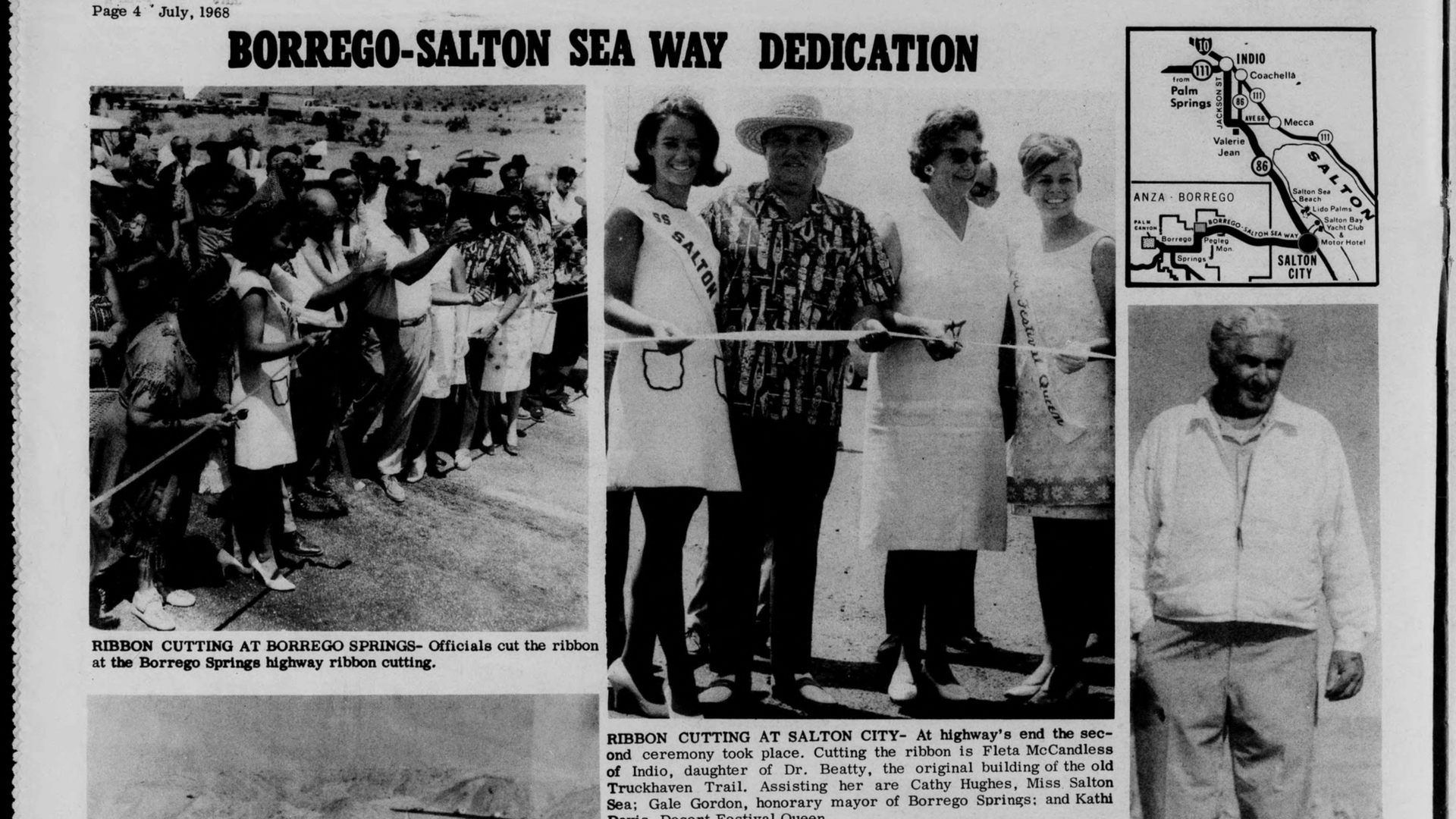
A firsthand account of the Beaty family's homestead, ranching life, the original Borrego school, General Patton's desert training, and the people who helped shape the Borrego Valley.
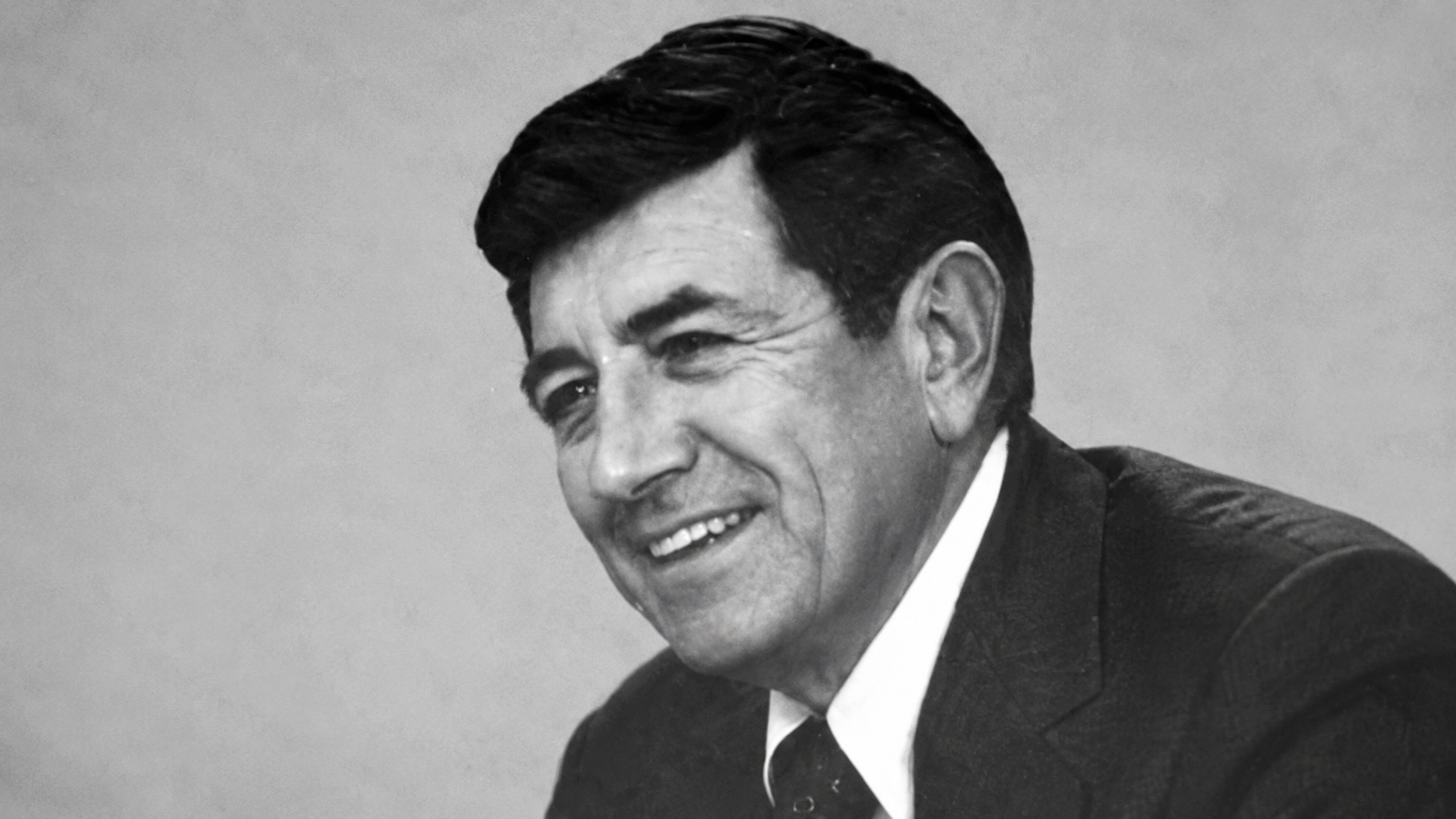
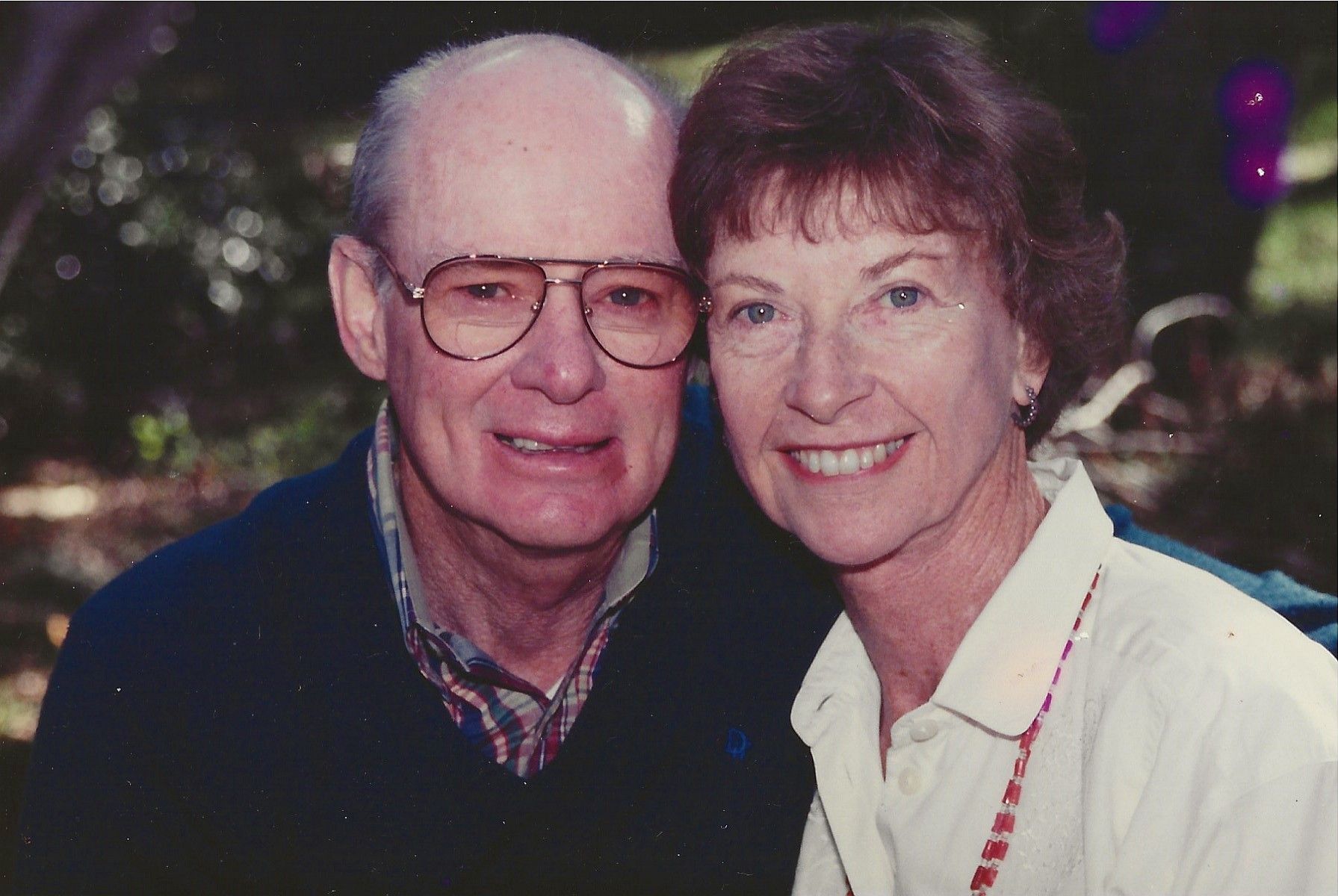
Alfred A. McCandless (1927–2017) was a Republican congressman from California who served six terms from 1983 to 1995. A UCLA graduate, Marine Corps captain, automotive dealer, and former Riverside County supervisor, he died in La Quinta at age 90.
RECOLLECTIONS OF ANZA/BORREGO SPRINGS IN THE EARLY DAYS
by Congressman Al McCandless - 1993
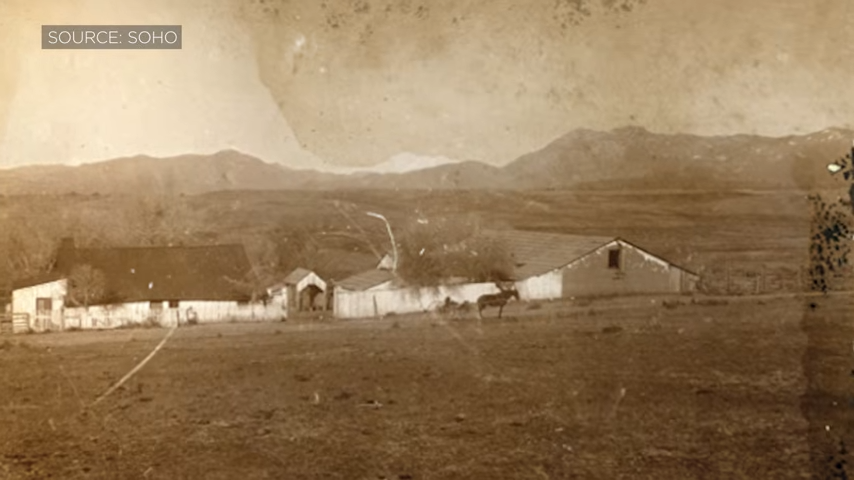
My grandparents migrated to the Borrego Valley (now Borrego Springs with two r's) from Azusa in 1910 -- from civilized, orange-grove studded Azusa where my grandfather owned a livery stable and stagecoach -- to the wild and woolly, most uninhabited valley that stretched right up to the badlands. This piece of the California frontier would be home to my grandparents for the next 38 years.
A native of Waco, Texas, my grandfather, "Doc" Beaty (he was considered the local veterinarian), fell in love with Southern California as a young man and put roots down here. When the homesteading bug bit, he acquired 160 acres in Borrego, directly across the road from what is now the airport.
This piece of land, though, had no electricity, paved roads, or most critically, it had no water. After he acquired title, somehow my grandfather learned that he could file for water rights up in Coyote Canyon. So he created an irrigation system up there, including a reservoir which was next to and stored water from the reservoir, and he farmed the area now known as Anza Ranch. He grew row crops, including alfalfa and onions. He also bred mules, and raised donkeys and horses, and he was a hunting guide in the Santa Rosas when he wasn't working 30 hours a day on the ranch. He and my grandmother lived in a canvas house under the mesquite trees -- it was a big tent, really, with a framed door and a wooden floor. They lived in that canvas tent for almost 18 years.
No one gives much thought anymore to what goes into having a well-stocked pantry from the local grocery store. Or to the milk in the refrigerator or the ice cream in the freezer. But growing food, buying food, finding fresh food, and cooking food consumed a huge amount of my grandparents' time. Without electricity, and in a desert climate, keeping food fresh was a major job. They solved part of that problem by bartering canned food and supplies in Brawley, which was 60 miles and two days away by wagon. And every time it rained, all the dirt roads turned into channels of mud. Other times, my grandfather would go out into the sand dunes in the evening and shoot a rabbit for dinner the next day. My grandmother probably knew 40 ways to cook a rabbit -- and I ate a rabbit prepared each one of those 40 ways as a child. I don't eat rabbit anymore.
My grandparents had one child, my mother Fleta. When Fleta was old enough to start school, there was no school in the Borrego Valley. So my grandparents made arrangements with the Hadley family in Brawley, and my mother boarded with them for the next 12 years during school months. She spent Christmas and the summer at home. A year after she graduated from high school, Fleta met my father, Max McCandless, in Brawley where he worked at City Hall. He hailed from Kansas, and they were married the following year in 1926. I came along a year later.
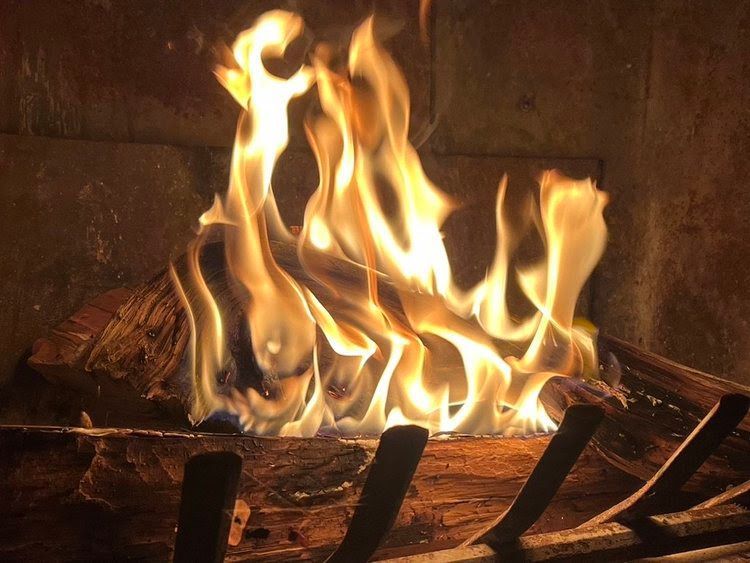
A year or two after I was born, my grandparents sold the Beaty/Anza Ranch in the canyon, took the money and developed the original homestead in the valley. They drilled a well, installed a big old Fairbanks/Morse one-cylinder engine to pump the water out of the ground, and had a regular house built. "Uncle Charley" from Azusa (I never knew whose uncle he was) built the house. I guess there was some concern about Uncle Charley's construction methods in view of the fact that the Borrego Valley was earthquake territory, but my grandfather just shook off the criticism by saying, "there's a stone fireplace at one end to anchor it down, and at the other, Uncle Charley put in enough nails to do the job."
The house itself was just basic shelter by today's standards, but after a canvas house, it was a palace. It had a corrugated steel roof, a front porch, an underground cellar that served as a refrigerator, that huge stone fireplace in the living room, two bedrooms and a utility room, a kitchen, and a two-holer out back. They also had a wooden shower enclosure out front, with a windmill. It was always very important to check the shower for scorpions before using it.
Doc Beaty was going to make his fortune in a new crop, with the help of the University of California's agriculture department. Pecans. Forty acres of pecans. After row crops, this was pretty exciting. He planted shoots on those forty acres, irrigated them, weeded them, and gave them every bit of tender loving care that he could. And every single one of them died.
My grandparents never completely recovered from what was a devastating financial setback. But they tried. They went back to row crops, mostly alfalfa and onions. By then, the Great Depression had set in, and my parents moved from Brawley to Los Angeles. In 1932, I went to live with my grandparents in the valley, so that my parents could concentrate on being the major source of our extended family's income. I started school in the original Borrego wooden school house in a mesquite grove. It was about 2 1/2 miles from my grandparent's house (and a mile east of Eddie DuVall's store on the section line), and I rode my one-eyed pony, Jinx, to school every day. Jinx was terrified of rattle snakes, which we had in abundance, and he was very skittish and hard to mount sometimes. So after being tied to a tree while I was in school, I'd have to get on for the return trip home by climbing the tree and sliding down his neck. One time when one of the Courtney family boys -- the Courtney's farmed up aways, too -- stayed with us and went to school with me, I loaned him Jinx, and I rode one of our burros.
We raced on the way home, but my burro got tired, and threw me into the nearest cactus. My grandmother had some choice words as she pulled cactus spines out of me later that day.
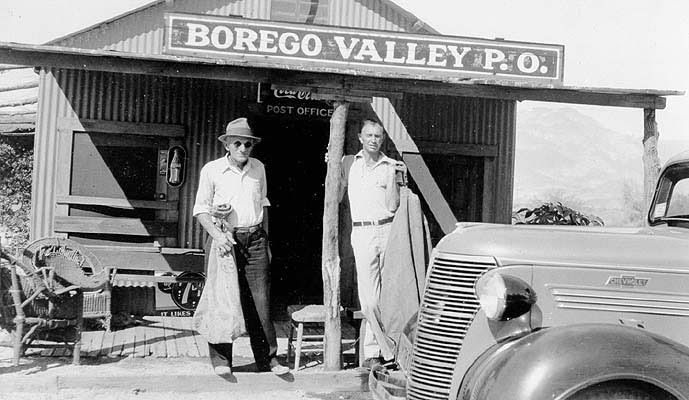
A source of major excitement always happened on Tuesday, Thursday, and Saturday when Al Mathis went up to Julian (28 miles) and brought the mail back to the DuVall Store. He also brought back fresh fruits and vegetables. About once a month, we would order a block of ice, and for a few days, we'd have fresh food (and iced tea!) at my grandparent's.
The Borrego School had 22 students, from 1st through 8th grade. The older ones helped to teach the younger ones, which was extremely effective. My ability to learn fast and thoroughly was also helped along mightily by my grandfather, who was a stern disciplinarian, and my grandmother, who knew that education was the key to a better life. I spent about two years at that school, until I rejoined my parents in Los Angeles.
We visited often, sometimes sitting on my grandparent’s front porch to watch General Patton train his men in desert tank maneuvers. Patton had set up artillery on the west mountain slope, and would shoot 14 miles across the valley into the badlands. We sat on that same front porch one Christmas watching my father drive in from Los Angeles with his car laden with Christmas presents. As he descended into the valley, blinking the headlights on the car three times to signal us, he disappeared. It had been raining, and he sank into the muddy dirt road up to the tops of the wheels. He walked the rest of the way, and we retrieved the car and the presents in the morning.
My grandparents lived in that house until my grandfather died in the late 1940’s. Years of breaking horses and other four-legged critters had taken their toll on his legs, and his later years were slower and he was often in pain. But even with that, he’d occasionally go out with his y-shaped stick and grab a rattler behind the head, pick him up by the tail, twirl him around, and chuck his head off against a rock or a tree. And that night, they’d have fresh meat for dinner.
After my grandfather died, my grandmother sold the ranch and moved into a little place near Christmas Circle -- with electricity, water, and plumbing. It had been a hard life for her -- I remember her washing clothes in a big tub in the yard, over a mesquite fire -- and then she lived with us for a while before she joined my grandfather in 1957.
My grandfather chased his dreams, but he didn’t realize them. Along the way, though, he managed to be instrumental in establishing the Anza-Borrego State Park in 1936, and he worked hard on the start of the School District. He was also a driving force in the building of the original Truck Haven Road through the badlands to the Salton Sea, so that access to Borrego was easier, and would encourage more trade.
Someone asked me recently what Doc Beaty would think if he could have known that his grandson would one day represent this area in the U.S. Congress. I think he might have said: “What? And have him get mixed up with THAT crew????????”
So, having thrown in my lot with this “crew” here in Washington, my schedule is not my own -- otherwise I would be right there with you to celebrate old Borrego during “Borrego Springs Founders Day.” Please give my best wishes to everyone!
Learn More About Borrego Springs
By Andrea McKenna
•
August 5, 2026
Nearly every issue from 1958 to 2008 is now searchable online.
By Andrea McKenna
•
July 9, 2026
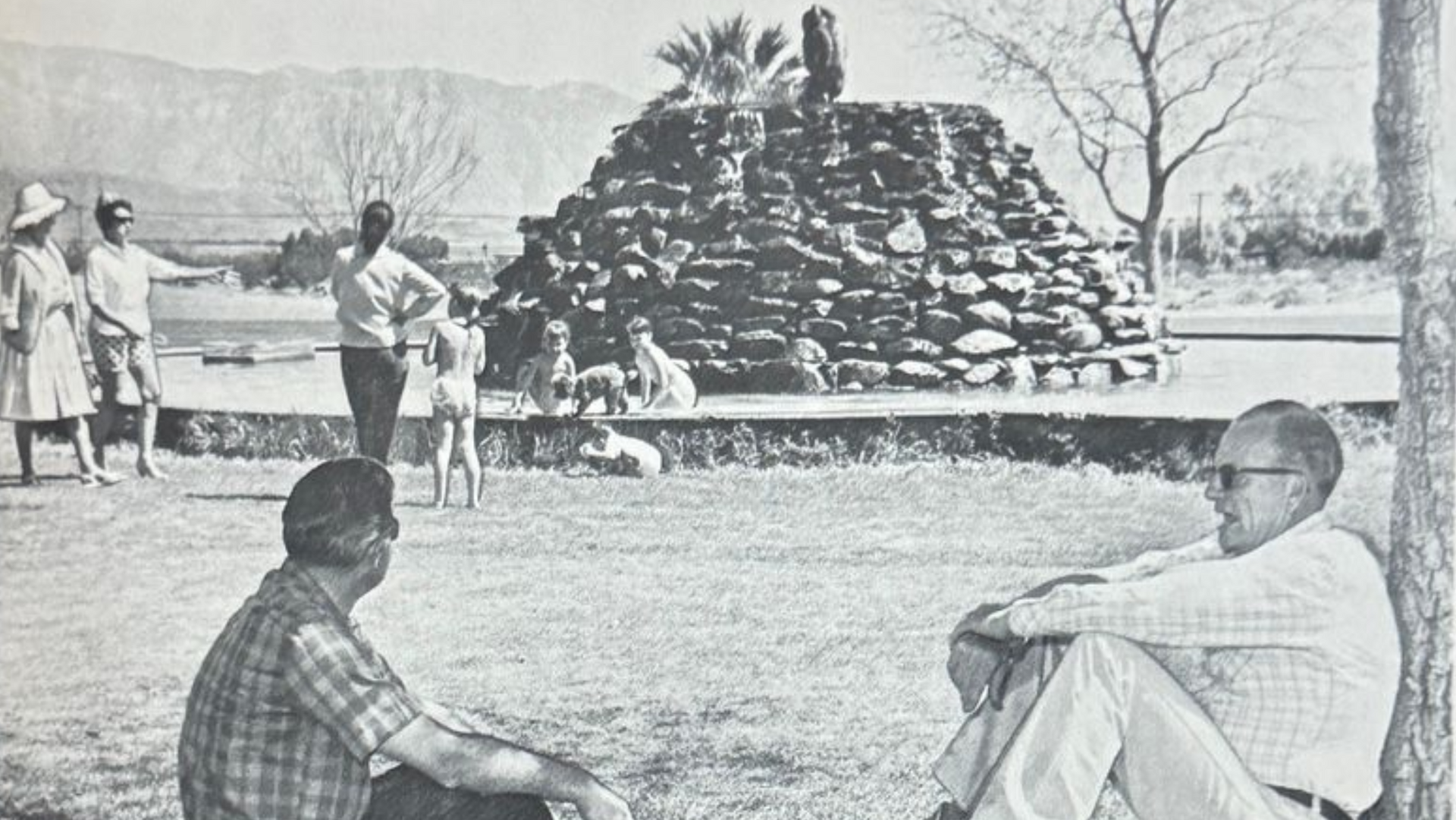
A 1966 Borrego Sun photo offers a glimpse of Christmas Circle during one of Borrego Valley's busy wildflower seasons. Published in the April 2, 1966 edition, the image shows visitors relaxing on the lawn near the iconic fountain after spending time exploring the desert in bloom. The original caption reads: SIESTA — One can get pretty hot and tired, looking at the wildflowers in Borrego Valley. Christmas Circle, with its inviting fountain, trees and green grass, is a nice place to take a break. This is the way it has been during the last few weekends. The photograph captures a quiet moment in Borrego Springs history, preserving the way visitors experienced Christmas Circle nearly 60 years ago. Images like this continue to document the community's past through the pages of the Borrego Sun archives.
By Andrea McKenna
•
July 8, 2026
When the future of the Community Concert Association was uncertain, Bill Wright inspired a path forward through growth, volunteers and community support. As the Borrego Springs Community Concert Association announces its new season, it is worth remembering the people who helped keep this tradition alive. Founded in 1975, the all-volunteer nonprofit brings high-quality, eclectic music to Borrego Springs. Each season includes five public concerts and four free educational concerts for local students. Children are bused to the Borrego Springs Performing Arts Center to experience professional live music, and musicians also visit local schools for interactive programs that introduce students to music up close. That tradition almost came to an end. When the Association had fallen on hard times (2015) and was preparing to disband, Bill Wright stepped forward. By reaching out to his many business associates, Bill raised enough money to help save the organization and keep professional musicians coming to the Borrego stage. Among his written correspondence with the board, Bill Wright repeatedly advocated for “growth, not reduction,” encouraged members to “recruit new volunteers” and “develop sponsorship opportunities,” and closed one letter with a promise that captured his commitment: “We will do more than our share to keep the great music series going.”

By Andrea McKenna
•
July 5, 2026
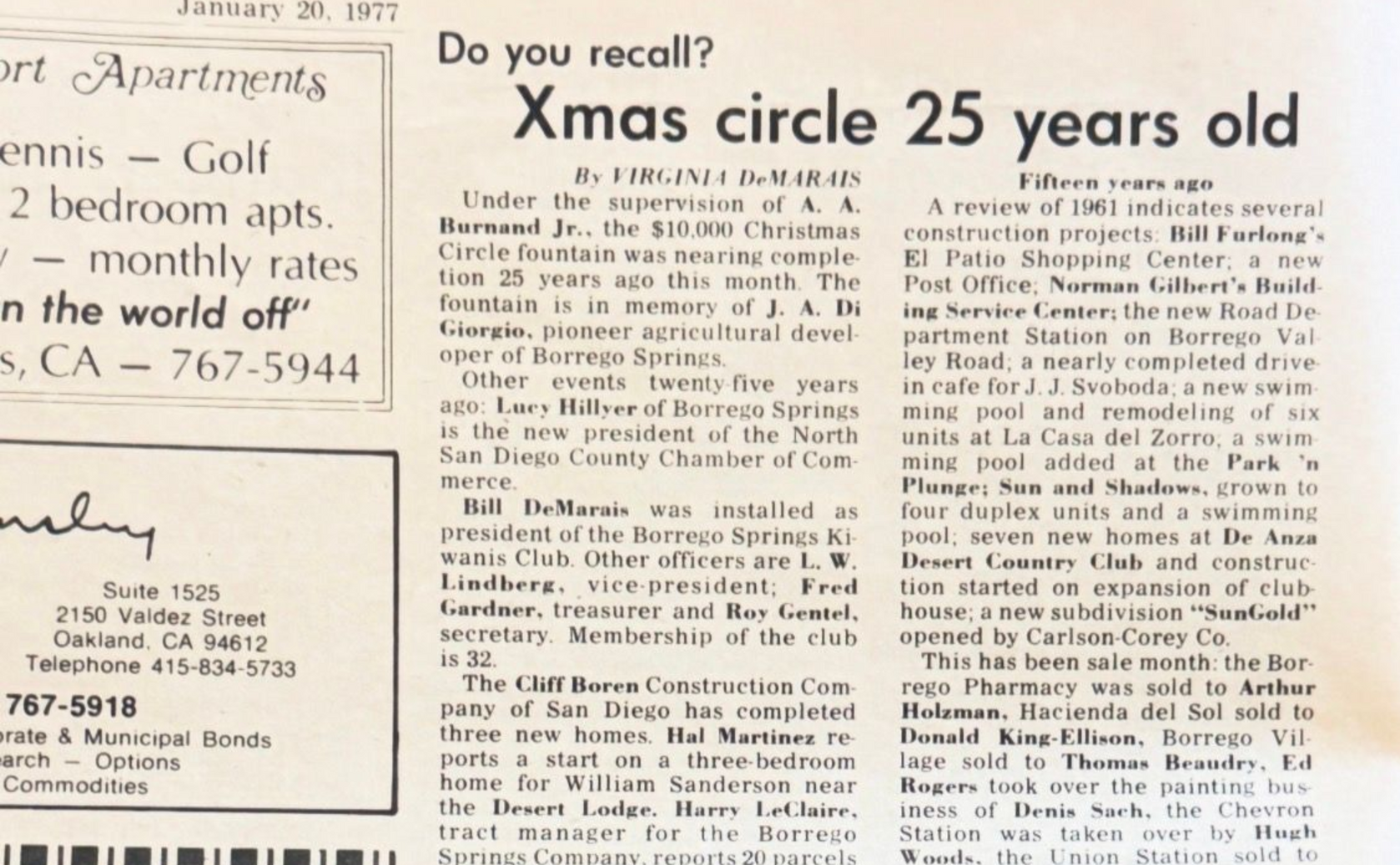
January 20, 1977 Xmas circle 25 years old By VIRGINIA DeMARAIS Under the supervision of A. A. Burnand Jr., the $10,000 Christmas Circle fountain was nearing completion 25 years ago this month. The fountain is in memory of J. A. Di Giorgio, pioneer agricultural developer of Borrego Springs. Other events twenty-five years ago: Lucy Hillyer of Borrego Springs is the new president of the North San Diego County Chamber of Commerce. Bill DeMarais was installed as president of the Borrego Springs Kiwanis Club. Other officers are L. W. Lindherr, vice-president; Fred Gardner, treasurer and Roy Gentel, secretary. Membership of the club is 32. The Cliff Boren Construction Company of San Diego has completed three new homes. Hal Martinez reports a start on a three-bedroom home for William Sanderson near the Desert Lodge. Harry LeClaire, tract manager for the Borrego Springs Company, reports 20 parcels of land sold during the holidays, totaling $50,000. Work has started on straightening Banner Summit Grade, reports Hugh Woods, vice-president of the Highway 78 Association. The Borrego Springs Square Dance Club is meeting at Hoberg’s Desert Resort. Wick Hauser is caller and teacher, Dick Wear – manager. Girl Scout Troop 441 of Borrego Springs serenaded the valley with Christmas carols, under the supervision of Mrs. Ralph Bell, Girl Scout leader, and Mrs. Charles Broeske, assistant. Mrs. Lola LeBard has started construction of a house and trailer court at Sunny Acres on Split Mountain Road. Borrego starts the new year with 18 telephones in the valley. Cover girl for the recently published Redbook Magazine is Dolores Smith Dalzell, daughter of the Borrego mail carrier, George C. Smith. Chamber of Commerce president Hugh Woods reports discussions at meeting of possibility of a bank by Perry Burnand, and suggestions and ideas on promoting television reception in the valley. Birdies are not eagles! Our typewriter slipped when we said W. D. Johnston got an eagle 3 on the par 4 18th hole at De Anza in the last edition. It was, of course, an eagle 2. A review of 1961 A review of 1961 indicates several construction projects: Bill Furlong’s El Patio Shopping Center; a new Post Office; Norman Gilbert’s Building Service Center; the new Road Department Station on Borrego Valley Road; a nearly completed drive-in cafe for J. J. Svoboda; a new swimming pool and remodeling of six units at La Casa del Zorro; a swimming pool added at the Park ’n Plunge; Sun and Shadows, grown to four duplex units and a swimming pool; seven new homes at De Anza Desert Country Club and construction started on expansion of clubhouse; a new subdivision “SunGold” opened by Carlson-Corey Co. This has been sale month: the Borrego Pharmacy was sold to Arthur Holzman, Hacienda del Sol sold to Donald King-Ellison, Borrego Village sold to Thomas Beaudry, Ed Rogers took over the painting business of Denis Such, the Chevron Station was taken over by Hugh Woods, the Union Station sold to Jack Barling. New openings were the Carlson-Corey Realty Company, the Marga-Reta Remembrance Shop, the Bottle Shop, the Bantam Market, and the Lazy V. Cafe. Service seminar Eleven local men recently were given certificates for attending a special electronic ignition service seminar sponsored by J & R Auto Supply in Borrego Springs. The seminar was designed to familiarize them with the new automotive electronic ignition systems, according to John A. Bowley of J & R. Besides Bowley, participants included Ted Townsend of Borrego Automotive; Joe Romas and John Guelke of Anza-Borrego Desert State Park; Billy Lawrence and Thomas Heiser of Borrego Springs Fire Department; John Petrich, Union 76 station; Paul Dellostrillo, Earl Cartier and Dale Cartier of Cartier Mobile Service; Angus Smith of De Anza Country Club, and Henry Barling Jr., Borrego Springs Dump Truck Service. Ewe goes to L.A. The body of the Bighorn sheep ewe that was found in possession of a man on Montezuma Grade was donated to the Los Angeles County Museum and will become part of a diorama there. Salton Sea steady The Salton Sea water level (-229.3 feet) has remained at that level from Sept. 30 to early December, according to Craig Engel, manager of the State Parks Department Salton Sea Area. Engel said this indicates that “perhaps the water monitoring, higher water rates and fines imposed by the Irrigation District are working.”





By Andrea McKenna
•
July 4, 2026
San Diego History Center Opens America 250 Exhibit Celebrating the Nation's 250th Anniversary
By Andrea McKenna
•
July 4, 2026
A December 1939 travel magazine captured Borrego Valley as one of Southern California's emerging desert destinations. One of the many historic items preserved with the Borrego Sun collection is a rare issue of Motor and Outing Magazine , published by the Los Angeles Examiner on Sunday, December 3, 1939 . The "Motor and Outing Magazine" was a popular recurring Sunday supplement distributed in the Los Angeles Examiner during the mid-20th century. It primarily featured regional travel guides, automotive lifestyle stories, and outdoor recreational content showcasing destinations and weekend trips across Southern California. Anza-Borrego Desert State Park was officially established by the State of California in 1933 . This particular page shows how Borrego Valley was presented to Southern California travelers in 1939. The accompanying caption describes the valley as “a spectacular cactus scene” and notes that it was part of Anza Desert State Park, highlighting the desert’s seasonal beauty with “spring flowers” blooming in winter. Nearly 90 years later, the image offers a rare glimpse of Borrego as an early desert destination promoted to motorists exploring Southern California by car. The photographs in the feature are credited to John H. C. Stingle , who documented several scenic locations throughout San Diego County for the publication. Historic items like this help tell the story of how Borrego Springs was introduced to visitors long before it became the community we know today. They provide a unique glimpse into early tourism, desert travel, and the publications that showcased the region's beauty nearly 90 years ago. ---- These documents are part of the Borrego Sun materials acquired by Ram Media Foundation . Separately, The Borrego Sun archives are being preserved and digitized by the San Diego History Center , ensuring that decades of Borrego Springs history will be preserved for future generations. To support the future of local media and preserve the past, please contact Andrea at andrea@rammediafoundation.org .


By Andrea McKenna
•
June 23, 2026
California Newspaper Publishers Association Merit Awards presented to the Borrego Sun for Best Front Page in 1966 and 1967.

By Sunbelt Publications
•
June 9, 2026
A Sunbelt Spotlight with Diana Lindsay For 17 years, Marshal South and his family lived on Ghost Mountain, a remote, waterless mountaintop in Blair Valley, now part of Anza-Borrego Desert State Park. Their life of isolation, creativity, and survival became one of the desert’s most talked-about stories. Life on Ghost Mountain From 1930 to 1947, the South family lived in a handmade home on Ghost Mountain. Marshal South wrote about their primitive lifestyle in monthly articles for Desert Magazine, drawing thousands of readers into the family’s unusual desert experiment. A Writer, Poet, and Desert Storyteller South wrote poems, novels, essays, short stories, and more than 100 pieces for Desert Magazine. His writing celebrated the silence, beauty, natural history, and healthful qualities of the desert. The Story Behind the Legend Diana Lindsay, editor of Marshal South and the Ghost Mountain Chronicles, shares the history behind the South family’s life, the questions surrounding their years on Ghost Mountain, and why the story continues to fascinate readers today. About Diana Lindsay Diana Lindsay is an award-winning author, historian, editor, and president of Sunbelt Publications. Her work has helped preserve and share the history of Anza-Borrego and the remarkable story of Marshal South. .
By Jake Hinton
•
May 28, 2026
Charles Robert Starrett was an American actor and singer, best known for his role as “The Durango Kid” in over 100 Western films. Born on March 28th, 1903 in Athol, Massachusetts, Starrett began his acting career in the silent era before transitioning to sound films. He passed away on March 22nd, 1986, in Borrego Springs, California.
Show More