Andrea McKenna • September 6, 2026
The Two Mile Radio Telescope on Clark's Dry Lake | Historic Borrego Sun
Share
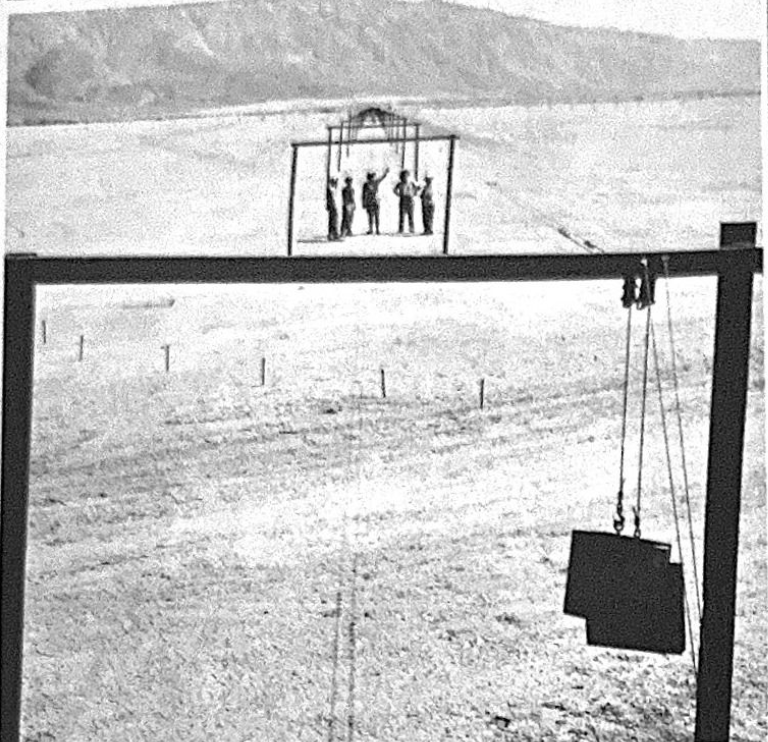
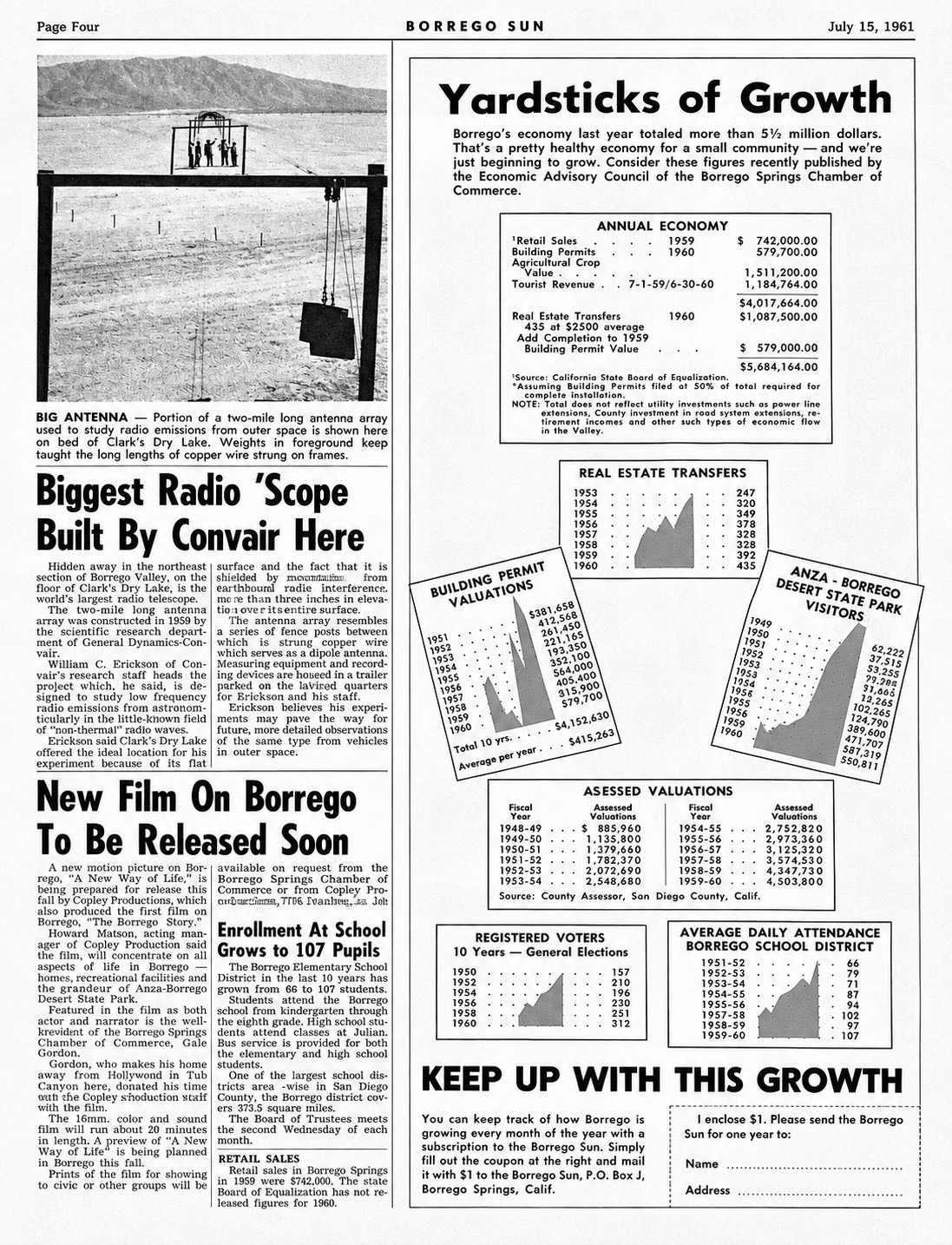
A portion of the two-mile antenna array on Clark Dry Lake used to study radio emissions from outer space. Weights kept the long copper wires taut on their frames. Borrego Sun, July 15, 1961.
A Two-Mile Telescope on Clark Dry Lake
In 1961, while the Borrego Sun was reporting on new homes, golf courses, motels and a growing community, something far more unusual was taking shape on Clark Dry Lake: a two-mile-long radio telescope built to listen to signals from deep space.
The telescope looked nothing like the familiar dish-shaped antennas we know today. Tall frames stretched across the lakebed, supporting long lengths of copper wire kept taut by heavy weights. The enormous array extended for roughly two miles across the desert.
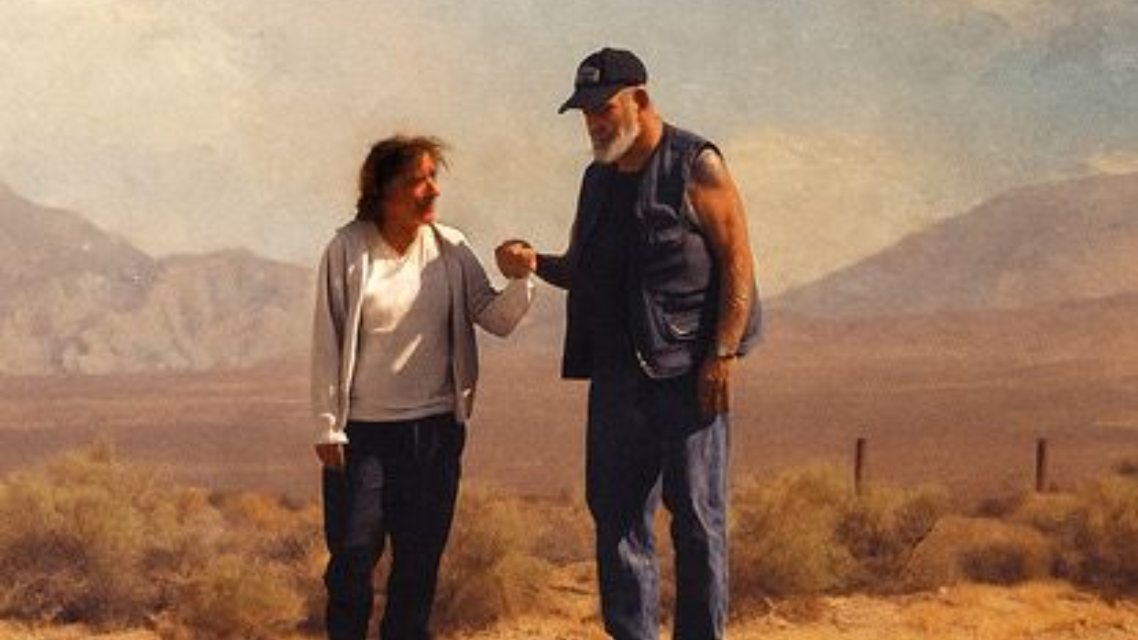
Convair’s scientific research department built the telescope in 1959 under the direction of scientist William C. Erickson. It was designed to study low-frequency radio emissions from distant objects in space.
Recording equipment was housed in a trailer on the lakebed, with another trailer serving as living quarters for Erickson and his research team.
Clark Dry Lake was an ideal location. Surrounding mountains helped shield the site from radio interference, while the remarkably flat lakebed provided the space needed for such a massive instrument. The Borrego Sun reported that across an area about two miles long and a quarter-mile wide, the elevation varied by no more than three inches.
Erickson believed the research being done in Borrego Valley could help pave the way for future observations made from instruments in outer space.
What happened next
The 1961 article captured the observatory near the beginning of its story. The site later became associated with the University of Maryland, and Erickson spent decades developing new instruments and training students at Clark Lake. Over time, hundreds of antennas spread across the lakebed, including the later Teepee Tee telescope.
Research at the site ended in the early 1990s after funding ran out. Today, Clark Dry Lake lies within Anza-Borrego Desert State Park, with only traces remaining of the remarkable observatory that once listened to the universe from the Borrego desert.
Erickson later received the first Grote Reber Medal in 2005 for his lifetime contributions to radio astronomy. He considered one of Clark Lake Observatory’s greatest legacies to be the generations of students who trained there.
>> Lessons Learned from the Clark Lake Experience W. C. Erickson
----
These documents are part of the Borrego Sun materials acquired by Ram Media Foundation. The Borrego Sun archives are being preserved by the San Diego History Center, ensuring that decades of Borrego Springs history will be preserved for future generations.
To support the future of local media and preserve the past, please contact Andrea at andrea@rammediafoundation.org
Learn More About Borrego Springs