Jake Hinton • August 17, 2023

Galleta Meadows Farm Worker Statues in Borrego Springs

Share
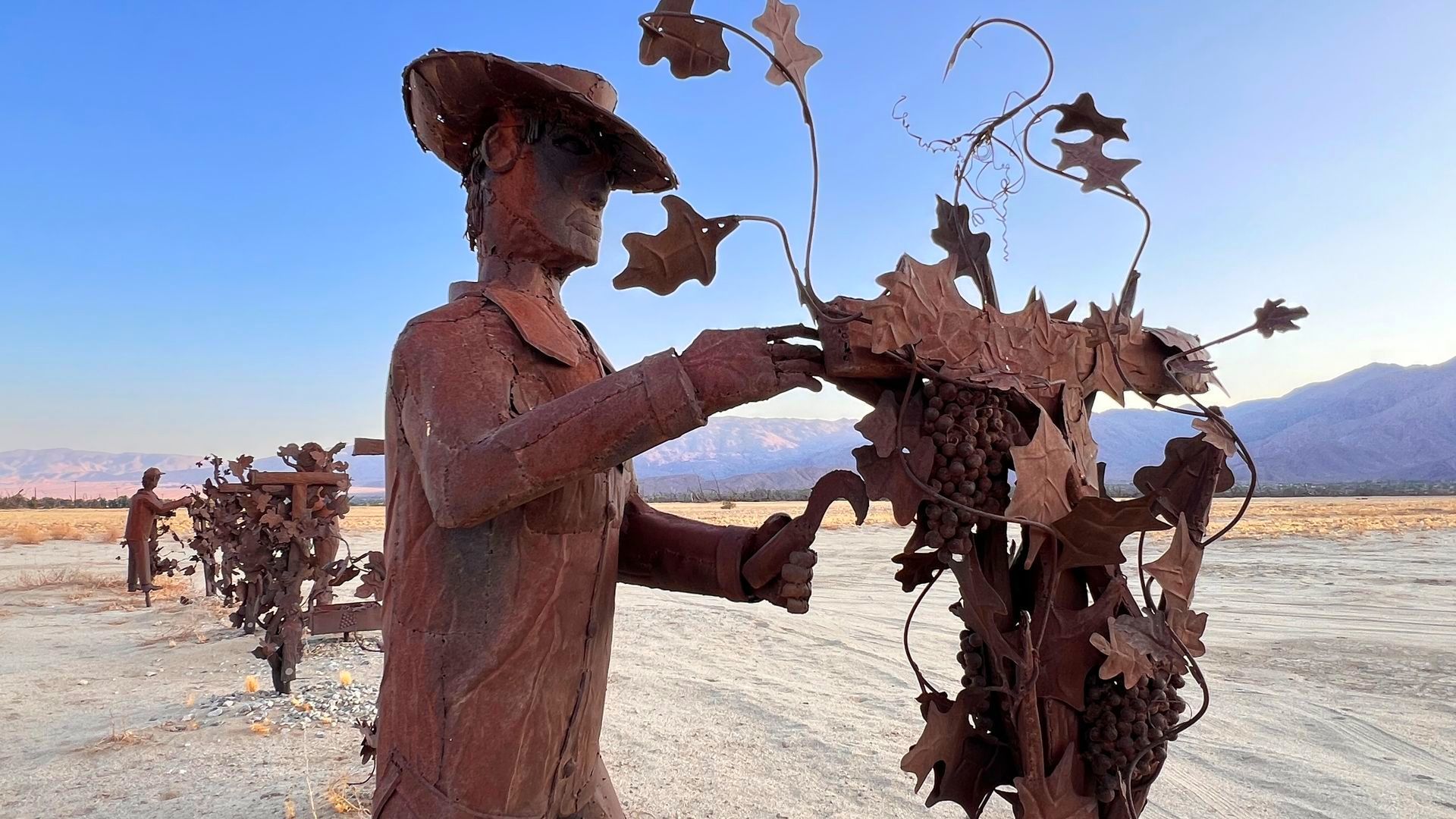
Galleta Meadows Farm Workers in Borrego Springs

Experience Borrego Springs' Agricultural Legacy Through Art


In Borrego Springs, the captivating history of farm workers and grape farming is vividly brought to life through the sculptures at Galleta Meadows. These remarkable works by artist Ricardo Breceda depict the essence of the valley's agricultural past, paying tribute to the laborers who tirelessly worked in the fields and vineyards. Galleta Meadows, a vast outdoor sculpture park, was conceived and funded by philanthropist Dennis Avery. Avery's vision transformed the landscape into a unique art destination, blending history, culture, and creativity to honor the area's rich farming heritage.
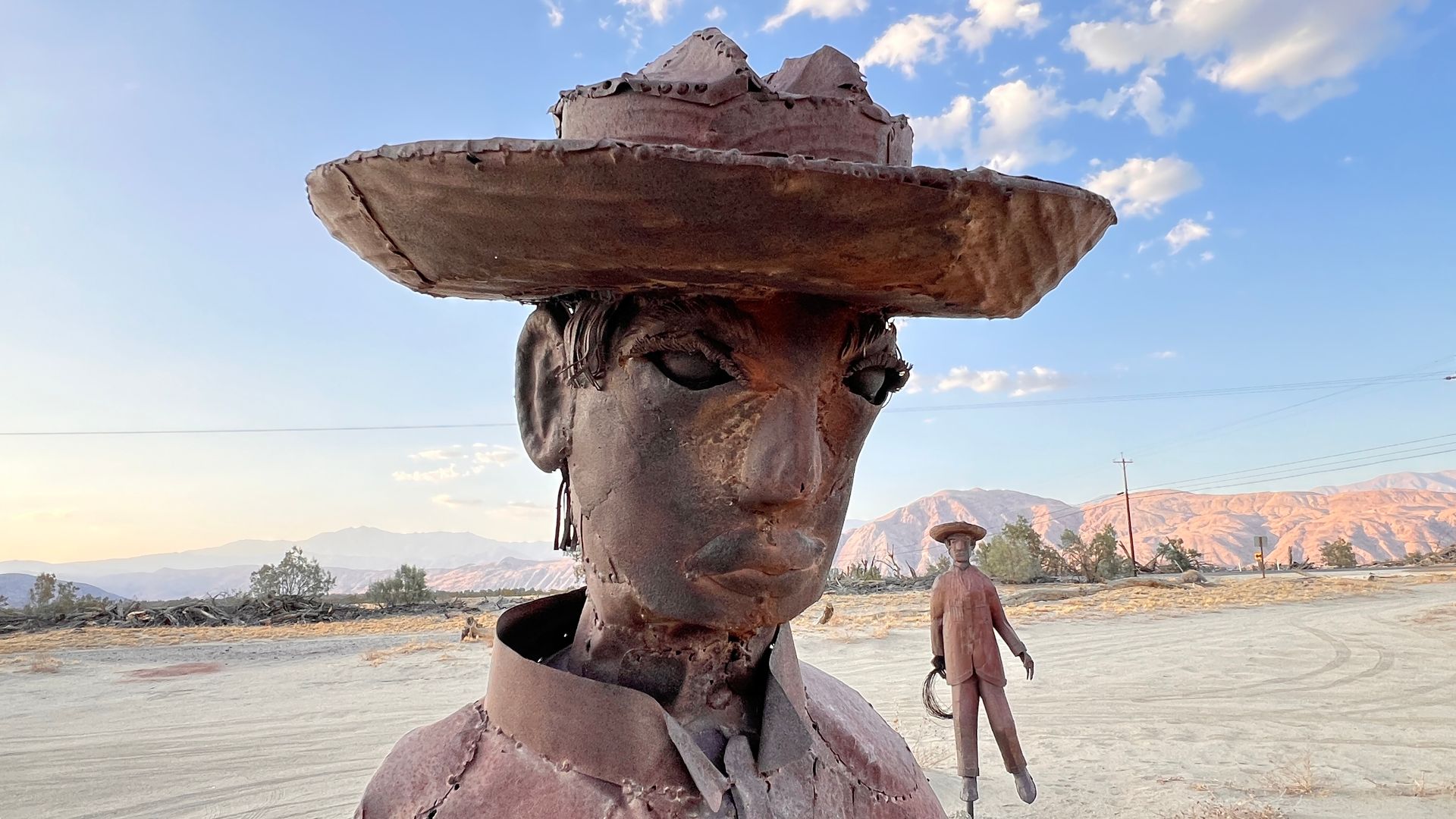
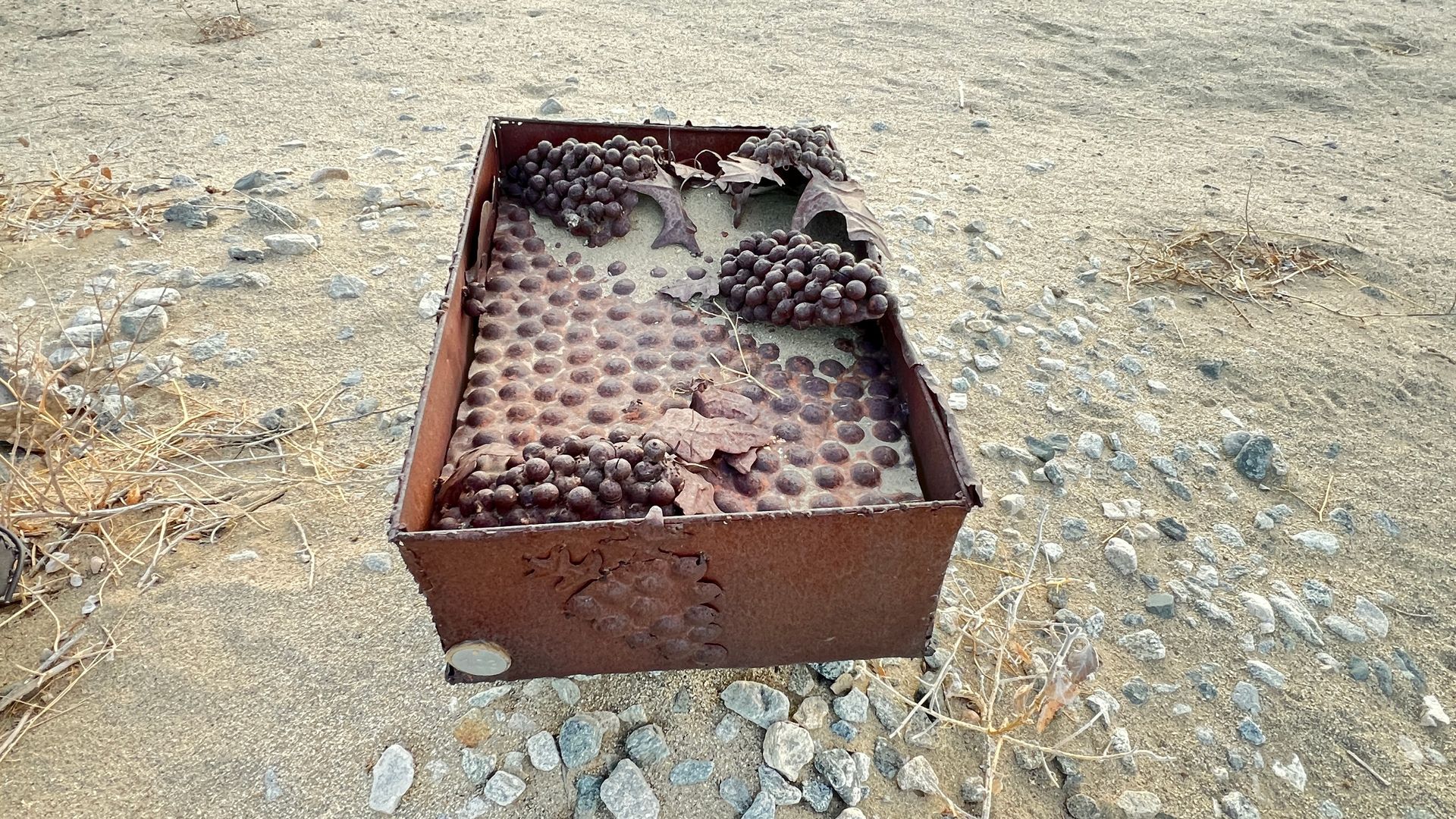
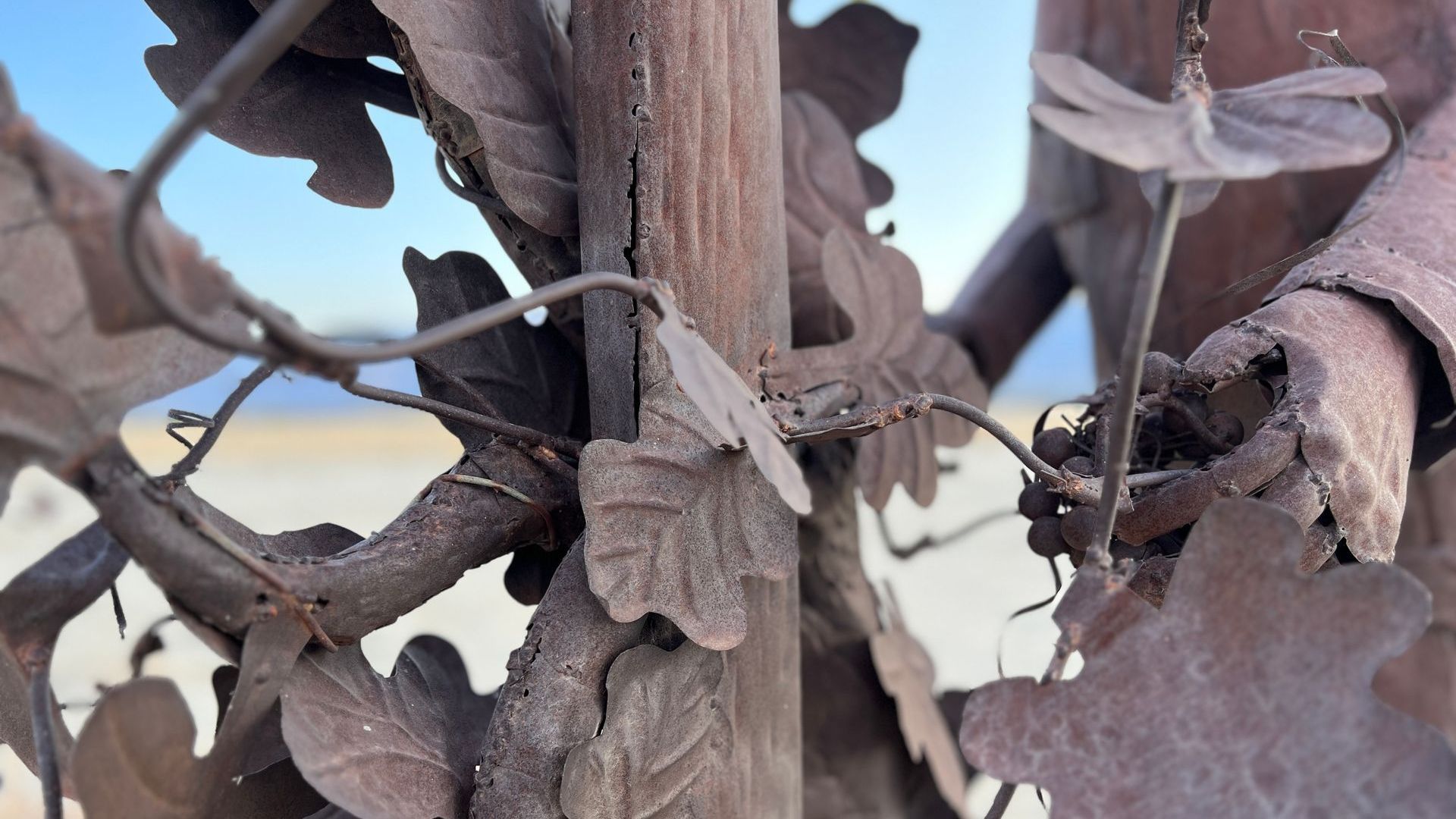
Galleta Meadows Farm Workers in Borrego Springs

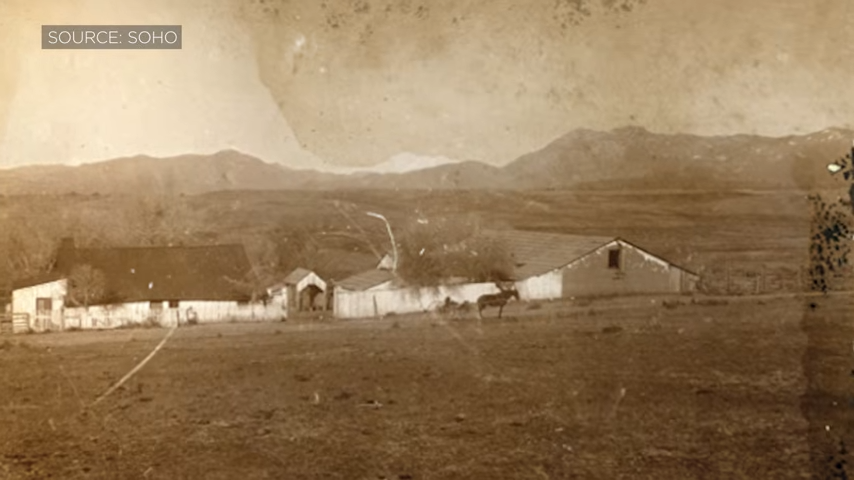
Early Development and Homesteading


Farming in Borrego Springs began in the early 20th century with the arrival of the first homesteaders. The discovery of an underground aquifer in 1926 was pivotal, providing the necessary water to transform the desert landscape into productive farmland. Early farms in the region cultivated crops such as alfalfa and tomatoes, laying the foundation for future agricultural ventures.


The Rise of Grape Farming


The mid-20th century saw the introduction of grape farming in Borrego Springs, significantly shaping its agricultural landscape. The DiGiorgio Fruit Corporation was instrumental in this development, purchasing 1,200 acres and establishing vineyards. These vineyards produced table grapes that were shipped nationwide, with the early harvests commanding top prices in markets, especially in New York.


Challenges and Decline


Despite initial successes, grape farming in Borrego Springs faced numerous challenges. The harsh desert climate, with its extreme heat, wind, and occasional rain, often led to low production yields. Additionally, labor strikes led by the United Farm Workers further complicated operations. These challenges ultimately led to the cessation of grape farming by the early 1960s.


Transition to Citrus Farming


Following the decline of grape farming, the region shifted its focus to citrus cultivation. Grapefruit and other citrus fruits became the main crops, benefiting from the sunny climate and available water resources. Today, citrus farming remains a significant agricultural activity in Borrego Springs.


Impact of WWII and Development


World War II brought additional changes to the region as the desert was used for military training. After the war, efforts to develop Borrego Springs into a resort community gained momentum, leveraging the area's natural beauty and the tourism generated by Anza-Borrego Desert State Park.


Borrego Springs' agricultural history is a testament to the resilience and adaptability of its farmers. The sculptures at Galleta Meadows serve as a poignant reminder of the valley's rich farming heritage and the people who contributed to its development. Today, while the focus has shifted towards tourism and citrus farming, the legacy of grape farming remains an important chapter in the history of Borrego Springs.


Galleta Meadows Map

Learn More About Borrego Springs

By East County Performing Arts July 29, 2026
Award-Winning Cellist Ruslan Biryukov Performs Two Concerts in Julian
By Andrea McKenna July 26, 2026
Santa Ysabel Art Gallery Showcases Young Creative Talent
By Matt Bosson July 24, 2026
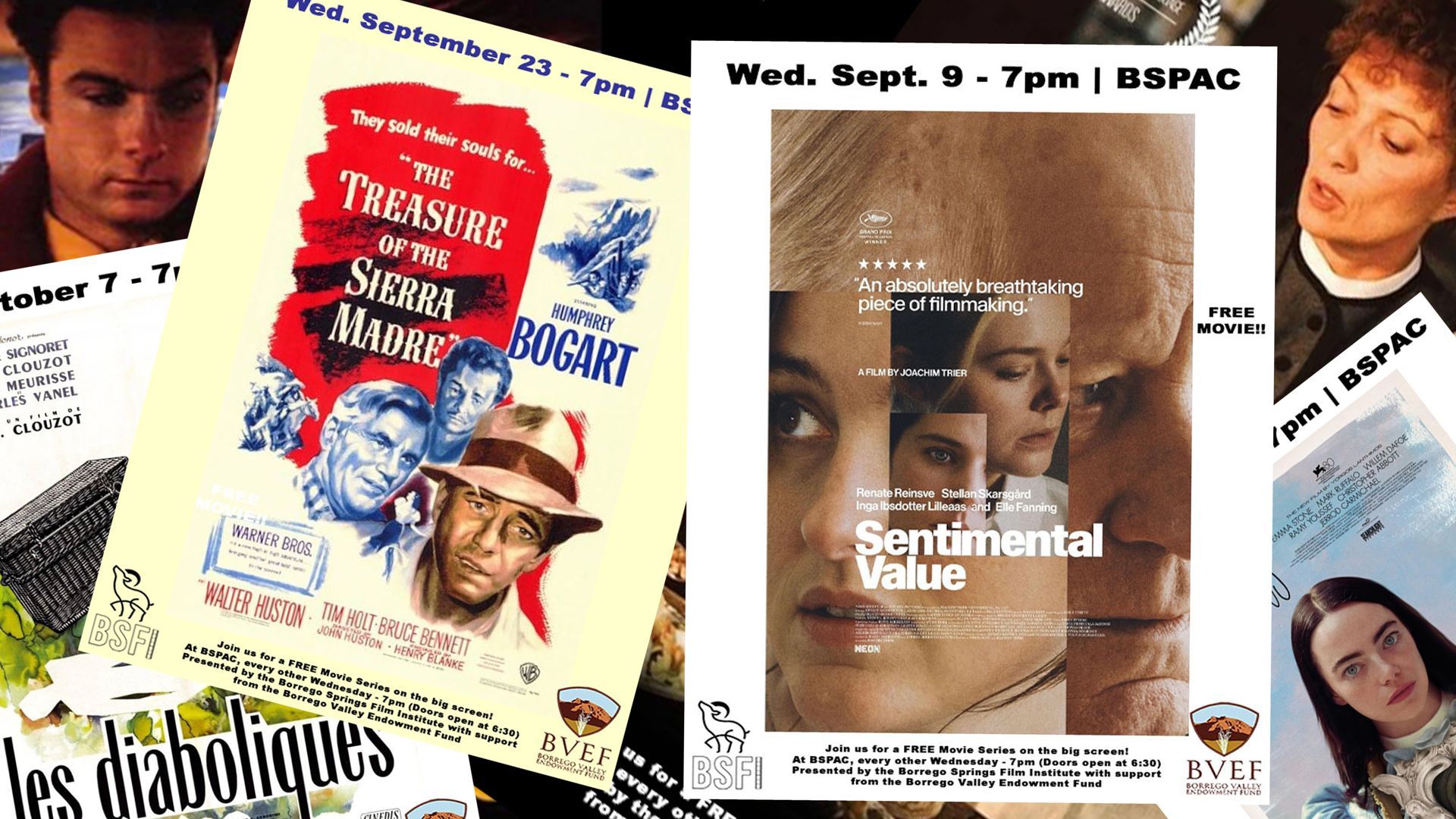
Free Summer Movies Continue in Borrego Springs This August

By East County News Service July 18, 2026
East County News Services Looking for an affordable summer outing? San Diego residents can visit select Balboa Park museums free every Tuesday through the park's popular Free Museum Tuesdays program. Each Tuesday features a different participating museum, but on the first Tuesday of every month , residents receive free admission to both the Fleet Science Center and the San Diego Natural History Museum (The Nat) . Visitors simply need to bring a valid photo ID or other proof of San Diego County residency. The recently updated San Diego Natural History Museum offers five floors of exhibits, including displays on Southern California's unique wildlife, fossils and conservation. One featured exhibit showcases artwork created from plastic collected along shorelines, highlighting the impact of marine pollution. Just steps away, the Fleet Science Center has also undergone recent renovations and features hands-on science exhibits, interactive displays and activities designed for visitors of all ages. Parking can also help keep the day budget-friendly. Several free parking lots are available throughout Balboa Park, and the City of San Diego has temporarily paused parking enforcement in many areas through early next year, making it easier for visitors to enjoy the park without added expense. Free Museum Tuesdays rotate participating museums each week, giving residents the opportunity to explore many of Balboa Park's cultural attractions throughout the month. For the current schedule and additional information, visit balboapark.org .  ---------- Located about 90 miles southwest of Borrego Springs, Balboa Park makes for an easy day trip, offering San Diego County residents free admission to select museums every Tuesday through the Free Museum Tuesdays program.
By Matt Bosson BSFI July 15, 2026
Free Summer Movies Continue in Borrego Springs This July
By Andrea McKenna July 15, 2026
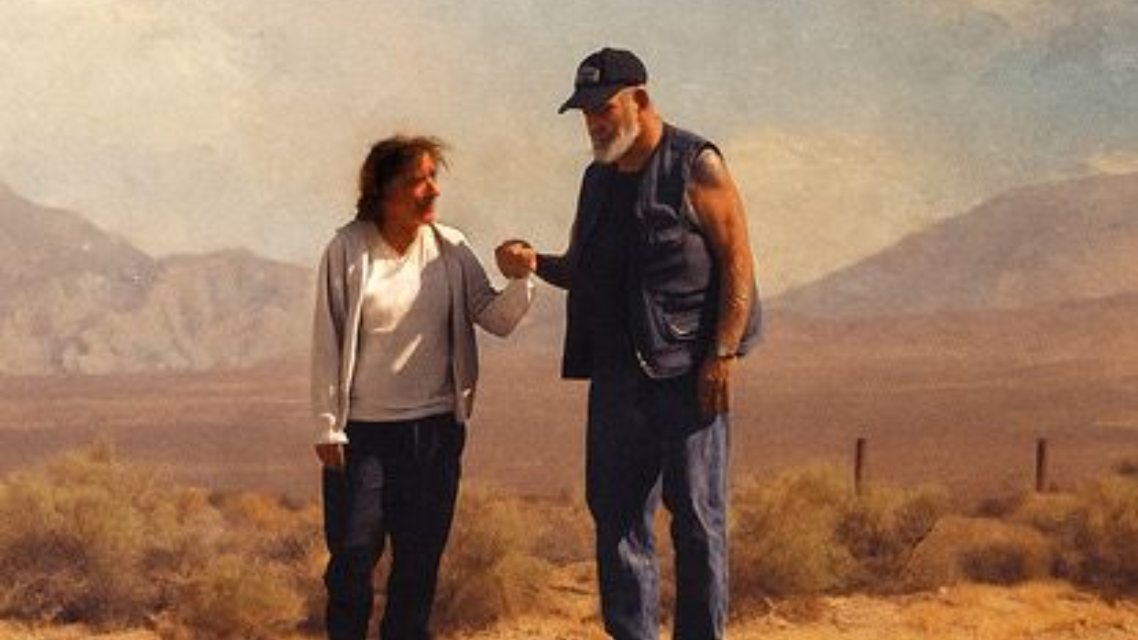
Leo Carrillo’s A Salute to Borrego Valley A Salute to Borrego Valley is a small 1960 booklet written by actor Leo Carrillo, best known as Pancho on The Cisco Kid. Carrillo was a longtime supporter of Borrego Springs, an honorary mayor and a familiar presence at local events. He also served as master of ceremonies at the 1949 dedication of the Borrego Springs Airport. The booklet notes that Carrillo wrote the verse years earlier while sharing a $1-a-day room with Will Rogers at the Summerset Hotel in New York City. In the poem, Carrillo contrasts crowded city life with the peace of Borrego Valley, celebrating its sagebrush, desert sand, open skies, mountains and wildlife.
By Andrea McKenna July 13, 2026
From the Borrego Sun archives Gale Gordon was best known for his longtime work with Lucille Ball on The Lucy Show and Here’s Lucy. He also appeared in I Love Lucy, Our Miss Brooks and Dennis the Menace. Gordon later made Borrego Springs his home, living on a Tub Canyon ranch and serving as honorary mayor. This 1969 article tells how a search for land purchased by his mother led him to the desert. ------- Originally published in the Borrego Sun on June 21, 1969. HE FOUND PEACE Lost Acreage Brought Gale Gordon To Desert It’s not difficult to find a reason for moving to Borrego Springs. But for actor Gale Gordon it was even less difficult. He came to Borrego 40 years ago to find 10 lost acres his mother, English actress Gloria Gordon, had purchased for speculation, but no one knew where they were. Gale, today the honorary mayor of Borrego Springs, couldn’t find them, according to a recent article in the Los Angeles Times, and in subsequent trips he fell in love with the desert. “When I bought Tub Canyon,” he told the Times writer, Cecil Smith, “I brought an expert surveyor down to check my property lines, and while he was here I sent him to look for Mother’s land. He couldn’t find it. “Just a few years ago, a man wrote me asking me if he could have an easement for a road over Mother’s 10 acres to his property. I told him I’d give him the easement if he’d show it to me. Now, at last, I know where it is.” In the Times article, Smith wrote: “Some people are frightened by the desert. The solitude disturbs them. Across the mountains at Palm Springs there is glitter and clamor and neon dazzle where tourists and movie stars gambol. “Though show folk own great tracts of Borrego (among them Bing Crosby, Jascha Heifetz, Chuck Connors, Eddie Albert and Margo), there is here quiet, muted peace.” Gale obviously agrees, in his words:  “When I get in my car to come here I can feel the tensions slacken, the muscles relax. By the time I’m here, I’m a different man and Hollywood seems light-years away. The desert is like the sea, an ever-changing thing that never changes. I guess I come here to find my soul."
By Brice Weaver July 12, 2026
By: Brice Weaver www.briceweaverphotography As I write this, I’m traveling home from Arles, France, after spending the past week participating in the Photo Folio Portfolio Reviews during Les Rencontres d’Arles, one of the world’s largest and most respected photography festivals.  For one week each summer, the historic city in southern France becomes a gathering place for photographers, curators, publishers, editors, gallery directors, and artists from around the world. Photography spills out of galleries and into churches, museums, former industrial buildings, courtyards, and public spaces. It feels less like a festival and more like a city-wide conversation. I traveled to Arles to present Evidence, a long-term photographic project exploring memory, environmental change, and the traces people leave behind in the landscape. The work brings together photographs made at California’s Salton Sea, in Patagonia, and throughout Southern California. Getting there was the culmination of months of preparation. Photographs were selected, removed, rearranged, printed, and reconsidered. Like many photographers, I spend most of my time working alone. Arles is the opposite of that experience. Suddenly, you’re surrounded by people from dozens of countries, all there because photography matters to them. The portfolio reviews took place over five days. Each meeting lasted just twenty minutes, but those twenty minutes moved quickly. Some conversations focused on environmental themes. Others centered on publishing, exhibitions, sequencing, or the future of the project. Some people responded strongly to Evidence as a complete body of work, while others became interested in one particular chapter and wanted to spend most of our time discussing it. What became clear very quickly was that there was no single way to read the project. Different people saw different things in the same photographs. At times the conversations confirmed ideas I already had. At other times they took the work in directions I hadn’t considered. By the end of the week, I had pages of notes and plenty to think about on the flight home. One thing I appreciated was that the discussions rarely stayed focused on photography alone. Conversations often expanded into larger subjects: environmental change, memory, history, the passage of time, and the complicated relationship between people and the places they inhabit. Between reviews, I spent as much time as possible exploring the festival. Arles is forever associated with Vincent van Gogh, who moved there in 1888 and produced some of the most important work of his career. More than a century later, artists are still making the journey. Walking through the city, it wasn’t difficult to understand why. The light is extraordinary, and creativity seems woven into everyday life. The exhibitions themselves were remarkable. One might be housed inside a centuries-old church, while another occupied a former warehouse or industrial building. In a single afternoon, it was possible to move from contemporary photography addressing climate change or migration to Roman artifacts that had survived for nearly two thousand years. At one museum, a cat slept quietly among the visitors and ancient stonework, completely unfazed by the steady stream of people passing through. The city was filled with photographers carrying portfolios through narrow streets between review sessions and exhibitions. Conversations started in galleries and continued in cafés. Everywhere I went, people were exchanging ideas, discussing projects, debating books, and sharing experiences. Coming from Borrego Springs, I couldn’t help noticing how often the subjects being discussed in France felt familiar. Landscape. Water. Environmental change. Human impact. Memory. The locations were different, but many of the questions were the same. That felt especially relevant given the origins of Evidence. Much of the project grew from places close to home, particularly the Salton Sea and the changing landscapes of Southern California. Seeing those photographs spark conversations with people from different countries and backgrounds was one of the most rewarding parts of the experience. As the week came to an end, photographers were still moving through the city with portfolios tucked under their arms, heading toward another exhibition, another review, or another conversation. A few hours later, I was on a train leaving Arles, carrying home a notebook full of ideas, new professional connections, and a renewed appreciation for the role photography can play in connecting people and places that might otherwise never meet. For a photographer from a small desert community, it was a week I won’t soon forget.
By Andrea McKenna July 9, 2026
A 1966 Borrego Sun photo offers a glimpse of Christmas Circle during one of Borrego Valley's busy wildflower seasons. Published in the April 2, 1966 edition, the image shows visitors relaxing on the lawn near the iconic fountain after spending time exploring the desert in bloom. The original caption reads: SIESTA — One can get pretty hot and tired, looking at the wildflowers in Borrego Valley. Christmas Circle, with its inviting fountain, trees and green grass, is a nice place to take a break. This is the way it has been during the last few weekends. The photograph captures a quiet moment in Borrego Springs history, preserving the way visitors experienced Christmas Circle nearly 60 years ago. Images like this continue to document the community's past through the pages of the Borrego Sun archives.
By Andrea McKenna July 8, 2026
When the future of the Community Concert Association was uncertain, Bill Wright inspired a path forward through growth, volunteers and community support. As the Borrego Springs Community Concert Association announces its new season, it is worth remembering the people who helped keep this tradition alive. Founded in 1975, the all-volunteer nonprofit brings high-quality, eclectic music to Borrego Springs. Each season includes five public concerts and four free educational concerts for local students. Children are bused to the Borrego Springs Performing Arts Center to experience professional live music, and musicians also visit local schools for interactive programs that introduce students to music up close. That tradition almost came to an end. When the Association had fallen on hard times (2015) and was preparing to disband, Bill Wright stepped forward. By reaching out to his many business associates, Bill raised enough money to help save the organization and keep professional musicians coming to the Borrego stage. Among his written correspondence with the board, Bill Wright repeatedly advocated for “growth, not reduction,” encouraged members to “recruit new volunteers” and “develop sponsorship opportunities,” and closed one letter with a promise that captured his commitment: “We will do more than our share to keep the great music series going.”

By California Wolf Center July 6, 2026
Limited-time summer promotion encourages families to explore wolf conservation and education in Julian.
By Andrea McKenna July 5, 2026
January 20, 1977 Xmas circle 25 years old By VIRGINIA DeMARAIS Under the supervision of A. A. Burnand Jr., the $10,000 Christmas Circle fountain was nearing completion 25 years ago this month. The fountain is in memory of J. A. Di Giorgio, pioneer agricultural developer of Borrego Springs. Other events twenty-five years ago: Lucy Hillyer of Borrego Springs is the new president of the North San Diego County Chamber of Commerce. Bill DeMarais was installed as president of the Borrego Springs Kiwanis Club. Other officers are L. W. Lindherr, vice-president; Fred Gardner, treasurer and Roy Gentel, secretary. Membership of the club is 32. The Cliff Boren Construction Company of San Diego has completed three new homes. Hal Martinez reports a start on a three-bedroom home for William Sanderson near the Desert Lodge. Harry LeClaire, tract manager for the Borrego Springs Company, reports 20 parcels of land sold during the holidays, totaling $50,000. Work has started on straightening Banner Summit Grade, reports Hugh Woods, vice-president of the Highway 78 Association. The Borrego Springs Square Dance Club is meeting at Hoberg’s Desert Resort. Wick Hauser is caller and teacher, Dick Wear – manager. Girl Scout Troop 441 of Borrego Springs serenaded the valley with Christmas carols, under the supervision of Mrs. Ralph Bell, Girl Scout leader, and Mrs. Charles Broeske, assistant. Mrs. Lola LeBard has started construction of a house and trailer court at Sunny Acres on Split Mountain Road. Borrego starts the new year with 18 telephones in the valley. Cover girl for the recently published Redbook Magazine is Dolores Smith Dalzell, daughter of the Borrego mail carrier, George C. Smith. Chamber of Commerce president Hugh Woods reports discussions at meeting of possibility of a bank by Perry Burnand, and suggestions and ideas on promoting television reception in the valley. Birdies are not eagles! Our typewriter slipped when we said W. D. Johnston got an eagle 3 on the par 4 18th hole at De Anza in the last edition. It was, of course, an eagle 2. A review of 1961 A review of 1961 indicates several construction projects: Bill Furlong’s El Patio Shopping Center; a new Post Office; Norman Gilbert’s Building Service Center; the new Road Department Station on Borrego Valley Road; a nearly completed drive-in cafe for J. J. Svoboda; a new swimming pool and remodeling of six units at La Casa del Zorro; a swimming pool added at the Park ’n Plunge; Sun and Shadows, grown to four duplex units and a swimming pool; seven new homes at De Anza Desert Country Club and construction started on expansion of clubhouse; a new subdivision “SunGold” opened by Carlson-Corey Co. This has been sale month: the Borrego Pharmacy was sold to Arthur Holzman, Hacienda del Sol sold to Donald King-Ellison, Borrego Village sold to Thomas Beaudry, Ed Rogers took over the painting business of Denis Such, the Chevron Station was taken over by Hugh Woods, the Union Station sold to Jack Barling. New openings were the Carlson-Corey Realty Company, the Marga-Reta Remembrance Shop, the Bottle Shop, the Bantam Market, and the Lazy V. Cafe. Service seminar Eleven local men recently were given certificates for attending a special electronic ignition service seminar sponsored by J & R Auto Supply in Borrego Springs. The seminar was designed to familiarize them with the new automotive electronic ignition systems, according to John A. Bowley of J & R. Besides Bowley, participants included Ted Townsend of Borrego Automotive; Joe Romas and John Guelke of Anza-Borrego Desert State Park; Billy Lawrence and Thomas Heiser of Borrego Springs Fire Department; John Petrich, Union 76 station; Paul Dellostrillo, Earl Cartier and Dale Cartier of Cartier Mobile Service; Angus Smith of De Anza Country Club, and Henry Barling Jr., Borrego Springs Dump Truck Service. Ewe goes to L.A.  The body of the Bighorn sheep ewe that was found in possession of a man on Montezuma Grade was donated to the Los Angeles County Museum and will become part of a diorama there. Salton Sea steady The Salton Sea water level (-229.3 feet) has remained at that level from Sept. 30 to early December, according to Craig Engel, manager of the State Parks Department Salton Sea Area. Engel said this indicates that “perhaps the water monitoring, higher water rates and fines imposed by the Irrigation District are working.”







Show More

Share This Post