Andrea McKenna • June 25, 2026

Did You Know Ken Kramer Featured Borrego Springs?

Share

The Emmy Award-winning host called the sculptures "the most remarkable metal sculptures to be found anywhere in the world."

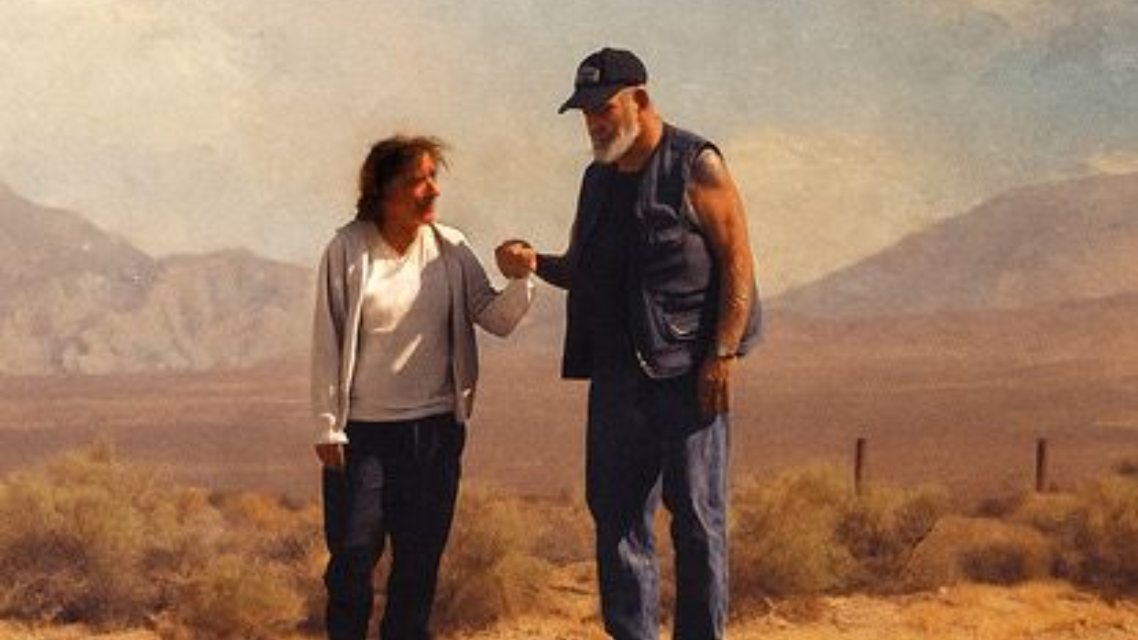
If you've ever admired the giant metal sculptures scattered across Galleta Meadows, you may remember that Ken Kramer's About San Diego featured them in a 2018 episode titled "Episode 71 - Metal Monsters in Borrego Springs."


Kramer introduced viewers to what he called "the most remarkable metal sculptures to be found anywhere in the world," describing how they seem to stand naturally in the desert landscape, "unaffected by blowing sand and scorching heat."


The episode tells the story of the late Dennis Avery, who envisioned filling his Borrego Springs property with public art celebrating prehistoric creatures and whimsical desert creations. To bring that vision to life, Avery found sculptor Ricardo Breceda, whose imagination and craftsmanship transformed the desert into one of Southern California's most recognizable outdoor art experiences.


Traveling to Breceda's workshop, Kramer discovered not only the artist behind Borrego's sculptures but also the joy that drives his work. Breceda explained, "The best pay for an artist is when people like what you do, when people enjoy what you do." He summed up his philosophy simply: "I make people smile. I make people happy."


Kramer also reflected on what makes the sculptures so special, calling them "an inspiration to think large, think fearlessly," before leaving viewers with Breceda's own advice: "Focus on something, make it happen. Do it. Just do it. And most of all... have fun."


Earlier this year, the Emmy Award-winning series celebrated its 100th episode on Feb. 19, 2026, marking nearly half a century of uncovering little-known stories that help viewers see San Diego County in a new way.
This is paragraph text. Click it or hit the Manage Text button to change the font, color, size, format, and more. To set up site-wide paragraph and title styles, go to Site Theme.


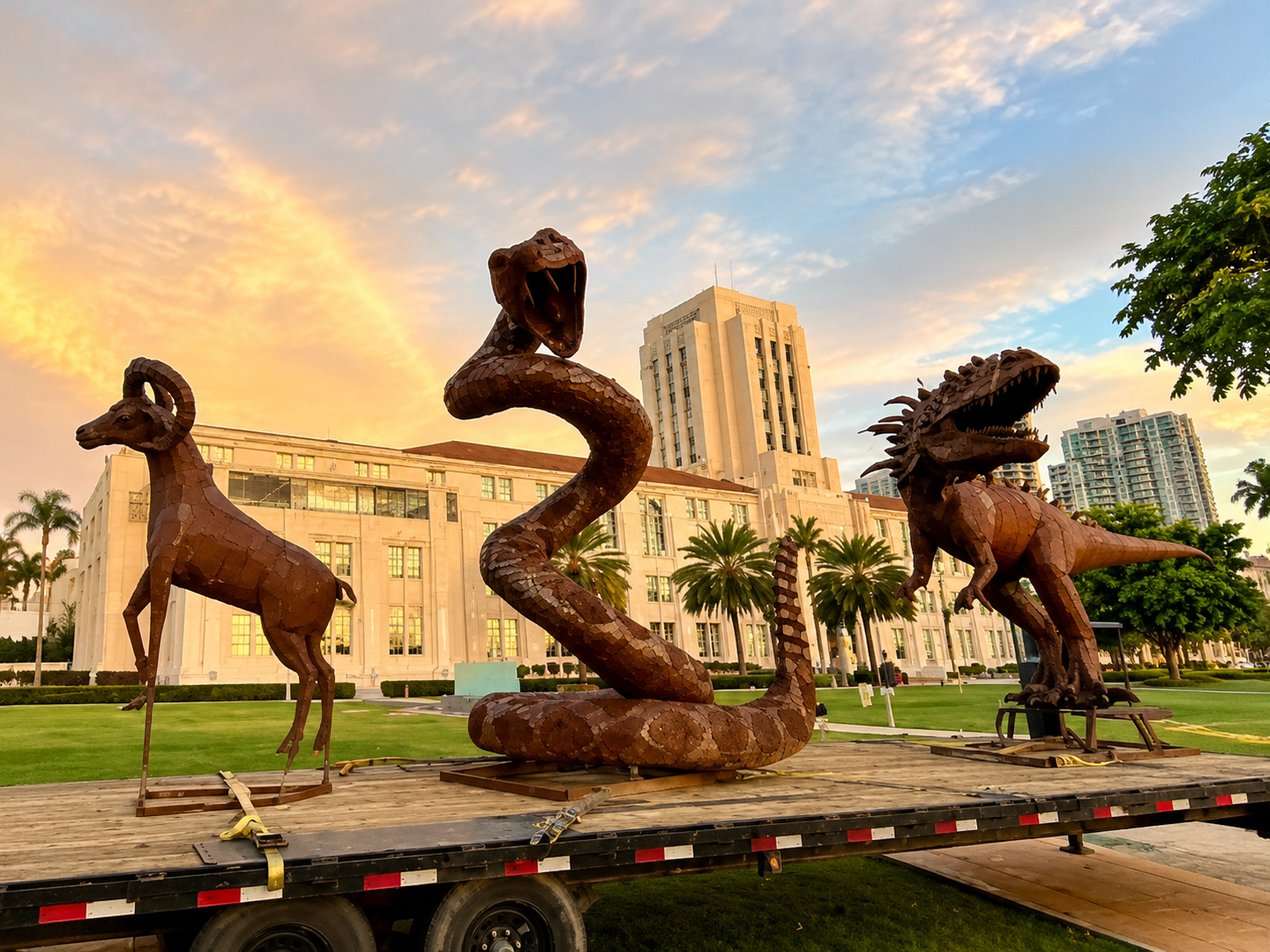
The story of Breceda's work in Borrego Springs continues to grow. In October 2025, Borrego Community Builders led a public art installation featuring Ricardo Breceda sculptures that traveled throughout San Diego County, with stops at the San Diego County Waterfront Park, Logan Heights, the Gaslamp Quarter, and the California Center for the Arts, Escondido. The traveling exhibit concluded at the Borrego Days Parade, bringing the sculptures home to Borrego Springs.
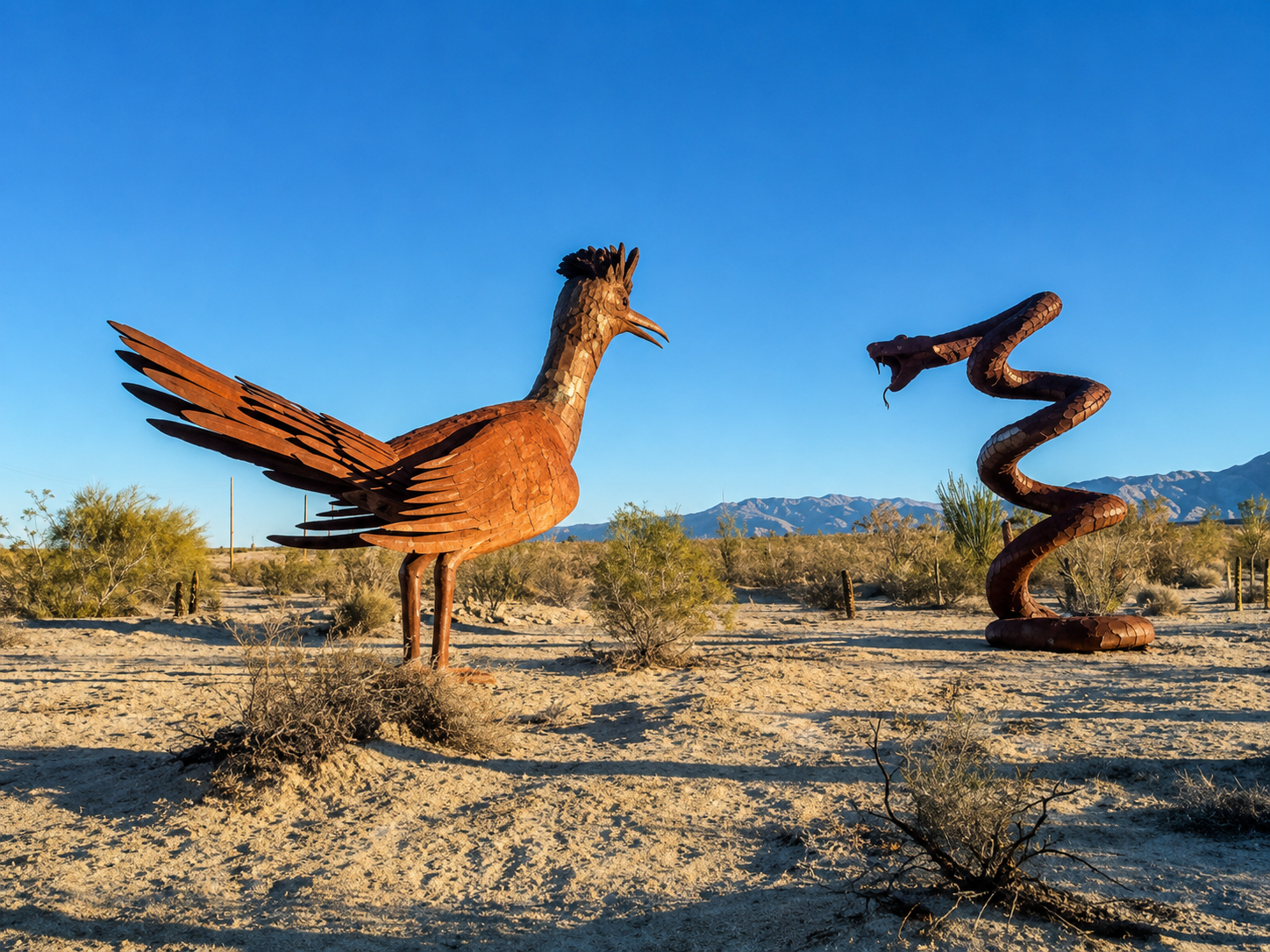


"Battle of the Desert," commissioned by Rams Hill and installed in December 2025, is the newest public Ricardo Breceda sculpture installation in Borrego Springs.


Just a few months later, in December 2025, Borrego Community Builders celebrated the installation of two new Ricardo Breceda sculptures commissioned by Rams Hill. Titled "Battle of the Desert," the impressive new works became the newest public Breceda installation in Borrego Springs, adding another chapter to the community's growing collection of world-renowned metal sculptures.


Today, the collection has grown to more than 130 sculptures and remains one of Borrego Springs' most photographed attractions, drawing visitors from around the world.


Watching Ken Kramer's episode today is a reminder of how one visionary landowner, one gifted artist, and one remarkable storyteller helped introduce Borrego Springs to audiences across San Diego County.


And it leaves us wondering: Will Ken Kramer return to Borrego Springs to discover the next chapter of our desert story?


-----------


Learn More About Borrego Springs

By Borrego Springs Soroptimist June 24, 2026
Circle of Art Continues a Tradition of Art and Giving in Borrego Springs
By Kathy Dice, Borrego Springs Soroptimist Club President June 24, 2026
Soroptimist International of Borrego Springs representatives Sally Theriault, Scholarship Committee Chair, and Jenny Huntley, Treasurer, present scholarships to Borrego Springs High School graduating seniors during Awards Night.
By Andrea McKenna June 24, 2026
Reserve a guided night sky tour with astronomer Dennis Mammana
By Andrea McKenna June 23, 2026
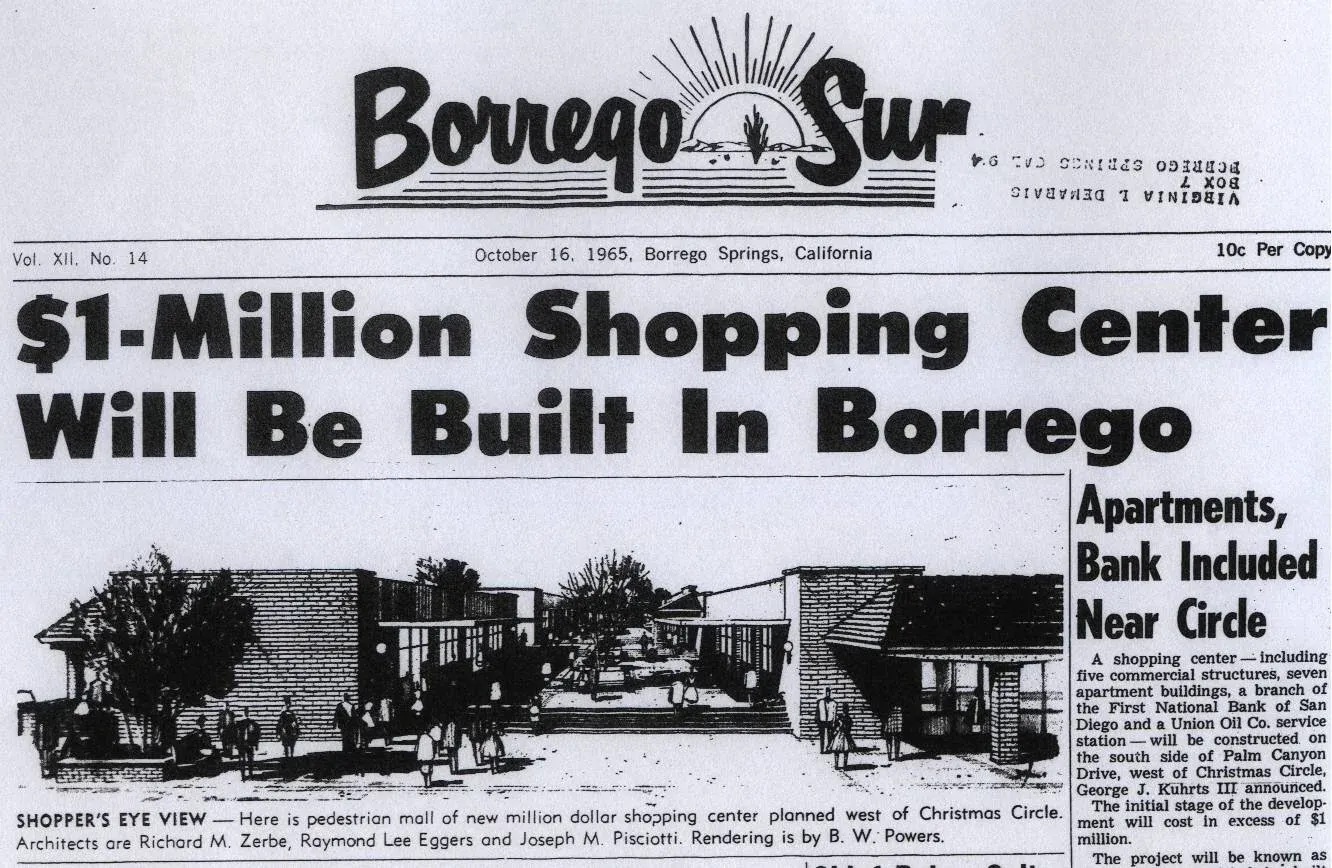
California Newspaper Publishers Association Merit Awards presented to the Borrego Sun for Best Front Page in 1966 and 1967.
By Andrea McKenna June 22, 2026
Diane Johnson thanks guests and shares upcoming events during Borrego Art Institute’s Summer Solstice gathering.
June 22, 2026
Renowned plein air artist Geoff Allen found inspiration in one of Borrego Springs’ most iconic locations: The Palms at Indian Head pool.
June 21, 2026
Prepared with information from ABDNHA's Dark Sky resources, Michael Poirier, Astrophotographer, and the Sky Calendar from Michigan State University. Learn more about Borrego Springs dark skies at: https://abdnha.org/darksky/sky / Note: You can subscribe to the Sky Calendar from Abrams Planetarium, Michigan State University, 755 Science Rd, East Lansing, MI 48824. Borrego Springs offers some of the darkest skies in Southern California, making summer an excellent time to observe the Milky Way, planets, meteor showers, and other celestial events. Here's what to look for in June and July 2026. Early June Sunrise: 5:38 a.m. Sunset: 7:50 p.m. PST Day Length: 14 hours 12 minutes June Highlights June 1 (Monday) Venus and Jupiter appear within 8° of each other in the west-northwestern sky after sunset. June 3–16 Milky Way viewing conditions are excellent, with dark, moonless skies after nightfall. The Milky Way rises at 10:57 p.m. on June 7 and as early as 10:30 p.m. on June 14. It remains visible for up to 4 hours and 29 minutes. June 6–13 Grand Canyon Star Party, Arizona. Learn more at www.grandcanyon.org . June 11 (Thursday) Venus, Jupiter, and Mercury span their shortest angle in the evening sky, just 13.2° apart. June 15 (Monday) New Moon — one of the darkest nights of the month for stargazing and astrophotography. June 15 (Monday) Mercury reaches greatest elongation, 24.5° from the Sun, making it the best evening appearance of the year shortly after sunset. June 21 (Sunday) June Solstice marks the beginning of summer in the Northern Hemisphere. It is the longest day of the year with 14 hours and 20 minutes of daylight. June 22–July 2 June Bootids Meteor Shower. June 29 (Monday) Full Moon rises at 8:17 p.m. and sets at 5:04 a.m. June 30 (Tuesday) Asteroid Day. Early July Sunrise: 5:41 a.m. Sunset: 7:59 p.m. Day Length: 14 hours 18 minutes July Highlights July 5 (Sunday) The Milky Way rises at 9:38 p.m. and remains visible for 3 hours and 58 minutes. July 12 (Sunday) The Milky Way rises at 9:34 p.m. and remains visible for 3 hours and 35 minutes. July 14 (Tuesday) New Moon — ideal conditions for stargazing and astrophotography. July 15 (Wednesday) Mercury reaches greatest elongation, 24.5° from the Sun. July 28–29 (Tuesday–Wednesday) Delta Aquariids Meteor Shower peaks. July 29 (Wednesday) Full Moon rises at 8:17 p.m. and sets at 5:04 a.m. The Planets and the Milky Way in June Evening Planets Venus and Jupiter dominate the western sky after sunset throughout June. Around June 8–9, the two planets appear in conjunction, creating a striking close encounter in the west-northwestern sky. Venus, often called the "Evening Star," shines brilliantly as it moves from Taurus toward Gemini and climbs higher in the evening sky each night. Jupiter remains nearby and is also easily visible. Mercury becomes visible low in the western sky during the second half of June. June 15 offers the best viewing opportunity, as Mercury reaches its greatest elongation and highest apparent position above the horizon. Morning Planets Saturn and Mars are visible before sunrise. Mars remains low in the east-northeast, while Saturn rises higher from the east to east-southeast. Early June provides a chance to see the two planets relatively close together. Summer Milky Way Summer is the prime season for viewing the bright central core of the Milky Way. From June through August, the galaxy's core rises in the southeastern sky and becomes one of the most spectacular sights available to dark-sky observers. June Bootids Meteor Shower The June Bootids occur annually from June 22 through July 2 and peak around June 27. Most years produce only one or two meteors per hour. However, this shower has occasionally surprised observers with dramatic outbursts. In 1998, rates briefly reached approximately 100 meteors per hour. The shower originates from debris left by Comet Pons-Winnecke, which orbits the Sun every 6.3 years. June Bootids are known for their unusually slow speed, entering Earth's atmosphere at approximately 14 kilometers per second. Asteroid Day – June 30 Asteroid Day is a United Nations-sanctioned global awareness campaign held annually on June 30. The event educates the public about asteroid impacts, planetary defense, and ongoing research into near-Earth objects. The date commemorates the Tunguska Event of June 30, 1908, when a massive airburst explosion flattened approximately 830 square miles of Siberian forest. The blast is estimated to have released energy equivalent to between 3 and 50 megatons of TNT, making it the largest recorded impact event in modern history. For more information, visit www.un.org. Delta Aquariids Meteor Shower The Delta Aquariids meteor shower peaks on the night of July 28 and the morning of July 29. This annual shower can produce up to 20 meteors per hour under ideal conditions and is associated with debris from Comets Marsden and Kracht. The shower runs from July 12 through August 23 each year. Unfortunately, the 2026 peak coincides with a Full Moon, which will wash out many fainter meteors. Patient observers may still catch some of the brighter meteors throughout the night. The meteors appear to radiate from the constellation Aquarius but can be seen anywhere in the sky. Learn More About Borrego Springs' Dark Skies Borrego Springs is California's first International Dark Sky Community and one of the best places in Southern California to experience the Milky Way, meteor showers, planets, and other celestial events. To learn where to observe, dark sky etiquette, upcoming programs, and more about stargazing in Borrego Springs, visit the Anza-Borrego Desert Natural History Association's Dark Sky resources: https://abdnha.org/darksky/sky/


By Matt Bosson BSFI June 20, 2026
Free Summer Movies Continue in Borrego Springs This July


By San Diego County June 20, 2026
Up to $75,000 Available for EV Charger Installations
Show More

Share This Post