

Andrea McKenna • July 7, 2026
Borrego Springs Sees Lowest Groundwater Pumping Since 2021
Share
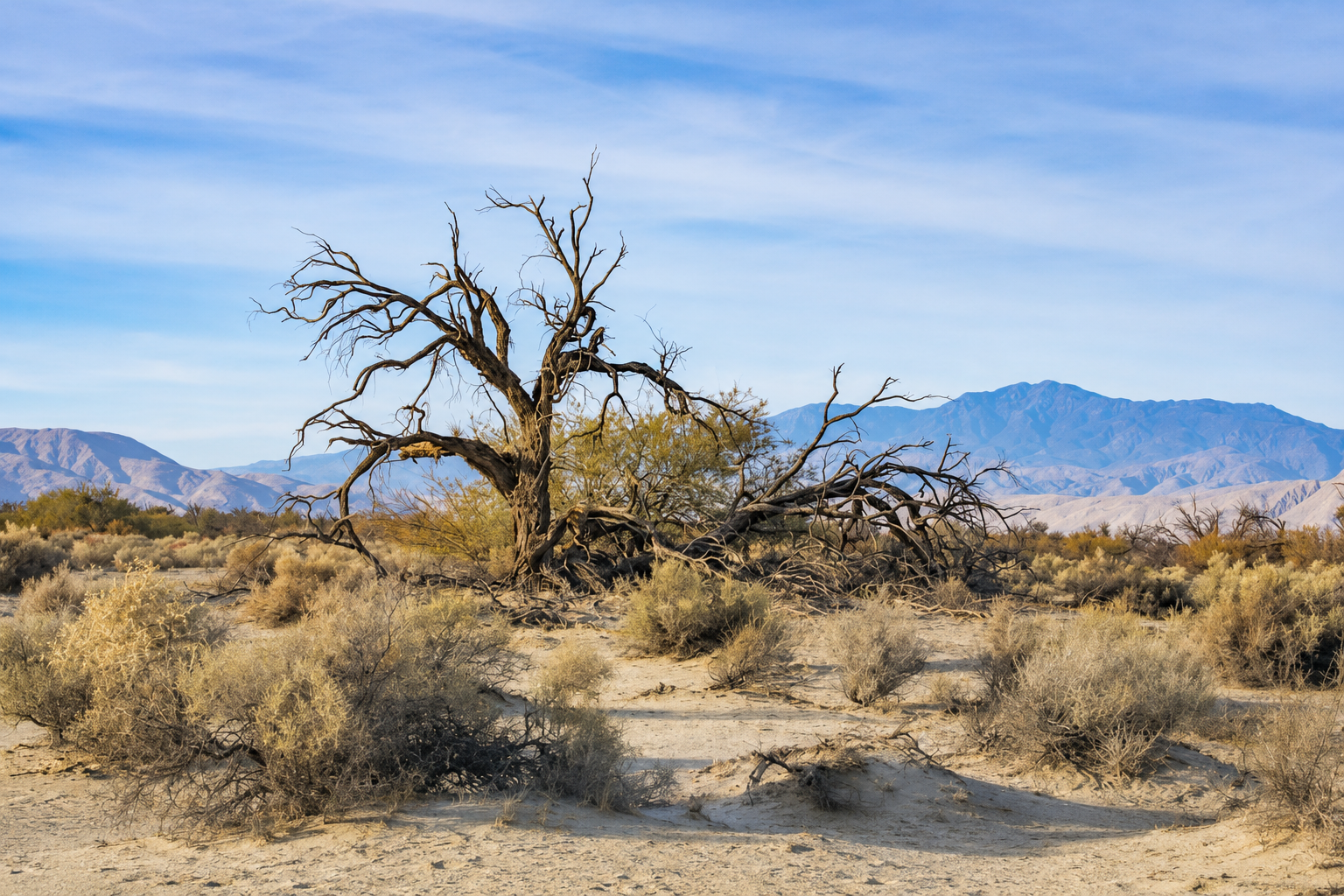
New Watermaster reports show measurable progress on groundwater conservation, alongside ongoing debate over the Mesquite Bosque.
Borrego Springs recorded its lowest groundwater pumping since 2021, marking a significant milestone in the community’s long-term conservation efforts. The reduction reflects measurable progress under the court-approved plan to protect the Basin’s water supply for homes, businesses, farming, and recreation.
Figures presented during the May 2026 Borrego Springs Watermaster meeting showed continued reductions across every major water-use sector, offering one of the clearest signs yet that the community’s conservation efforts are making a difference.
According to the presentation, groundwater pumping in Water Year 2026 was down 1,551 acre-feet compared to WY 2025 and was the lowest pumping volume recorded since 2021. All sectors reduced pumping compared to the previous year, including agriculture, municipal users, recreation, and other groundwater users.
Agriculture accounted for the largest reduction, lowering pumping by 1,048 acre-feet from the prior year. Agriculture remained the Basin's largest groundwater use sector at approximately 51% of total pumping.
Watermaster consultants said the ongoing pumping rampdown remains the most important action underway to slow and halt declining groundwater levels.
Borrego Springs operates under a court-approved Stipulated Judgment and Groundwater Management Plan, filed on April 8, 2021. Managed by the Borrego Springs Watermaster, the plan requires annual pumping reductions to achieve a sustainable yield target of 5,700 acre-feet by 2040, representing an overall 75% reduction.
The meeting also highlighted continued monitoring efforts across Borrego Springs. During Spring 2026 monitoring, groundwater-level data was collected from 58 of 59 wells, while groundwater-quality data was collected from 38 of 40 wells in the monitoring network.
At the center of ongoing discussion is the Mesquite Bosque near Borrego Sink and whether it should formally be recognized as a groundwater-dependent ecosystem under California's Sustainable Groundwater Management Act (SGMA).
As former San Diego County hydrologist and Watermaster advisory panel member John Peterson told the San Diego Union-Tribune, "People say we want enough water for us to be able to pump out of the system. But on the flip side, we live in an ecosystem out here."
A recent UCI report concluded the Mesquite Bosque is connected to the regional aquifer and continues to decline in health primarily because of falling groundwater levels. The report recommended recognizing the bosque as an environmentally beneficial user of groundwater and allocating 645 acre-feet annually to help protect it.
However, a separate TAC/EWG Recommendation Report presented to the Watermaster Board reflected differing scientific opinions on whether the UCI report should be considered the "best available science" for future management decisions.
The Technical Advisory Committee (TAC) includes hydrogeologists, engineers, and technical consultants representing Basin stakeholders. The Environmental Working Group (EWG) focuses on environmental and habitat issues related to groundwater management.
According to the recommendation report, four TAC members concluded the UCI report alone should not yet be used for policy decisions, while two EWG members considered it to represent the best available science.
The report also reflected differing opinions about whether the Mesquite Bosque should officially be classified as a groundwater-dependent ecosystem. Two Environmental Working Group members supported the designation, while several Technical Advisory Committee members cited uncertainty about the bosque's reliance on groundwater compared with soil moisture, runoff, and floodwater recharge.
Consultants also noted the UCI report may not fully account for deep soil moisture replenished by periodic flooding and infiltration from areas such as Coyote Creek.
Rather than recommending immediate policy changes, Watermaster staff called for additional monitoring, adaptive management, and continued scientific review. Proposed next steps include expanded monitoring of groundwater levels, vegetation health, temperature, precipitation, surface water inflows, and potential impacts from pests, fire, and human activity.
The Board is also reviewing the groundwater model used to estimate Borrego Springs' long-term sustainable water supply.
Some concerns remain. Three parties were identified as being at risk of exceeding their pumping allocations, and one party remained out of compliance with the Watermaster.
The May Watermaster reports highlight both progress and ongoing work. Groundwater pumping continues to decline as Borrego Springs moves toward its long-term sustainability goals, while scientific study and public discussion continue over the Mesquite Bosque and the best path forward for managing the Basin's shared water resources.
------------
Sources and Background Materials
Watermaster Presentation
Borrego Springs Watermaster presentation.
https://drive.google.com/file/d/14nSHYSXcW4Xk-e1SfI_Ab0tQYCUZWS5n/view?usp=drive_link
San Diego Union-Tribune Article
https://www.sandiegouniontribune.com/2026/05/17/deep-in-the-san-diego-county-desert-new-research-has-this-town-at-loggerheads-on-what-to-do-about-water/
UCI Groundwater-Dependent Ecosystems Report
https://anzaborrego.ucnature.org/wp-content/uploads/2025/06/GDE-Final-report_15May2025.pdf
Technical Advisory Committee / Environmental Working Group Recommendation Report
https://borregospringswatermaster.com/wp-content/uploads/2026/05/TAC-EWG-Recommendation-Report_GDE_FINAL.pdf
Fall 2025 Monitoring Report
https://borregospringswatermaster.com/wp-content/uploads/2026/01/VD.-Fall-2025-Monitoring-Report.pdf
Learn More About Borrego Springs