

April 3, 2026

Armand Frederick Vallée: Native American Indian Drawings

Share

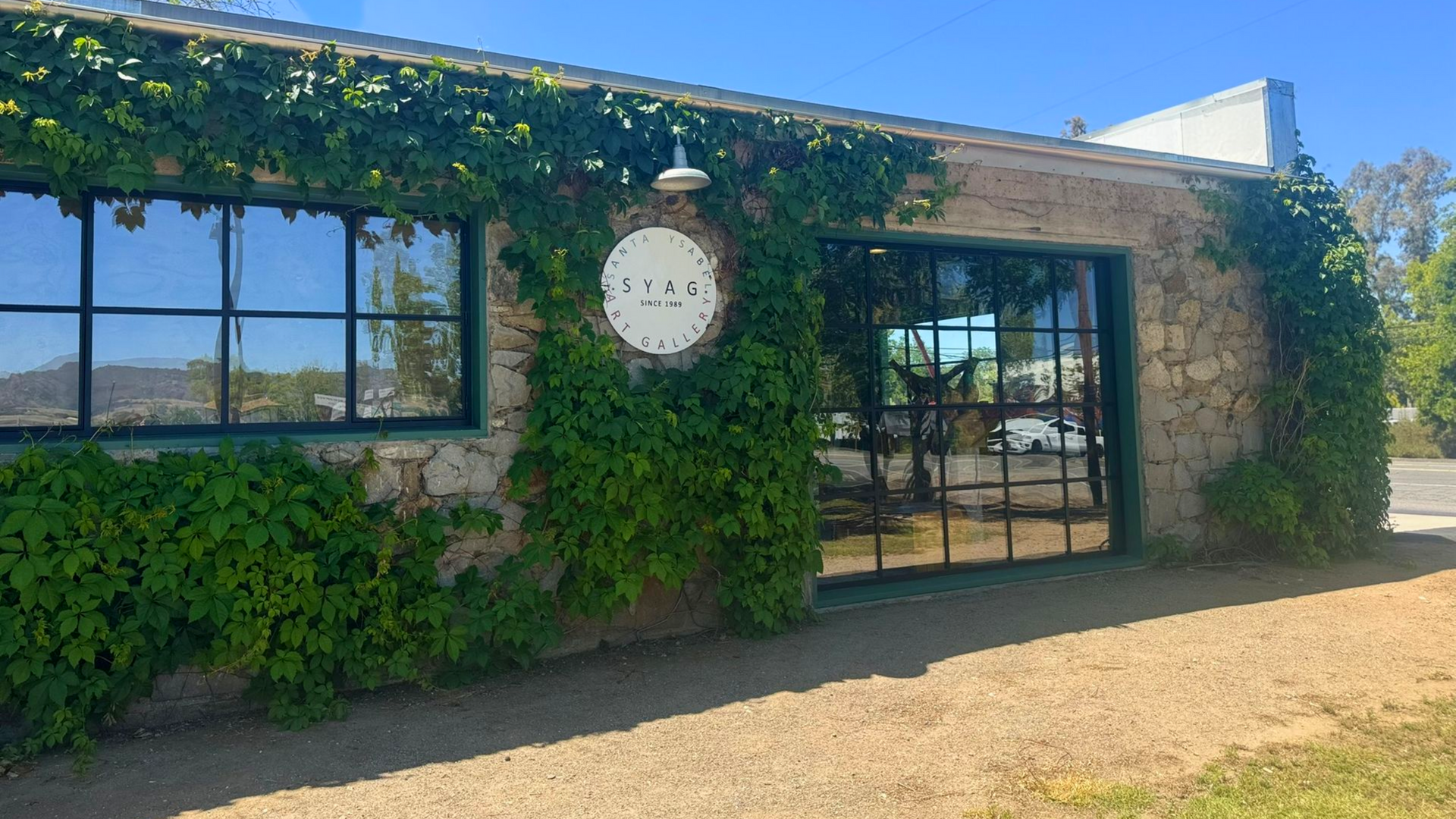
ARTWALK with Armand Frederick Vallée at The Gallery at The Palms Saturday, April 4 at 5-7 pm. The exhibition has added a few new original paintings to the collection. Stop by and take a look at these masterful paintings.


See you at ARTWALK!

The Gallery at the Palms

Join The Gallery at The Palms for a unique never before seen collection of Armand Frederick Vallée original drawings and a limited number of original paintings complemented with Native American Indian sand paintings and vintage pottery presented March 14 - April 26, 2026. 


This unique collection of drawings represents Native American Indian Elders drawn from life itself.  Vallée’s time on the Hopi and Zuni reservations in Arizona gave rise to intense research on the ancient religions of North American Indians.  Vallee’s painting series “The Religion and Mythology of the North American Indian pursued extensive research and sketches were made on this subject before the actual painting began. 


The kind cooperation and understanding of native elders, tribal leaders and groups from reservations across the United States and Canada made it possible to collect, to separate and evaluate the hundreds of stories, the mythological legends and the old religious beliefs.  The series was painted true to the spoken native word.  Seen through the eye of a white painter, meaning no disrespect to the native way of symbols and sand painting.


The paintings are a powerful representation of cultural native beliefs, of religious wealth and spiritual freedom.  The work was created in the spirit of friendship and respect to further better understanding between man.  Painted between 1979-1983…” -- Betrice R. Vallée (wife of Armand Frederick Vallée) from The Art of Armand Frederick Vallée, January 1, 1993.


Learn More About Borrego Springs
By County of San Diego Communications Office June 3, 2026
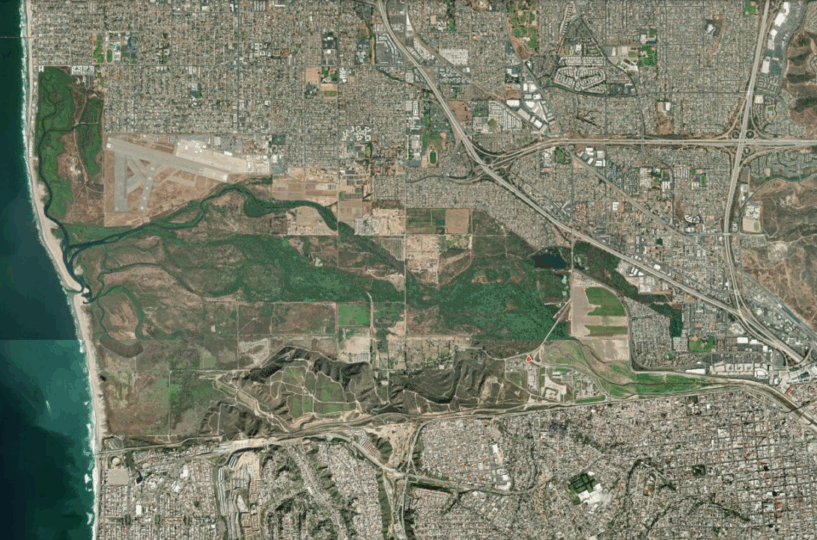
By Fernanda Lopez Halvorson , County of San Diego Communications Office People living in the South Bay, especially those near the Tijuana River Valley (TJRV), are experiencing high hydrogen sulfide (H2S) emissions, often recognized by the strong rotten egg smell produced by untreated wastewater flows. The rise in H2S emissions comes after a recent break in a sewage pipe in Tijuana called the Parallel Gravity Line. The San Diego County Air Pollution Control District (SDAPCD) monitors report that average hydrogen sulfide emissions in the Tijuana River Valley exceeded the 4-hr Level 1 Federal Acute Exposure Guideline Level (AEGL) threshold of 360 ppb for a period between 10 p.m. and 4 a.m. earlier today and reached a one-hour average of 915 parts per billion between 1 and 2 a.m. Current and recent hourly H2S emissions are available online through the SDAPCD’s network of monitors. The U.S. International Boundary and Water Commission (USIBWC) first reported the break over the weekend and has continued to provide updates. The agency says repairs are being expedited, and USIBWC is pressing Mexico to complete them as quickly as possible. While Mexican authorities have indicated repairs could be completed as soon as the end of the week, USIBWC continues to urge an accelerated timeline to halt excess flows to the Tijuana River. The flows are expected to cause an increase in stronger odors in the area. The Parallel Gravity Line is currently being rehabilitated end-to-end under a binational agreement, part of the U.S.-Mexico commitment to a permanent solution to transboundary flows. Visit the USIBWC official X site for the latest updates on the repairs. “We are working closely with our partners at the USIBWC, SDAPCD and others and staying in close communication,” said Dr. Sayone Thihalolipavan, M.D., M.P.H., County Public Health Officer. “We really want to people who live, work or go to school in the area to know where they can find up-to-date information on H2S levels and what steps they can take to reduce their exposure to H2S.” According to the U.S. Environmental Protection Agency , emissions exceeding the AEGL Level 1 can cause “notable discomfort, irritation, or certain asymptomatic non-sensory effects. However, the effects are not disabling and are transient and reversible upon cessation of exposure.” “We are continuously monitoring hydrogen sulfide levels in the Tijuana River Valley to ensure residents are informed and safe, said Paula Forbis, Air Pollution Control Officer for the San Diego County Air Pollution Control District. “We encourage residents to visit our website for the latest information on hydrogen sulfide levels. Our monitoring network provides current data so you can stay informed and take the necessary precautions to protect your health.” People in affected communities can take steps to reduce the impact of the hydrogen sulfide (H2S) by: Limiting their outdoor activities if odors are bothersome. Keeping doors and windows closed when odors are present and air out your home or building when odors improve. Increasing air circulation indoors using fans or air conditioning on recirculation mode. Running an air purifier with a high efficiency particulate air (HEPA) filter and activated charcoal with potassium permanganate, is particularly effective for H2S odors. Those purchasing air purifier can find a verified model with potassium permanganate on the California Air Resources Board (CARB) website and also get more information on a dedicated Tijuana River Valley website created by CARB. People who are more sensitive to air pollution like those with asthma, chronic obstructive pulmonary disease (COPD), or other chronic lung conditions should keep rescue medication(s) readily available. Anyone with persistent, worrisome, or worsening, symptoms should reach out to their medical care provider or seek emergency care if symptoms feel life-threatening. To learn more and get additional resources: Sign up to receive email and/or text alerts when emissions surpass 30 parts per billion Current emission levels and other Tijuana River Valley pollution data are tracked on the County’s Tijuana River Valley dashboard Get Community Hydrogen Sulfide Guidance to follow when levels exceed 30 ppb River flows are monitored on US International Boundary and Water Commission (USIBWC) dashboards A collaborative partnership that includes the USIBWC, U.S. Environmental Protection Agency (EPA), California Department of Public Health (CDPH), San Diego Regional Water Quality Control Board (SDRWQCB), San Diego County Air Pollution Control District (SDAPCD), and the County of San Diego has been working together since 2024 on the sewage treatment issues, progress updates and health concern guidelines. The County also continues to coordinate with the Tijuana River Coalition , healthcare providers and community organizations to support affected residents. More information about the ongoing pollution in the Tijuana River Valley and South County beach water is available from the SDAPCD, IBWC and the County’s dedicated Tijuana River Valley & Beach Water Sewage Crisis webpage. Most recently the County opened up a survey to measure the economic impact of the chronic pollution and entered into a contract with the University of California San Diego to better understand how the pollution is affecting people living and working in nearby communities.
By Andrea McKenna June 3, 2026
Congratulations to the newly elected officers of the Sons of the American Legion for 2026-27:
By Andrea McKenna June 3, 2026
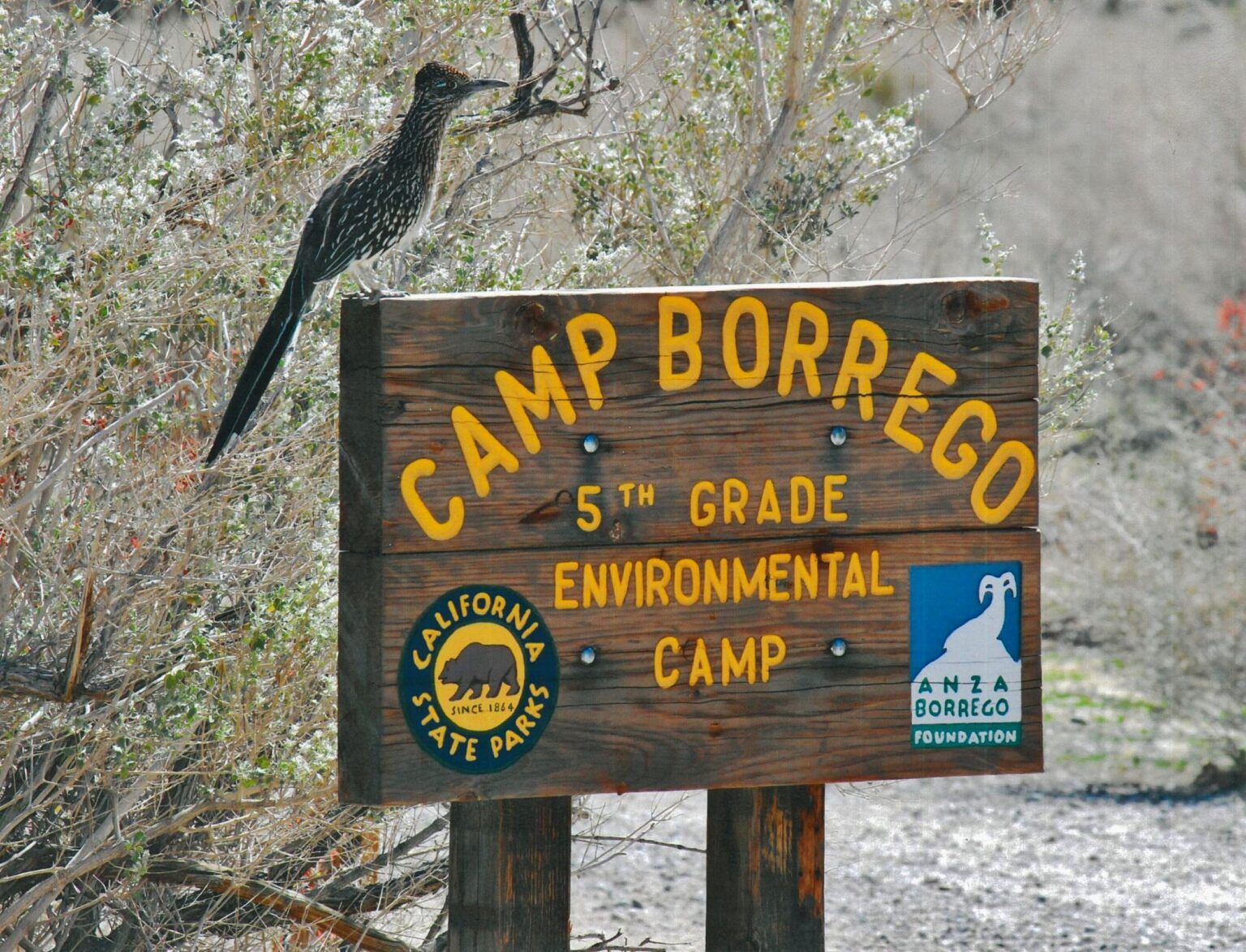
ABF’s latest blog explores the surprising chain of events that led to the creation of Camp Borrego.
By Andrea McKenna June 2, 2026
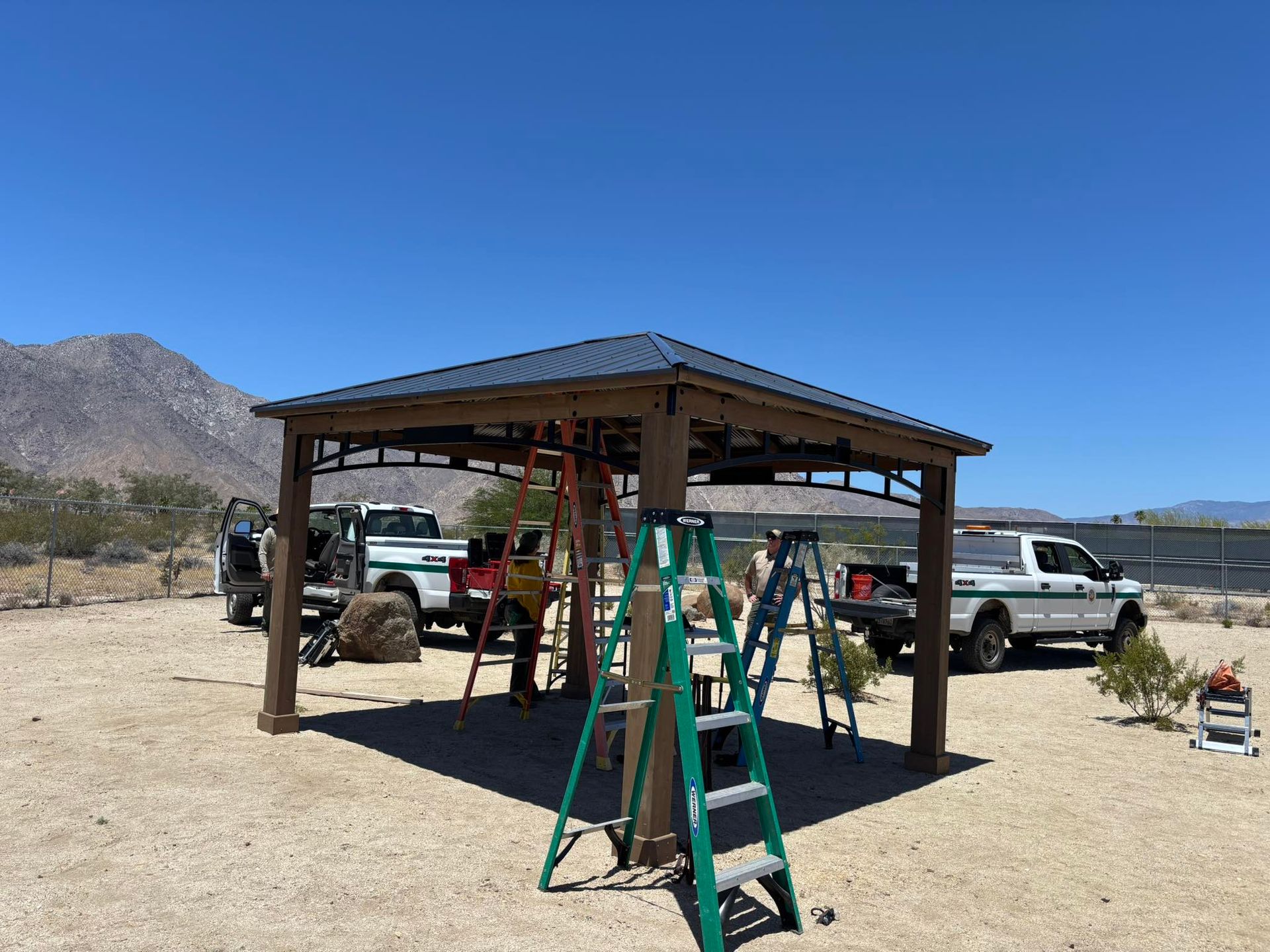
New shade structure adds comfort to the Borrego Springs Community Dog Park.
By Andrea McKenna June 2, 2026
Long-running golf tournament supports Borrego Springs Children’s Center with funds and supplies
By Dennis Mammana June 2, 2026
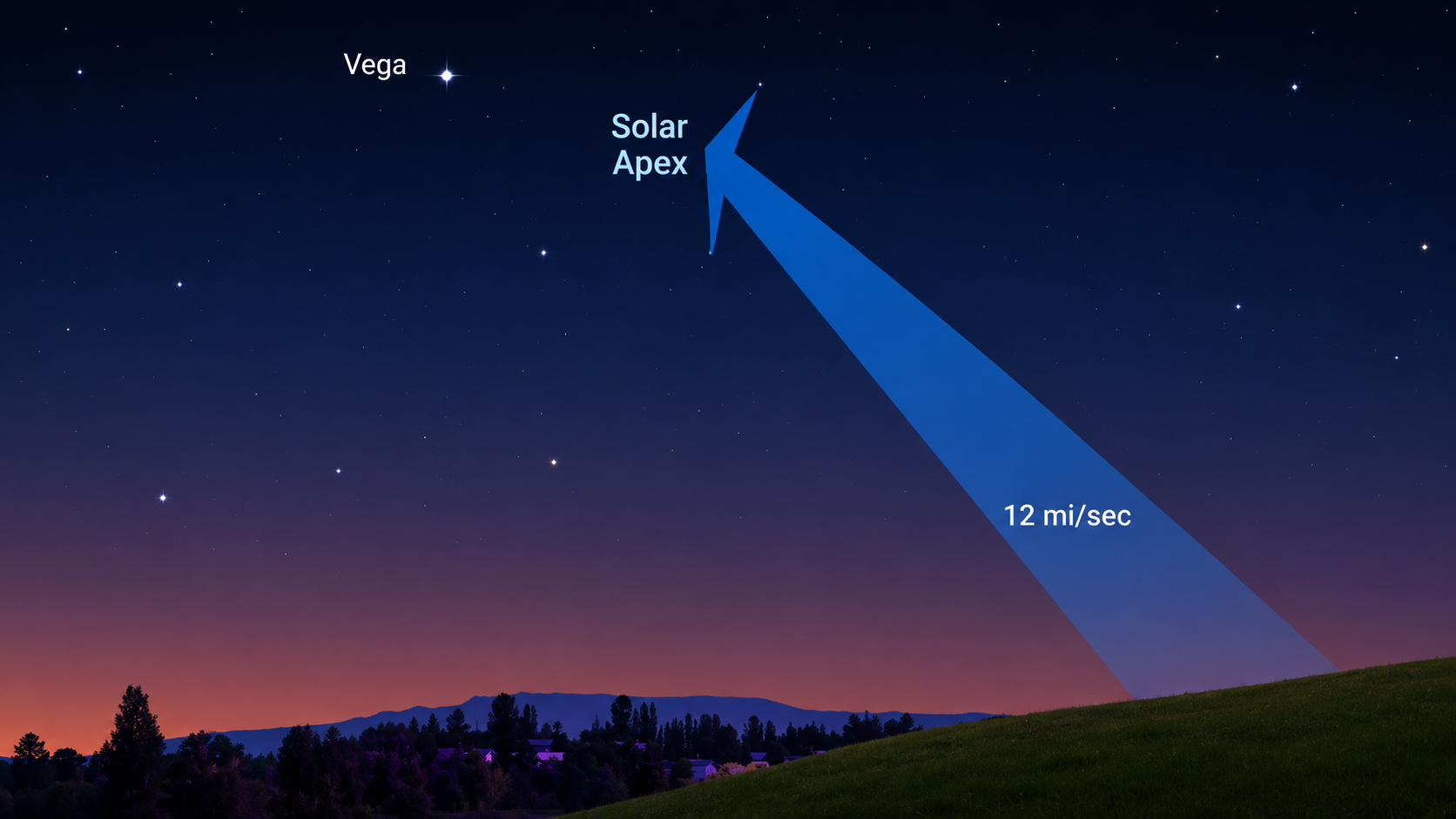
By Dennis Mammana Week of June 7-13, 2026 During one of my recent night sky tours, an elderly guest gazed into the sky and asked if the stars ever move. He said the constellations look the same now as when he was a child, and he was convinced that nothing in the heavens ever changes. It was an excellent observation but one that didn't consider an important fact: Human time scales are considerably different than cosmic time scales. Even the healthiest of humans will live at most about a century, and during our lives, we measure time in seconds, minutes, hours, days, weeks, months, years and decades. The cosmos, on the other hand, has been around for nearly 14 billion years, and everything takes much longer to occur. To recognize changes in the universe, astronomers must think on a more cosmic scale. When we do, we find that the universe is remarkably active. Stars are forming, consuming their nuclear fuel, and dying, and all are racing through our galaxy at tremendous speeds. Expecting to see changes in any star's appearance or the shapes of constellations over even a full human lifespan just isn't possible. To understand this, consider Barnard's Star, visible only through a telescope from the Earth's Southern Hemisphere. This star tears through our galaxy at a speed of some 88 miles per second, yet from our terrestrial vantage point six lightyears away, Barnard's Star requires three and a half centuries to cross a segment of the sky only the width of your outstretched little finger. Of course, we can't watch this movement with our eyes — or even through powerful telescopes — but by using sophisticated earthbound and satellite technology, astronomers can precisely measure these stellar speeds and directions of motion. Measure the speeds and directions of enough stars, and we find some interesting patterns. For example, stars that appear roughly in the direction of the summer star Vega (now shining low in the northeastern sky after dark) seem to be spreading out from a central point, while those on the opposite side of the sky (near Sirius, setting in the southwest around sunset) appear to be converging on one another. What this means is fascinating. Our sun's own motion is carrying it (along with the planets of our solar system) toward the stars near Vega — a point we know as the solar apex — and away from those near Sirius (known as the solar antapex). This phenomenon isn't difficult to visualize. Imagine you're driving along a highway from one city to another. The buildings in front of you appear to become more widely separated as you approach, while those behind you appear to converge more tightly. This is exactly what's happening in our section of the galaxy. Our sun is moving at some 12 miles per second toward a point in our sky not far from the bright star Vega. Of course, we can't see this movement, but it's fun to stand outdoors on a clear night and imagine our sun and Earth racing outward toward Vega. Now, if you're worried about a collision with this star ... well, fuhgetaboutit. Even at this remarkable speed, we'd need some 5,300 human lifetimes to get there! Visit Dennis Mammana at dennismammana.com. To read features by other Creators Syndicate writers and cartoonists, visit the Creators Syndicate website at www.creators.com. Learn More About Borrego Springs
By Explore Always June 2, 2026
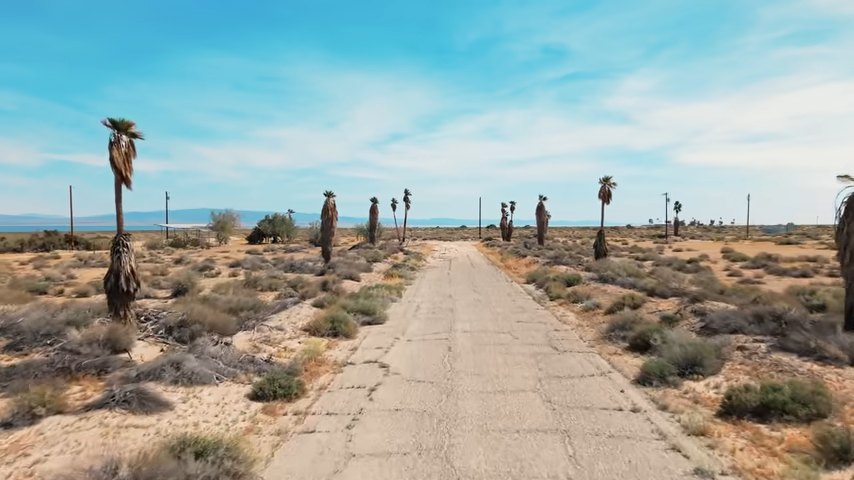
By: Explore Always on YouTube
By East County News Service June 1, 2026
East County News Service June 1, 2026 (San Diego County) — The San Diego Humane Society is clearing a path to make the road to a forever home less bumpy for hundreds of companion animals. The SDHS is waiving all adoption fees Saturday, June 6, as part of the third annual California Adopt-a-Pet Day .  As shelters across the state struggle with overcrowding, this statewide initiative — hosted by California Animal Welfare Association (CalAnimals) , the San Francisco Society for the Prevention of Cruelty to Animals and the American Society for the Prevention of Cruelty to Animals — aims to clear kennel space while connecting pets with new families. The San Diego Humane Society currently has more than 800 pets waiting for adoption across its campuses in El Cajon, San Diego, Escondido and Oceanside. On Saturday, all campuses will be open from 10 a.m. to 6 p.m. with no adoption fees. SDHS is encouraging prospective adopters to arrive early, as all adoptions will be processed on a first-come, first-served basis. The annual adoption event has seen consistent growth since its inception. In 2024, the initiative facilitated 3,609 adoptions across California, a figure that climbed to nearly 5,000 in 2025. Last year alone, the SDHS successfully placed 293 pets in a single day, and organizers are setting their sights on exceeding that number this weekend. “Waiving adoption fees for a day can transform hundreds of lives, both for the animals who find homes and the people who welcome them,” said Dr. Gary Weitzman, president and CEO of SDHS. “We’re proud to join shelters across California to spotlight the incredible pets in our care and help more families discover their perfect companion.” To ensure each pet gets off to a healthy start, the SDHS includes several services with every adoption. These include spay/neuter surgery, current vaccinations, permanent microchip identification, post-adoption training support and a complimentary veterinary exam at participating clinics. Prospective adopters can preview local animals currently awaiting homes by visiting sdhumane.org/adopt .
By Andrea McKenna June 1, 2026
By: Andrea McKenna
Show More

Share This Post