May 15, 2026

BSFI Free Movies this Summer at BSPAC!

Share

The Borrego Springs Film Institute presents the 2026 Film Series.


Borrego Springs Performing Arts Center

590 Palm Canyon Drive,
​Borrego Springs, CA, 92004


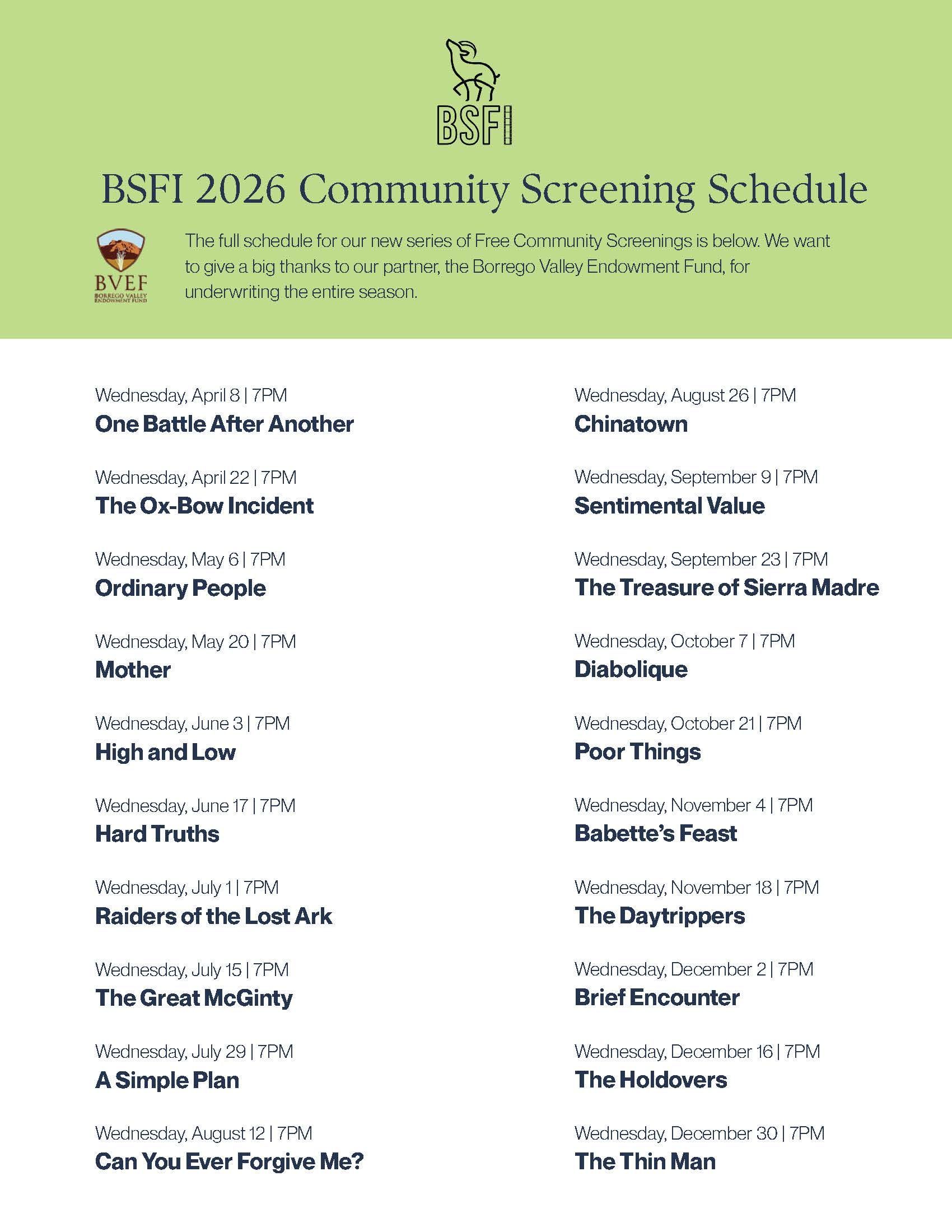
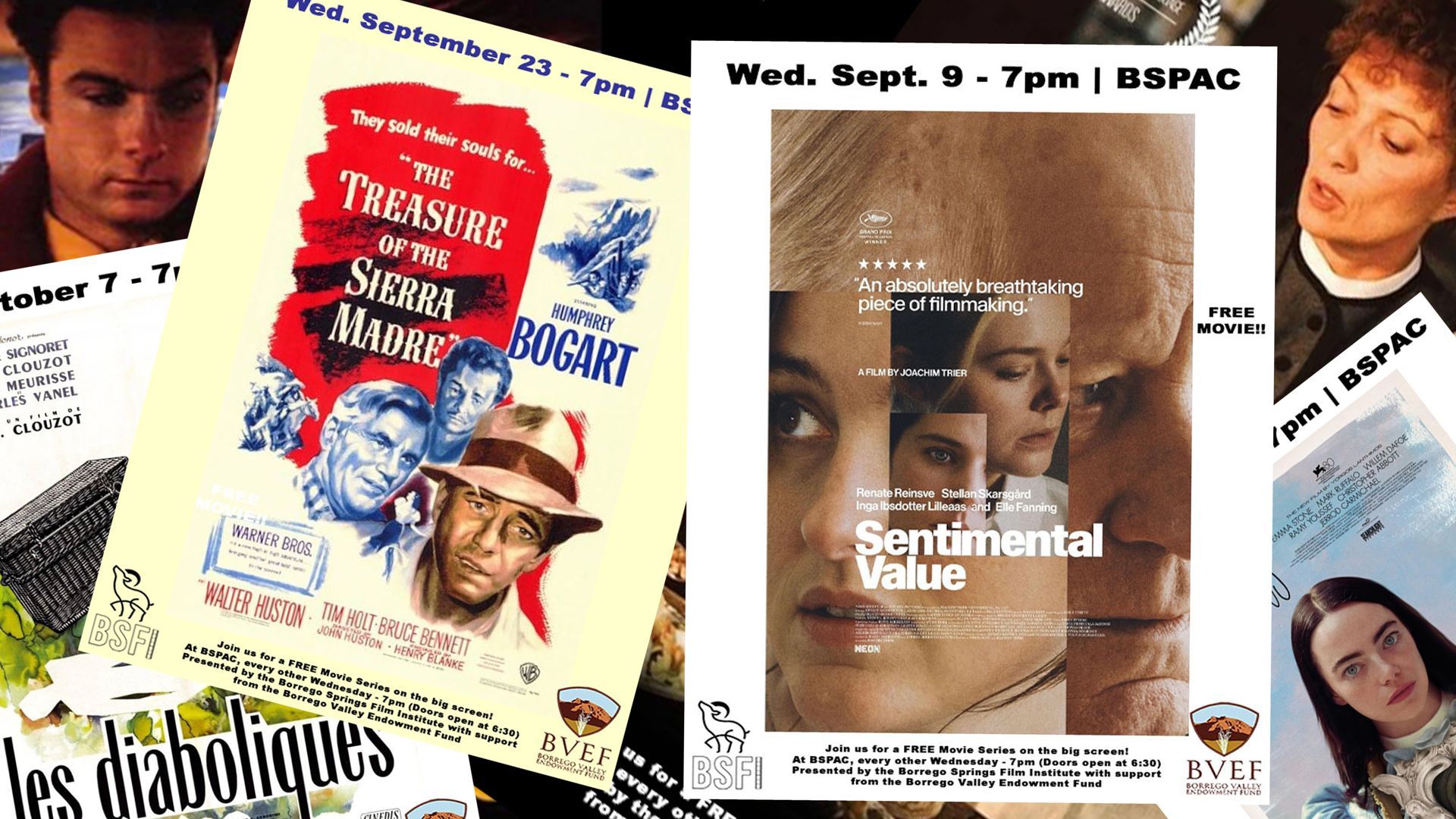
BORREGO SPRINGS, CA — The Borrego Springs Film Institute (BSFI) is proud to announce its Summer 2026 screening series, bringing free bi-weekly screenings, every other Wednesday, of exceptional cinema to the heart of the desert. All screenings take place at the Borrego Springs Performing Arts Center (BSPAC), 590 Palm Canyon Drive, Borrego Springs, CA 92004, and begin at 7pm. The full 2026 BSFI schedule (April through December 2026) is now available at www.borregospringsfilminstitute.org. Please note that due to the vagaries of film licensing, all screenings are subject to change — we encourage patrons to check the website for the most current information before attending.


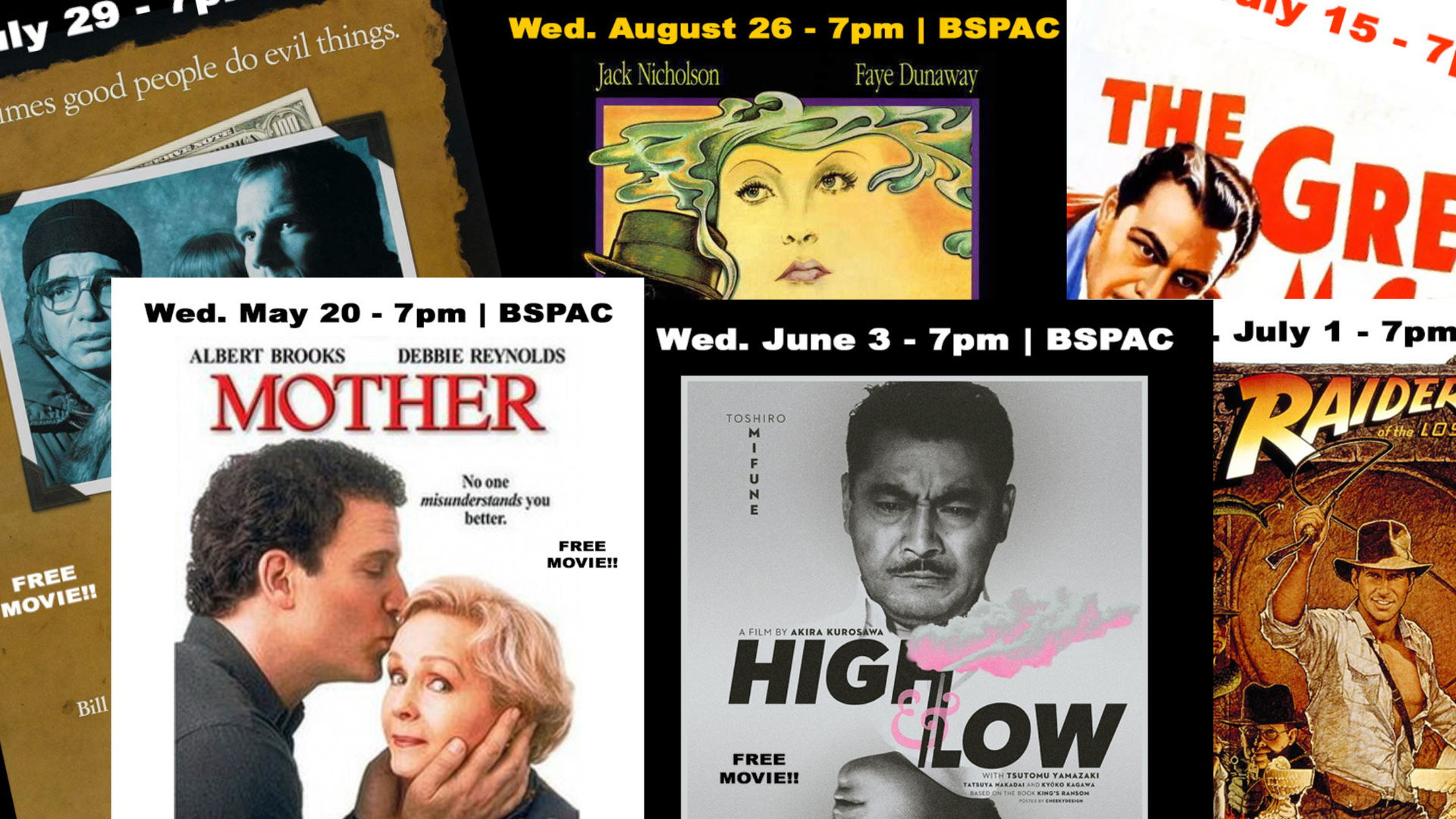
Wednesday, June 3 — High and Low (1963, Not Rated, 2h 23m) Toshirō Mifune delivers one of his greatest performances as a powerful industrialist whose family is targeted by a calculating kidnapper in Akira Kurosawa's masterful crime thriller. Adapted from Ed McBain's novel King's Ransom, the film moves from an agonizing moral drama in a hilltop mansion to a gripping police procedural in Yokohama's neon-lit streets. A towering work of world cinema, it is as much a searing portrait of class and inequality as it is a riveting thriller. In Japanese with English subtitles.


Wednesday, June 17 — Hard Truths (2024, Rated R, 1h 37m) Mike Leigh's quietly devastating character study centers on Pansy, a woman whose volcanic anger and crushing depression drive away nearly everyone in her life. Her warm and patient sister Chantelle remains a fragile lifeline, and the film explores — with compassion and honesty — what lies beneath a personality that the world finds almost impossible to love. It features a ferocious and fearless lead performance widely celebrated as among the best of 2024.




Wednesday, July 1 — Raiders of the Lost Ark (1981, Rated PG, 1h 45m) Continuing our “Summer Blockbuster” tradition in July, Steven Spielberg's genre-defining adventure follows the irresistible archaeologist Indiana Jones — played by Harrison Ford — as he races Nazi operatives across the globe to claim the legendary Ark of the Covenant before it can be weaponized for world domination. Crackling with wit, spectacle, and irresistible momentum, the film reinvented the action-adventure genre by channeling the spirit of 1930s serials through a thoroughly modern cinematic lens. Few films are as purely, unabashedly fun — and it remains one of Hollywood's most beloved and influential blockbusters.


Wednesday, July 15 — The Great McGinty (1940, Not Rated, 1h 22m) Preston Sturges made his directorial debut with this razor-sharp political comedy, following small-time opportunist Dan McGinty (Brian Donlevy) as he claws his way from street-level muscle to the mayor's office — courtesy of a thoroughly corrupt political machine. Trouble arrives when McGinty falls genuinely in love with his marriage-of-convenience wife and makes the catastrophic mistake of trying to do the right thing. Wickedly funny and surprisingly pointed, it set the template for Sturges's celebrated run of Hollywood satires that followed.


Wednesday, July 29 — A Simple Plan (1998, Rated R, 2h 1m) When three men stumble upon a crashed plane carrying over four million dollars in cash in the snowy woods outside their small town, what seems like a stroke of impossible luck quickly curdles into something far darker. Director Sam Raimi's tense and deeply moral thriller — anchored by Bill Paxton and a remarkable Billy Bob Thornton — charts with quiet precision how greed, fear, and small compromises can unravel ordinary lives. It is a modern fable about the price of keeping secrets, and one of the most underrated American films of its decade.


Wednesday, August 12 — Can You Ever Forgive Me? (2018, Rated R, 1h 47m) Melissa McCarthy delivers a career-defining dramatic performance as Lee Israel, a down-and-out biographer in 1990s New York who turns to forging letters by literary legends to keep herself afloat. Directed by Marielle Heller, the film is both a sharp-edged portrait of literary obsession and a surprisingly tender story of loneliness and self-destruction. Richard E. Grant shines as her raffish accomplice, and the film lingers long after the credits as a meditation on talent, desperation, and the lies we tell ourselves.


Wednesday, August 26 — Chinatown (1974, Rated R, 2h 10m) Roman Polanski's landmark neo-noir remains one of the most perfectly constructed films ever made, following Los Angeles private detective J.J. Gittes (Jack Nicholson) as a seemingly routine infidelity case pulls him into a labyrinth of corruption, murder, and devastating family secrets. With Faye Dunaway as the enigmatic Mrs. Mulwray and John Huston as a villain of quietly monstrous authority, the film operates as both a flawless thriller and a cynical elegy for American idealism. Robert Towne's Oscar-winning screenplay is a masterclass in plotting, and its ending remains one of cinema's most haunting.


All screenings are held on Wednesday evenings at 7pm at the Borrego Springs Performing Arts Center, 590 Palm Canyon Drive, Borrego Springs, CA 92004. To find the full 2026 schedule, and the latest updates, visit www.borregospringsfilminstitute.org.


Learn More About Borrego Springs

May 15, 2026
There are photographers who chase spectacle, and there are photographers who quietly ask people to slow down and look more carefully. The work of Brice Weaver belongs firmly in the latter. Through film photography, remote landscapes, abandoned spaces, layered histories, and reflective atmosphere, Weaver explores ideas surrounding memory, impermanence, and the traces humanity leaves behind. His images often feel suspended somewhere between documentary observation and emotional archaeology, asking viewers not simply to look at a place, but to consider who stood there before, what remains after time passes, and how photography itself becomes evidence that something briefly existed. From trekking to Everest Base Camp carrying the cremated remains of a fallen Marine Corps brother, to diving with great white sharks in fulfillment of a childhood dream inspired by Jacques Cousteau, Weaver’s photographic journey is deeply tied to exploration, personal reflection, and the emotional relationship between people and place. We spoke with Weaver about photography, memory, travel, film, and the evolving body of work he calls Evidence. Photography & Creative Beginnings “My interest in photography really began long before I ever owned a serious camera,” Weaver says. “Growing up around Washington D.C., some of my earliest school field trips were to places like the Smithsonian and the National Gallery of Art.” Those early experiences left a lasting impression. “I still vividly remember standing in front of the massive Megalodon jaws at the Smithsonian as a kid, completely in awe, and thinking, ‘That’s what I want to do someday.’ At the time, I was obsessed with the expeditions of Jacques Cousteau and dreamed about exploring the ocean and diving with sharks myself one day.” He also recalls standing in front of paintings such as Daniel in the Lions’ Den at the National Gallery and being struck by the emotional atmosphere they carried. “At home, I would spend hours in my grandparents’ basement reading old National Geographic magazines and musty volumes of Encyclopaedia Britannica, completely fascinated by exploration, history, wildlife, and distant places.” Photography eventually entered his life during a period of uncertainty. “At the time, I was working on an ambulance and had taken time off to hike the Pacific Crest Trail. Around mile 250, an old hip injury from the Marines resurfaced badly enough that I eventually needed surgery. Suddenly I went from constantly moving and working in high-intensity environments to being laid up in bed wondering what came next.” During recovery, he reflected on the photographs he had casually taken during his travels. “People had responded well to photos I was taking on my phone and GoPro, and eventually I thought, why not actually buy a real camera and take it seriously?” What began as a creative outlet quickly became something deeper. “I realized the camera was changing the way I observed the world. I became less interested in simply documenting places and more interested in atmosphere, memory, light, and the emotional weight certain environments carry.” Exploration, Travel & Perspective For Weaver, travel has always represented more than movement. “A lot of my creative influences came less from photography specifically and more from exploration, atmosphere, and visual storytelling,” he explains. “There was always this sense of discovery, history, and wonder tied to imagery for me.” That fascination eventually took him across environments ranging from the Amazon and Peru to Nepal and Patagonia. One journey in particular remains deeply personal. “Trekking to Everest Base Camp was deeply meaningful for me,” he says. “One of my closest friends from the Marine Corps, someone I served with in Iraq and who was like a brother to me, and I used to talk about making that journey someday.” After his friend was murdered unexpectedly, Weaver decided to carry some of his cremated remains with him to Everest Base Camp. “So the trek became much more than just travel or adventure. There were moments on that mountain where I found myself thinking about friendship, mortality, memory, and how small we really are within landscapes that have existed for thousands of years.” Those experiences altered not only his worldview, but the way he approaches photography itself. “The more I’ve explored the world, the more I’ve realized how small we are within the larger scope of history, nature, and time. I think that perspective has shaped not only the way I photograph, but the way I move through life in general.” Travel, he says, has also taught him adaptability. “Travel places you into unfamiliar environments constantly, different cultures, languages, conditions, and situations where you have to learn to navigate uncertainty and trust yourself. There have been moments ranging from communication barriers in remote places to genuinely dangerous situations, including one experience in Nepal that almost resulted in me being kidnapped, which is probably a story for another day.” A Full Circle Beneath the Surface One of the most unforgettable moments of Weaver’s career came underwater at Guadalupe Island. “Growing up, I had spent countless hours fascinated by sharks, ocean exploration, and the expeditions of Jacques Cousteau ever since I was a kid standing in awe beneath the Megalodon jaws at the Smithsonian,” he says. Years later, that childhood fascination came full circle while photographing great white sharks. “One experience I’ll never forget was diving with great white sharks and photographing the image that later became known as Great Bite . What stayed with me most was the sense of respect and presence you feel underwater with an animal like that. There’s an intensity to it, but also an incredible calm. Everything becomes very quiet and focused.” The photograph would later receive international recognition and become one of his most widely known images. “Looking back, I think that photograph became meaningful to me not just because of the recognition it later received, but because it represented the realization of something that had lived in my imagination since childhood.” Atmosphere, Memory & Evidence Much of Weaver’s work focuses on subtle details, quiet environments, and traces of human presence. “What usually stops me first is light, specifically the way it interacts with a subject or environment and creates atmosphere,” he explains. “But beyond that, I’m often drawn to places because of the sense of history and human presence they carry.” He recalls sitting on a hillside overlooking the Acropolis in Greece and imagining the continuity of human experience across centuries. “I found myself thinking that I could quite literally be standing in the same place where someone like Socrates once stood thousands of years ago. Moments like that change the way you experience a landscape. It stops feeling like scenery and starts feeling connected to memory, history, and human continuity.” That fascination with traces of existence has become central to his evolving body of work. “I think I’m often responding to evidence of people more than the places themselves. When I encounter an abandoned building, a quiet landscape, or subtle traces left behind, I find myself wondering who those people were, what their lives were like, and what that place felt like in its prime.” For Weaver, photography exists in a complicated relationship with time. “Memory plays a significant role in my work because I think photography exists in this strange space between preservation and impermanence. On one hand, a photograph acts as evidence that something existed, a place, a moment, a specific atmosphere in time. But at the same time, even the things we photograph remain vulnerable to change, decay, and disappearance.” He points to his award-winning photograph Deserted Refuel as an example. “I recently went back to that location after the image had already received recognition. Part of the building had burned down, and even the graffiti on the gas station canopy had completely changed from what appears in the photograph. It was a reminder that the image had already become a document of something that no longer fully exists in the same way.” That realization helped shape the conceptual direction of his broader body of work, Evidence . “If I had to summarize my work philosophically, I think it revolves around evidence of existence and the fleeting nature of time. We are only here for an incredibly brief moment within a much larger continuum of history and existence, and photographs become small records of those moments before they disappear or change.” Film, Presence & Intentionality Although Weaver works across both film and digital formats, analog photography remains deeply important to his process. “What keeps me connected to analog film photography is the level of presence and intentionality it requires,” he says. “With film, every frame matters. When I press the shutter, I’ve consciously decided that particular moment is worth preserving.” For him, film photography changes not only the image, but the photographer. “With digital, there’s often an element of instant gratification, you can immediately review images, adjust, and continue shooting. Film removes that safety net entirely.” The uncertainty, he says, is part of the emotional connection. “With film, there’s always a degree of trust involved. So many factors exist outside your control, from how the film was stored, to lab processing, to whether airport security refuses to hand check it and sends it through scanners. You don’t fully know what you captured until much later.” Oddly enough, that unpredictability has become part of the appeal. “Getting scans back from a roll of film almost feels like opening a Christmas present because there’s still an element of discovery involved. Sometimes imperfections or unexpected moments become part of what gives the image character and emotional weight.” Recognition & Creative Growth Recognition arrived relatively quickly after Weaver first picked up a camera. “Not long after buying my first DSLR, I was already being published in places like Backpacker Magazine, and then receiving recognition such as the International Photography Awards Honorable Mention for Great Bite in 2019.” One moment still stands out vividly. “I remember attending the IPA gala in New York City wearing a black tie tuxedo and suddenly finding myself standing next to Annie Leibovitz. It was one of those moments where I had to pause and think about how unexpected the entire journey had been.” Despite the accolades, Weaver says recognition has not fundamentally changed his creative direction. “I still create the work I feel personally drawn to and photograph environments the way I naturally see and experience them. I think if you start chasing recognition too heavily, it can pull you away from authenticity and toward trying to predict what other people want to see.” The greater challenge, he says, has been visibility. “One of the biggest challenges in growing as a photographer has been simply being seen in an environment where attention moves incredibly fast. Social media algorithms tend to reward constant output, speed, and short attention spans, while a lot of the work I’m interested in creating is slower, more reflective, and asks people to spend time with an image.” Reflection & What Comes Next When asked what he hopes viewers experience through his work, Weaver’s answer is simple. “Curiosity and reflection.” “I’m more interested in creating images that invite people to slow down, look more carefully, and spend time thinking about what they’re seeing.” As for inspiration, he still returns to the same sources that shaped him early on. “I think staying creatively inspired starts with staying true to yourself and remaining curious about the world around you. For me, inspiration often comes less from social media and more from physically experiencing places, museums, galleries, history, travel, and simply paying attention.” And his advice to younger photographers? “Don’t become overly consumed with gear or the idea that equipment alone creates meaningful work. Far more important is developing your eye, learning how to observe, recognize atmosphere and emotion, and tell a story through an image.” Looking ahead, Weaver is preparing for the next chapter of his creative journey. “Right now, one of the things I’m most looking forward to is attending Les Rencontres d’Arles in France. It’s an opportunity to immerse myself in a space centered around photography, conversation, and creative exchange at an international level.” He also plans to continue expanding Evidence , the interconnected body of work exploring memory, atmosphere, and human presence through film photography. “I’m increasingly interested in creating work that feels interconnected conceptually rather than just individual images,” he says. And perhaps no place reflects those ideas more naturally than the desert community he now calls home. “What I love about Borrego Springs is the silence, the space, the light, and the sense of time that exists there. It’s an environment that constantly reminds you how temporary we are compared to the landscapes around us. I think that perspective inevitably finds its way into my work.” Learn more about Brice Weaver here: briceweaverphotography.com
By Andrea McKenna May 14, 2026
Borrego Bob’s weather station data has helped track conditions in Borrego Springs for years through BoblandUSA.com.
By Jake Hinton May 11, 2026
The Bike4BorregoKids fundraiser is ongoing and continues to support graduating seniors at Borrego Springs High School with financial aid f
May 9, 2026
BY: Colt Knedler Rams Hill Golf Club
By Jake Hinton May 5, 2026
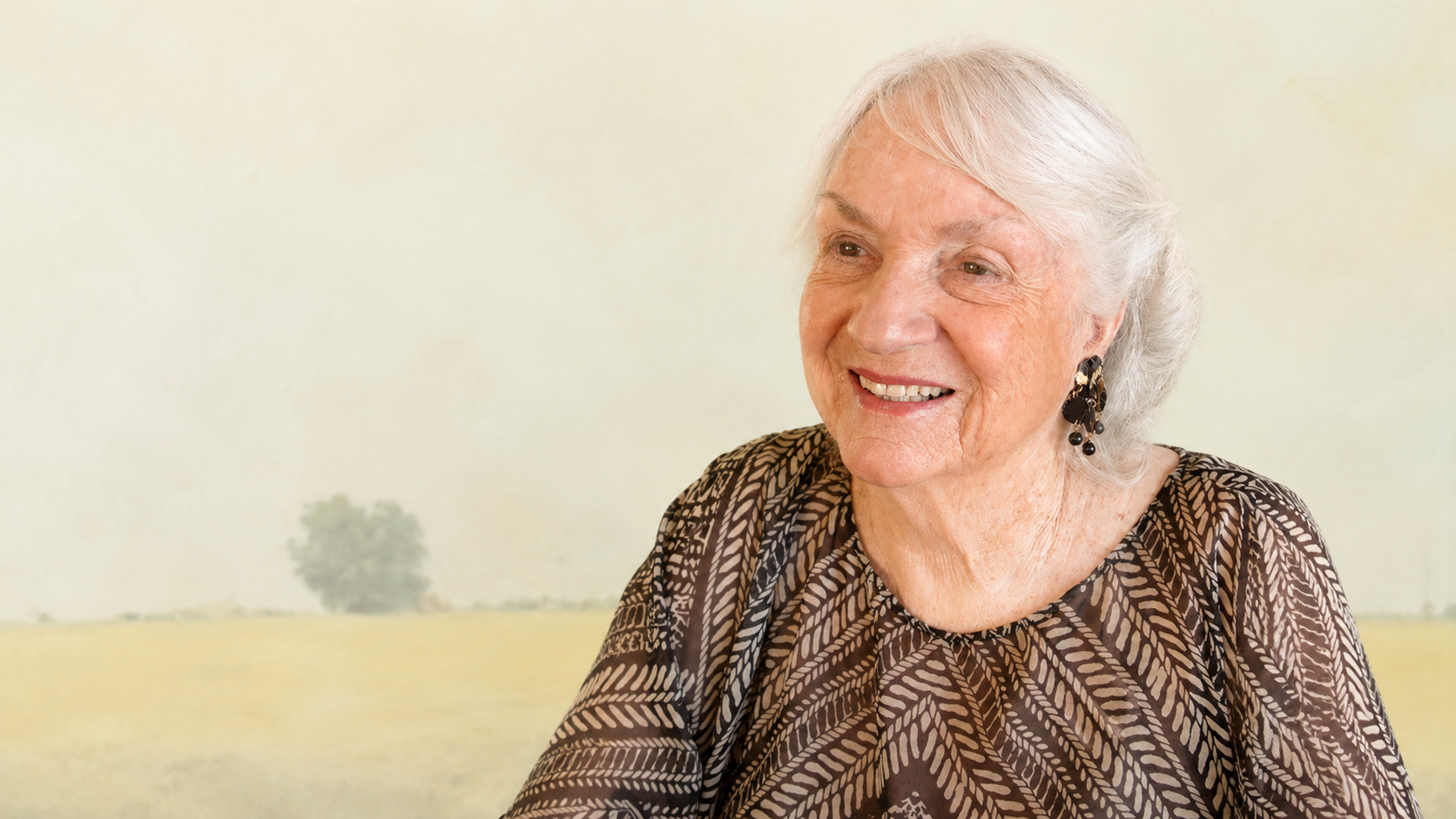
Explore Alta Jones DuVall’s life, personal journey, and the historical context of Borrego Valley.
A man with long hair and a beard is standing in front of a logo for kevin key photography
April 23, 2026
In Memory of Kevin Key: An Interview with a Photographer Who Saw Beauty in Forgotten Places Kevin Connolly Key, a photographer known for documenting the Anza-Borrego Desert and Salton Sea, passed away on April 20, 2026, at age 54. Known as “Kevin LiT!,” he was part of the Bombay Beach artistic community and captured the region’s beauty and change through his work. In a 2023 interview, Kevin described the Salton Sea as “an amazing place for photographers,” encouraging others to look beyond ruins and find inspiration in its evolving landscape. Who Was Kevin Key? Kevin Key was a real estate and fine art photographer known for documenting the Salton Sea, abandoned buildings, desert landscapes, and night scenes. After starting as a software developer, he became a full-time photographer in 2017. His work captured the beauty, history, and mystery of places many people overlook.
April 19, 2026
More than 400 people served through a coordinated community effort at the CRC
April 18, 2026
Soroptimist awarded Marina Lopez $1,500 to help grow her baking business.
By Jake Hinton December 8, 2025
SHORT | 24:35 | THE 2026 BSFF COMMUNITY FILM!
Show More

Share This Post