Andrea McKenna • July 4, 2026

Road Tripping to Borrego Valley in 1939 | Historic Borrego Sun

Share
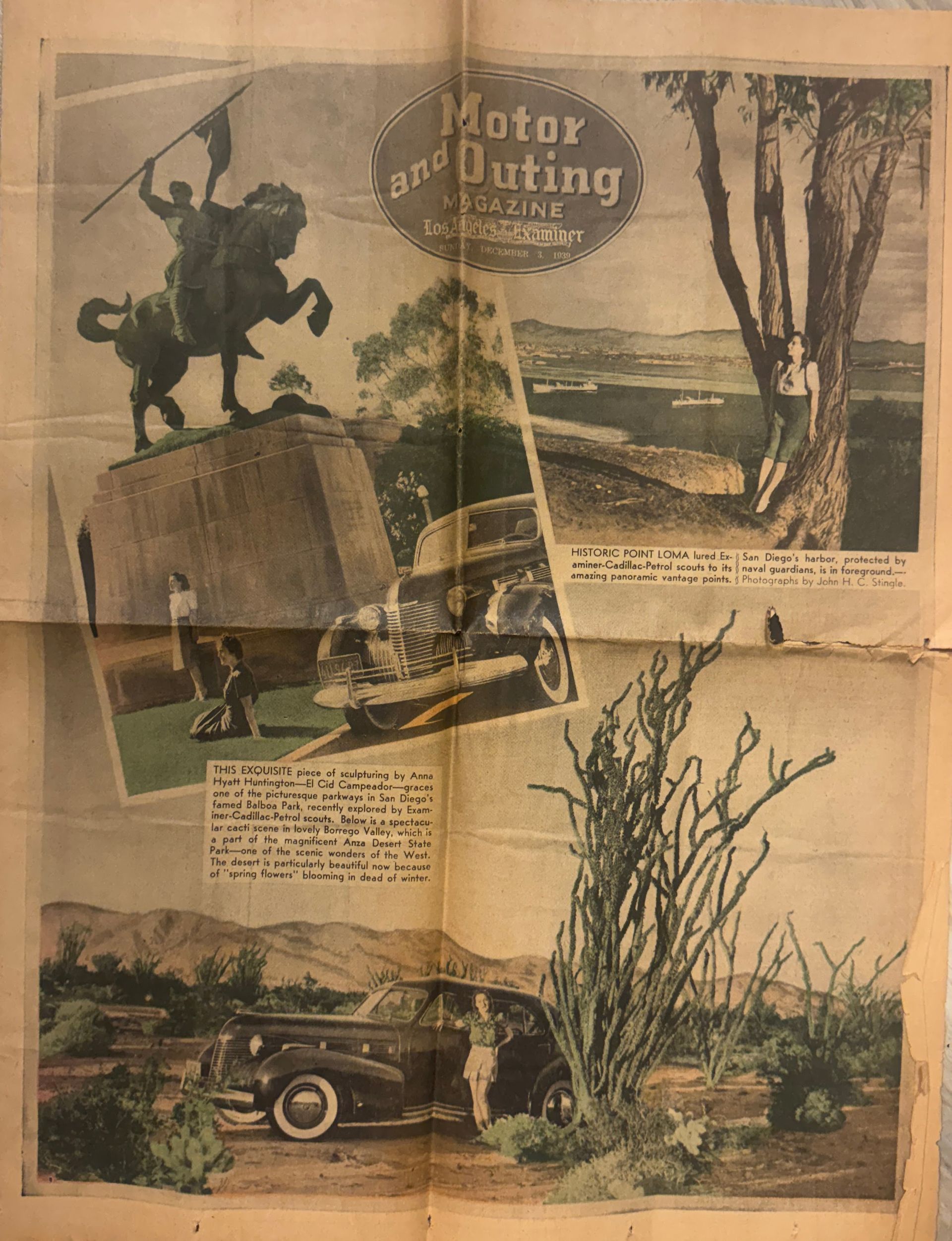
A December 1939 travel magazine captured Borrego Valley as one of Southern California's emerging desert destinations.


One of the many historic items preserved with the Borrego Sun collection is a rare issue of Motor and Outing Magazine, published by the Los Angeles Examiner on Sunday, December 3, 1939.


The "Motor and Outing Magazine" was a popular recurring Sunday supplement distributed in the Los Angeles Examiner during the mid-20th century. It primarily featured regional travel guides, automotive lifestyle stories, and outdoor recreational content showcasing destinations and weekend trips across Southern California.


Anza-Borrego Desert State Park was officially established by the State of California in 1933.


This particular page shows how Borrego Valley was presented to Southern California travelers in 1939. The accompanying caption describes the valley as “a spectacular cactus scene” and notes that it was part of Anza Desert State Park, highlighting the desert’s seasonal beauty with “spring flowers” blooming in winter. Nearly 90 years later, the image offers a rare glimpse of Borrego as an early desert destination promoted to motorists exploring Southern California by car.


The photographs in the feature are credited to John H. C. Stingle, who documented several scenic locations throughout San Diego County for the publication.


Historic items like this help tell the story of how Borrego Springs was introduced to visitors long before it became the community we know today. They provide a unique glimpse into early tourism, desert travel, and the publications that showcased the region's beauty nearly 90 years ago.


----


These documents are part of the Borrego Sun materials acquired by Ram Media Foundation. , the Borrego Sun archives are being preserved and digitized by the San Diego History Center, ensuring that decades of Borrego Springs history will be preserved for future generations.


To support the future of local media and preserve the past, please contact Andrea at andrea@rammediafoundation.org.


Learn More About Borrego Springs
By Andrea McKenna August 6, 2026
A firsthand account of the Beaty family's homestead, ranching life, the original Borrego school, General Patton's desert training, and the people who helped shape the Borrego Valley.
By Andrea McKenna August 5, 2026
Nearly every issue from 1958 to 2008 is now searchable online.
By Andrea McKenna August 4, 2026
Originally published February 1999.
By Jake Hinton July 29, 2026
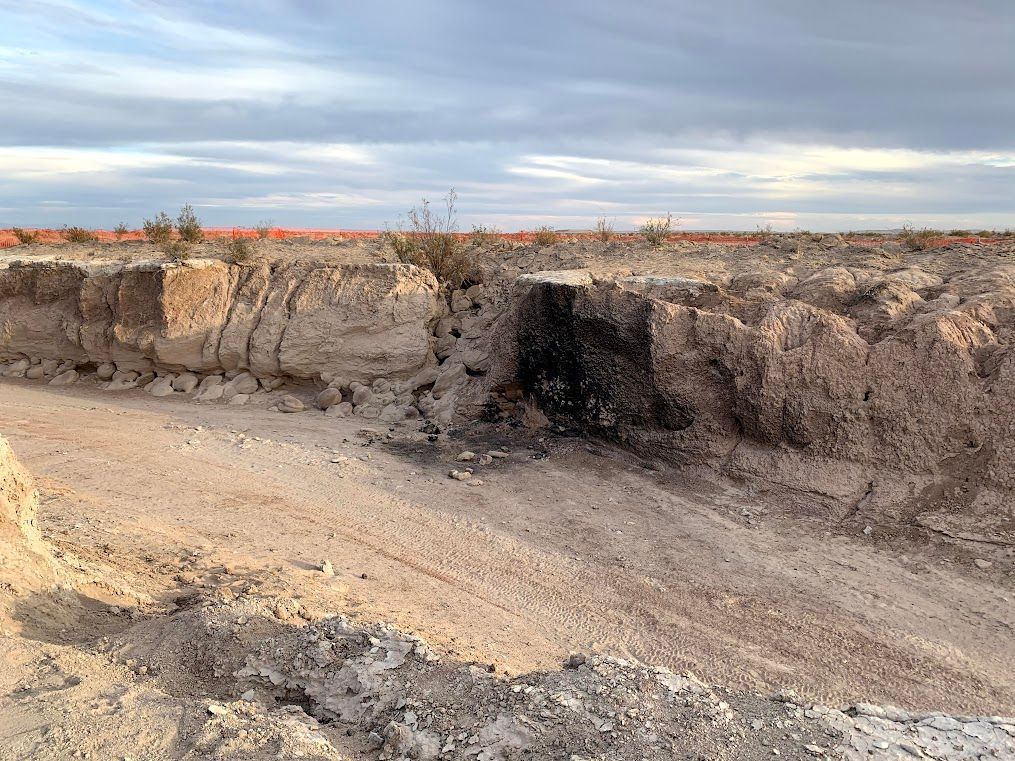
F-35B Fighter Jet Crash in Ocotillo Wells SVRA On July 29, 2021 , a U.S. Marine Corps F-35B fighter jet crashed in Ocotillo Wells SVRA near Anza-Borrego Desert State Park, California . The crash caused a small brush fire and led to the temporary evacuation of campers in the area as a precautionary measure. Fortunately, the pilot was able to eject safely and was rescued by a search and rescue team, later being released from the hospital after evaluation. The aircraft was part of the 3rd Marine Aircraft Wing based at Marine Corps Air Station Miramar and was on a routine training mission when the crash occurred. The incident involved the F-35B making contact with a KC-130J tanker during an air-to-air refueling exercise, which led to the crash. The U.S. Marine Corps launched a safety investigation to determine the exact cause of the crash. Though the brush fire caused by the crash was quickly contained, the crash site was closed for some time before reopening to the public.
By Andrea McKenna July 15, 2026
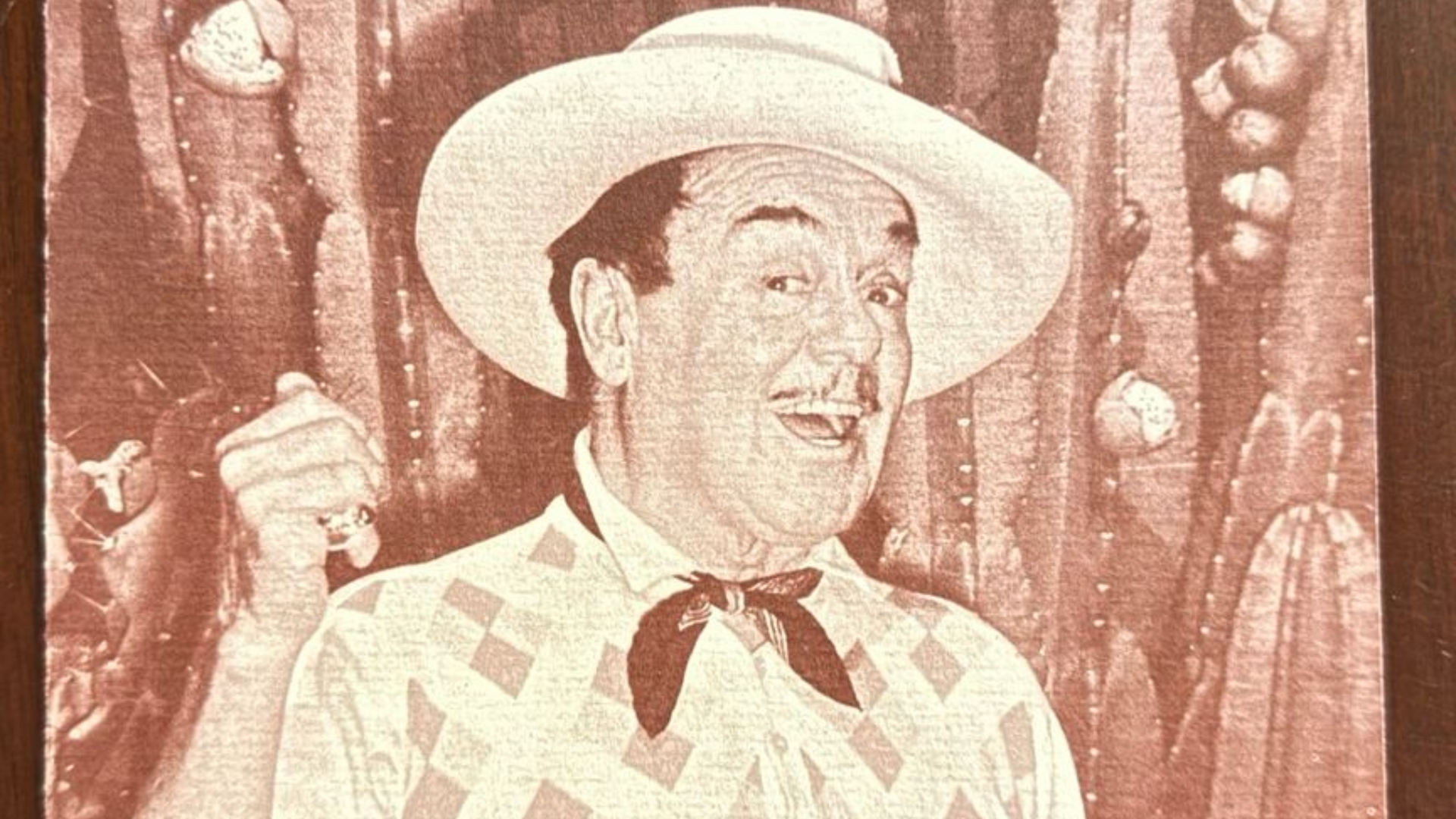
Leo Carrillo’s A Salute to Borrego Valley A Salute to Borrego Valley is a small 1960 booklet written by actor Leo Carrillo, best known as Pancho on The Cisco Kid. Carrillo was a longtime supporter of Borrego Springs, an honorary mayor and a familiar presence at local events. He also served as master of ceremonies at the 1949 dedication of the Borrego Springs Airport. The booklet notes that Carrillo wrote the verse years earlier while sharing a $1-a-day room with Will Rogers at the Summerset Hotel in New York City. In the poem, Carrillo contrasts crowded city life with the peace of Borrego Valley, celebrating its sagebrush, desert sand, open skies, mountains and wildlife.
By Andrea McKenna July 13, 2026
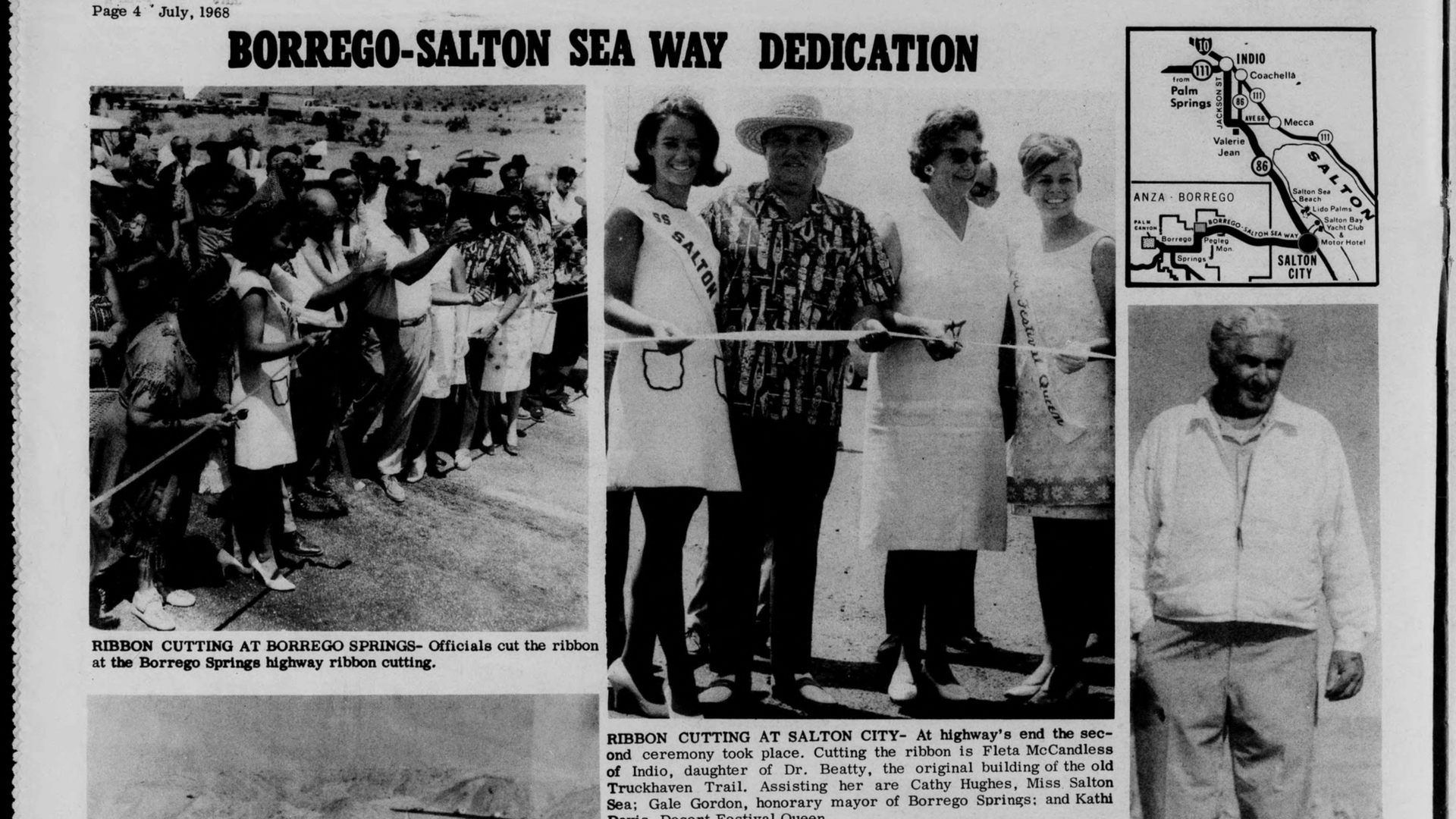
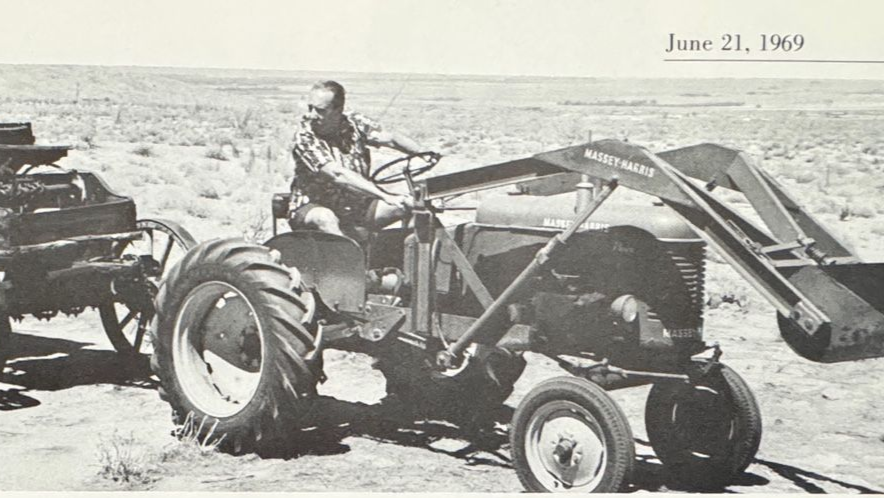
From the Borrego Sun archives Gale Gordon was best known for his longtime work with Lucille Ball on The Lucy Show and Here’s Lucy. He also appeared in I Love Lucy, Our Miss Brooks and Dennis the Menace. Gordon later made Borrego Springs his home, living on a Tub Canyon ranch and serving as honorary mayor. This 1969 article tells how a search for land purchased by his mother led him to the desert. ------- Originally published in the Borrego Sun on June 21, 1969. HE FOUND PEACE Lost Acreage Brought Gale Gordon To Desert It’s not difficult to find a reason for moving to Borrego Springs. But for actor Gale Gordon it was even less difficult. He came to Borrego 40 years ago to find 10 lost acres his mother, English actress Gloria Gordon, had purchased for speculation, but no one knew where they were. Gale, today the honorary mayor of Borrego Springs, couldn’t find them, according to a recent article in the Los Angeles Times, and in subsequent trips he fell in love with the desert. “When I bought Tub Canyon,” he told the Times writer, Cecil Smith, “I brought an expert surveyor down to check my property lines, and while he was here I sent him to look for Mother’s land. He couldn’t find it. “Just a few years ago, a man wrote me asking me if he could have an easement for a road over Mother’s 10 acres to his property. I told him I’d give him the easement if he’d show it to me. Now, at last, I know where it is.” In the Times article, Smith wrote: “Some people are frightened by the desert. The solitude disturbs them. Across the mountains at Palm Springs there is glitter and clamor and neon dazzle where tourists and movie stars gambol. “Though show folk own great tracts of Borrego (among them Bing Crosby, Jascha Heifetz, Chuck Connors, Eddie Albert and Margo), there is here quiet, muted peace.” Gale obviously agrees, in his words:  “When I get in my car to come here I can feel the tensions slacken, the muscles relax. By the time I’m here, I’m a different man and Hollywood seems light-years away. The desert is like the sea, an ever-changing thing that never changes. I guess I come here to find my soul."
By Andrea McKenna June 30, 2026
The Dutch monarch’s quiet visit to Anza-Borrego Desert State Park remained largely unknown until months later.
By Andrea McKenna June 29, 2026
A glimpse into Borrego Springs' history through music and song.
By Jake Hinton June 10, 2026
The Military History of Borrego Springs and Anza-Borrego During World War II, the Borrego Valley became an important military training area for the U.S. Army and Navy. Between 1942 and 1944, large portions of what is now Borrego Springs and Anza-Borrego Desert State Park were used for troop training, aerial gunnery practice, bombing exercises, and anti-aircraft operations. Borrego Maneuver Area Established in 1942, the Borrego Maneuver Area covered approximately 400 square miles of desert extending across the Borrego Valley, the eastern Badlands, and areas reaching present-day Highway 86 and Highway 78. Army troops used the area for desert acclimatization, field exercises, and live-fire anti-aircraft training. Military activity occurred at locations including Borrego Valley, Ensign Ranch, Clark's Dry Lake, Borrego Sink, Coyote Canyon, Borrego Mountain, and the eastern Badlands. Observation posts were established on surrounding high points, including Yaqui Pass and Fish Creek Mountain. One lasting improvement from the military presence was the paving of Yaqui Pass Road and portions of Palm Canyon Drive to improve access to training areas. Navy Bombing and Gunnery Ranges The U.S. Navy leased several locations in the Borrego Valley for bombing, strafing, and emergency landing operations. Major target areas included Borrego Wash (Military Wash), Clark's Dry Lake, Benson Dry Lake, and the Borrego Hotel site near Half-filled Dry Lake. Clark's Dry Lake served as a shared Army and Navy bombing range, while Borrego Wash contained rock-circle targets and observation stations used to evaluate pilot accuracy. Benson Dry Lake and the Borrego Hotel site provided emergency landing fields and additional aerial target areas. Rocket Testing and Anti-Aircraft Training In 1943, scientists from the California Institute of Technology (Caltech) conducted rocket experiments in the Borrego Mountain area to provide realistic targets for anti-aircraft units. Army gunners used .30-caliber, 40 mm, and 90 mm weapons during training exercises throughout the region. Carrizo Impact Area Following World War II, the military established the Carrizo Impact Area, which remained active from approximately 1945 through 1959. The U.S. Navy used more than 20,000 acres for bombing, rocket, and strafing exercises. Today, the Carrizo Impact Area remains closed to the public because unexploded ordnance may still be present. Legacy Although military operations ended decades ago, evidence of this history can still be found throughout the desert. Visitors should never disturb military artifacts or suspected ordnance. Any discoveries should be reported to Anza-Borrego Desert State Park staff. Today, these former training grounds are part of the protected landscapes of Anza-Borrego Desert State Park, preserving both the natural environment and an important chapter of Borrego Springs history. 
Show More
Subscribe for Free Updates!

Share This Post