
June 21, 2026

The June–July 2026 Dark Sky Calendar

Share
Prepared with information from ABDNHA's Dark Sky resources, Michael Poirier, Astrophotographer, and the Sky Calendar from Michigan State University.


Learn more about Borrego Springs dark skies at:
https://abdnha.org/darksky/sky/


Note: You can subscribe to the Sky Calendar from Abrams Planetarium, Michigan State University, 755 Science Rd, East Lansing, MI 48824.


Borrego Springs offers some of the darkest skies in Southern California, making summer an excellent time to observe the Milky Way, planets, meteor showers, and other celestial events.


Here's what to look for in June and July 2026.


Early June

Sunrise: 5:38 a.m.
Sunset:
7:50 p.m. PST
Day Length:
14 hours 12 minutes


June Highlights

June 1 (Monday)
Venus and Jupiter appear within 8° of each other in the west-northwestern sky after sunset.


June 3–16
Milky Way viewing conditions are excellent, with dark, moonless skies after nightfall. The Milky Way rises at 10:57 p.m. on June 7 and as early as 10:30 p.m. on June 14. It remains visible for up to 4 hours and 29 minutes.


June 6–13
Grand Canyon Star Party, Arizona. Learn more at
www.grandcanyon.org.


June 11 (Thursday)
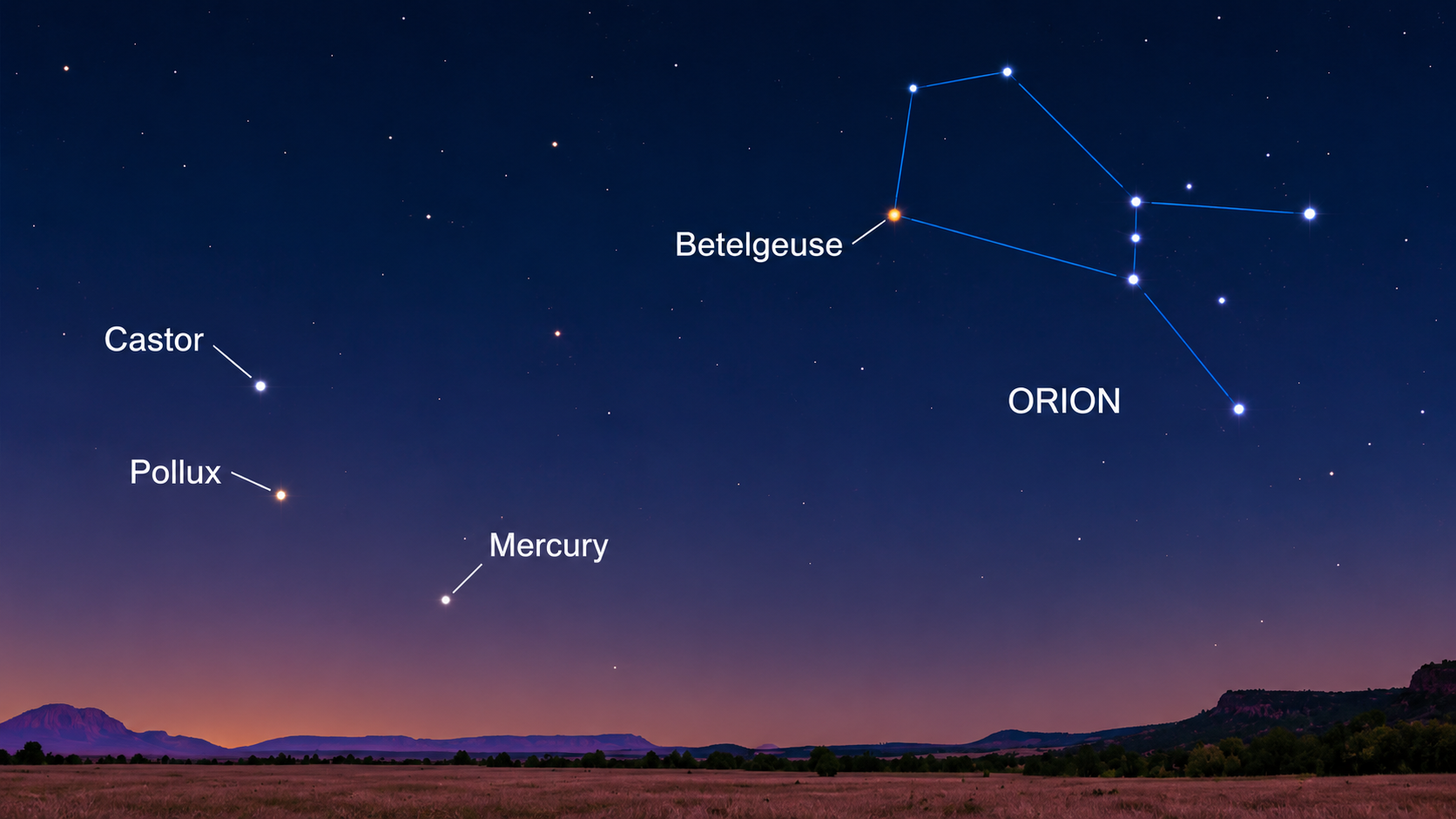
Venus, Jupiter, and Mercury span their shortest angle in the evening sky, just 13.2° apart.


June 15 (Monday)
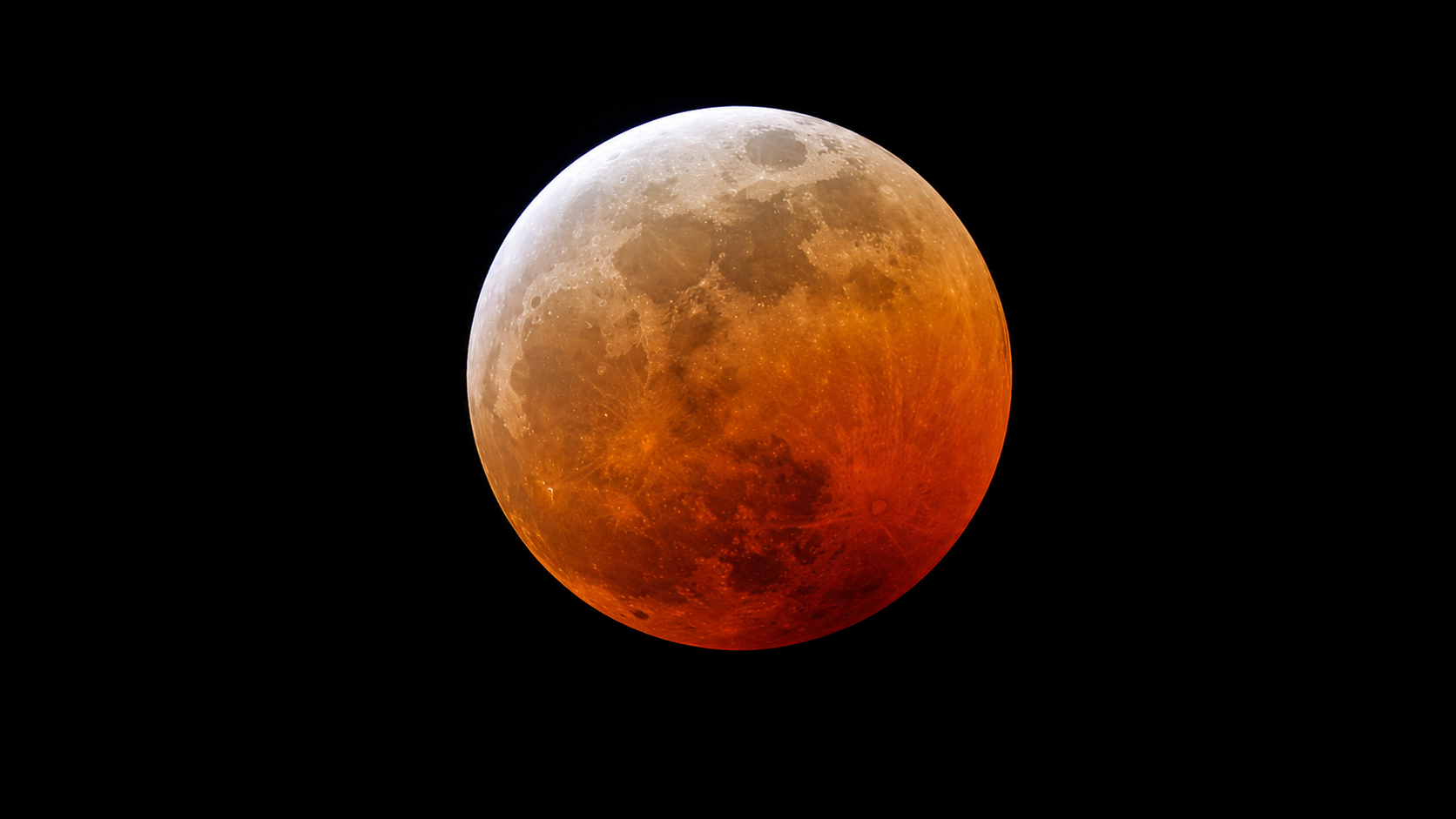
New Moon — one of the darkest nights of the month for stargazing and astrophotography.


June 15 (Monday)
Mercury reaches greatest elongation, 24.5° from the Sun, making it the best evening appearance of the year shortly after sunset.


June 21 (Sunday)
June Solstice marks the beginning of summer in the Northern Hemisphere. It is the longest day of the year with 14 hours and 20 minutes of daylight.


June 22–July 2
June Bootids Meteor Shower.


June 29 (Monday)
Full Moon rises at 8:17 p.m. and sets at 5:04 a.m.


June 30 (Tuesday)
Asteroid Day.


Early July

Sunrise: 5:41 a.m.
Sunset:
7:59 p.m.
Day Length:
14 hours 18 minutes


July Highlights

July 5 (Sunday)
The Milky Way rises at 9:38 p.m. and remains visible for 3 hours and 58 minutes.


July 12 (Sunday)
The Milky Way rises at 9:34 p.m. and remains visible for 3 hours and 35 minutes.


July 14 (Tuesday)
New Moon — ideal conditions for stargazing and astrophotography.


July 15 (Wednesday)
Mercury reaches greatest elongation, 24.5° from the Sun.


July 28–29 (Tuesday–Wednesday)
Delta Aquariids Meteor Shower peaks.


July 29 (Wednesday)
Full Moon rises at 8:17 p.m. and sets at 5:04 a.m.


The Planets and the Milky Way in June


Evening Planets


Venus and Jupiter dominate the western sky after sunset throughout June. Around June 8–9, the two planets appear in conjunction, creating a striking close encounter in the west-northwestern sky.


Venus, often called the "Evening Star," shines brilliantly as it moves from Taurus toward Gemini and climbs higher in the evening sky each night. Jupiter remains nearby and is also easily visible.


Mercury becomes visible low in the western sky during the second half of June. June 15 offers the best viewing opportunity, as Mercury reaches its greatest elongation and highest apparent position above the horizon.


Morning Planets


Saturn and Mars are visible before sunrise. Mars remains low in the east-northeast, while Saturn rises higher from the east to east-southeast. Early June provides a chance to see the two planets relatively close together.


Summer Milky Way


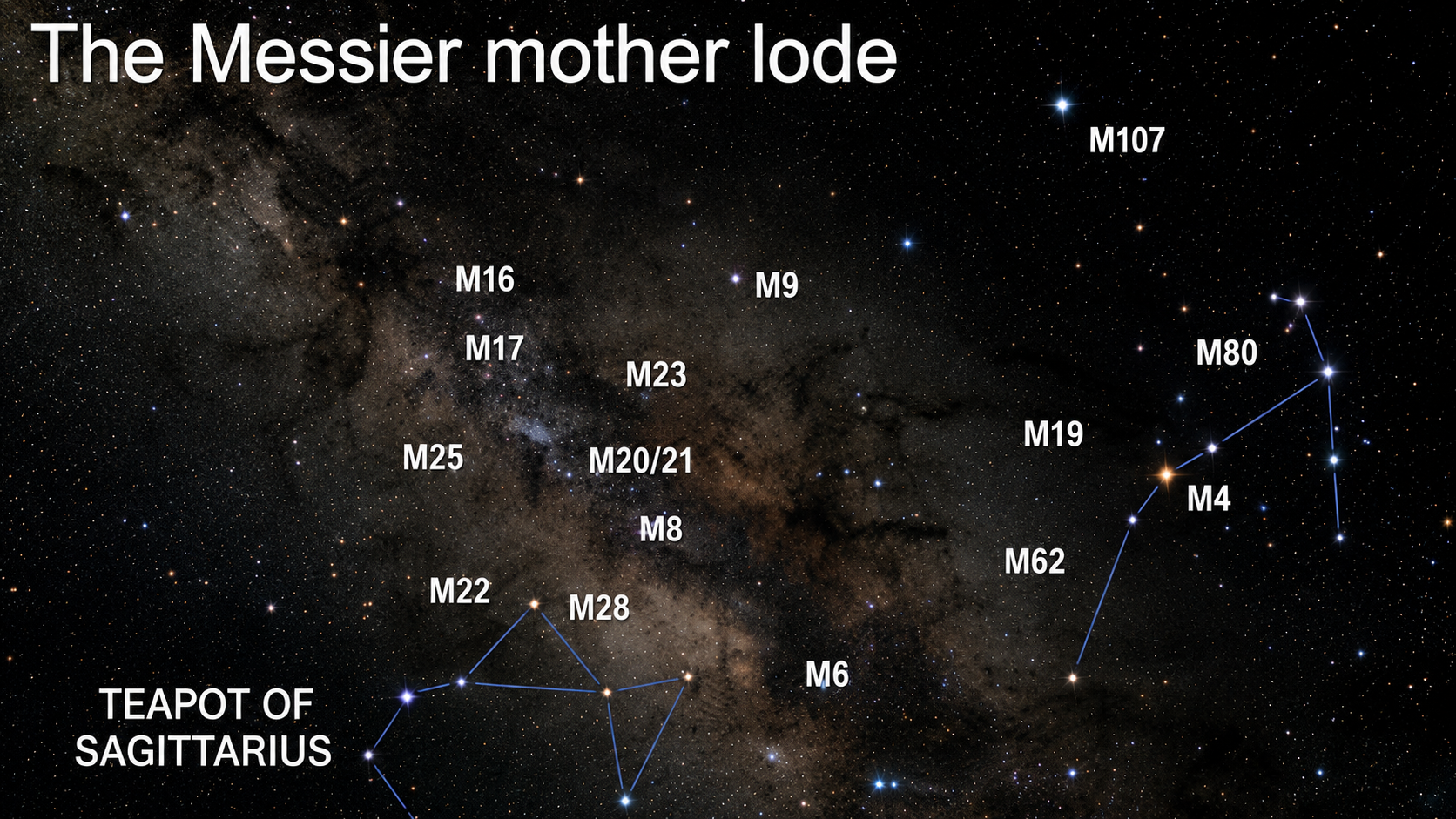
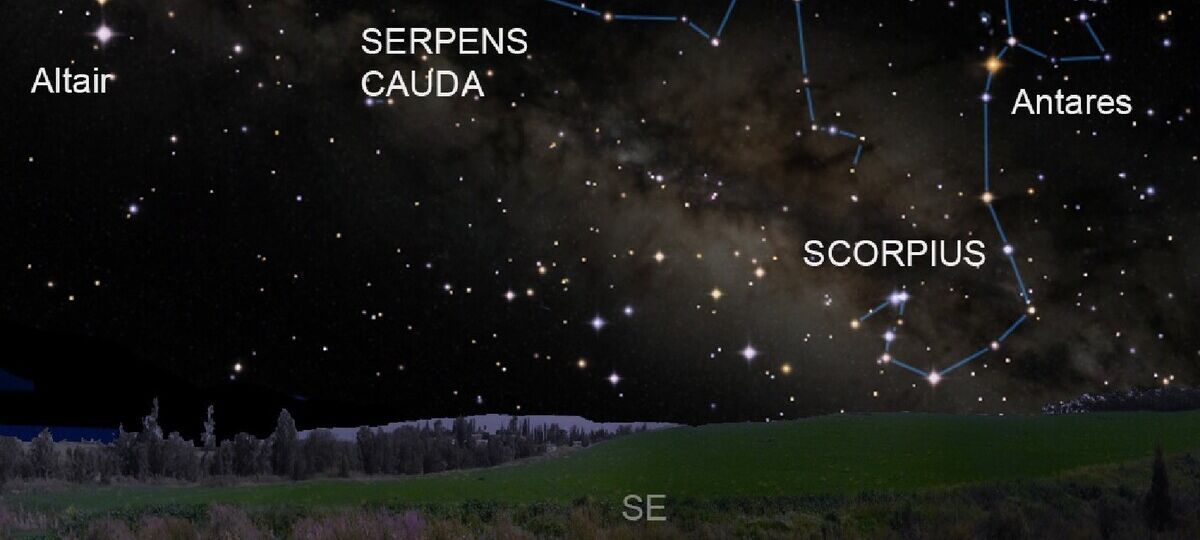
Summer is the prime season for viewing the bright central core of the Milky Way. From June through August, the galaxy's core rises in the southeastern sky and becomes one of the most spectacular sights available to dark-sky observers.


June Bootids Meteor Shower


The June Bootids occur annually from June 22 through July 2 and peak around June 27.

Most years produce only one or two meteors per hour. However, this shower has occasionally surprised observers with dramatic outbursts. In 1998, rates briefly reached approximately 100 meteors per hour.

The shower originates from debris left by Comet Pons-Winnecke, which orbits the Sun every 6.3 years. June Bootids are known for their unusually slow speed, entering Earth's atmosphere at approximately 14 kilometers per second.


Asteroid Day – June 30

Asteroid Day is a United Nations-sanctioned global awareness campaign held annually on June 30. The event educates the public about asteroid impacts, planetary defense, and ongoing research into near-Earth objects.

The date commemorates the Tunguska Event of June 30, 1908, when a massive airburst explosion flattened approximately 830 square miles of Siberian forest. The blast is estimated to have released energy equivalent to between 3 and 50 megatons of TNT, making it the largest recorded impact event in modern history.

For more information, visit www.un.org.


Delta Aquariids Meteor Shower


The Delta Aquariids meteor shower peaks on the night of July 28 and the morning of July 29. This annual shower can produce up to 20 meteors per hour under ideal conditions and is associated with debris from Comets Marsden and Kracht.


The shower runs from July 12 through August 23 each year. Unfortunately, the 2026 peak coincides with a Full Moon, which will wash out many fainter meteors. Patient observers may still catch some of the brighter meteors throughout the night.


The meteors appear to radiate from the constellation Aquarius but can be seen anywhere in the sky.


Learn More About Borrego Springs' Dark Skies


Borrego Springs is California's first International Dark Sky Community and one of the best places in Southern California to experience the Milky Way, meteor showers, planets, and other celestial events.


To learn where to observe, dark sky etiquette, upcoming programs, and more about stargazing in Borrego Springs, visit the Anza-Borrego Desert Natural History Association's Dark Sky resources:

https://abdnha.org/darksky/sky/


Learn More About Borrego Springs
By Andrea McKenna June 18, 2026
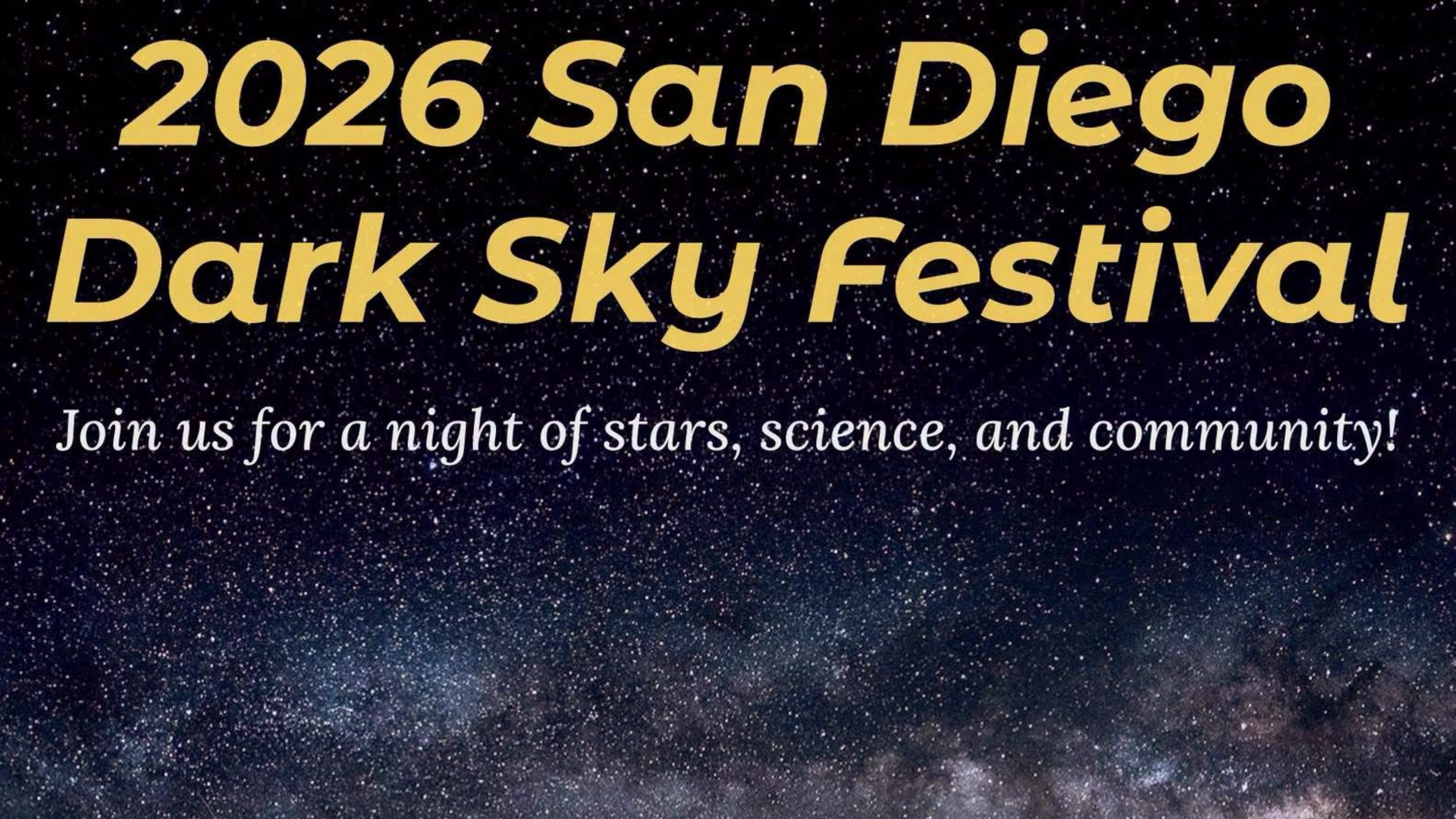
Regional event celebrates the night sky, science, and dark sky preservation Borrego Springs residents who enjoy stargazing, astronomy, and protecting the night sky may want to mark their calendars for the 2026 San Diego Dark Sky Festival , scheduled for August 15 from 3 p.m. to 11 p.m. at Julian Union High School in Julian. The festival will feature distinguished speakers, telescope viewing, hands-on activities, educational exhibits, and opportunities to learn more about the growing dark sky movement throughout San Diego County. The event is organized by DarkSky San Diego County and regional partners committed to reducing light pollution and preserving access to natural darkness. Activities are designed for families, students, amateur astronomers, and anyone interested in the night sky. Festival organizers describe it as a celebration of stars, science, and community. For Borrego Springs residents, the festival highlights a cause that has become part of the community's identity. Borrego Springs was California's first International Dark Sky Community , earning recognition for its efforts to reduce light pollution and preserve exceptional night-sky viewing. Julian followed with its own International Dark Sky Community designation in 2021, creating a network of dark-sky advocates in San Diego County's backcountry. The festival also showcases the growing regional movement to protect dark skies. Organizations from Borrego Springs, Julian, Fallbrook, Mission Trails Regional Park, and the Laguna Mountain area are working together to promote responsible lighting and preserve natural darkness for future generations. Visitors can expect telescope viewing, astronomy demonstrations, educational booths, and presentations on the importance of natural darkness for wildlife, human health, and energy conservation. Similar festivals have drawn large crowds and provided opportunities for the public to experience some of Southern California's best night skies. For many Borrego Springs residents, the event offers a chance to connect with neighboring dark-sky communities while celebrating one of the region's greatest natural resources—the star-filled skies that make both Borrego Springs and Julian special destinations for stargazing. ------------------ Fun Local Fact: K-RAM 90.5 FM at 730 Christmas Circle recently received a Night Sky Friendly Business Certificate of Merit from the Borrego Springs Dark Sky Coalition. The building also houses a Dark Sky visitor center and Borrego Valley Realty, where realtor Mary Watkins helps visitors learn more about protecting Borrego Springs' famous night skies.
By Andrea McKenna June 16, 2026
One of the things that makes Borrego Springs special happens after the sun goes down. Borrego Springs became California's first International Dark Sky Community in 2009 and was only the second community in the world to receive the designation. The certification recognizes communities that actively work to reduce light pollution and protect the night sky for future generations. Earlier this year, a Dark Sky presentation highlighted K-RAM 90.5, XL Fuel Stop, and Borrego Holiday Homes as examples of businesses using responsible lighting practices that help preserve Borrego Springs' internationally recognized night skies. Ram Media Foundation Updates Exterior Lighting The Ram Media Foundation building at 730 Christmas Circle, now home to K-RAM 90.5, the Borrego Sun, and Borrego Valley Realty, removed older unshielded, high-lumen fixtures that reflected light outward around the property. The updated lighting includes shielded fixtures and a downward-facing reflector along the front walkway. These improvements provide lighting where it is needed while reducing unnecessary glare and light escaping into the night sky. XL Fuel Stop Reduces Sky Glow XL Fuel Stop was highlighted for using fully shielded lighting that directs light where it is needed instead of into the night sky. According to the presentation, a bright light mounted atop a high pole was turned off, and after-hours lighting levels were reduced. These changes help minimize sky glow while maintaining safety and visibility for customers. Borrego Holiday Homes Improves Efficiency Borrego Holiday Homes was highlighted as another example of responsible lighting practices. The property reduced excessive brightness by lowering lumen levels and using shielding that directs light downward. The result is reduced glare, improved efficiency, and lighting that better serves guests without unnecessarily illuminating the surrounding area. Why Dark Skies Matter According to the Borrego Springs Dark Sky Coalition, light pollution is the human-made alteration of outdoor light levels from those occurring naturally. Excessive brightness can create visual discomfort, affect wildlife behavior, disrupt human circadian rhythms, and diminish our ability to see the stars. Responsible lighting does not mean eliminating outdoor lighting. Instead, it means using the right amount of light, directing it where it is needed, and avoiding unnecessary brightness. The Borrego Springs Dark Sky Coalition was formed in 2007 by local residents seeking Dark Sky certification. Facilitated by the Anza-Borrego Desert Natural History Association (ABDNHA), the coalition continues to educate residents, businesses, and visitors about responsible lighting practices that help preserve Borrego Springs' exceptional nighttime environment. The improvements made by K-RAM 90.5 , XL Fuel Stop, and Borrego Holiday Homes demonstrate that protecting dark skies can go hand in hand with safety, efficiency, and good business practices. For residents and visitors alike, these efforts help ensure that Borrego Springs remains one of the best places in Southern California to experience a sky filled with stars.
June 14, 2026
June 2026 Skywatching Highlights
By Dennis Mammana June 2, 2026
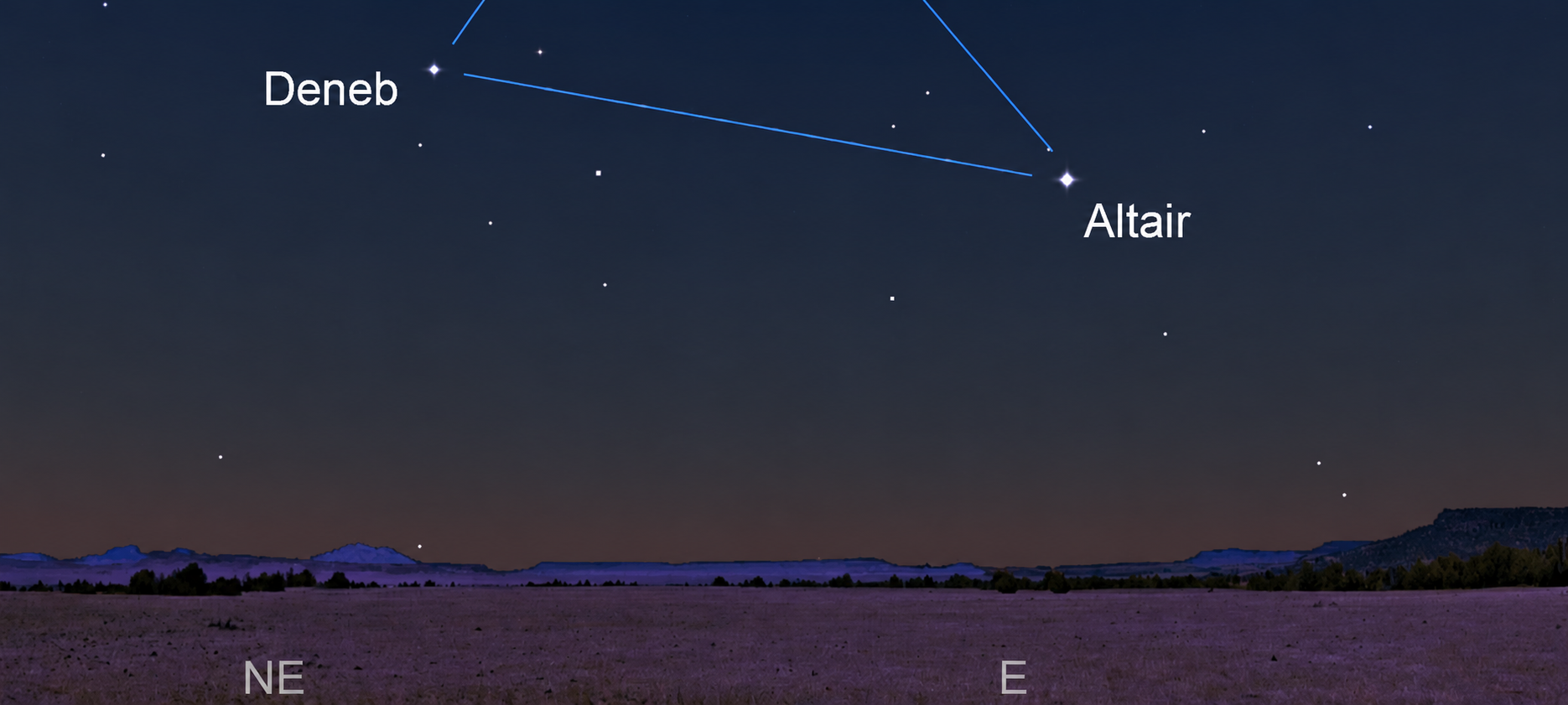
By Dennis Mammana Week of June 7-13, 2026 During one of my recent night sky tours, an elderly guest gazed into the sky and asked if the stars ever move. He said the constellations look the same now as when he was a child, and he was convinced that nothing in the heavens ever changes. It was an excellent observation but one that didn't consider an important fact: Human time scales are considerably different than cosmic time scales. Even the healthiest of humans will live at most about a century, and during our lives, we measure time in seconds, minutes, hours, days, weeks, months, years and decades. The cosmos, on the other hand, has been around for nearly 14 billion years, and everything takes much longer to occur. To recognize changes in the universe, astronomers must think on a more cosmic scale. When we do, we find that the universe is remarkably active. Stars are forming, consuming their nuclear fuel, and dying, and all are racing through our galaxy at tremendous speeds. Expecting to see changes in any star's appearance or the shapes of constellations over even a full human lifespan just isn't possible. To understand this, consider Barnard's Star, visible only through a telescope from the Earth's Southern Hemisphere. This star tears through our galaxy at a speed of some 88 miles per second, yet from our terrestrial vantage point six lightyears away, Barnard's Star requires three and a half centuries to cross a segment of the sky only the width of your outstretched little finger. Of course, we can't watch this movement with our eyes — or even through powerful telescopes — but by using sophisticated earthbound and satellite technology, astronomers can precisely measure these stellar speeds and directions of motion. Measure the speeds and directions of enough stars, and we find some interesting patterns. For example, stars that appear roughly in the direction of the summer star Vega (now shining low in the northeastern sky after dark) seem to be spreading out from a central point, while those on the opposite side of the sky (near Sirius, setting in the southwest around sunset) appear to be converging on one another. What this means is fascinating. Our sun's own motion is carrying it (along with the planets of our solar system) toward the stars near Vega — a point we know as the solar apex — and away from those near Sirius (known as the solar antapex). This phenomenon isn't difficult to visualize. Imagine you're driving along a highway from one city to another. The buildings in front of you appear to become more widely separated as you approach, while those behind you appear to converge more tightly. This is exactly what's happening in our section of the galaxy. Our sun is moving at some 12 miles per second toward a point in our sky not far from the bright star Vega. Of course, we can't see this movement, but it's fun to stand outdoors on a clear night and imagine our sun and Earth racing outward toward Vega. Now, if you're worried about a collision with this star ... well, fuhgetaboutit. Even at this remarkable speed, we'd need some 5,300 human lifetimes to get there! Visit Dennis Mammana at dennismammana.com. To read features by other Creators Syndicate writers and cartoonists, visit the Creators Syndicate website at www.creators.com. Learn More About Borrego Springs
By Dennis Mammana May 21, 2026
By Dennis Mammana Week of May 24-30, 2026 When you hear the phrase "once in a blue moon," what do you think? If you're like most people, you think of something that doesn't happen often. So what exactly is a blue moon, and why is it so rare? First off, a blue moon isn't all that rare. It occurs on average about once every 2.72 years. Secondly, the moon doesn't appear blue at all; it's just a regular ol' full moon that happens to be the second one in any particular month. You know this phenomenon if you receive a paycheck every two weeks. You'll usually get two checks a month, but occasionally you'll receive a third. It's not that uncommon, and neither is a blue moon, despite the popular meaning of the term. A second full moon in a month occurs occasionally because our calendar isn't synced with the lunar phases, even though the word "month" derives from the word "moon". What we call a month — approximately one-twelfth of a year — is longer than the moon's "synodic" period — the average time between one full moon and the next (29.53059 days). So every once in a while — every blue moon, one might say — two full moons will occur during the same calendar month. We'll see the next one on Saturday night, May 30. Be sure to watch as the moon rises in the southeast just after sunset that night. Chances are that it will first appear rather orange or red because its light must pass through a long column of air on its way to our eyes, and normal particulate matter suspended in the air scatters the moon's light and colors it orange. Some have defined the blue moon differently. Most seasons of the year will experience three full moons, but occasionally a fourth will sneak in. In that case, the fourth of the season would be known as a "blue moon." This seasonal definition may have originated from a 1943 question-and-answer column in Sky and Telescope magazine in which Laurence J. Lafleur traced the term to a 1937 "Maine Farmers' Almanac." Three years later, it seems, folklorist Philip Hiscock wrote in the same magazine an article that gave birth to the "second full moon in a month" idea. Neither of these situations is particularly unusual, so where did the rarity idea originate? Occasionally, especially thick smoke or volcanic ash particles suspended in our atmosphere can remove enough red moonlight to make the moon appear bluish. It is said that, after the Krakatoa volcanic eruption in 1883, the moon appeared blue for more than a year. As you might imagine, this is extremely rare. In fact, one might say that it happens ... only once in a blue moon! Now there's one more thing about the full moon that we'll see this coming weekend. It reaches its orbital "apogee" at 4:45 a.m. EDT / 1:45 a.m. PDT, its farthest point from the Earth (about 250,517 miles away). This means that it will appear as the smallest full moon of this year. You might hear it called a blue "mini moon," though most stargazers won't be able to see much difference from a normal full moon. Visit Dennis Mammana at dennismammana.com. To read features by other Creators Syndicate writers and cartoonists, visit the Creators Syndicate website at www.creators.com. Learn More About Borrego Springs
By East County News Service May 18, 2026
May 17, 2026 (Mount Laguna) — Star parties are back at Mount Laguna with the return of the Summer Visitors Program at the Mount Laguna Observatory. The public programs will be held on Saturday nights from 8 to 11 p.m., May 23 through August 15, with a special bonus mid-week viewing scheduled for Wednesday, August 12. Operated by the San Diego State University Department of Astronomy in partnership with the United States Forest Service, the outreach initiative has been connecting the public with the cosmos in various forms since the observatory’s dedication in 1968. According to Dr. Robert Quimby, MLO Director and Professor in the SDSU Department of Astronomy, each event will feature a public lecture at the Harrington Visitors Center. If weather permits, the lecture will be followed by direct stargazing through the observatory’s 0.5-meter (21-inch) Reginald Buller telescope. While MLO boasts larger instruments for deep-space science, the Buller telescope is specifically dedicated to instructional use and public outreach. Nestled in the Cleveland National Forest roughly 45 miles east of downtown San Diego, MLO sits at an elevation of 6,100 feet. The site is highly regarded by astronomers for its pristine dark skies, exceptional atmospheric conditions, and vital distance from city light pollution. Beyond its public outreach, MLO is a premier research and training facility. The mountain hosts an impressive array of cutting-edge technology, including the 1.25-meter Phillips Claud Telescope, which is used alongside the observatory’s 1.0-meter and 0.6-meter Clifford Smith telescopes to collect critical data on the age of and distance to star clusters. MLO also houses one of only two EvryScopes in the world. This specialized multi-camera array monitors the entire accessible sky simultaneously, making it an exceptional tool for detecting stellar activity and eclipsing binaries (co-orbiting star systems). Because the observatory is a functioning research station located in a rugged forest environment, organizers emphasize that safety and preparation are paramount for attendees. Visitors are advised to bring a small flashlight and park at the lower visitors parking lot located on Morris Ranch Road, follow the short trail from the parking lot to Observatory Road, and from there, look for the white dashes painted on the ground and follow them for a quarter-mile uphill to the Harrington Visitors Center. Note that visitors must remain on the designated road at all times. Morris Ranch Road is located off Sunrise Highway (S1) between mile markers 21.5 and 22, directly across from the Wooded Hill Campground sign. All stargazing events are weather-permitting. For daily operational updates, weather delays, or cancellations, visitors should call the observatory hotline at (619) 594-1415 before making the drive up the mountain.
Walk of the Cosmos
By Andrea McKenna May 17, 2026
Experience the Walk of the Cosmos in Borrego Springs—a journey through the solar system in a beautiful desert park with playgrounds, sports courts, and stargazing opportunities.
By Dennis Mammana May 12, 2026
By Dennis Mammana Week of May 17-23, 2026 That brilliant light now glistening in the west at sunset is again the "star" of the show. It is, of course, the planet Venus, and this week it'll pair up with two other celestial wanderers: Jupiter and the moon. Jupiter, another very bright planet, has been descending farther to the west as the spring months progress, and it is now approaching a close encounter with Venus by the end of the month. This occurs because these worlds, along with the Earth, orbit the sun, and our constantly changing viewpoint makes them appear to drift slowly against the more distant and "fixed" stars. Over the next week, though, another solar system body will enter the scene: the moon. Since our celestial neighbor orbits the Earth once a month, we can see it change its position in the sky from night to night. Shortly after sunset on May 17, you might try searching very low in the west for the tiny and delicate crescent moon, but to find it, you'll need a very clear sky and a low horizon, and possibly binoculars. If you don't succeed, don't worry. It'll be pretty tough to spot, but if you wait until the next night, it'll be much easier to see. On the 18th, it will appear not far from Venus. Of course, the moon won't really be next to this planet; they will be separated by 124 million miles that evening, but since both lie roughly along the same line of sight, they'll appear together in the sky. For a really amazing view, check out the pair through binoculars! The following night, May 19, the moon will have moved eastward along its orbit and will appear about midway between Jupiter and Venus. If your sky is clear on May 20, check out the western sky again, and you'll notice that the moon is not only a significantly thicker crescent but now lies above Jupiter. Of course, this whole view is purely an illusion caused by our inability to see true depth in the cosmos, but it does result in a truly pretty picture. And speaking of pretty pictures, this week offers a good opportunity to try your hand at photographing the spectacle. Since the trio appears low enough in the sky at dusk, you can frame the scene with a foreground subject — a dramatic tree, building, sculpture or person, for example. You don't need fancy or expensive equipment to do this; just a regular camera or smartphone will do fine. You may find, however, that zooming in a bit will produce a more compelling image. If you shoot half an hour or so after sunset, you can probably trust the automatic settings of your camera or phone. Much later, though, you may need to adjust settings as you go because the light at dusk changes rapidly. Don't be afraid to experiment; if some photos turn out poorly, you can always hit "delete," and no one will ever know! I hope your skies are clear this week so you can enjoy the planetary sky show. And if you get some nice photos, please email me. I'd love to share your success!  Visit Dennis Mammana at dennismammana.com. To read features by other Creators Syndicate writers and cartoonists, visit the Creators Syndicate website at www.creators.com. Learn More About Borrego Springs
March 18, 2026
By Dennis Mammana Week of March 22-28, 2026 Now that spring has sprung, I'm sure that those who have endured a long, cold and snowy winter are rejoicing. Anyone who knows me knows that I'm no winter person. Sure, I used to enjoy the season when I was a kid, but that's only because I could spend entire days building snow forts with my friends and making a few bucks shoveling the white stuff for neighbors. No longer. Today, warmer days of springtime can't come soon enough for me! If we had no calendar, we would still know the seasons are changing. We see it happening all around us: Temperatures are rising, the first flower buds are beginning to appear, and many birds are returning to our part of planet Earth. And, just as our daytime world gives us clues that spring is approaching, the darkness does as well. Nighttime hours are beginning to shorten, and the brilliant stars of winter are descending in the west to make way for those of springtime. And no star grouping heralds the arrival of springtime to our Northern Hemisphere more than Leo, the lion. Head outdoors during early evening hours and cast your gaze midway up in the eastern sky. There, you'll see Leo, one of the few constellations that, with some imagination, actually can be made to look like its namesake — a lion crouching in a regal pose reminiscent of the enigmatic Egyptian Sphinx. Most prominent in this constellation is the bright star Regulus, which shines brightly beneath the lion's majestic head and mane, outlined by a large sickle-shaped grouping of stars. More metropolitan stargazers may recognize this figure not as a sickle but as a backward question mark, with Regulus forming the dot at its base. The star's very name, "Regulus," comes from the Latin word "Rex," meaning "king," and, interestingly, this star was revered throughout the ancient world as a "royal" star. According to astronomy author R.A. Allen, it was known in Arabia as "Malikiyy" (the Kingly One), while the ancient Greeks knew it as "the Star of the King." At the other end of the lion, we find the bright star Denebola, whose name originates from the Arabic "Al Dhanab al Asad," meaning "The Lion's Tail." You can find Leo more easily if you use the two pointer stars of the Big Dipper, farther to the northeast. These stars point toward Polaris (the north star) if you follow them from the bottom to the top of the Dipper's bowl, but if you follow them in the opposite direction, you can find your way toward the back of the lion. If you have trouble tracing this animal's shape among the stars, don't worry. Just turn it around and you'll find it's much easier to find not the mighty king of the jungle but instead a mouse! Quite frankly, I think the figure of a mouse is much easier to trace. Here, the star Denebola forms its pointy nose, the nearby triangle forms his head, and the sickle now outlines its long, curving tail. Either way you look at it — mouse or lion — nothing in the heavens announces springtime more loudly than Leo!  Visit Dennis Mammana at dennismammana.com. To read features by other Creators Syndicate writers and cartoonists, visit the Creators Syndicate website at www.creators.com. Learn More About Borrego Springs

Show More

Share This Post