June 12, 2024

SoCal Raptor Runs Anza Borrego 2024 (Behind The Scenes)

Share

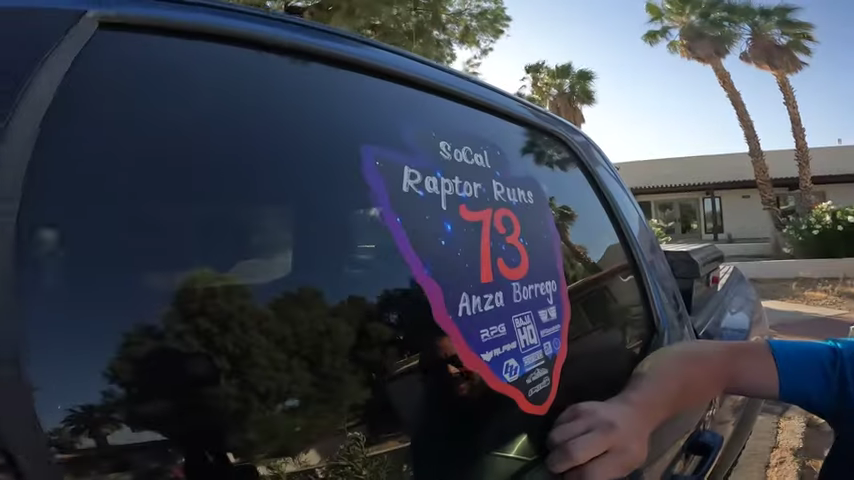
Join SoCal Raptor Runs as they embark on an exciting two-day adventure deep into Anza-Borrego Desert State Park.


This behind-the-scenes video offers a glimpse into their thrilling off-road experience, showcasing favorite trails and a new trail that quickly became a top pick.



  • Slide title

    Write your caption here
    Button
  • Slide title

    Write your caption here
    Button
  • Slide title

    Write your caption here
    Button
  • Slide title

    Write your caption here
    Button
  • Slide title

    Write your caption here
    Button

About the Video


The video provides a detailed look at the adventures of SoCal Raptor Runs, featuring behind-the-scenes footage, lively banter, and insightful explanations. If off-roading in a Raptor, Bronco Raptor, or Ranger Raptor sounds like fun, this video is for you.


Key Highlights


  • Exploration: Discover the beauty of Anza-Borrego Desert State Park from multiple perspectives.
  • Community: Learn how to become a member and join in on future runs.
  • Family-Friendly: The group offers family-friendly events with affordable membership options.


Membership and Events


SoCal Raptor Runs hosts events every 8-10 weeks throughout the year. Memberships are low-cost and provide numerous benefits. Currently, there are about 20 memberships left, so check out their website for more information.


Check Them Out


Visit their websites:


Follow them on social media:


YouTube channel: NorCal Raptor Runs


Sponsors


  • BajaHQ
  • Baja Designs
  • Raceline Wheels
  • Deaver Suspension
  • RPG Offroad
  • Lindley Racing
  • Wraps by SF
  • Alpine Offroad
  • T&L Raceworks
  • BuiltRight Industries
  • BFGoodrich
  • Ortiz Films
  • RAD Designs


Experience the thrill of off-roading in and around Anza-Borrego Desert State Park with SoCal Raptor Runs. Watch their latest adventure and get inspired to join the fun!


Learn More About Borrego Springs

March 6, 2026
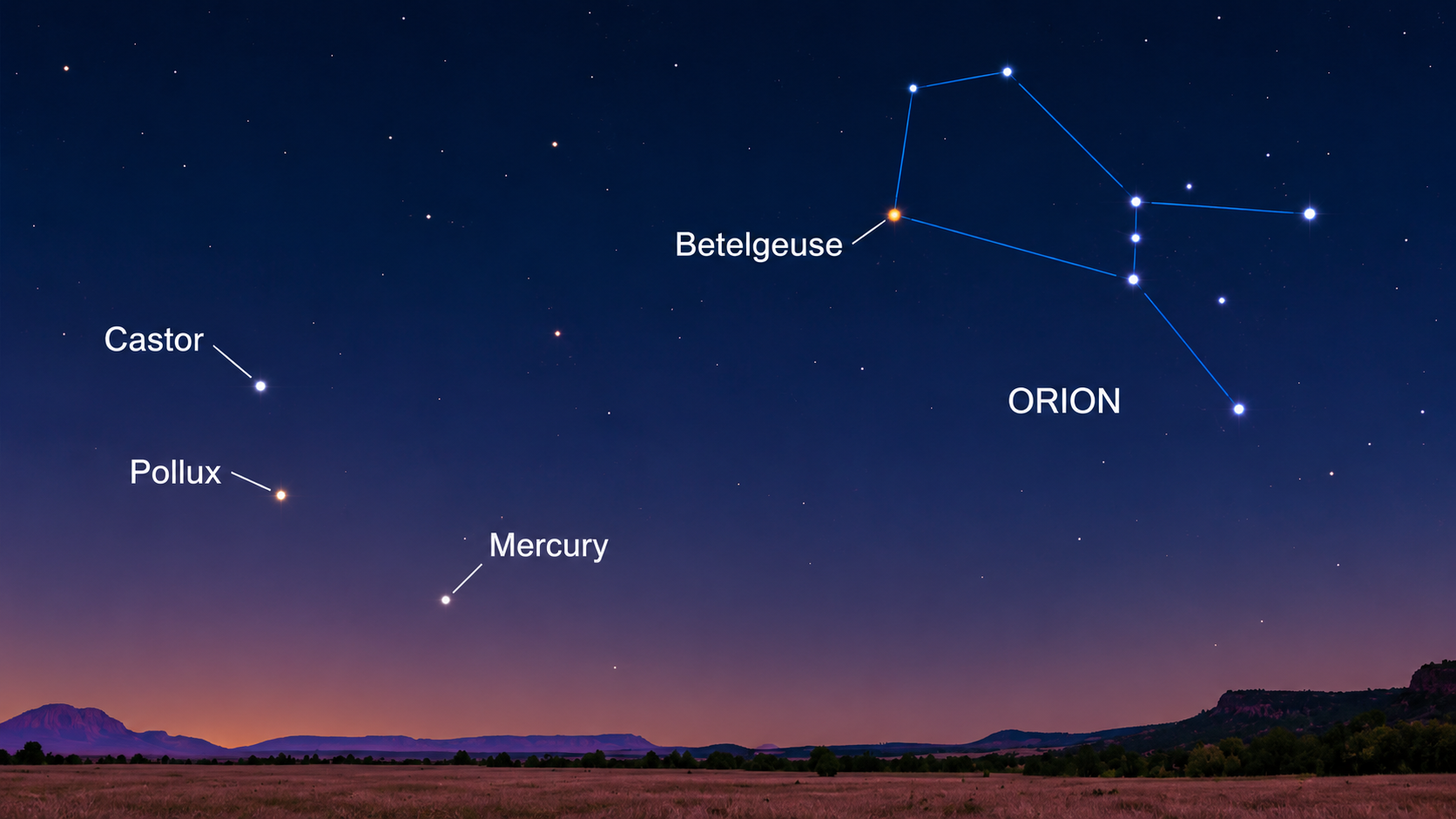
By Dennis Mammana Week of March 8-14, 2026 If you hear the word "superstar," what immediately comes to mind? Perhaps names like Tom Hanks, Taylor Swift or LeBron James? That's certainly understandable; they are all undisputed superstars who attract the attention of paparazzi and fans alike. If you're an astronomer, however, you may answer this question differently. For example, when I hear the word "superstar," I think of UY Scuti, WOH G64 or RSGC1-F01. Yes, these are superstars, but not quite how people may think. These are some of the largest stars known in our galaxy and, for that reason, are quite intriguing to us celestial paparazzi. Regular readers of this column know that our sun is also a star. It appears big and bright in our daytime sky because not only is it rather close (about 93 million miles away), it's also pretty large (nearly a million miles across). It sounds huge, but our star is rather small on a cosmic scale, and believe it or not, there are stars out there that would dwarf our sun and make it look tiny. These are the true superstars! Until recently, the largest star known was given the hopelessly poetic name of UY Scuti. At a distance of some 9,500 lightyears from Earth, UY Scuti is what is known as a red hypergiant star, with a diameter some 1,700 times that of the sun! All that changed recently, however, when astronomers found a gargantuan star some 2,150 times larger than our sun! It's named Stephenson 2-18, and if you'd like to get a peek at this stellar behemoth, you'll need more than your eyes. At a distance of some 18,900 lightyears, it appears 5,100 times fainter than we can see without a telescope. If you have no telescope but would still like to see a celestial superstar, you're in luck. There's one shining in our night sky right now; it's one of the brightest up there and is named Betelgeuse. Betelgeuse sparkles brightly in the northeastern corner of Orion, the hunter, and you can see its orange light midway up in the southern sky after dark this week. With about 15-20 times more mass than our sun, Betelgeuse is known as a red supergiant star for good reason. While we could align 109 Earths across the face of our sun, we would need at least 700 suns to cross the face of Betelgeuse! Indeed, this star is so immense that if it replaced our sun at the center of our planetary system, Betelgeuse would engulf the orbits of Mercury, Venus, Earth and Mars, and stretch part of the way to Jupiter! Yet it appears as a simple point of light in our night sky because of its tremendous distance from us — some 3,100 trillion miles, or about 520 lightyears. Betelgeuse is easily one of the largest known stars, though its size fluctuates by as much as 60% as the star shudders and pulsates on its way to an eventual supernova explosion, thousands or millions of years from now. Or tonight. We just don't know.  I hope you'll step out under the night sky soon to meet this remarkable superstar for yourself! Visit Dennis Mammana at dennismammana.com. To read features by other Creators Syndicate writers and cartoonists, visit the Creators Syndicate website at www.creators.com. Learn More About Borrego Springs
February 25, 2026
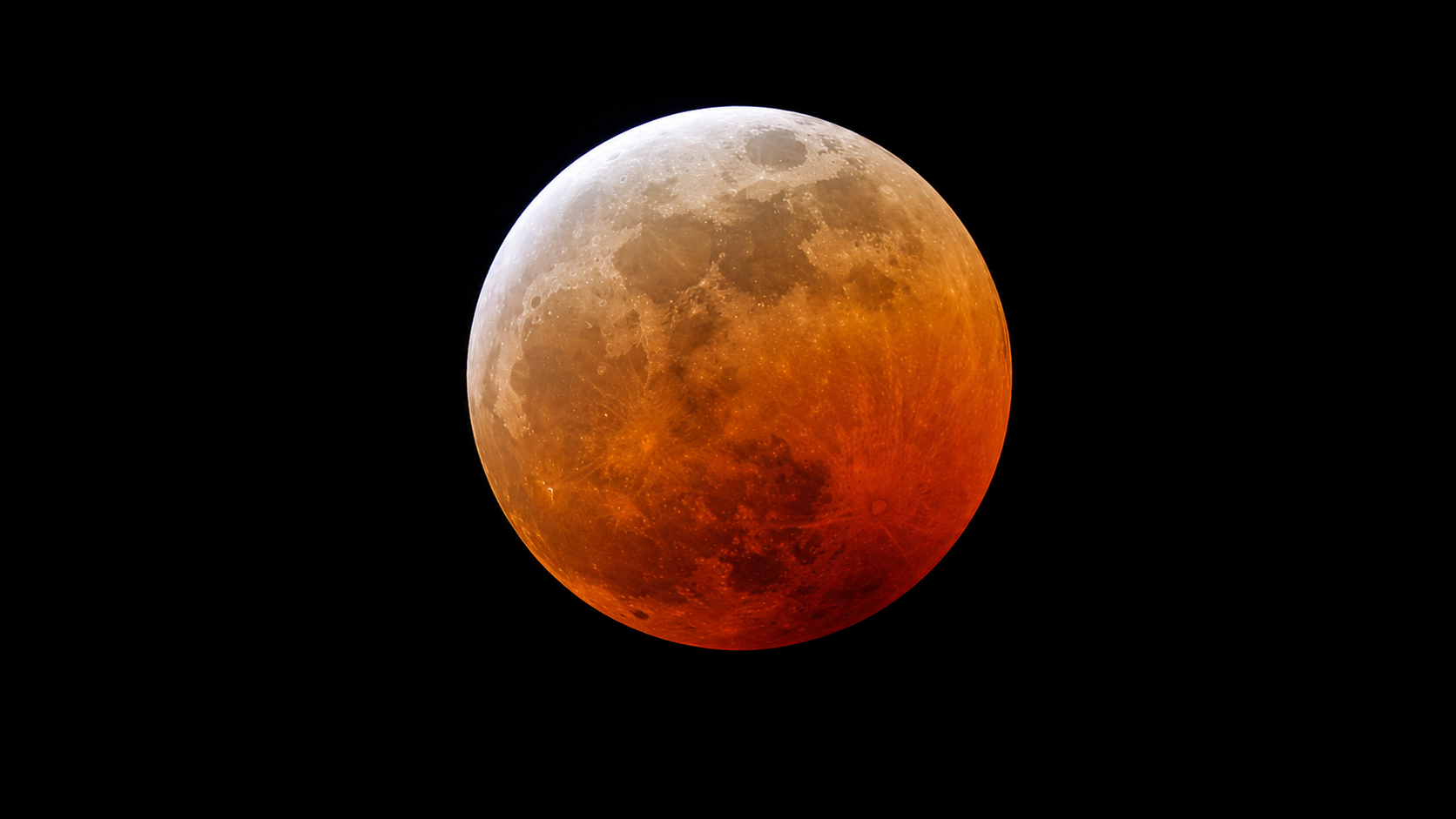
By Dennis Mammana Week of March 1-7, 2026 Attention, night owls and insomniacs! The sky show this week is just for you! Much of North America is about to see the moon experience one of nature's most beautiful sky shows: a total lunar eclipse. A lunar eclipse occurs when the full moon slips into the Earth's shadow far out in space, either partially or completely, and that's just what will happen during the wee hours of March 3. Skywatchers throughout North America will see the start of this eclipse (weather permitting, of course), but depending on where you live, you may see only a portion of the sky show. In general, the farther west you live, the more of the eclipse you will see before the moon sets behind the western horizon. The eclipse begins at 12:44 a.m. PST (3:44 a.m. EST), when the moon enters the Earth's light outer shadow (known as the penumbra), but this shadow is so thin that no one will notice a darkening of the moon's appearance. Within an hour or so, that will change significantly. As the moon approaches the dark inner shadow of the Earth (known as the umbra), skywatchers will notice the eastern side of the moon beginning to darken slightly. The real show begins at 1:50 a.m. PST (4:50 a.m. EST) when the moon officially enters the umbra. No one gazing skyward will have any doubt that a "bite" has been taken out of the moon — a bite that will grow larger with each passing minute. For the next hour or so, the moon will dim as it slips more deeply into our planet's umbra, until 3:04 a.m. PST (6:04 a.m. EST) when it's completely engulfed and the total eclipse begins. Unfortunately, those in the far eastern part of North America may miss this since the moon will lie quite close to (or even below) the western horizon. During the total phase, the moon will take on a dim coppery hue. This occurs because sunlight passing through our atmosphere is reddened and bent inward toward the darkened surface of the eclipsed moon, now suspended eerily against the stars of Leo, the lion. Only those viewing from the Midwest to the West Coast will see mid-eclipse, which occurs at 3:33 a.m. PST (5:33 a.m. CST). Those in the Midwest may miss the end of totality at 4:02 a.m. PST (6:02 a.m. CST), however, as the moon will be setting in the west. The entire event will end at 5:17 a.m. PST (4:17 a.m. MST) with the moon approaching the western horizon for viewers in western North America. Unlike an eclipse of the sun, a lunar eclipse is perfectly safe to view without protective filters. Your eyes are all you need to enjoy the show, but you'll have even more fun viewing through binoculars or a small telescope. If the sky is cloudy that morning, or if you live where the eclipse won't be visible, you can watch a livestream of the sky show online. Visit timeanddate.com and click on "Sun, Moon & Space" at the top to find details for your location, as well as links to view the eclipse live online. Visit Dennis Mammana at dennismammana.com. To read features by other Creators Syndicate writers and cartoonists, visit the Creators Syndicate website at www.creators.com.  Learn More About Borrego Springs

By Dennis Mammana February 11, 2026

Among Eridanus’ prominent stars is Epsilon Eridani. Creators.com illustration
By Dennis Mammana January 22, 2026
The Great Orion Nebula is visible with the unaided eye.
By Jake Hinton January 10, 2026
This segment aired on KTLA's Off the Clock on Jan. 7, 2026.
By Jake Hinton November 2, 2024
Explore Borrego Valley Airport! Get pilot tips on parking, fuel, and local highlights in this detailed video guide.
By Jake Hinton September 15, 2024
Explore the best stargazing spots in Borrego Springs, California, with a stargazing map by the Dark Sky Coalition. Discover popular locations and tips for a perfect night under the stars.
By Jake Hinton September 12, 2024
Meet Dennis Mammana, a passionate astronomer with nearly five decades of experience in unraveling the mysteries of the cosmos. Dennis’s journey began in Easton, PA, where he was captivated by the launch of the first Earth-orbiting satellites in the late 1950s.
By Jake Hinton September 11, 2024
Explore Anza-Borrego's Wind Caves Trail: hiking details and scenic views.
By Jake Hinton September 11, 2024
Discover popular hiking trails in Anza-Borrego Desert State Park. Explore scenic routes, palm oases, and historic sites.
By Jake Hinton September 3, 2024
Explore the hidden wonders of the Arroyo Tapiado Mud Caves in Anza-Borrego Desert State Park!
Walk of the Cosmos
By Jake Hinton August 18, 2024
Experience the Walk of the Cosmos in Borrego Springs—a journey through the solar system in a beautiful desert park with playgrounds, sports courts, and stargazing opportunities.
Show More

Share This Post