August 6, 2023

Owning Dogs in Hot Borrego Springs: Embracing the Summer Challenge

Share

Dogs and Desert Heat


Borrego Springs is known for its intense desert heat, especially in summer. If you have dogs, it's crucial to keep them cool and safe when temperatures soar.


Understanding the Challenges


1. Hot Outside, Hot Sand

Summer temperatures in Borrego Springs often exceed 110°F. The desert sand absorbs heat, making it uncomfortable and potentially dangerous for dogs to walk on.


2. Thick Coats, Hard to Cool Off

Dogs with thick coats can struggle to regulate their body temperature in the heat. It's essential to provide ways for them to cool down efficiently.


Ways to Keep Your Dogs Cool


1. Provide Shade and Water

Set up shaded areas in your yard or when outside, using canopies or natural shade. Make sure water stations are always available to keep your dog hydrated.


2. Dog Pools and Cooling Mats

A small pool can give your dog relief from the heat. Cooling mats designed for pets can also provide immediate comfort, indoors or outdoors.


3. Frozen Dog Treats

Offer frozen treats like peanut butter popsicles or yogurt cubes to help your dog cool down.


4. Early Morning and Evening Walks

Take your dog outside during the cooler hours—early morning or late evening—to avoid the midday heat.


5. Protective Dog Apparel

Lightweight, breathable vests or cooling bandanas can help regulate your dog’s temperature during walks.


Be Mindful of These Risks


1. Heatstroke

Watch for symptoms of heatstroke, like excessive panting, lethargy, or drooling. If you suspect heatstroke, move your dog to a cool area and contact a vet.


2. Hot Surfaces

Avoid walking your dog on hot surfaces like asphalt or concrete, which can burn their paw pads. Stick to grassy areas or use protective dog booties.


3. Never Leave Dogs in Cars

Temperatures inside a parked car can rise dangerously fast, even with windows cracked. Always take your dog with you or leave them in a cool, safe environment at home.


Learn more about Borrego Springs
June 14, 2026
June 2026 Skywatching Highlights
By Sunbelt Publications June 9, 2026
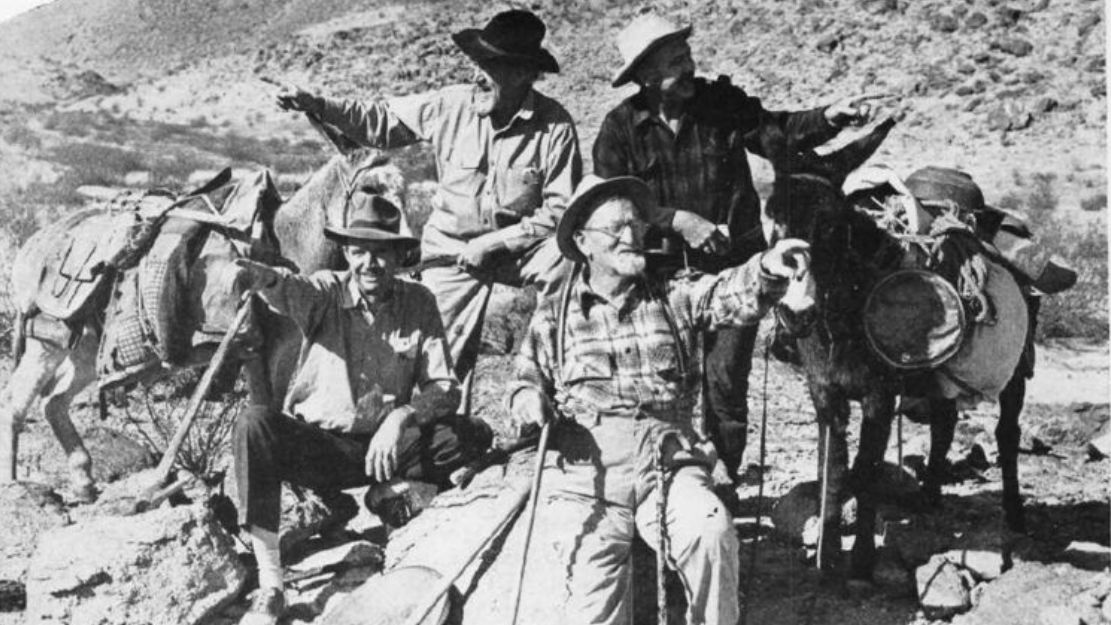
A Sunbelt Spotlight with Diana Lindsay  For 17 years, Marshal South and his family lived on Ghost Mountain, a remote, waterless mountaintop in Blair Valley, now part of Anza-Borrego Desert State Park. Their life of isolation, creativity, and survival became one of the desert’s most talked-about stories. Life on Ghost Mountain From 1930 to 1947, the South family lived in a handmade home on Ghost Mountain. Marshal South wrote about their primitive lifestyle in monthly articles for Desert Magazine, drawing thousands of readers into the family’s unusual desert experiment. A Writer, Poet, and Desert Storyteller South wrote poems, novels, essays, short stories, and more than 100 pieces for Desert Magazine. His writing celebrated the silence, beauty, natural history, and healthful qualities of the desert. The Story Behind the Legend Diana Lindsay, editor of Marshal South and the Ghost Mountain Chronicles, shares the history behind the South family’s life, the questions surrounding their years on Ghost Mountain, and why the story continues to fascinate readers today. About Diana Lindsay Diana Lindsay is an award-winning author, historian, editor, and president of Sunbelt Publications. Her work has helped preserve and share the history of Anza-Borrego and the remarkable story of Marshal South. .
By Dennis Mammana June 9, 2026
By Dennis Mammana Week of June 14-20, 2026  The universe is a colorful place, but stargazers are often frustrated when they cannot see the glorious colors that appear in celestial photographs. These are all quite real, so why are we unable to see them? One reason is that the color receptors of the human eye (the cones) don't respond well under faint light. They need a significant amount of energy falling on them to become active. You can prove this to yourself by trying to see colors around you in a dark movie theater. Sure, those on the screen are vibrant — that's some pretty bright light hitting your eyes — but colors throughout the dim theater appear completely muted. The second reason that astronomical photographs show beautiful colors is that camera detectors are not affected by human physiology. They can "see" colors from even the faintest of light. This is important because these colors tell us a lot about the physical and chemical properties of celestial objects. This doesn't mean you can't see color in the night sky; it just means that you'll need to find bright stars to improve your chances. One of the brightest shines high in the eastern sky after dark this week: Arcturus. Follow the handle of the Big Dipper away from its bowl, and you'll soon encounter this star. If you have good color vision, you may notice that Arcturus shines with a yellow-orange light that indicates a temperature of about 7,200 F. Now look lower toward the northeastern sky. There you'll find Vega, a nearly white star that burns considerably hotter than Arcturus — about 17,000 F. Very low in the southeast after dark, you'll find a star even more orange than Arcturus. This is Antares, the brightest in the constellation of Scorpius, glowing with a temperature of "only" 6,100 F. Aim binoculars or a small telescope toward these stars, and their colors will appear to pop. This is because the optics gather much more light than your eyes, and this helps to stimulate your color receptors. Now if you'd like to see an intensely red star, you'll need to cast your gaze high overhead. Here you'll find a star that astronomers know as Y Canum Venaticorum. Most stargazers just call it La Superba (the magnificent), so named by the mid-19th century astronomer Father Angelo Secchi. To locate it, you'll need to start at the Big Dipper; just above it appear the two most prominent stars of Canes Venatici, the hunting dogs. About two-thirds of the way between the bend of the Dipper's handle (Mizar) and the westernmost star of Canes Venatici (Chara) lies a very faint star — one you may not be able to spot with your eyes alone from near the lights of a city. What makes this star unique is that it's what astronomers call a carbon star, one of the few visible to the unaided eye. Yes, it's a giant star like Arcturus, and it's also nearing its death, but, unlike "normal" such aging stars, La Superba has accumulated more carbon compounds in its outer atmosphere. Find this faint star and aim binoculars or a small telescope toward it. I promise you'll be delighted by what you see. Visit Dennis Mammana at dennismammana.com. To read features by other Creators Syndicate writers and cartoonists, visit the Creators Syndicate website at www.creators.com. Learn More About Borrego Springs

Show More

Share This Post