April 30, 2024

Bishop Susan Brown Snook Celebrates Fr. David Madsen's Ministry at St. Barnabas, Borrego Springs

Share

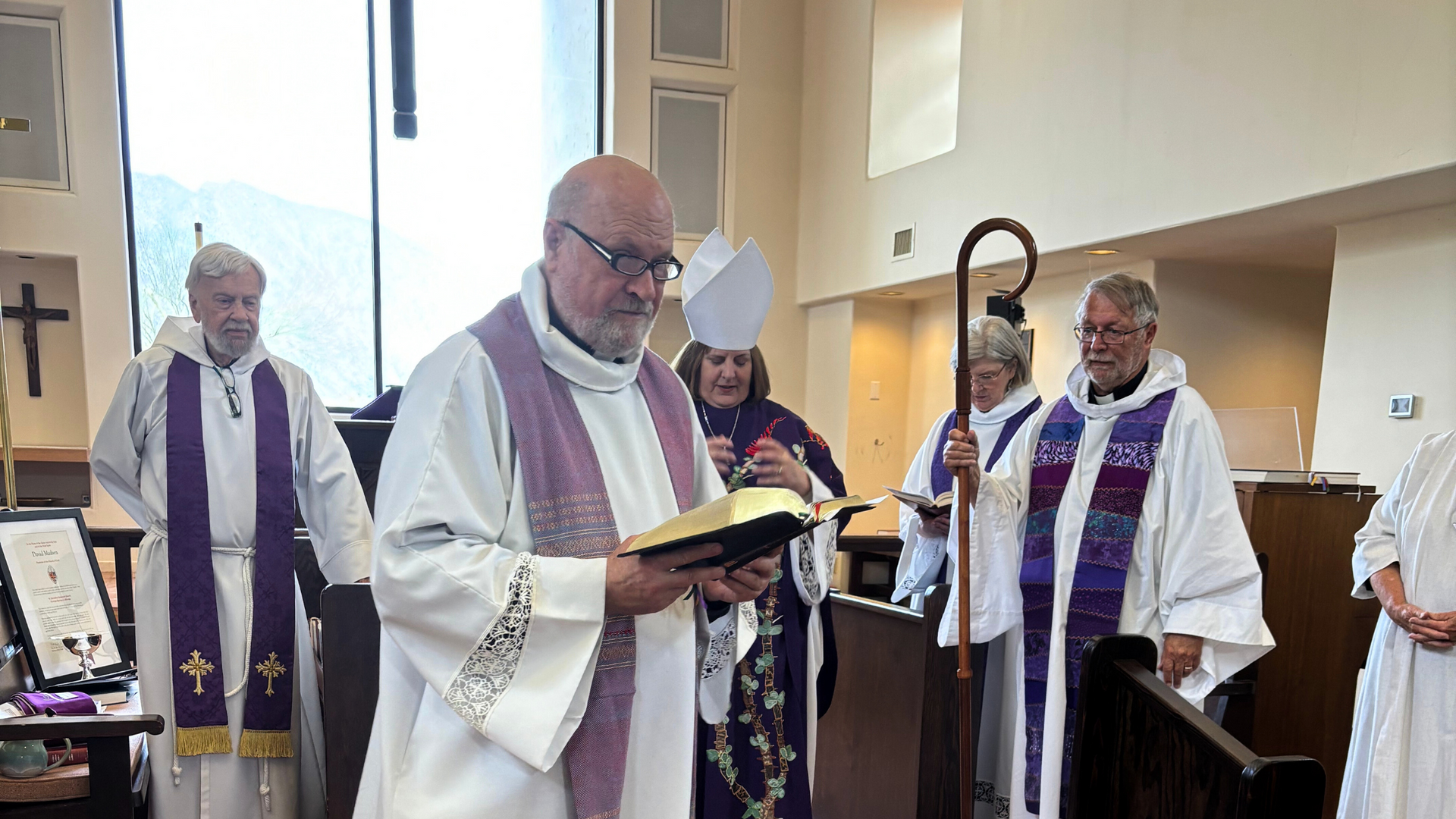
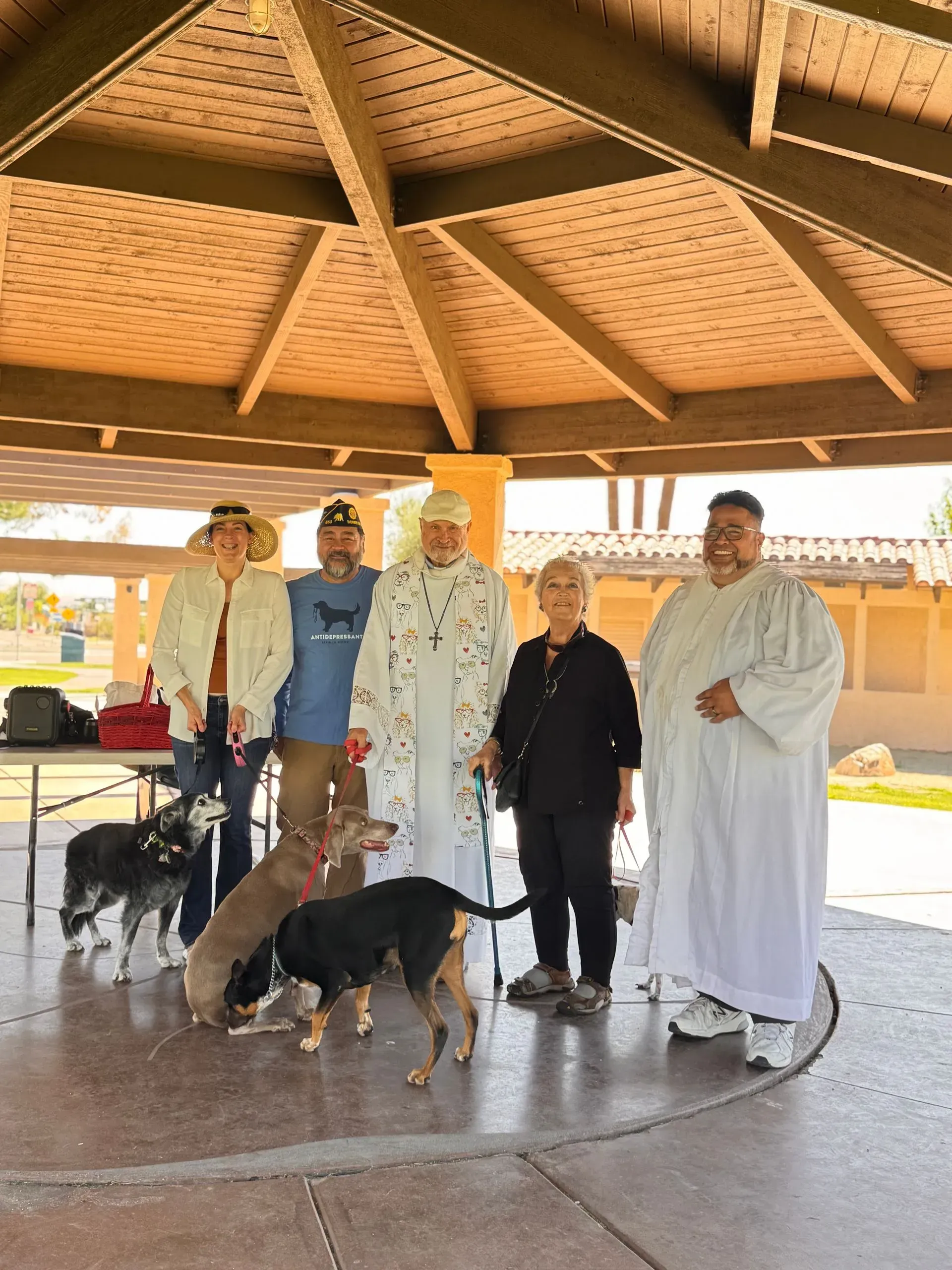
Bishop Susan Brown Snook celebrates the new ministry of Fr David and Naomi Madsen at St. Barnabas

On February 25, 2024, Bishop Susan Brown Snook of the Episcopal Diocese of San Diego made her annual visitation to St. Barnabas parish. She preached and presided at the Eucharist and in the course of the service celebrated the new ministry of Fr. David Madsen as rector of the parish. Fr. David and Naomi began service at St. Barnabas on May 1, 2023. Fr. David previously was rector of St. Alban Episcopal Church in El Cajon. There he inaugurated Welcome Ministry, an outreach to migrants from the Middle East living in El Cajon. This ministry was ecumenical, involving the Presbyterian, Lutheran and other churches there. It provided food, housing support, employment counseling and regular Arabic-English liturgies. Naomi previous with the social ministries of the United Methodist Church. Since arriving in Borrego, Fr David and Naomi have been intensely dedicated to community service. They have trucked firewood to the asylum seekers' encampments in Jacumba. He has continued, with her, to be involved with the El Cajon Welcome Ministry, while at the same time joining the Borrego Ministers Association, Rotary, the St. Barnabas food bank, among other activities supporting those in need in greater Borrego. Both the congregation community of St. Barnabas and the larger Borrego community welcome the wonderful service of Fr. David and Naomi Madsen and wish them many years of joy and good work here.


---

The Rev. Michael Plekon, PhD
Professor Emeritus: Sociology, Religion & Culture The City University of New York - Baruch College


Learn More About Borrego Springs

By by Michael Plekon February 14, 2026
by Michael Plekon Every year, Christians move through the months with different seasons and festivals. The Christmas-Epiphany season is just finishing, and before that, in December, was Advent, is a time of preparation and anticipation of the Christmas feast of Jesus’ birth in Bethlehem. This year, on Ash Wednesday, February 18, Christians will start the season of Lent, a forty-day period of prayer and good works. It leads up to Holy Week, when Jesus’ last supper, his trial, crucifixion, death and burial are commemorated on Maundy Thursday, Good Friday and Holy Saturday. Jesus’ resurrection is celebrated on Easter Sunday, April 5. Borrego churches and the BMA gather behind the Methodist Church for a Sunrise Service. St. Barnabas has a simple Eucharist right afterwards and a festive service at the regular 9:30am time. Why ashes? The Hebrew Bible has many references to ashes as a sign of sorrow and repentance for the evil one has done. Job places ashes on his head to acknowledge his failing in faith (42:6) Tamar also. (2 Sam. 13: 19) The entire people use ashes to express their desire to turn away from sin and back to God. (Numb. 19:9) And there are quite a few other examples. In our time there are gestures of admitting guilt and asking forgiveness, something that happens in courthouses after a trial concludes. In our families and circles of friends, at times we need to humble ourselves and ask forgiveness of those we have wronged. And accept the forgiveness of others as well. The ashes are put on a person’s forehead with the words, “Remember you are dust, and to dust you shall return.” (Gen. 3:19) Usually there are other things about which people ask for prayers—relatives who are ill, friends facing tough times with finances, work, relationships. Contrary to what some might think, ashes and Lent are anything but gloomy or self-imposed sorrow. The word “lent” comes from an Old English word for the spring slowly com ing, lencten. Yes, it connotes the lengthening of the days, more sunshine and warmth, which in years long ago meant release from cold, planting of crops, and the joy of spring and summer. Easter and its Jewish precedent, Passover/ Pesach, bears some of the same meanings—release from bondage, life triumphing over death. The encounters with folks on the Christmas Circle and in church are anything but morose, whether they drive up and stay in their vehicles or park and walk up, or line up for ashes after the BYOB music or at the afternoon service. There is joy, maybe even a lightness in their step. The clergy of Borrego will be there at The Circle in shifts starting at 8am, continuing till noon. And ashes will be available as mention, at church. In addition to taking daily prayer mor seriously, there are many things one can do in Lent. It used to be assumed that alcohol and desserts would be given up. This is fine if you so choose. Giving more for food insecurity, volunteering at food banks, even seeking out family and friends to make sure you are at peace with them—all of these are wonderful Lenten practices. Happy Lent.
February 13, 2026
Our Kids Need Your Help!
By Jake Hinton January 9, 2026
Located at the Borrego Community Resource Center
By Jake Hinton January 2, 2026
Strengthening Health Care in Borrego Springs
By Jake Hinton December 29, 2025
An Invitation Without Conditions
By Jake Hinton December 17, 2025
By Fr. Michael Plekon Every year in December we come around to a holiday that still for many is a holy day. It has different names in different languages and cultures—Yuletide, Jul, Weinachten, Noel, Navidad, Natale, Rizdvo and more. Christmas comes from “Christ’s Mass,” denoting the sacred service known in many churches and languages as the “Mass.” There are feasts of other faith traditions that often come close to the end of the year. Hannukah is the Jewish celebration of the victory of the Maccabees and the restoration of the sacred lights on the menorah or candlestick in the Jerusalem Temple. Despite not being filled with enough oil, the lamps burned for eight days. There is the Hindu celebration of light in darkness, Diwali. And the African-American holiday of Kwanzaa. Christmas also has other special days associated with it. December 6 is the feast of St. Nicholas, the original Santa Claus, a 4th century bishop renowned for his generosity to those in need. In some countries this is the day of the exchange of gifts. Likewise January 6 is the feast of Epiphany or the day of the Three Magi Kings, when in Hispanic countries gifts are given. Central to Christmas is the celebration of Jesus’ birth. The gospel of Luke tells the familiar story of the parents, Mary and Joseph’s journey to Bethlehem to enroll in a census. While there, lodging in a stable, their son is born, wrapped in swaddling clothes and placed in a manger, a feed trough for domestic animals. Angels announced this birth to shepherds in the surrounding countryside. These herdsmen came and honored the newborn child, having heard a song from the angels: “Glory to God in the highest, peace to all people on earth.” Later, in Matthew’s gospel, three astronomers, perhaps also royalty, came from further East to visit the child, following a star which led them to where the family was. This gospel does not mention the angels, the manger or shepherds, but notes that King Herod was fearful of the newborn as a threat to his power, asking the three astronomers to report back and disclose where the child was. They did not do this and went home on another route. The male children of Bethlehem were subjected to a massacre. Thus, the birth of Jesus was not without pain and suffering also. Christmas evokes images of trees twinkling with lights and ornaments, dinner tables loaded with food, the faces of children lit up with glee, not just at their presents but also at the warmth of family and friends. Christmas is an event that was to bring peace to the world, the birth of someone who became a teacher and healer later in life, one whom his followers saw, in Matthew’s words as “God with us,” Emmanuel, God becoming a human being, part of our world, of space and time. But Jesus was born in a land under the occupation of the Roman Empire, in a society in which most people teetered on the edge of extreme hunger and poverty. The birth happened in a barn where domestic animals lived, and the first visitors were scruffy sheep herders, thought of as not trustworthy. Two thousand years later, Christmas remains a moment in a world torn apart by suspicion, hatred, violence and anger. The holiday sees millions of dollars spent on gifts, parties, decorations, and entertainment. And yet, the story of how this birth came to take place remains one that faces us with a helpless infant, loving parents, the sense of joy from heavenly beings, the welcome of very humble as well as some very elite, privileged visitors. Christmas can still stand as a sign of light in the darkness, a message of joy and goodness despite everything that might appear as opposed to this. You don’t need to be religious to see in this holiday something of hope and joy. Merry Christmas! --- The Rev. Michael Plekon, PhD Professor Emeritus: Sociology, Religion & Culture The City University of New York - Baruch College Learn More About Borrego Springs
Show More

Share This Post