Jake Hinton • March 30, 2020
EDDIE DUVALL AND HIS ICONIC 1935 FORD
Share

A JOURNEY THROUGH OLD BOREGO’S AUTOMOTIVE HISTORY
Explore the fascinating story of Eddie DuVall, his 1935 Ford, and the deep connection with the Borego community. Discover how this classic car has stood the test of time, and how Denny DuVall continues to cherish the love of a vehicle.
Ed Duvall, Alta Jones, and the Iconic 1935 Ford: A Love Story and Lasting Legacy in Borego’s History
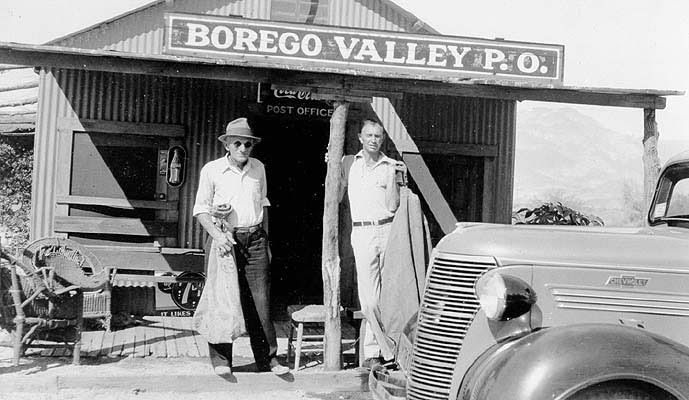
In the early 1930s, the small desert community of Borego was undergoing significant changes. In 1928, Borego welcomed its first post office, with Eslie Wynn serving as the inaugural postmaster. His homestead was strategically located along the valley’s south side, near the old hogback road from The Narrows. Around the same time, Wynn established the valley’s first store, which he later relocated to a separate building across from his home.
In December 1934, Glenn DuVall became Borego’s postmaster, and after Wynn’s death, he and his brother Edward bought Wynn’s store. By 1936, Eddie DuVall took over the store and the postmastership. Meanwhile, Alta Jones, a Los Angeles teacher, and Sierra Club member, frequently visited Borego to explore the captivating desert landscape. During her visits, Alta met Ed DuVall, who ran the general store with his brother Glen. Their connection blossomed into love, and the couple married in early 1936.
To celebrate their new life together, Ed and Alta purchased a 1935 Ford in Los Angeles. This marked the beginning of a profound bond between Ed, his car, and the Borego community. In late 1936, during a visit to San Francisco, Ed’s friend, a Highway Patrol officer, was testing various 1937 model vehicles for patrol use. Intrigued, Ed boldly claimed that his 1935 Ford could outperform any of the 1937 models being tested.
Proving the 1935 Ford’s Worth
Ed’s Ford indeed outshined all the other cars that day, reaching an impressive top speed of 102 mph. The only notable difference between Ed’s car and other Fords was the “Texas rear end,” a lower ratio compared to the standard 4:11 rear ends in most Fords. That speed even stands now as a testament to the car’s incredible performance. (check out this article on Curbside.tv to learn more)
The 1935 Ford was a groundbreaking automobile that left a lasting impact on the automotive industry. With significant advancements in design, performance, and safety, it became a beloved classic among car enthusiasts and collectors alike.
Here are a few interesting facts about this iconic vehicle that showcases its importance and influence during its time:
1. Introduction of the Flathead V8: The 1935 Ford was equipped with the legendary Flathead V8 engine. This engine became synonymous with power and reliability, making it a popular choice among car enthusiasts.
2. Improved design: The 1935 Ford featured a more streamlined design with a new grille, skirted fenders, and a sloping windshield, which gave the car a modern and stylish appearance.
3. Introduction of the Model 48: Ford replaced the Model 40 in 1935 with the Model 48, which was available in various body styles, including coupes, sedans, convertibles, and station wagons.
4. Improved suspension: The 1935 Ford had an improved suspension system with transverse leaf springs, which provided better handling and ride comfort compared to earlier models.
5. Hydraulic Brakes: Although the 1935 Ford introduced many significant upgrades, hydraulic brakes were not among them. In fact, Ford lagged behind other companies like Chrysler Corp, which had already adopted hydraulic braking systems. In 1938, Ford experimented with cable brakes, which proved to be a poor choice. As a result, the company switched to hydraulic brakes for its 1939 models.
In a phone conversation, Denny DuVall, who amazes me with his extensive knowledge of vehicles, shared that 1938 Ford model owners encountered a tough decision. They had the option to either revert to using mechanical brakes or patiently await the release of the 1939 hydraulic brake kits to address the issue with their troublesome cables.
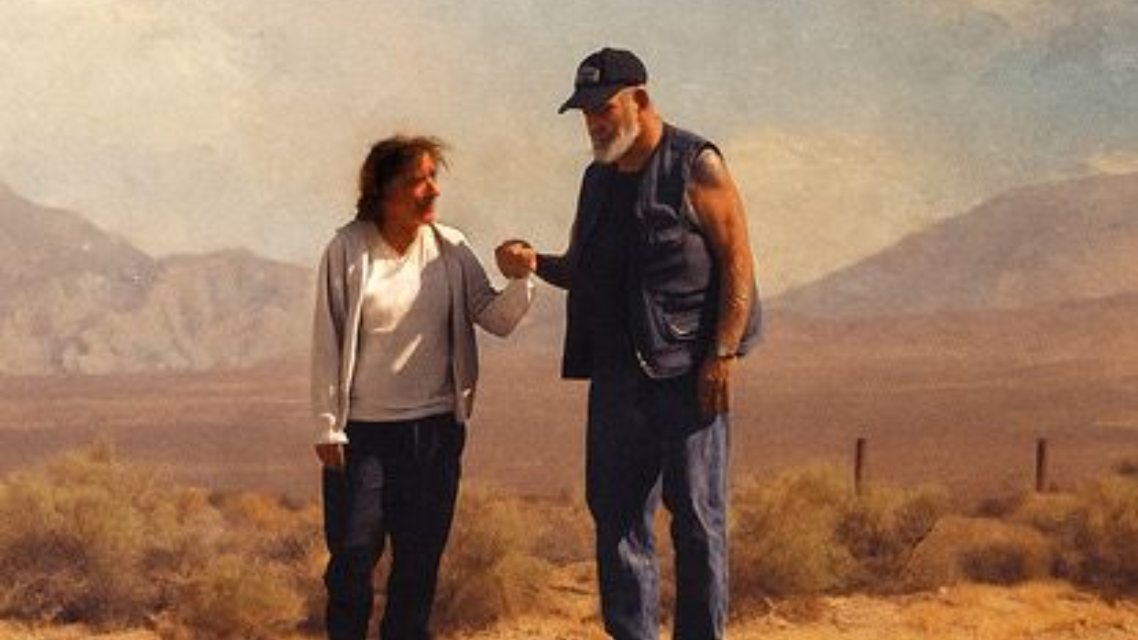
Denny Duvall – Author of the book: That’s My Story and I’m Stickin’ To It
6. 85 horsepower: The Flathead V8 engine in the 1935 Ford produced 85 horsepower, which was an impressive figure for the time, enabling the car to reach high speeds.
7. Popular among hot-rodders: The 1935 Ford became a popular choice among hot-rodders due to its V8 engine, sleek design, and ease of modification.
8. Production numbers: In 1935, Ford produced around 820,000 vehicles, making it one of the most popular cars of the era. The 1935 Ford played a vital role in helping the company recover from the Great Depression.
9. Price range: The 1935 Ford had a price range of approximately $500 to $700, depending on the body style and options chosen. ($500 in 1936 has the same buying power as around $10,821.58 today, which is a $10,321.58 increase over 87 years.)
10. Influence on future models: The design elements and innovations introduced in the 1935 Ford went on to influence future Ford models and helped shape the American automotive industry.
A Father-Son Bond Over the 1935 Ford
By 1939, Alta and Eddie desired to expand their family beyond themselves and their cherished 1935 Ford. Unfortunately, after a heartbreaking miscarriage, they decided to pursue adoption. This is when Denny DuVall entered their lives. Four years later, they continued to grow their family by adopting a daughter.
From the moment Denny DuVall, Ed’s son, laid eyes on the 1935 Ford, he was smitten. As a young child, he would eagerly stand between his father’s legs, gripping the steering wheel with determination. As he grew older, Denny would graduate to sitting on Ed’s lap, taking more control of the wheel and feeling the thrill of driving.
Denny’s earliest memories of learning to count are intertwined with the Ford, specifically the number “eighty.” This number held significance because it represented the speed at which Ed confidently drove their beloved Ford. That powerful connection between speed, the car, and family bonding left an indelible mark on Denny, instilling a lifelong passion for the iconic vehicle.
The Legacy Lives On: Denny DuVall and Henry the Truck
The connection between the DuVall family and their beloved vehicles didn’t end with Ed and his 1935 Ford. Ed’s son, Denny DuVall, continued the family tradition by becoming the proud owner of a truck fondly known as “Henry.” Denny purchased Henry for just $35 in 1960, rescuing the truck from its uncertain fate in Ocotillo Wells, California.
Like his father before him, Denny developed a deep bond with his treasured vehicle. Henry the Truck, with its funky and happy demeanor, soon became a symbol of the DuVall family’s love for vintage vehicles and their dedication to preserving automotive history. Over the years, Henry has seen numerous adventures and has been a faithful companion to Denny.
Together, the DuVall family vehicles – Ed’s 1935 Ford and Denny’s Henry the Truck – represent the enduring legacy of their passion for automobiles and their commitment to preserving the stories of Old Borego.
Check out Denny Duvall’s Article on Curbside.tv: Vintage vehicles, Automotive history and stories from motoring’s past: Ed Duvall’s 1935 Ford
Learn More About Borrego Springs