Jake Hinton • April 3, 2024

Dinosaur Tracks at Split Mountain (1939 The Desert Magazine)

Share
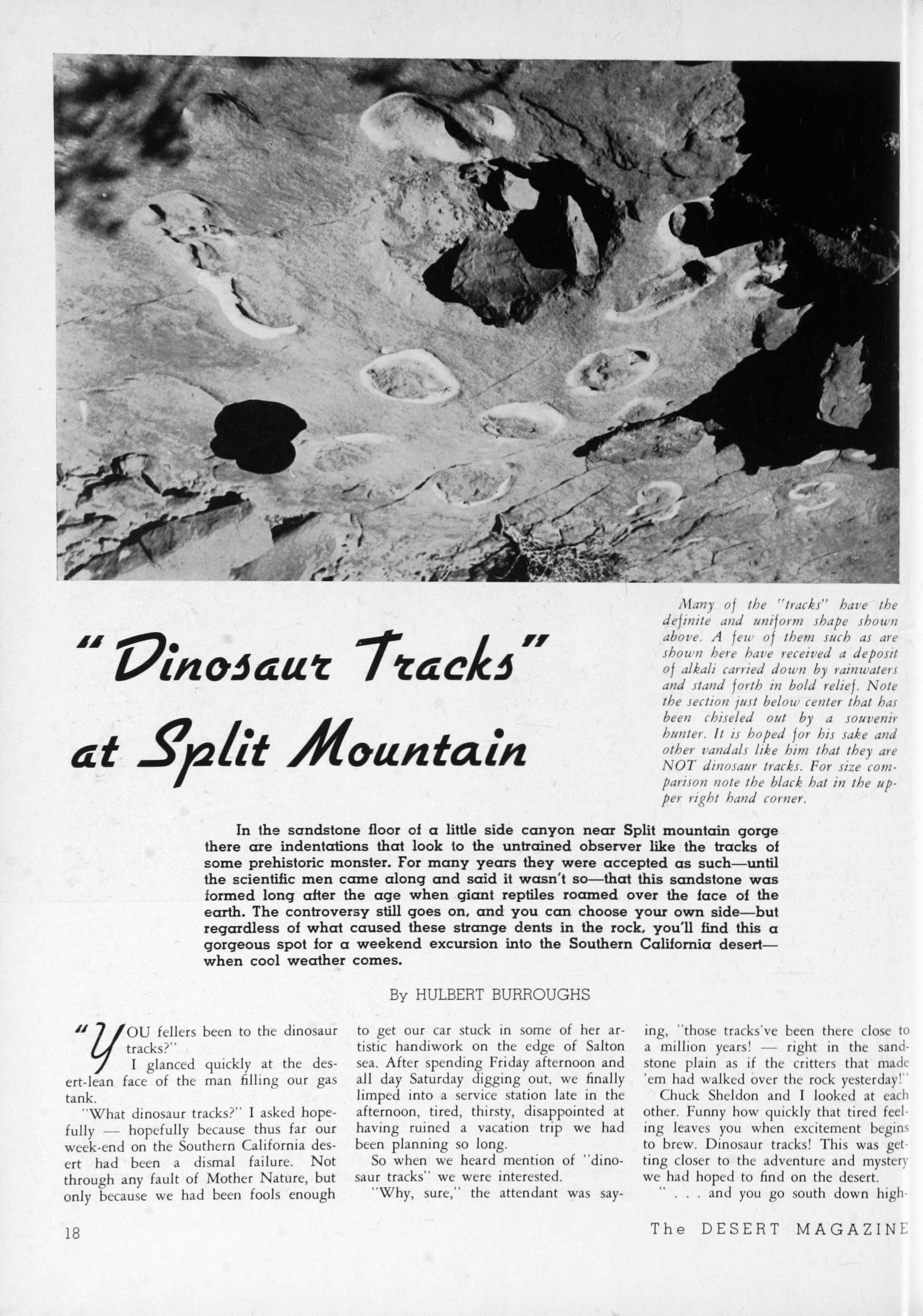
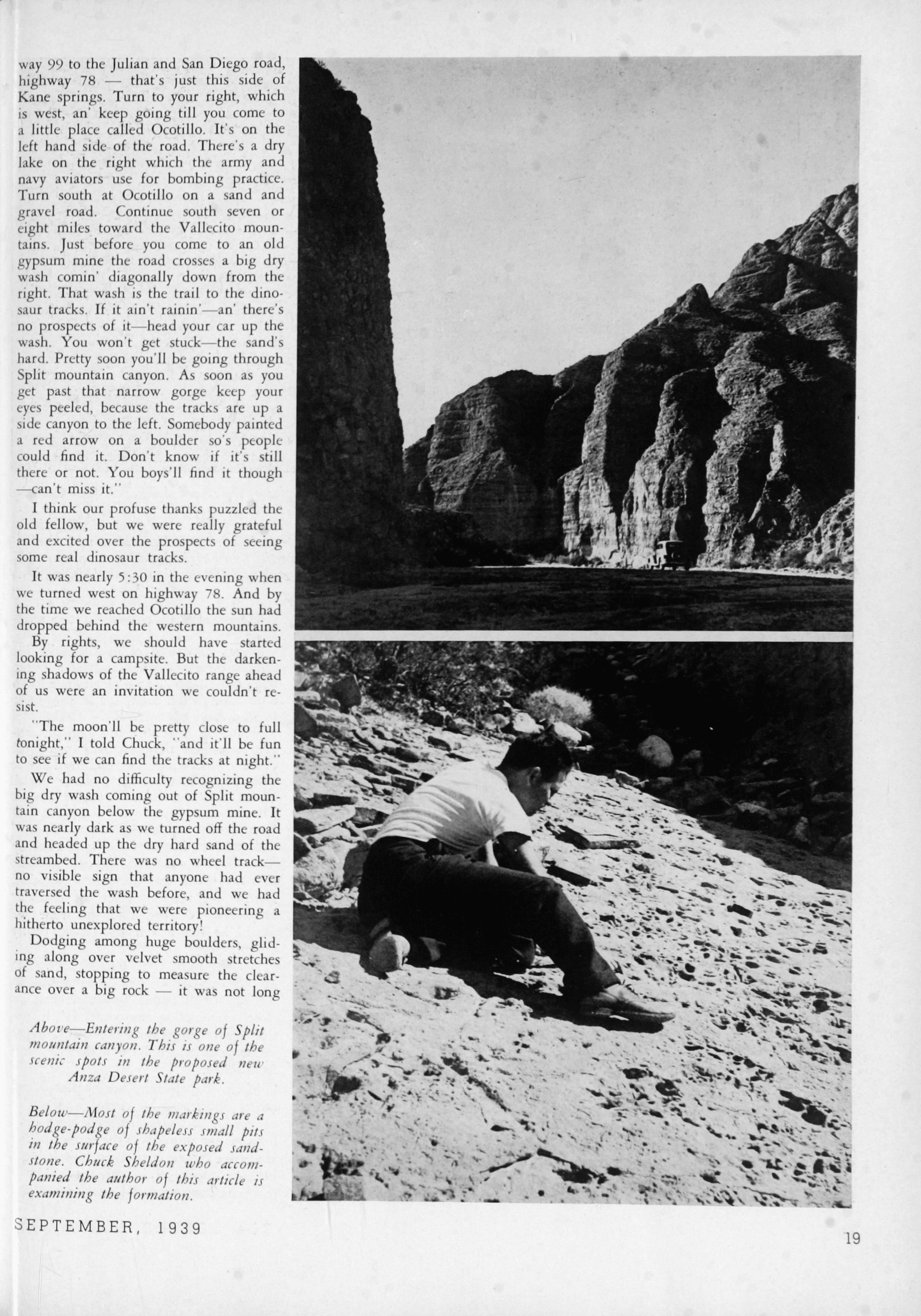
Transcription: "Dinosaur Tracks" at Split Mountain (September 1939)

In the sandstone floor of a little side canyon near Split Mountain Gorge, there are indentations that look to the untrained observer like the tracks of some prehistoric monster. For many years they were accepted as such—until the scientific men came along and said it wasn’t so—that this sandstone was formed long after the age when giant reptiles roamed over the face of the earth. The controversy still goes on, and you can choose your own side—but regardless of what caused these strange dents in the rock, you’ll find this a gorgeous spot for a weekend excursion into the Southern California desert—when cool weather comes.


By HULBERT BURROUGHS


"YOU fellers been to the dinosaur tracks?"


I glanced quickly at the desert-lean face of the man filling our gas tank.


"What dinosaur tracks?" I asked hopefully—hopefully because thus far our week-end on the Southern California desert had been a dismal failure. Not through any fault of Mother Nature, but only because we had been fools enough to get our car stuck in some of her artistic handiwork on the edge of Salton Sea. After spending Friday afternoon and all day Saturday digging out, we finally limped into a service station late in the afternoon, tired, thirsty, disappointed at having ruined a vacation trip we had been planning so long.


So when we heard mention of "dinosaur tracks," we were interested.


"Why, sure," the attendant was saying, "those tracks've been there close to a million years! — right in the sandstone plain as if the critters that made 'em had walked over the rock yesterday!"


Chuck Sheldon and I looked at each other. Funny how quickly that tired feeling leaves you when excitement begins to brew. Dinosaur tracks! This was getting closer to the adventure and mystery we had hoped to find on the desert.


". . . and you go south down highway 99 to the Julian and San Diego road, highway 78—that’s just this side of Kane Springs. Turn to your right, which is west, an' keep going till you come to a little place called Ocotillo. It’s on the left-hand side of the road. There’s a dry lake on the right which the army and navy aviators use for bombing practice. Turn south at Ocotillo on a sand and gravel road. Continue south seven or eight miles toward the Vallecito Mountains. Just before you come to an old gypsum mine the road crosses a big dry wash comin' diagonally down from the right. That wash is the trail to the dinosaur tracks. If it ain’t rainin’—an’ there’s no prospects of it—head your car up the wash.


You won’t get stuck—the sand’s hard. Pretty soon you’ll be going through Split Mountain Canyon. As soon as you get past that narrow gorge keep your eyes peeled, because the tracks are up a side canyon to the left. Somebody painted a red arrow on a boulder so’s people could find it. Don’t know if it’s still there or not. You boys’ll find it though—can’t miss it."


I think our profuse thanks puzzled the old fellow, but we were really grateful and excited over the prospects of seeing some real dinosaur tracks.


It was nearly 5:30 in the evening when we turned west on highway 78. And by the time we reached Ocotillo the sun had dropped behind the western mountains.


By rights, we should have started looking for a campsite. But the darkening shadows of the Vallecito range ahead of us were an invitation we couldn’t resist.


"The moon’ll be pretty close to full tonight," I told Chuck, "and it’ll be fun to see if we can find the tracks at night."


We had no difficulty recognizing the big dry wash coming out of Split Mountain Canyon below the gypsum mine. It was nearly dark as we turned off the road and headed up the dry hard sand of the streambed. There was no wheel track—no visible sign that anyone had ever traversed the wash before, and we had the feeling that we were pioneering a hitherto unexplored territory!


Dodging among huge boulders, gliding along over velvet smooth stretches of sand, stopping to measure the clearance over a big rock—it was not long before we were deep into the canyon.


Download File

Learn More About Anza Borrego
By Marine Science Institute July 20, 2026
Marine Science Institute has named Lisa Biasillo its new Executive Director, succeeding longtime leader Marilou Seiff.
By Andrea McKenna July 9, 2026
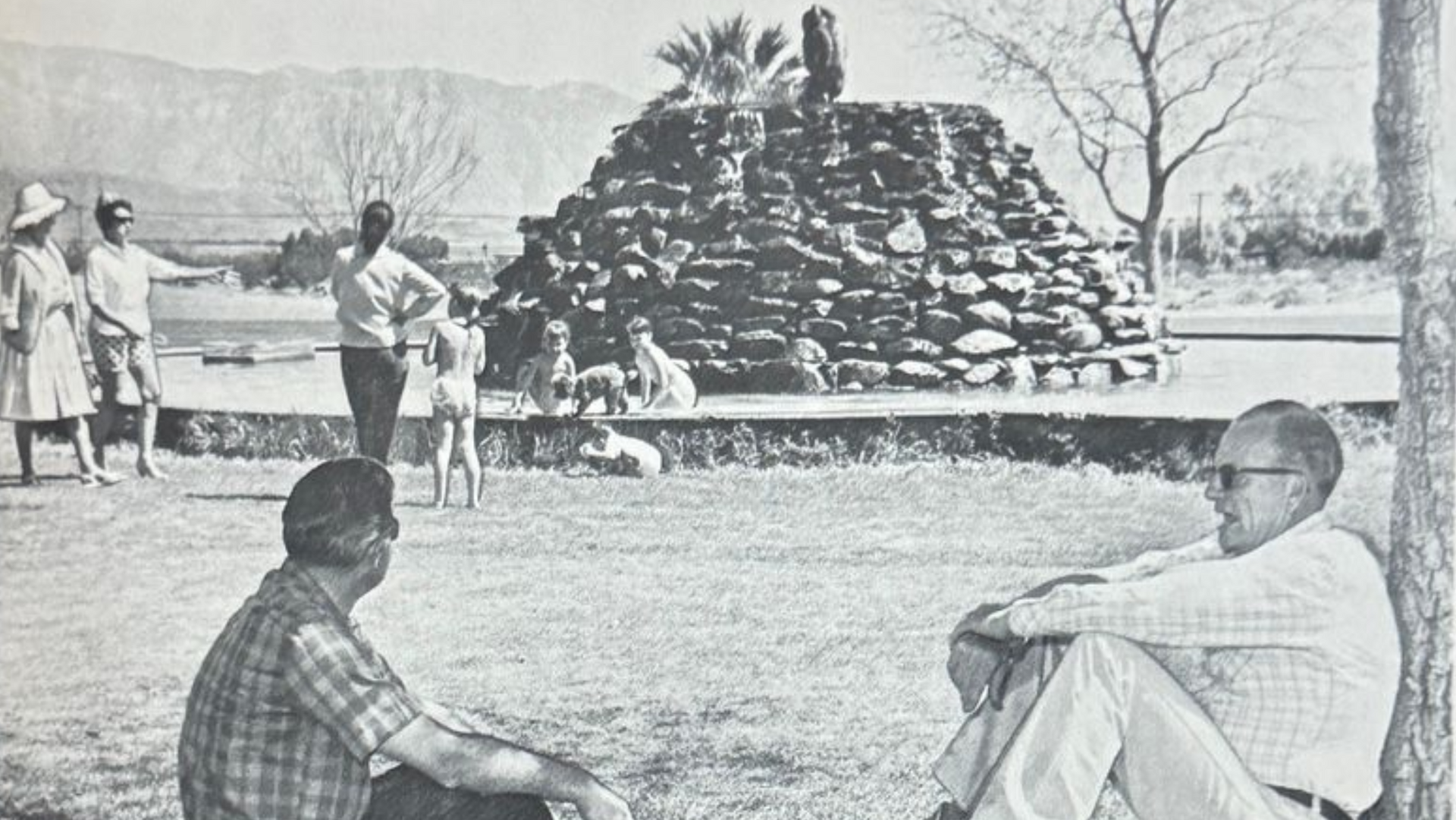
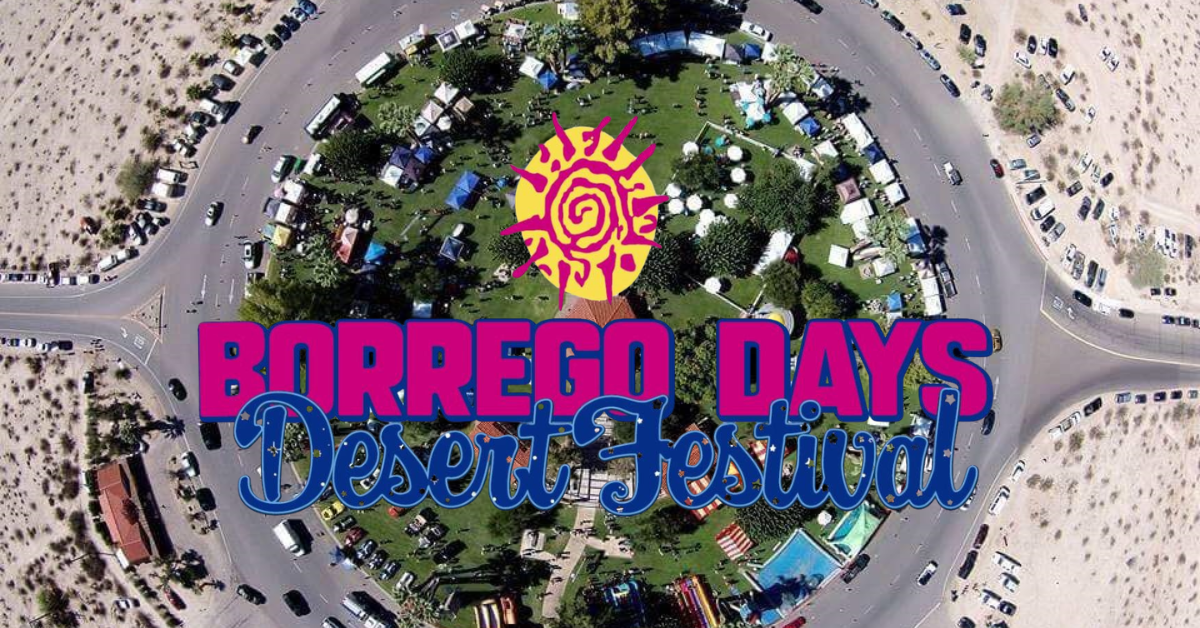
A 1966 Borrego Sun photo offers a glimpse of Christmas Circle during one of Borrego Valley's busy wildflower seasons. Published in the April 2, 1966 edition, the image shows visitors relaxing on the lawn near the iconic fountain after spending time exploring the desert in bloom. The original caption reads: SIESTA — One can get pretty hot and tired, looking at the wildflowers in Borrego Valley. Christmas Circle, with its inviting fountain, trees and green grass, is a nice place to take a break. This is the way it has been during the last few weekends. The photograph captures a quiet moment in Borrego Springs history, preserving the way visitors experienced Christmas Circle nearly 60 years ago. Images like this continue to document the community's past through the pages of the Borrego Sun archives.




By Andrea McKenna July 8, 2026
When the future of the Community Concert Association was uncertain, Bill Wright inspired a path forward through growth, volunteers and community support. As the Borrego Springs Community Concert Association announces its new season, it is worth remembering the people who helped keep this tradition alive. Founded in 1975, the all-volunteer nonprofit brings high-quality, eclectic music to Borrego Springs. Each season includes five public concerts and four free educational concerts for local students. Children are bused to the Borrego Springs Performing Arts Center to experience professional live music, and musicians also visit local schools for interactive programs that introduce students to music up close. That tradition almost came to an end. When the Association had fallen on hard times (2015) and was preparing to disband, Bill Wright stepped forward. By reaching out to his many business associates, Bill raised enough money to help save the organization and keep professional musicians coming to the Borrego stage. Among his written correspondence with the board, Bill Wright repeatedly advocated for “growth, not reduction,” encouraged members to “recruit new volunteers” and “develop sponsorship opportunities,” and closed one letter with a promise that captured his commitment: “We will do more than our share to keep the great music series going.”



By Andrea McKenna July 5, 2026
January 20, 1977 Xmas circle 25 years old By VIRGINIA DeMARAIS Under the supervision of A. A. Burnand Jr., the $10,000 Christmas Circle fountain was nearing completion 25 years ago this month. The fountain is in memory of J. A. Di Giorgio, pioneer agricultural developer of Borrego Springs. Other events twenty-five years ago: Lucy Hillyer of Borrego Springs is the new president of the North San Diego County Chamber of Commerce. Bill DeMarais was installed as president of the Borrego Springs Kiwanis Club. Other officers are L. W. Lindherr, vice-president; Fred Gardner, treasurer and Roy Gentel, secretary. Membership of the club is 32. The Cliff Boren Construction Company of San Diego has completed three new homes. Hal Martinez reports a start on a three-bedroom home for William Sanderson near the Desert Lodge. Harry LeClaire, tract manager for the Borrego Springs Company, reports 20 parcels of land sold during the holidays, totaling $50,000. Work has started on straightening Banner Summit Grade, reports Hugh Woods, vice-president of the Highway 78 Association. The Borrego Springs Square Dance Club is meeting at Hoberg’s Desert Resort. Wick Hauser is caller and teacher, Dick Wear – manager. Girl Scout Troop 441 of Borrego Springs serenaded the valley with Christmas carols, under the supervision of Mrs. Ralph Bell, Girl Scout leader, and Mrs. Charles Broeske, assistant. Mrs. Lola LeBard has started construction of a house and trailer court at Sunny Acres on Split Mountain Road. Borrego starts the new year with 18 telephones in the valley. Cover girl for the recently published Redbook Magazine is Dolores Smith Dalzell, daughter of the Borrego mail carrier, George C. Smith. Chamber of Commerce president Hugh Woods reports discussions at meeting of possibility of a bank by Perry Burnand, and suggestions and ideas on promoting television reception in the valley. Birdies are not eagles! Our typewriter slipped when we said W. D. Johnston got an eagle 3 on the par 4 18th hole at De Anza in the last edition. It was, of course, an eagle 2. A review of 1961 A review of 1961 indicates several construction projects: Bill Furlong’s El Patio Shopping Center; a new Post Office; Norman Gilbert’s Building Service Center; the new Road Department Station on Borrego Valley Road; a nearly completed drive-in cafe for J. J. Svoboda; a new swimming pool and remodeling of six units at La Casa del Zorro; a swimming pool added at the Park ’n Plunge; Sun and Shadows, grown to four duplex units and a swimming pool; seven new homes at De Anza Desert Country Club and construction started on expansion of clubhouse; a new subdivision “SunGold” opened by Carlson-Corey Co. This has been sale month: the Borrego Pharmacy was sold to Arthur Holzman, Hacienda del Sol sold to Donald King-Ellison, Borrego Village sold to Thomas Beaudry, Ed Rogers took over the painting business of Denis Such, the Chevron Station was taken over by Hugh Woods, the Union Station sold to Jack Barling. New openings were the Carlson-Corey Realty Company, the Marga-Reta Remembrance Shop, the Bottle Shop, the Bantam Market, and the Lazy V. Cafe. Service seminar Eleven local men recently were given certificates for attending a special electronic ignition service seminar sponsored by J & R Auto Supply in Borrego Springs. The seminar was designed to familiarize them with the new automotive electronic ignition systems, according to John A. Bowley of J & R. Besides Bowley, participants included Ted Townsend of Borrego Automotive; Joe Romas and John Guelke of Anza-Borrego Desert State Park; Billy Lawrence and Thomas Heiser of Borrego Springs Fire Department; John Petrich, Union 76 station; Paul Dellostrillo, Earl Cartier and Dale Cartier of Cartier Mobile Service; Angus Smith of De Anza Country Club, and Henry Barling Jr., Borrego Springs Dump Truck Service. Ewe goes to L.A.  The body of the Bighorn sheep ewe that was found in possession of a man on Montezuma Grade was donated to the Los Angeles County Museum and will become part of a diorama there. Salton Sea steady The Salton Sea water level (-229.3 feet) has remained at that level from Sept. 30 to early December, according to Craig Engel, manager of the State Parks Department Salton Sea Area. Engel said this indicates that “perhaps the water monitoring, higher water rates and fines imposed by the Irrigation District are working.”
By Andrea McKenna July 4, 2026
San Diego History Center Opens America 250 Exhibit Celebrating the Nation's 250th Anniversary
By Andrea McKenna July 4, 2026
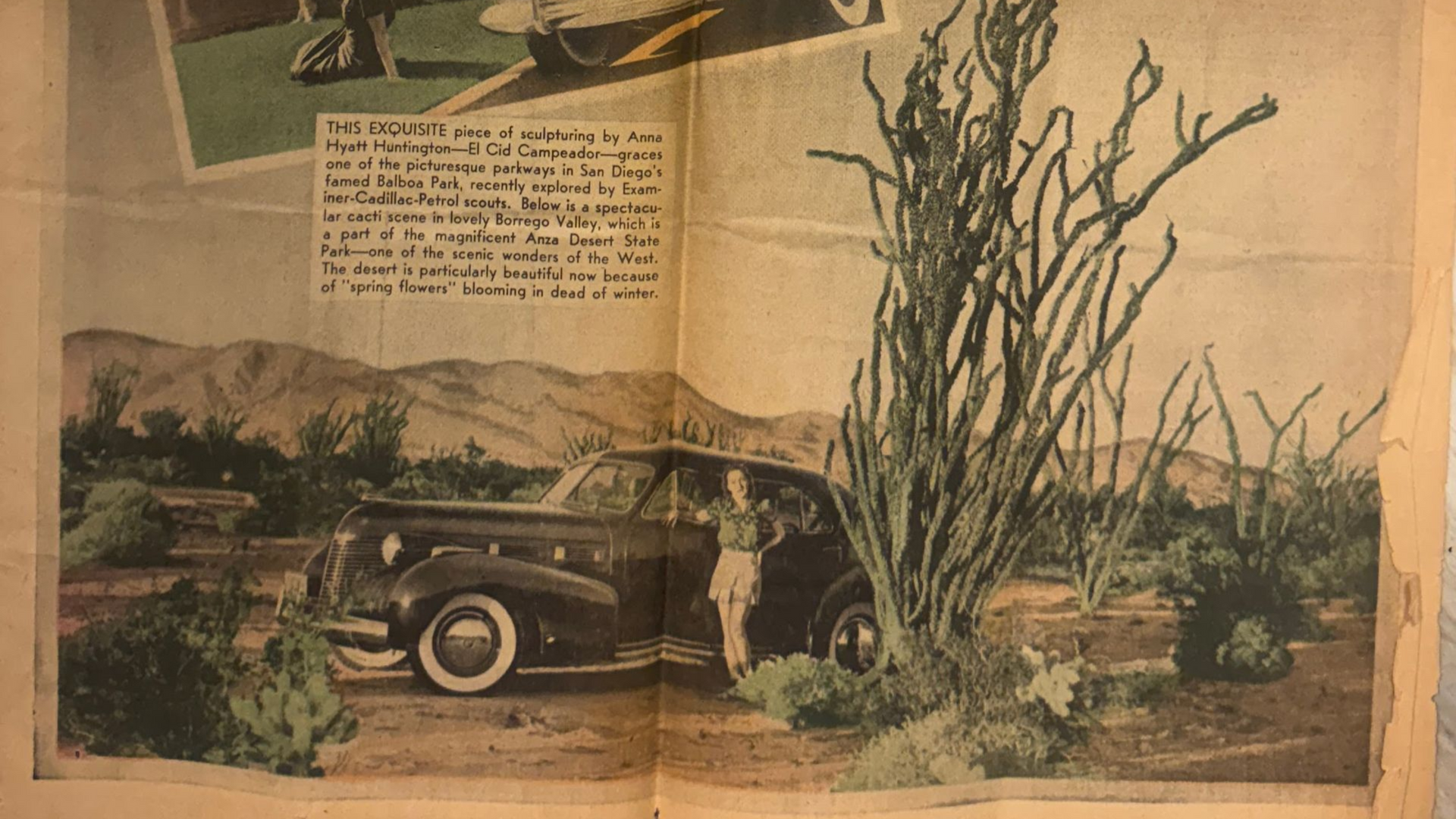
A December 1939 travel magazine captured Borrego Valley as one of Southern California's emerging desert destinations. One of the many historic items preserved with the Borrego Sun collection is a rare issue of Motor and Outing Magazine , published by the Los Angeles Examiner on Sunday, December 3, 1939 . The "Motor and Outing Magazine" was a popular recurring Sunday supplement distributed in the Los Angeles Examiner during the mid-20th century. It primarily featured regional travel guides, automotive lifestyle stories, and outdoor recreational content showcasing destinations and weekend trips across Southern California. Anza-Borrego Desert State Park was officially established by the State of California in 1933 . This particular page shows how Borrego Valley was presented to Southern California travelers in 1939. The accompanying caption describes the valley as “a spectacular cactus scene” and notes that it was part of Anza Desert State Park, highlighting the desert’s seasonal beauty with “spring flowers” blooming in winter. Nearly 90 years later, the image offers a rare glimpse of Borrego as an early desert destination promoted to motorists exploring Southern California by car. The photographs in the feature are credited to John H. C. Stingle , who documented several scenic locations throughout San Diego County for the publication. Historic items like this help tell the story of how Borrego Springs was introduced to visitors long before it became the community we know today. They provide a unique glimpse into early tourism, desert travel, and the publications that showcased the region's beauty nearly 90 years ago. ---- These documents are part of the Borrego Sun materials acquired by Ram Media Foundation . Separately, The Borrego Sun archives are being preserved and digitized by the San Diego History Center , ensuring that decades of Borrego Springs history will be preserved for future generations. To support the future of local media and preserve the past, please contact Andrea at andrea@rammediafoundation.org .
By Andrea McKenna July 1, 2026
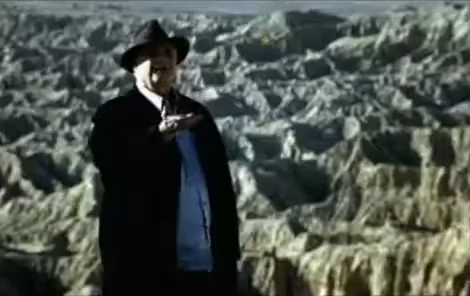
A Hollywood fun fact courtesy of longtime Park Ranger Fred Jee.
By Andrea McKenna July 1, 2026
Don't Miss These Summer Night Sky Events
By Andrea McKenna June 23, 2026
California Newspaper Publishers Association Merit Awards presented to the Borrego Sun for Best Front Page in 1966 and 1967.
June 21, 2026
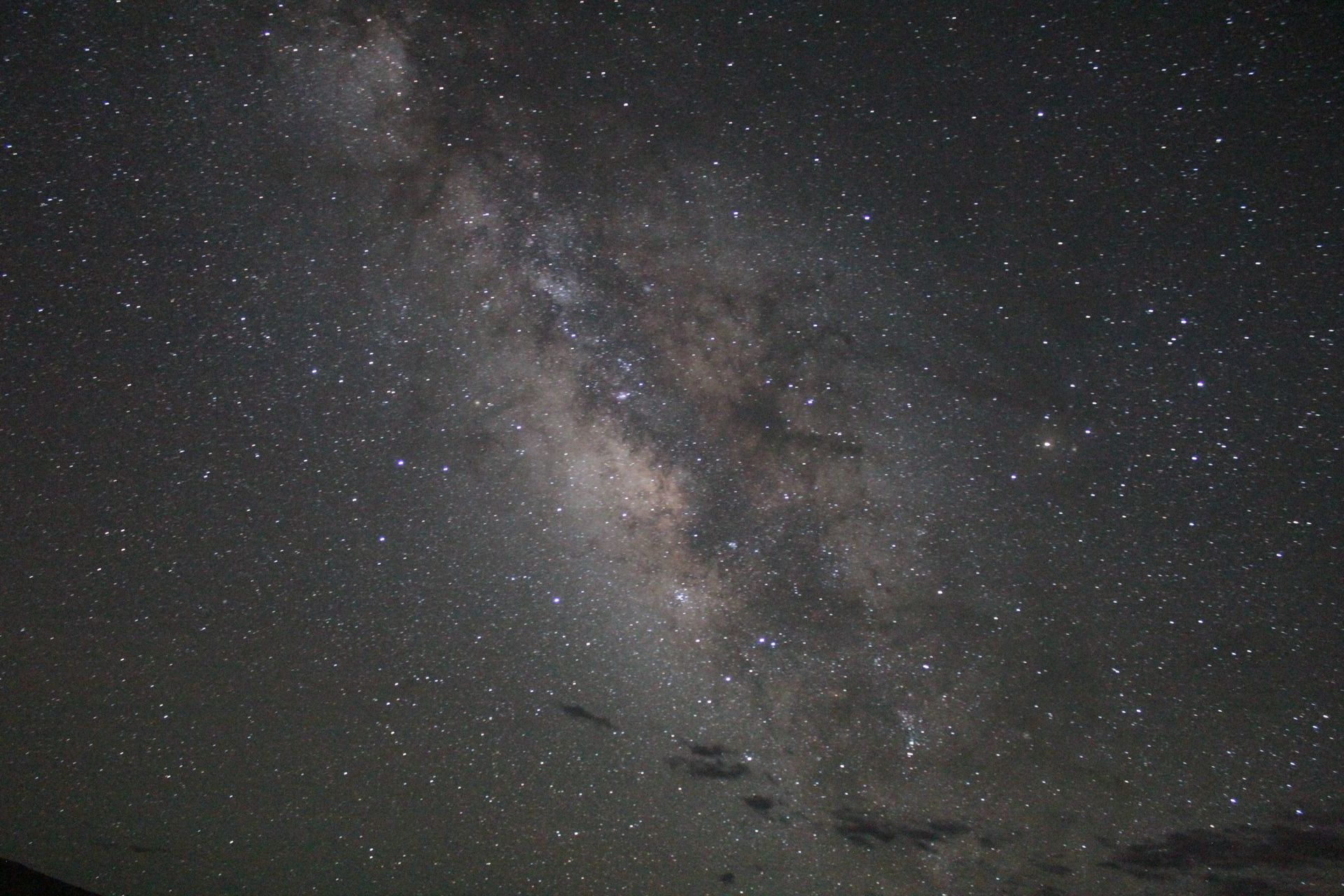
Prepared with information from ABDNHA's Dark Sky resources, Michael Poirier, Astrophotographer, and the Sky Calendar from Michigan State University. Learn more about Borrego Springs dark skies at: https://abdnha.org/darksky/sky / Note: You can subscribe to the Sky Calendar from Abrams Planetarium, Michigan State University, 755 Science Rd, East Lansing, MI 48824. Borrego Springs offers some of the darkest skies in Southern California, making summer an excellent time to observe the Milky Way, planets, meteor showers, and other celestial events. Here's what to look for in June and July 2026. Early June Sunrise: 5:38 a.m. Sunset: 7:50 p.m. PST Day Length: 14 hours 12 minutes June Highlights June 1 (Monday) Venus and Jupiter appear within 8° of each other in the west-northwestern sky after sunset. June 3–16 Milky Way viewing conditions are excellent, with dark, moonless skies after nightfall. The Milky Way rises at 10:57 p.m. on June 7 and as early as 10:30 p.m. on June 14. It remains visible for up to 4 hours and 29 minutes. June 6–13 Grand Canyon Star Party, Arizona. Learn more at www.grandcanyon.org . June 11 (Thursday) Venus, Jupiter, and Mercury span their shortest angle in the evening sky, just 13.2° apart. June 15 (Monday) New Moon — one of the darkest nights of the month for stargazing and astrophotography. June 15 (Monday) Mercury reaches greatest elongation, 24.5° from the Sun, making it the best evening appearance of the year shortly after sunset. June 21 (Sunday) June Solstice marks the beginning of summer in the Northern Hemisphere. It is the longest day of the year with 14 hours and 20 minutes of daylight. June 22–July 2 June Bootids Meteor Shower. June 29 (Monday) Full Moon rises at 8:17 p.m. and sets at 5:04 a.m. June 30 (Tuesday) Asteroid Day. Early July Sunrise: 5:41 a.m. Sunset: 7:59 p.m. Day Length: 14 hours 18 minutes July Highlights July 5 (Sunday) The Milky Way rises at 9:38 p.m. and remains visible for 3 hours and 58 minutes. July 12 (Sunday) The Milky Way rises at 9:34 p.m. and remains visible for 3 hours and 35 minutes. July 14 (Tuesday) New Moon — ideal conditions for stargazing and astrophotography. July 15 (Wednesday) Mercury reaches greatest elongation, 24.5° from the Sun. July 28–29 (Tuesday–Wednesday) Delta Aquariids Meteor Shower peaks. July 29 (Wednesday) Full Moon rises at 8:17 p.m. and sets at 5:04 a.m. The Planets and the Milky Way in June Evening Planets Venus and Jupiter dominate the western sky after sunset throughout June. Around June 8–9, the two planets appear in conjunction, creating a striking close encounter in the west-northwestern sky. Venus, often called the "Evening Star," shines brilliantly as it moves from Taurus toward Gemini and climbs higher in the evening sky each night. Jupiter remains nearby and is also easily visible. Mercury becomes visible low in the western sky during the second half of June. June 15 offers the best viewing opportunity, as Mercury reaches its greatest elongation and highest apparent position above the horizon. Morning Planets Saturn and Mars are visible before sunrise. Mars remains low in the east-northeast, while Saturn rises higher from the east to east-southeast. Early June provides a chance to see the two planets relatively close together. Summer Milky Way Summer is the prime season for viewing the bright central core of the Milky Way. From June through August, the galaxy's core rises in the southeastern sky and becomes one of the most spectacular sights available to dark-sky observers. June Bootids Meteor Shower The June Bootids occur annually from June 22 through July 2 and peak around June 27. Most years produce only one or two meteors per hour. However, this shower has occasionally surprised observers with dramatic outbursts. In 1998, rates briefly reached approximately 100 meteors per hour. The shower originates from debris left by Comet Pons-Winnecke, which orbits the Sun every 6.3 years. June Bootids are known for their unusually slow speed, entering Earth's atmosphere at approximately 14 kilometers per second. Asteroid Day – June 30 Asteroid Day is a United Nations-sanctioned global awareness campaign held annually on June 30. The event educates the public about asteroid impacts, planetary defense, and ongoing research into near-Earth objects. The date commemorates the Tunguska Event of June 30, 1908, when a massive airburst explosion flattened approximately 830 square miles of Siberian forest. The blast is estimated to have released energy equivalent to between 3 and 50 megatons of TNT, making it the largest recorded impact event in modern history. For more information, visit www.un.org. Delta Aquariids Meteor Shower The Delta Aquariids meteor shower peaks on the night of July 28 and the morning of July 29. This annual shower can produce up to 20 meteors per hour under ideal conditions and is associated with debris from Comets Marsden and Kracht. The shower runs from July 12 through August 23 each year. Unfortunately, the 2026 peak coincides with a Full Moon, which will wash out many fainter meteors. Patient observers may still catch some of the brighter meteors throughout the night. The meteors appear to radiate from the constellation Aquarius but can be seen anywhere in the sky. Learn More About Borrego Springs' Dark Skies Borrego Springs is California's first International Dark Sky Community and one of the best places in Southern California to experience the Milky Way, meteor showers, planets, and other celestial events. To learn where to observe, dark sky etiquette, upcoming programs, and more about stargazing in Borrego Springs, visit the Anza-Borrego Desert Natural History Association's Dark Sky resources: https://abdnha.org/darksky/sky/
By Andrea McKenna June 18, 2026
Regional event celebrates the night sky, science, and dark sky preservation Borrego Springs residents who enjoy stargazing, astronomy, and protecting the night sky may want to mark their calendars for the 2026 San Diego Dark Sky Festival , scheduled for August 15 from 3 p.m. to 11 p.m. at Julian Union High School in Julian. The festival will feature distinguished speakers, telescope viewing, hands-on activities, educational exhibits, and opportunities to learn more about the growing dark sky movement throughout San Diego County. The event is organized by DarkSky San Diego County and regional partners committed to reducing light pollution and preserving access to natural darkness. Activities are designed for families, students, amateur astronomers, and anyone interested in the night sky. Festival organizers describe it as a celebration of stars, science, and community. For Borrego Springs residents, the festival highlights a cause that has become part of the community's identity. Borrego Springs was California's first International Dark Sky Community , earning recognition for its efforts to reduce light pollution and preserve exceptional night-sky viewing. Julian followed with its own International Dark Sky Community designation in 2021, creating a network of dark-sky advocates in San Diego County's backcountry. The festival also showcases the growing regional movement to protect dark skies. Organizations from Borrego Springs, Julian, Fallbrook, Mission Trails Regional Park, and the Laguna Mountain area are working together to promote responsible lighting and preserve natural darkness for future generations. Visitors can expect telescope viewing, astronomy demonstrations, educational booths, and presentations on the importance of natural darkness for wildlife, human health, and energy conservation. Similar festivals have drawn large crowds and provided opportunities for the public to experience some of Southern California's best night skies. For many Borrego Springs residents, the event offers a chance to connect with neighboring dark-sky communities while celebrating one of the region's greatest natural resources—the star-filled skies that make both Borrego Springs and Julian special destinations for stargazing. ------------------ Fun Local Fact: K-RAM 90.5 FM at 730 Christmas Circle recently received a Night Sky Friendly Business Certificate of Merit from the Borrego Springs Dark Sky Coalition. The building also houses a Dark Sky visitor center and Borrego Valley Realty, where realtor Mary Watkins helps visitors learn more about protecting Borrego Springs' famous night skies.
By Explore With Jeven Dovey June 17, 2026
Exploring Goat Canyon Trestle Before It's Gone Adventure filmmaker Jeven Dovey documents one of Southern California's most remote railroad landmarks
Show More

Share This Post