
December 17, 2025
Christmas as Light in Darkness
Share
Every year in December we come around to a holiday that still for many is a holy day. It has different names in different languages and cultures—Yuletide, Jul, Weinachten, Noel, Navidad, Natale, Rizdvo and more. Christmas comes from “Christ’s Mass,” denoting the sacred service known in many churches and languages as the “Mass.”
There are feasts of other faith traditions that often come close to the end of the year. Hannukah is the Jewish celebration of the victory of the Maccabees and the restoration of the sacred lights on the menorah or candlestick in the Jerusalem Temple. Despite not being filled with enough oil, the lamps burned for eight days. There is the Hindu celebration of light in darkness, Diwali. And the African-American holiday of Kwanzaa.
Christmas also has other special days associated with it. December 6 is the feast of St. Nicholas, the original Santa Claus, a 4th century bishop renowned for his generosity to those in need. In some countries this is the day of the exchange of gifts. Likewise January 6 is the feast of Epiphany or the day of the Three Magi Kings, when in Hispanic countries gifts are given.
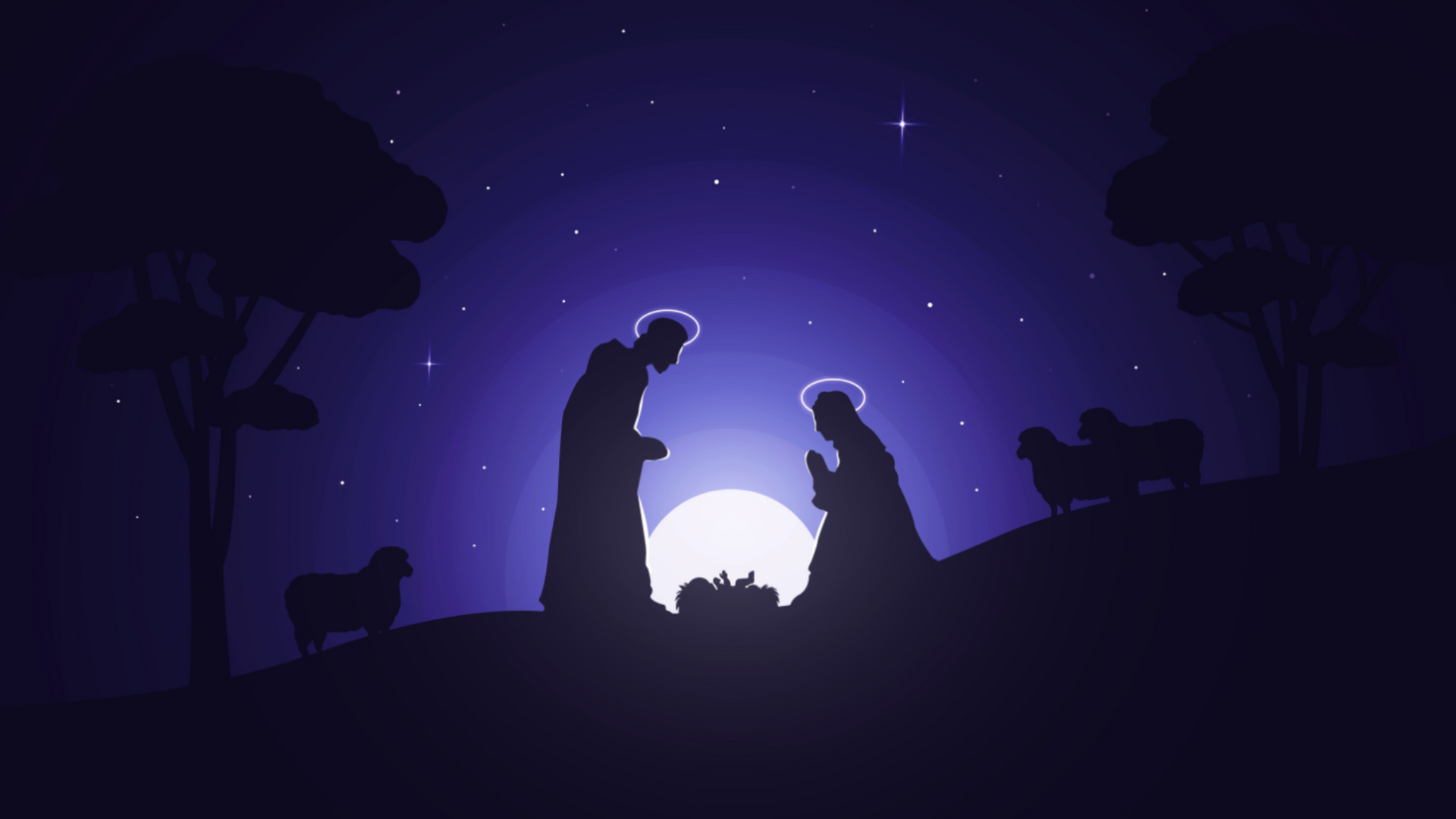
Central to Christmas is the celebration of Jesus’ birth. The gospel of Luke tells the familiar story of the parents, Mary and Joseph’s journey to Bethlehem to enroll in a census. While there, lodging in a stable, their son is born, wrapped in swaddling clothes and placed in a manger, a feed trough for domestic animals. Angels announced this birth to shepherds in the surrounding countryside. These herdsmen came and honored the newborn child, having heard a song from the angels: “Glory to God in the highest, peace to all people on earth.”
Later, in Matthew’s gospel, three astronomers, perhaps also royalty, came from further East to visit the child, following a star which led them to where the family was. This gospel does not mention the angels, the manger or shepherds, but notes that King Herod was fearful of the newborn as a threat to his power, asking the three astronomers to report back and disclose where the child was. They did not do this and went home on another route. The male children of Bethlehem were subjected to a massacre. Thus, the birth of Jesus was not without pain and suffering also.
Christmas evokes images of trees twinkling with lights and ornaments, dinner tables loaded with food, the faces of children lit up with glee, not just at their presents but also at the warmth of family and friends. Christmas is an event that was to bring peace to the world, the birth of someone who became a teacher and healer later in life, one whom his followers saw, in Matthew’s words as “God with us,” Emmanuel, God becoming a human being, part of our world, of space and time. But Jesus was born in a land under the occupation of the Roman Empire, in a society in which most people teetered on the edge of extreme hunger and poverty. The birth happened in a barn where domestic animals lived, and the first visitors were scruffy sheep herders, thought of as not trustworthy.
Two thousand years later, Christmas remains a moment in a world torn apart by suspicion, hatred, violence and anger. The holiday sees millions of dollars spent on gifts, parties, decorations, and entertainment. And yet, the story of how this birth came to take place remains one that faces us with a helpless infant, loving parents, the sense of joy from heavenly beings, the welcome of very humble as well as some very elite, privileged visitors. Christmas can still stand as a sign of light in the darkness, a message of joy and goodness despite everything that might appear as opposed to this.
You don’t need to be religious to see in this holiday something of hope and joy. Merry Christmas!
---
The Rev. Michael Plekon, PhD
Professor Emeritus: Sociology, Religion & Culture The City University of New York - Baruch College
Learn More About Borrego Springs