Jake Hinton • April 10, 2024

Sen. Jones’ Bill on Predator Placement Clears Committee

Share
---

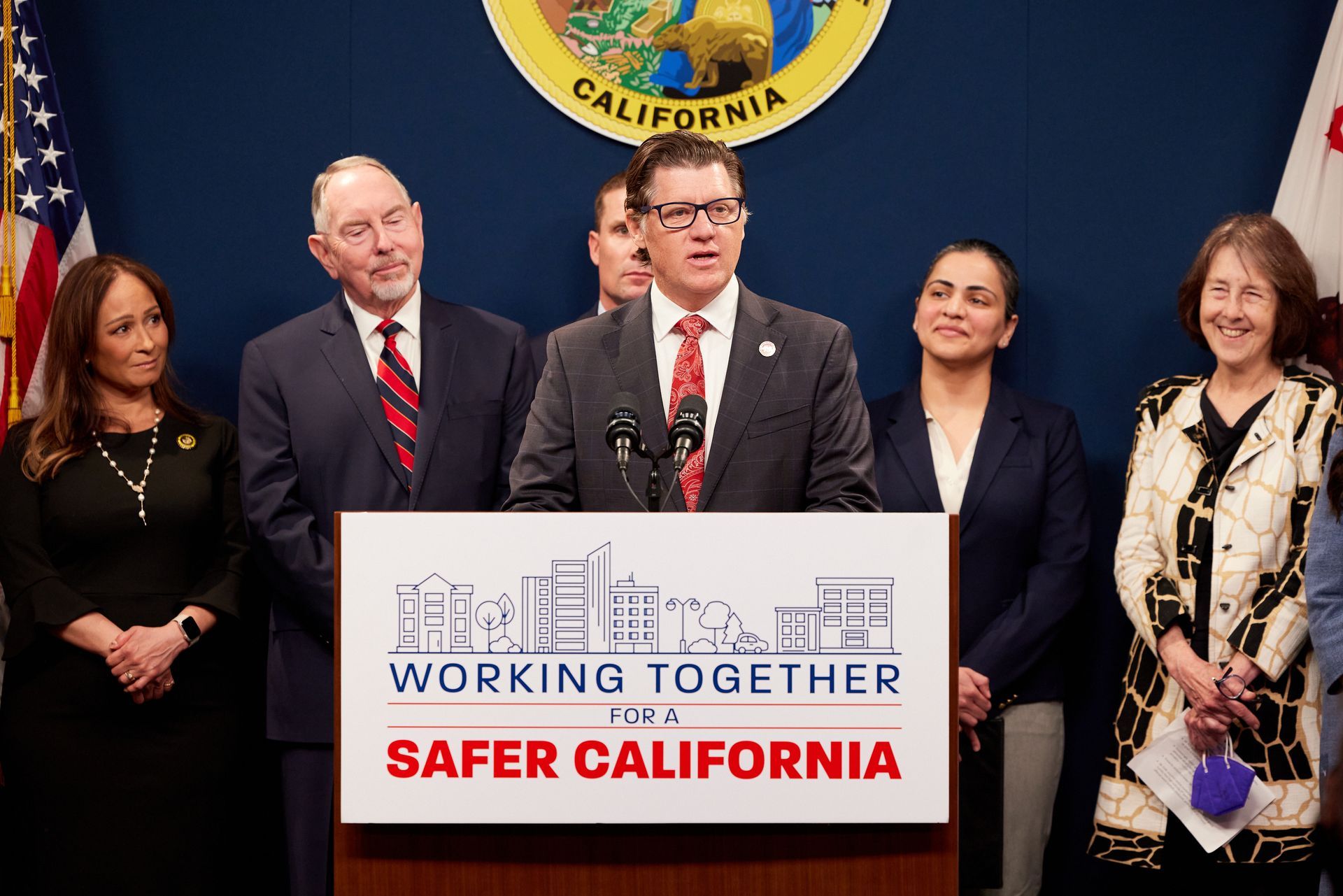
Today, the Senate Public Safety Committee unanimously approved Senate Minority Leader Brian W. Jones’s (R-San Diego) bipartisan Senate Bill 1074, called the “Sexually Violent Predator Accountability, Fairness, and Enforcement Act” (SAFE Act). Click here for SB 1074 the factsheet and here for more information about the bill and SVP issue.

---

A Unified Front Against Sexual Violence


In an unprecedented display of bipartisan solidarity, the California Senate Public Safety Committee has given its unanimous nod to a pivotal piece of legislation aimed at fortifying community defenses against sexually violent predators. On April 9, 2024, the "Sexually Violent Predator Accountability, Fairness, and Enforcement Act" (SAFE Act), championed by Senate Minority Leader Brian W. Jones (R-San Diego), sailed through the committee stage, marking a significant milestone in the state's legislative efforts to protect its residents.


Crafted with the intent to overhaul the current processes governing the placement of sexually violent predators (SVPs), the SAFE Act seeks to ensure such individuals are not surreptitiously placed into family-oriented neighborhoods, thereby safeguarding the sanctity and safety of community living spaces. Highlighting the act's essence, Senator Jones articulated, "The SAFE Act is designed to protect our neighborhoods and families from dangerous sexually violent predators, perpetrators of some of the most horrendous and violent sex crimes.”


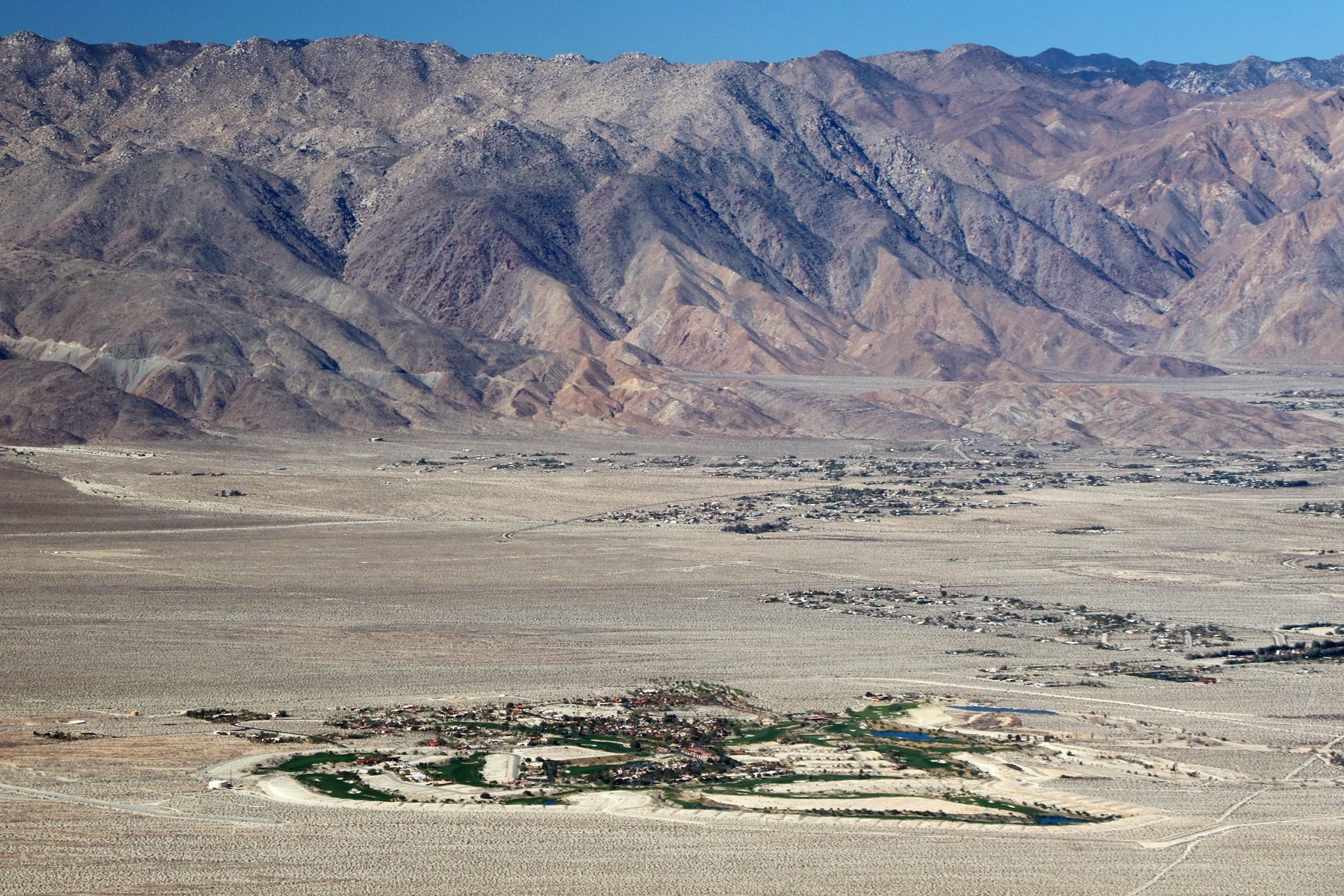
Among the locales under the legislative spotlight is Borrego Springs, a serene community that epitomizes the essence of California's diverse and vibrant living environments. The SAFE Act's provisions are particularly relevant here, ensuring that areas like Borrego Springs remain sanctuaries of peace and safety, untouched by the potential threats posed by the inappropriate placement of SVPs.


Central to the SAFE Act are measures that elevate public safety as the primary criterion in the placement decisions of SVPs, alongside requiring the Department of State Hospitals (DSH) to actively participate in and approve placement locations before any contractual agreements are finalized. This legislative push comes in response to growing concerns over the discreet integration of SVPs into unsuspecting communities, sparking widespread alarm and calls for reform.


The act's progression, underscored by a unanimous 4-0 committee vote, is buttressed by an extensive coalition of bipartisan support, reflecting a collective legislative commitment to community welfare. Echoing the sentiments of support, Senator Marie Alvarado-Gil (D-Jackson) affirmed, “As a state legislator dedicated to the safety and well-being of my district and California as a whole, I stand firmly in support of SB 1074. This bill not only prioritizes public safety as the paramount concern in deciding the placement of Sexually Violent Predators – it also ensures accountability by mandating the Department of State Hospitals' approval before any placement occurs.”


As the SAFE Act navigates its journey through the legislative corridors, its implications for communities like Borrego Springs and beyond are profound, heralding a new era of transparency, accountability, and safety in the management of sexually violent predators within the Golden State.


Related:


Learn More About Issues That Impact Borrego Springs
By Andrea McKenna August 10, 2026
The world champion who races in Borrego Springs trains all summer in a Saskatchewan village Fred LaCroix, a French handcyclist and a familiar sight on Borrego Springs roads, was recently featured by CBC News for his racing in Borrego Springs and his summer training base in rural Saskatchewan. LaCroix, 65, is from the French Alps and has competed in the 6-12-24 Hour World Time Trial Championships in Borrego Springs. He won the 24-hour men’s handcycle event in the 60–69 age division, finishing despite mechanical problems. A former helicopter pilot who worked in 62 countries, LaCroix’s life changed dramatically in 2016 when a virus caused him to lose the use of his legs. The disability ended his aviation career and made him a wheelchair user. He later turned to adaptive sports, first racing in a wheelchair and then discovering handcycling, which allowed him to train for longer distances and endurance competition. LaCroix was looking for somewhere in Canada with flat roads and elevation slightly higher than the Borrego Springs course. He landed in Cadillac, Saskatchewan, a small village about 146 miles southwest of Regina , by chance. This is his third summer there. The village has taken to him. CBC News reported that residents gathered during his interview , and local officials said LaCroix has become part of the community. He has volunteered at fundraiser barbecues and even helped by watering newly planted trees at the village campground. Regional Saskatchewan news outlets have also reported on LaCroix’s training and his preparations for racing in Borrego Springs. His regular appearances on local roads have made LaCroix a familiar figure in Borrego Springs, creating an unexpected connection between this desert community and a small prairie village more than 1,500 miles away.



By San Diego County August 9, 2026
FY 26/27 application and instructions will be available on July 1, 2026.
By Andrea McKenna August 9, 2026
New communications tower supports stronger local connectivity
By Andrea McKenna August 8, 2026
Historic protections proposed amid Lithium Valley development.
By Cassie N. Saunders, County of San Diego Communications Office August 7, 2026
By Cassie N. Saunders, County of San Diego Communications Office Nearly 200 older adults will start receiving a $500 a month in rental assistance next year through the County’s third round of the Shallow Rental Subsidy Program . The County is now accepting applications and will continue until 195 qualified households are accepted. Monthly payments to landlords are expected to begin in early 2027. The program offers $500 a month for 18 months to low-income older adults age 60 and older who are struggling with rising rental costs and are at risk of losing their housing. “This rental support gives older adults a better chance to stay in their homes and avoid homelessness. It is a practical step toward meeting the needs of our aging community,” said Dijana Beck, director of County Office of Homeless Solutions. To qualify, applicants must be severely rent burdened with a household income at or below 30 percent of the Area Median Income .
By Christmas Circle Foundation Board August 7, 2026
Help restore and preserve one of Borrego Springs' most treasured gathering places Christmas Circle Community Park began repairing and upgrading an aging irrigation system in early August 2026. This work will not only get our irrigation system working more efficiently, but also begin to transform the look of the park. The Board of Directors is making an appeal to the Borrego Springs Community and visitors to the park to make a generous one time donation to help fund this project. Our goal is $25,000 by December 31, 2026. Please consider making a donation and keeping the Park we all love and enjoy looking its best now and for years to come.
By Andrea McKenna August 6, 2026
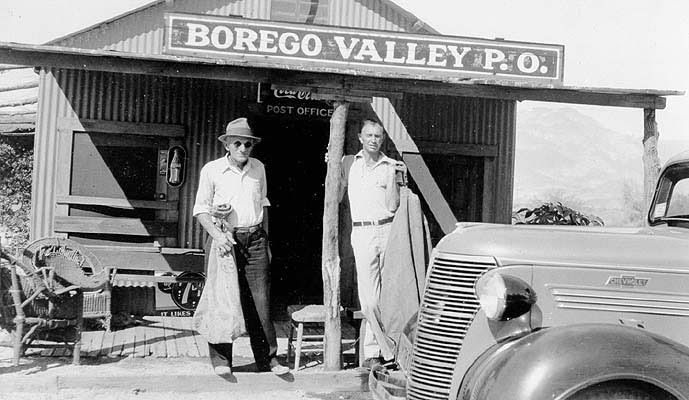
A firsthand account of the Beaty family's homestead, ranching life, the original Borrego school, General Patton's desert training, and the people who helped shape the Borrego Valley.
By Andrea McKenna August 6, 2026
Former agricultural land near Anza-Borrego Desert State Park could be restored with native wildflowers and desert vegetation A proposal would restore approximately 261 acres of former agricultural land at Bauer Ranch into native desert habitat as part of a potential California Proposition 4 climate grant project. Bauer Ranch is a Borrego Water District property located adjacent to Anza-Borrego Desert State Park , within the Borrego Palm Canyon and Clark Lake area north of central Borrego Springs. The project documents identify the site as fallowed agricultural land that is no longer in production because of groundwater-use reductions. The project is titled “From Fallowed Fields to Wildflowers: A Desert Revival & Restoration Initiative.” The Anza-Borrego Foundation would serve as the lead applicant, while the Borrego Water District was asked to consider participating as the landowner and co-applicant. California State Parks is anticipated to become the long-term owner and steward of the restored habitat if the proposal moves forward. Restoring former farmland Agricultural production on the property was discontinued as part of efforts to reduce groundwater pumping in the Borrego Springs Subbasin. According to the proposal, the former fields would be restored with native wildflowers and other desert vegetation to improve ecological function and long-term landscape resilience. The project documents explain that large areas of exposed, fallowed farmland can contribute to dust, higher surface temperatures and degraded soil conditions. Restoring native vegetation could help stabilize the soil, reduce dust and improve habitat near the state park. Proposed project goals The proposal identifies four main goals: Restore approximately 261 acres of fallowed farmland to native desert habitat. Increase vegetation to reduce exposed soil, dust and extreme-heat impacts. Evaluate opportunities to support groundwater recharge through soil improvements and land recontouring. Include Tribal consultation, community education and long-term stewardship in the planning process. The restoration could include soil work, land recontouring, native seed development, habitat establishment and long-term monitoring. Hydrologic, biological and cultural studies would also be completed during the planning process. Proposition 4 funding Funding would be sought through California’s Proposition 4 Extreme Heat Grant Program , which supports projects intended to reduce extreme-heat impacts and improve community resilience. The Anza-Borrego Foundation approached the Borrego Water District about the grant opportunity. Helix Environmental Planners was selected to assist with developing and submitting the application and to explain the responsibilities and possible costs associated with the Water District serving as a co-applicant. Potential model for other fallowed land The proposal describes Bauer Ranch as a possible model for restoring former agricultural land throughout the Borrego Valley and other groundwater-limited desert regions. Project documents estimate that approximately 9,000 acres of agricultural land in the Borrego Valley could be fallowed by 2040 as groundwater pumping is reduced. If successful, the Bauer Ranch project could demonstrate how those lands might be managed to reduce dust, restore habitat and improve climate resilience. The Bauer Ranch project remains a proposal . The Borrego Water District was asked to receive an overview and consider whether it should participate as a co-applicant in the grant process. The project documents do not establish that restoration work has been approved or funded. Source: Borrego Water District July 14, 2026 Board Package


By Andrea McKenna August 5, 2026
Creative classes for adults and families continue throughout August.
Show More
Subscribe for Free Updates!

Share This Post