Borrego Springs Local • January 20, 2023

Can Rabbit Haemorrhagic Disease (RHD) Infect Coyotes that Eat Infected Rabbits

Share

Rabbit Haemorrhagic Disease (RHD) and Coyotes in Borrego Springs


Rabbit Haemorrhagic Disease (RHD) is a serious and contagious illness that affects adult wild and pet rabbits of the Oryctolagus cuniculus species. When RHD enters a new area, it can cause large drops in rabbit populations. A common concern is whether this disease can spread to other animals, like coyotes, that might eat infected rabbits.


Can Coyotes Get RHD?


Studies show that RHDV, the virus that causes Rabbit Haemorrhagic Disease, does not affect other mammals, including coyotes. Even when scientists introduced the virus to 28 different animals, none got sick, and the virus didn’t multiply in their bodies. Specifically, research has shown that RHDV and its variants do not replicate in coyotes.


Source: “Rabbit haemorrhagic disease virus: A review,” Journal of Comparative Pathology, Volume 153, Issue 3, September 2015, Pages 131-139.


What Happens if Coyotes Eat Infected Rabbits?


While coyotes that eat infected rabbits can develop antibodies, which is called seroconversion, they do not get sick from the virus or spread it to others. This means they’ve been exposed to the virus but can’t pass it on.

Source: “Rabbit haemorrhagic disease in European rabbits and its potential impact on wild lagomorphs and their predators,” Biological Conservation, Volume 143, Issue 7, July 2010, Pages 1715-1724.


Conclusion


To sum up, while coyotes may develop antibodies after eating rabbits with RHD, they don’t get infected or spread the disease. However, it’s still important to be careful when handling wild rabbits in Borrego Springs and Anza-Borrego State Park to prevent the spread of RHD to other rabbit populations.


Taking these precautions helps protect the local wildlife and keep rabbit communities healthy.


Learn More About Borrego Springs

By Karen Pearlman July 21, 2026
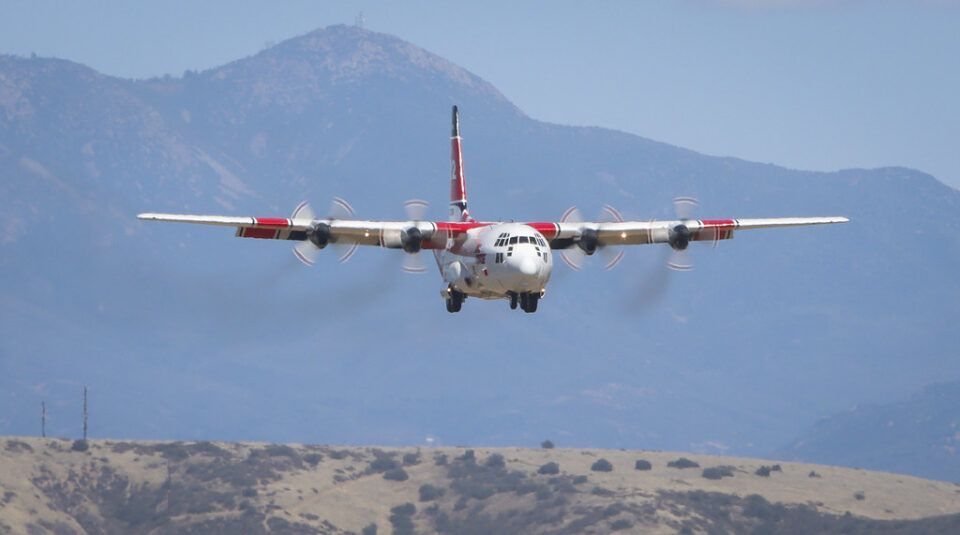
By Karen Pearlman, East County Magazine July 20, 2026 (Ramona) — San Diego County’s aerial firefighting capabilities have been boosted with the reopening of the modernized Ramona Air Attack Base, where state and local officials on Monday morning unveiled nearly $20 million in upgrades designed to get aircraft back into the air faster and expand around-the-clock wildfire response. The renovated base at 2498 Montecito Road now houses a new 4,000-gallon CAL FIRE C-130 Hercules air tanker, a night-capable S-70 CAL FIRE Hawk Helicopter, two S-2 air tankers and an OV-10 Air Tactical aircraft. The group of aircraft is creating what officials called one of California’s most advanced aerial firefighting hubs. The base’s aging infrastructure has been replaced with a modern retardant mixing plant capable of storing 20,000 gallons of fire retardant, redesigned aircraft loading bays that dramatically reduce turnaround times, and expanded ramp space to accommodate additional air tankers during major wildfire incidents. “This base is a regional asset,” CAL FIRE/San Diego County Fire Chief Tony Mecham said at a press conference that was livestreamed on YouTube . “When there is smoke in the sky, the citizens don’t care what color the fire engine is or what patch is on the uniform. They just want people to show up quickly.” The improvements come as California faces increasingly destructive wildfire seasons fueled by hotter temperatures, prolonged drought and more extreme weather conditions. CAL FIRE Director and Fire Chief Joe Tyler said the Ramona facility reflects years of investment in modernizing California’s aerial firefighting fleet. Over the past two years, CAL FIRE aircraft have flown more than 11,500 flight hours annually while maintenance crews logged more than 90,000 hours keeping aircraft mission-ready, Tyler said. Among the most significant additions is the C-130 Hercules air tanker, capable of dropping 4,000 gallons of fire retardant — more than three times the capacity of CAL FIRE’s traditional S-2 air tankers. The aircraft is part of the state’s new fleet of converted military transport planes that entered service beginning in 2024. Also based in Ramona is the county’s new S-70 Firehawk helicopter, which can perform water drops after dark — a capability officials said is already proving invaluable. It has an integrated 1,000-gallon water tank with hoist rescue capability and the ability to transport helicopter crews into remote terrain. San Diego County Board of Supervisors Chair Terra Lawson-Remer pointed to last week’s Thorn Fire, where the Firehawk flew nighttime suppression missions that slowed the fire’s progression and helped prevent flare-ups the following morning. “Our days are getting hotter, our nights are getting warmer, the winds are stronger and fuels are drier,” Lawson-Remer said. “Wildfire does not stop when the sun goes down.” She urged residents to prepare for wildfire emergencies by signing up for emergency alerts, planning evacuation routes and heeding evacuation orders when issued. For East County backcountry communities, the upgrades could mean quicker aerial response to fires threatening homes. Aircraft assigned to Ramona regularly respond throughout the county. Mecham twice shared the importance of coordinated and consolidated efforts between firefighting agencies across the county. “We fight fire without boundaries and without egos,” he said. Mecham said the modernization project focused on improving efficiency as much as expanding capabilities. Previously, air tankers were forced to maneuver awkwardly into a single retardant loading area, creating backups during major wildfire incidents. The redesigned facility features three drive-through loading pits that allow aircraft to taxi in, reload and immediately return to the fire. “The S-2s can reload in about two to three minutes,” Mecham said. “The C-130, under 10 minutes, it’s on the ground here at Ramona before it’s back in the sky responding to the next fire.” The expanded ramp now allows up to six air tankers to stage simultaneously. During last week’s Thorn Fire, officials said 11 air tankers were assigned to the incident, underscoring the need for increased loading capacity. Additional improvements are in the planning stages. Construction is expected to begin next year on a 14-person barracks to support future 24-hour operations, along with further expansion of the helicopter facilities. Monday’s ceremony also highlighted the historical significance of the Ramona Air Attack Base, which opened in 1957 as CAL FIRE’s first aviation base. While the facility received new buildings in 2000, much of its underground infrastructure — including water lines, electrical systems and retardant delivery equipment — had remained unchanged until the recent reconstruction. San Diego County Supervisor Joel Anderson, who lives in the fire-prone area of Alpine, thanked leaders for their understanding of the importance of the Ramona airport site… “not just in San Diego County but for Southern California in general.” “CAL FIRE has been an essential partner for the County Fire, providing joint fire protection in emergency services for more than 1.7 million acres,” Anderson said. “Since CAL FIRE’s creation in 2008, the Board of Supervisors have invested over a billion dollars into fire protection in emergency medical services. “In the years since we created County Fire, we have also expanded our partnership in collaborations. In 2022, CAL FIRE successfully collaborated with the Ramona Municipal Water District to establish the Ramona Airport as a hub for aerial firefighting teams, in addition to replacing fire engines and adding a third ambulance, which was so important to the backcountry and to all my constituents.”

By Karen Pearlman July 20, 2026
Photo courtesy County of San Diego
By Karen Pearlman July 19, 2026
Photo courtesy County of San Diego
By Andrea McKenna June 15, 2026
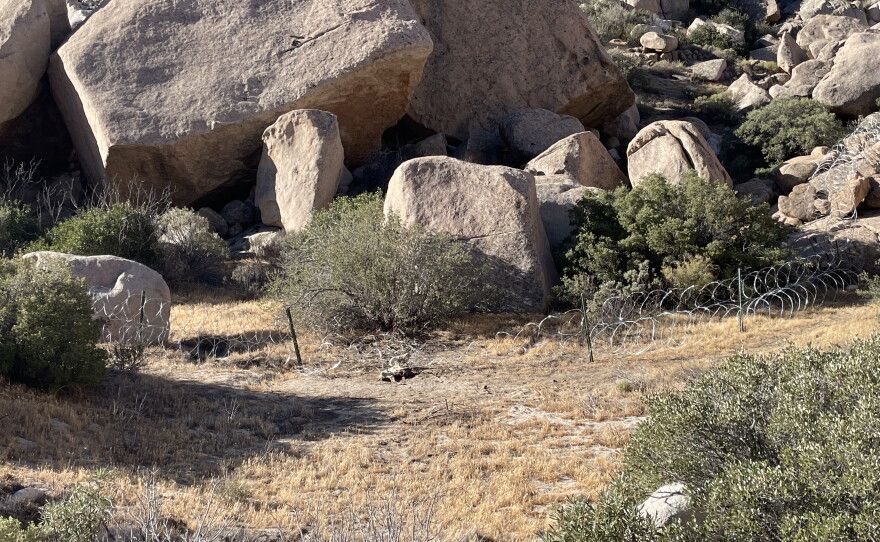
A recent KPBS report shared heartbreaking news: an endangered Peninsular bighorn sheep was found dead after becoming entangled in concertina wire near the U.S.-Mexico border in the Jacumba Wilderness. The story highlights growing concerns from wildlife biologists and conservationists about how border fencing and razor wire can affect protected species, including bighorn sheep, mountain lions, and wild horses. Wildlife biologist Christina Aiello has been among those warning that barriers can cut animals off from food, water, and safe movement corridors. This issue matters to Borrego Springs and the surrounding desert region because Peninsular bighorn sheep are part of our shared desert landscape. Protecting wildlife movement, water access, and habitat is essential to the long-term health of the Anza-Borrego region. Read the full KPBS report here: [ https://www.kpbs.org/news/environment/2026/06/10/endangered-ram-dies-after-getting-caught-in-concertina-wire-at-us-mexico-border ]
By East County News Services  June 13, 2026
Photo courtesy County of San Diego
By Jake Hinton December 16, 2025
Winter brings early wildflower blooms to Borrego Springs and Anza-Borrego Desert State Park. Hike, golf, explore art galleries, farmers markets, and dark skies—before spring crowds.
By Jake Hinton June 11, 2025
One Course, Many Possibilities Rams Hill Golf Club in Borrego Springs, California , remains one of Southern California’s most reliable golf destinations—offering a championship-caliber experience in a setting that adapts easily to different types of getaways. Whether you're planning a golf-focused weekend or a slower-paced retreat with friends or family, Rams Hill provides the foundation.  It’s not uncommon for guests to return to the same rental, play the same number of rounds, and dine at the same favorite restaurant—yet walk away with a completely different experience. Golf Designed for Everyone Designed by Tom Fazio , Rams Hill’s 18-hole course features dramatic elevation changes, wide landing areas, and expansive views across the Anza-Borrego desert. Multiple tee options suit a wide range of players, from scratch golfers to those still learning the game. Small but memorable touches—like tacos at the turn and post-round cookies—round out the experience. Paired with Stay & Play homes like The Desert Escape, guests can enjoy the convenience of staying on site while having space to relax, cook, or host small gatherings between rounds. Repeat Stays, Fresh Experiences One trip may focus on competitive rounds with fellow golfers. Another might center around a mixed group, some playing full rounds, others enjoying shorter outings or relaxing at the rental. The shared element is consistency: excellent course conditions, helpful staff, and the option to shape your schedule any way you like. Even repeat visitors report that the experience shifts depending on the group, the season, and how the trip is planned—without sacrificing the sense of quality or hospitality Rams Hill is known for. Summer in Borrego: More Than Golf While winter and spring are peak golf seasons, summer in Borrego Springs offers a quieter experience with wide-open skies, minimal traffic, and more room to explore beyond the course. For those interested in art, photography, or stargazing , the summer months offer clear air, high contrast light, and dramatic desert color. Visitors often combine their golf plans with stops at the Borrego Art Institute , which hosts rotating exhibitions and operates a garden-focused ArtPark nearby. Just a few minutes away, The Gallery at The Palms presents contemporary shows in a mid-century modern setting surrounded by native landscaping. These creative spaces offer a thoughtful balance to a golf itinerary and allow non-golfers to enjoy the weekend just as much. Dining in Borrego Springs Borrego Springs also offers a variety of local dining options , from casual cafes to full-service restaurants. Onsite, Rams Hill Restaurant is open to the public and known for elevated fare with sunset views over the course. In town, diners will find locally owned spots offering everything from breakfast staples to seasonal specials—many of which are open year-round. Easy to Reach, Hard to Forget Just under a two-hour drive from San Diego , Rams Hill is a short trip that feels far removed. Guests often return to familiar settings—the same house, same course, even the same server—and still leave with a new favorite moment.
By Jake Hinton December 13, 2024
Discover the story behind the Hawkwatch documentary, showcasing the Swainson's Hawk migration, citizen science efforts in Borrego Springs, and the push for conservation.
By Jake Hinton October 28, 2024
Sunbelt Publications: Sharing the Stories That Shape Our Land For over 36 years, Sunbelt Publications has brought readers closer to the natural beauty, rich history, and cultural heritage of California, the Southwest, and Baja California. Through award-winning publications, Sunbelt has become a cornerstone of regional storytelling, inspiring readers to connect with and conserve the unique landscapes and histories that shape our communities. Sunbelt’s Commitment to Education and Conservation Sunbelt Publications specializes in books that explore natural science, regional history, and cultural stories, emphasizing the connection between people and their environment. Through their own titles and collaborations with like-minded authors, Sunbelt remains committed to fostering a deep understanding of and appreciation for the regions they serve. They believe that by educating readers, they can inspire a sense of stewardship that leads to conservation. Built on a Legacy of Passion and Vision Sunbelt Publications was born from Diana and Lowell Lindsay’s passion for the Southwest, starting as a small-scale distribution network that allowed them to share regional stories with a growing audience. Over time, it evolved into a respected publishing house, recognized not only for its quality titles but also for its dedication to supporting local conservation efforts. From its humble beginnings, Sunbelt has grown into a trusted resource for books that reveal the hidden gems of the Southwest and beyond. The Story of Sunbelt Publications
Show More

Share This Post